Shigru
शिग्रु
Moringa oleifera Lam.
Moringaceae · Moringa
Benefits & side effects
TRADITIONAL VIEW, WITH SAFETY LIMITS
Hindi name: Sahjan
What the texts say Shigru does
- Shothahara — reduces swelling
- Deepana — kindles digestion (appetiser)
- Lekhana — scraping, reduces excess tissue and fat
- Krimighna — anthelmintic (against worms)
- Vranashodhana — cleans wounds
- Vidradhihara — used in vidradhi (abscess)
What the evidence says. Traditional use is extensive and long recorded. Modern clinical evidence is limited.
Side effects and limits
- Digestive upset
- Burning sensation
- Loose stool from the leaf in quantity
Avoid or ask first: Pregnancy, as regards the root bark and seed absolutely.; Breastfeeding, as regards the root bark.
A traditional classification, not a recommendation. The full safety record is below.
Stands in 4 groups
- Swedopaga — Adjuvant to sudation (named there as Shobhanjana)
- Shirovirechanopaga — Adjuvant to nasal evacuation
- Krimighna — Destroying worms (named there as Akshiva)
- Varunadi — Kapha, fat, and the head
A Samhita can only be read forwards, from the group to its members. This is the same list read backwards.
Photographs
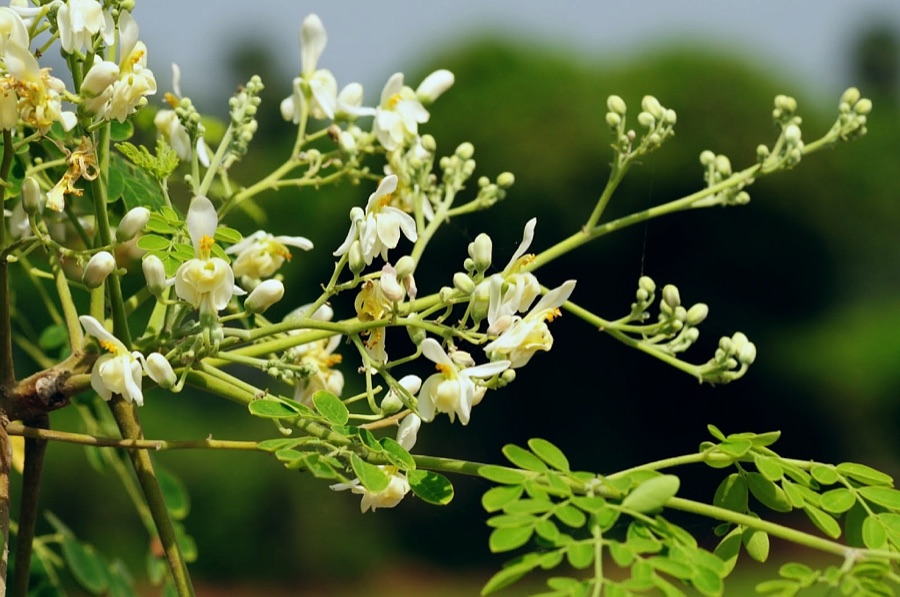
Photo: Venkatx5 · CC BY-SA 3.0 · Wikimedia Commons

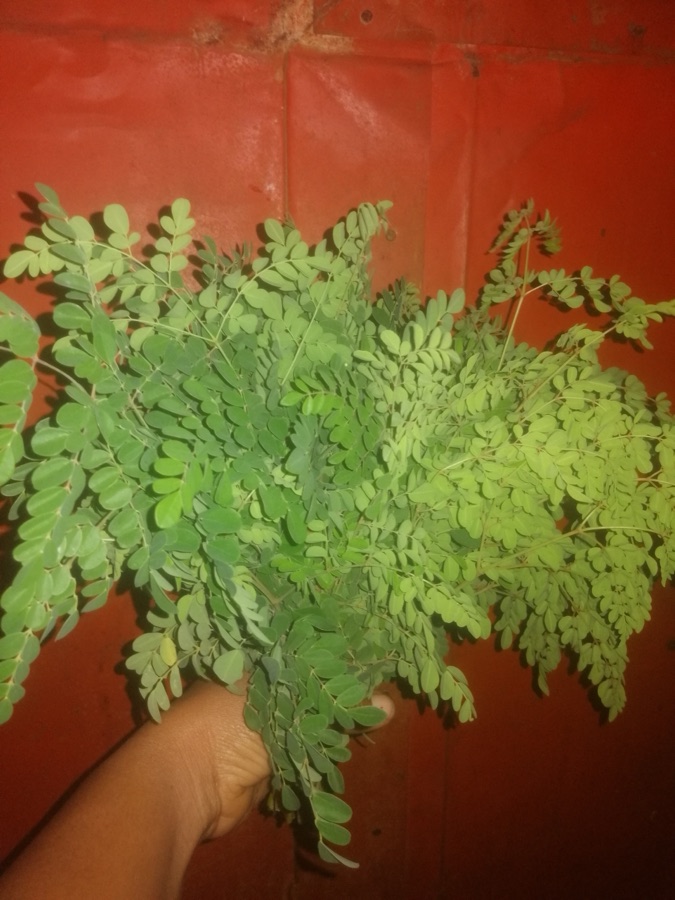
Photo: Chirocca77 · CC0 · Wikimedia Commons

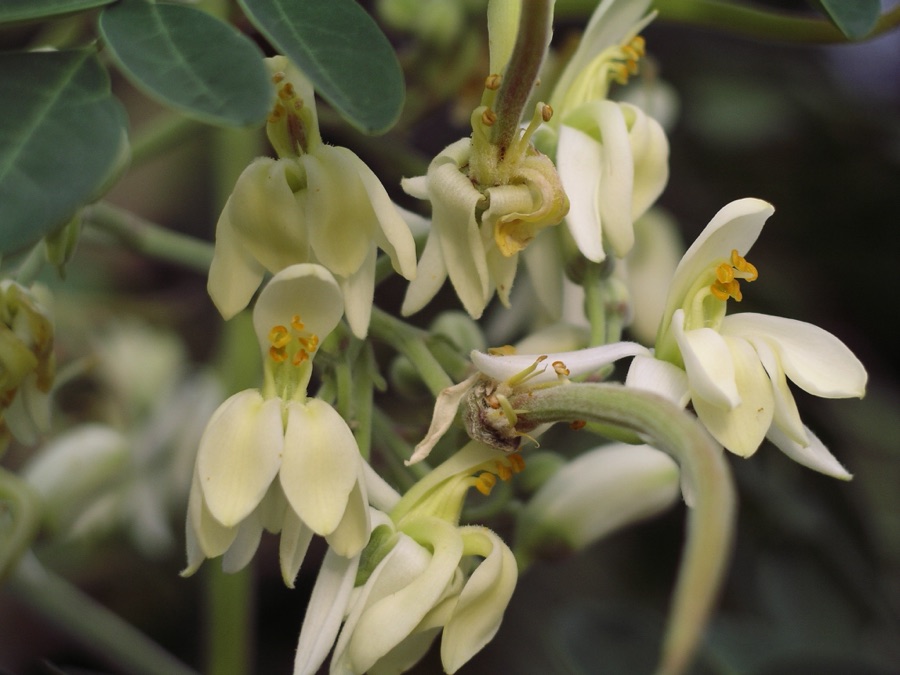
Photo: Harvey McDaniel from Naalehu, HI · CC BY 2.0 · Wikimedia Commons

Matra and anupana
AS THE CLASSICAL TEXTS AND THE API PRESCRIBE
| Twak churna | 2–4 g |
| Beeja churna | 1–3 g |
| Kwatha | 50–100 ml |
| Anupana | Ushnodaka · Madhu |
| Kala | Adhobhakta |
Root bark and seed are different drugs with different matra; the root bark of true Moringa is not the same as the commonly substituted Moringa concanensis.
Reported from Sharangadhara Samhita and the Ayurvedic Pharmacopoeia of India. Laisha states what the texts prescribe; it does not recommend. No quantity here is adjusted for a particular person — not for agni, koshtha, bala, age, pregnancy, kidney or liver function, or anything already being taken.
Pharmacopoeial standard
Ayurvedic Pharmacopoeia of India, Part I
| Marker | Glucosinolates and the isothiocyanates |
| Assay | |
| Total ash | |
| Acid-insoluble ash | |
| Alcohol-soluble extractive | |
| Water-soluble extractive | |
| Foreign matter |
Moringa oleifera. Root bark and seed differ substantially and are not interchangeable.
These are the marker and the identity test for this dravya, and they are not a test Laisha has run on anything. Laisha does not state the numeric limits here: the assay, ash and extractive figures must be read from the current edition of the Ayurvedic Pharmacopoeia of India, because a wrong limit printed here is a number a laboratory would act on. The entries in this library that DO carry figures carry them because each one was checked.
Rasapanchaka
| Rasa | KatuTikta |
| Guna | LaghuRukshaTikshna |
| Virya | Ushna |
| Vipaka | Katu |
| Prabhava | The texts single out shigru as shothahara and as acting where there is accumulation, and name it particularly for granthi and gulma. |
| Doshakarma | Kaphavatahara. Being ushna and tikshna it increases pitta. |
Katu and tikta with ushna virya and katu vipaka.
Karma and part used
These are the actions the classical texts record. They are statements about what the tradition holds, and this library does not restate them as findings about a human body.
| Upayukta anga | Mula twak (the root bark) Beeja (the seed) Patra (the leaf) Phala (the pod) |
| Why it matters | The texts use the root bark and seed as dravya. The pod and leaf are food. That distinction matters: the root bark is the strong article and the one the safety section is about, while the pod on a plate is not the same thing at all. |
Paryaya
Tikshnagandha names the sharp smell of the root, which is like horseradish and is where the English name horseradish tree comes from. Shobhanjana is the paryaya the texts use most.
Names, by language
| English | Drumstick tree |
| Sinhala | Murunga |
| Nepali | Sitalchini |
| Hindi | Sahjan |
| Kannada | Nugge |
| Tamil | Murungai |
| Telugu | Munaga |
| Malayalam | Muringa |
| Marathi | Shevga |
| Gujarati | Saragvo |
| Bengali | Sajina |
| Punjabi | Sohanjna |
| Odia | Sajana |
| Urdu | Sahajan |
Classical references
Rasa, guna, virya, vipaka and karma are recorded as the classical texts give them, with the text and section named so a student can open the book and check. Where an exact chapter and verse could not be confirmed, this library names the section rather than inventing a number.
Formulations it appears in
| Shigru Ghrita | Named for the dravya. |
| Shigrvadi Kwatha | Named for the dravya. |
| Rasnadi Kwatha | Shigru appears in some recensions. |
Adulterants and substitutes
Moringa concanensis and other Moringa species are collected as shigru. The substitution that matters is the same one as with bilva and gambhari: stem bark sold as root bark, because stem bark can be had without killing the tree. Given that the root bark carries the alkaloids described below and the stem bark carries them differently, this is not a harmless swap in either direction.
Identity
Matched live against the GBIF backbone on 28 September 2026 at 99 per cent confidence. A dravya, a vegetable and a field crop at once, and among the very few plants in this library that a household may be growing already.
A WAY TO REMEMBER IT
Moringa is from the Tamil-Malayalam murungai. Oleifera means oil-bearing: oleum + fero. The seed gives ben oil, and the Latin records it.
What the tradition holds
Shigru is described in the Bhavaprakasha Nighantu among the vegetables and is recorded as shothahara. That is what the tradition holds and where it is written down, not a finding about what the bark does in a body.
Constituents. The root bark carries alkaloids including spirochin and moringine, along with glucosinolates that give it its sharp smell. The leaf is nutritionally dense and is a quite different article.
What the evidence says
| Status | Traditional use is extensive and long recorded. Modern clinical evidence is limited. |
| Suggested | Health Canada publishes monographs covering Ayurvedic ingredients and permits specific traditional-use claims, which reflects a regulator accepting a documented tradition rather than a body of clinical trial evidence. |
| Not established | There is not enough good clinical evidence to establish an effect on any named health condition. Long traditional use is not a substitute for that evidence, and this library does not present it as one. |
| The honest gap | Almost all recent published work concerns the leaf as a food, and very little concerns the root bark the classical texts actually use. The two should not be read as one. |
Safety
This entry has to make one distinction very clearly. The pod and leaf are eaten as food across India and are not the concern. The root bark is a different matter: it carries alkaloids, it is documented as having been used to procure abortion, and it is contraindicated in pregnancy. Reports of poisoning from root bark exist. Someone reading about moringa as a nutritious leaf and then taking root bark on that basis has not taken more of the same thing — they have taken something else. Anyone on medication, pregnant, or managing a diagnosed condition should speak to a doctor or a qualified practitioner first.
| Side effects | Digestive upset Burning sensation Loose stool from the leaf in quantity |
| Contraindications | Pregnancy, as regards the root bark and seed absolutely. Breastfeeding, as regards the root bark. |
| Interactions | Antidiabetic medicines — Moringa leaf has a documented hypoglycaemic effect. Antihypertensives — additive lowering reported. Thyroid hormone — Moringa affects thyroid status in animal work. The ROOT BARK contains spirochin and is an abortifacient; it is not the leaf and is contraindicated in pregnancy. |
| Pregnancy and breastfeeding | The root bark and seed are not to be used in pregnancy in any quantity. The pod and leaf as ordinary food are long established, and medicinal quantities should still be discussed with a qualified practitioner. |
Growing it
| Climate | Tropical and subtropical, drought-hardy, fast-growing. |
| Soil | Wide range including poor, sandy and dry ground. It fails in waterlogging. |
| Planting | Grown readily from seed or from large cuttings. Bears within a year, which is unusual for a tree. |
| Harvest | Pods and leaves are picked through the season. Root bark is taken only when a tree is grubbed out, which is the honest source. |
| What is not stated | This library has not verified region-specific spacing, variety and yield figures against a named agricultural authority for every growing country, and does not state them rather than guessing. |
Grown as a crop: how to grow moringa, from sowing to harvest, in Laisha's grow guides.
Check this page
Print it and the code still works. It goes to this page and nowhere else.
What this is not
- This is a study and clinical reference for practitioners and students. The matra and anupana it records are what the classical texts and the Ayurvedic Pharmacopoeia of India PRESCRIBE — Laisha reports them, it does not recommend them. They are not a prescription for any particular person, and they are not adjusted for your age, agni, koshtha, bala, pregnancy, kidney or liver function, or anything else you are already taking. Only a qualified practitioner who has examined you can do that.
- Traditional classification is recorded as what the classical texts say, with the text and the place in it named so it can be checked. It is not restated as a finding about a human body.
- Nothing here replaces a qualified Ayurvedic practitioner or a doctor.
Sources
https://api.gbif.org/v1/species/match?name=Moringa%20oleifera%20Lam.
https://pcimh.gov.in/
https://www.canada.ca/en/health-canada/services/drugs-health-products/natural-non-prescription/applications-submissions/product-licensing/compendium-monographs.html
https://niimh.nic.in/ebooks/esharangadhara/
https://pcimh.gov.in/