 Laisha
AI Operating System for Agriculture
Enter Laisha
Laisha
AI Operating System for Agriculture
Enter Laisha
Moringa oleifera · Also called: Drumstick tree, Horseradish tree, Ben oil tree, Murungai, Munagakaya, Sahjan, Shajna, Malunggay
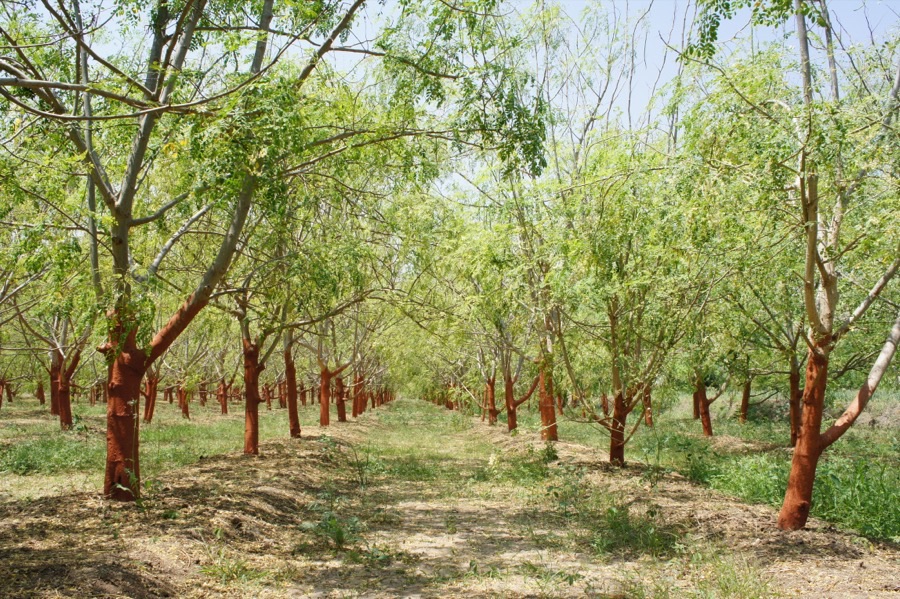
Photo: Crops for the Future, CC BY-SA 3.0 (Wikimedia Commons)
Moringa grows faster than almost any tree a smallholder can plant, on poor dry ground where little else will, and it gives food within months rather than years. The leaves are a vegetable and, dried and powdered, a high-value product traded internationally. The young pods are the drumsticks sold across South Asia. The seed presses an oil, and the leftover cake is used to settle muddy water. India produces by far the most pods, and the tree is now grown across Africa, South and South East Asia, and tropical Latin America, often as a hedge or a backyard tree rather than a field crop. For a household on dry land, few plants return as much for as little.
If you see: A tall thin tree three or four metres high with a bare trunk and all its leaves and pods out of reach at the very top.
It likely means: It was never cut back. Moringa grows straight up unless it is stopped, and a tree left to do that puts its whole harvest where nobody can pick it.
Do this: Cut the growing tip out when a young tree reaches about a metre, which forces it to branch.
If you see: A healthy fast-growing tree that yellows, wilts and dies within a few weeks, usually after heavy rain, with soft dark roots when dug up.
It likely means: Root rot from waterlogged ground. This is the commonest way moringa is killed, and it kills a tree that stood a three-month drought without complaint.
Do this: Plant only on well-drained ground, and on mounds or ridges where the soil is heavy.
If you see: Dried leaf powder that has come out dull yellow-brown and smells of hay instead of being bright green.
It likely means: It was dried in the sun, or dried too slowly in damp air. Sunlight destroys much of what makes the powder valuable, and the colour is the visible evidence.
Do this: Dry in deep shade with plenty of moving air, never in direct sun.
If you see: Pods that are stringy and woody when cooked, with hard seeds inside, and nobody wants to eat them.
It likely means: They were picked too late. Moringa pods go fibrous quickly once the seeds inside begin to swell.
Do this: Pick pods while they are still slim and green and snap cleanly when bent.
If you see: Young trees stripped of leaves within days, with hairy caterpillars clustered on the branches.
It likely means: Hairy caterpillars, which can clear a small moringa very fast. On an established tree it is a setback; on a seedling it can be fatal.
Do this: Walk the trees weekly and pick caterpillars off by hand, wearing gloves because the hairs irritate skin.
If you see: A vigorous leafy tree that flowers well but sets very few pods.
It likely means: Usually too few insects visiting the flowers, or a tree being cut so often for leaves that it never carries a pod crop.
Do this: Never spray anything while the tree is in flower, since insects carry the flower dust here.
If you see: Trees leaning badly or blown flat after a storm, often snapping at the base, especially ones grown from cuttings.
It likely means: Shallow roots and brittle wood. A tree grown from a cutting has no taproot, and moringa wood is soft.
Do this: Grow from seed rather than cuttings where wind is a regular problem, since a seedling makes a deep taproot.
Growing the crop is only part of the job. The last part is knowing what a normal harvest looks like where you are, and knowing what your leaves, pods or seed are worth before you agree a price with anybody.
If you forget every other page of this guide, keep these lines. They are the whole crop, in order, short enough to carry in your head.
What does a moringa planting look like, and why are the trees so short?
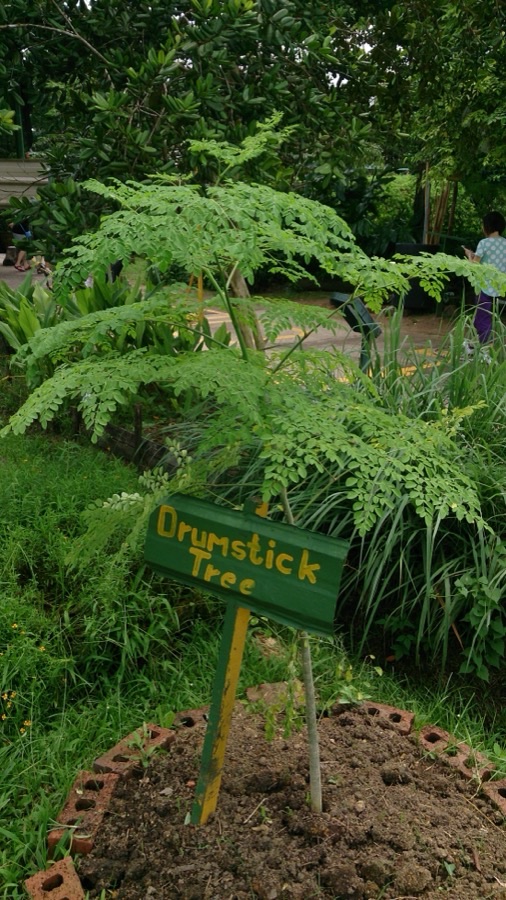
What do the leaves look like on the plant?
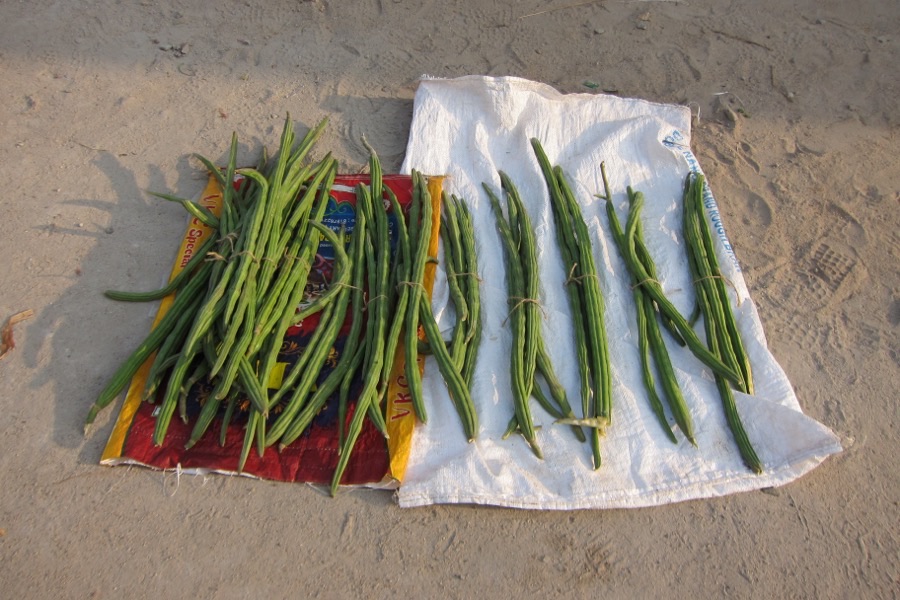
When is a pod ready to pick, and how do I know it is not too late?
This plant is also a dravya of Ayurveda. Shigru in Dravyaguna: its botanical identity, rasa, virya and karma, the part used, the dose the texts give, and its safety record.