Patra
पत्र
Cinnamomum tamala (Buch.-Ham.) T.Nees & C.H.Eberm.
Lauraceae · Cinnamomum
Benefits & side effects
TRADITIONAL VIEW, WITH SAFETY LIMITS
Hindi name: Tejpatta
What the texts say Patra does
- Deepana — kindles digestion (appetiser)
- Pachana — digests ama (digestive)
- Kaphaghna — pacifies kapha
- Mukhashodhana — cleans the mouth
- Hridya — good for the heart
What the evidence says. Traditional use is extensive and long recorded. Modern clinical evidence is limited.
Side effects and limits
- Digestive irritation in quantity
Avoid or ask first: No absolute contraindication is documented here. This is written deliberately rather than left blank.
A traditional classification, not a recommendation. The full safety record is below.
Stands in 4 groups
- Sheetaprashamana — Allaying cold (named there as Patra)
- Eladi — Vata and Kapha, poison, and itching (named there as Patra)
- Chaturjata — The four aromatics (named there as Patra)
- Trijata — The three aromatics (named there as Patra)
A Samhita can only be read forwards, from the group to its members. This is the same list read backwards.
Photographs
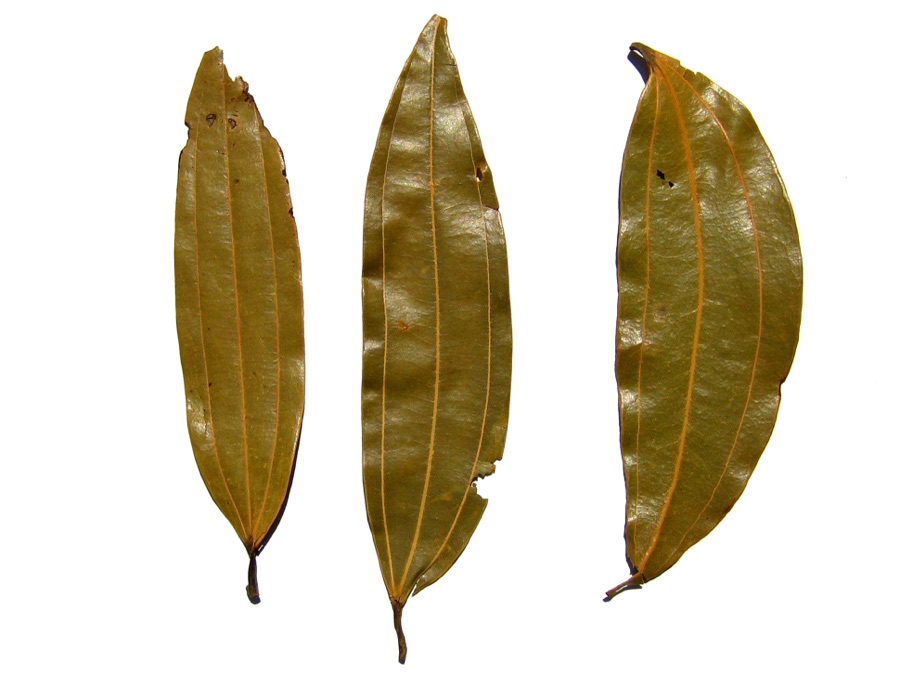
Photo: Sonja Pauen · Public domain · Wikimedia Commons

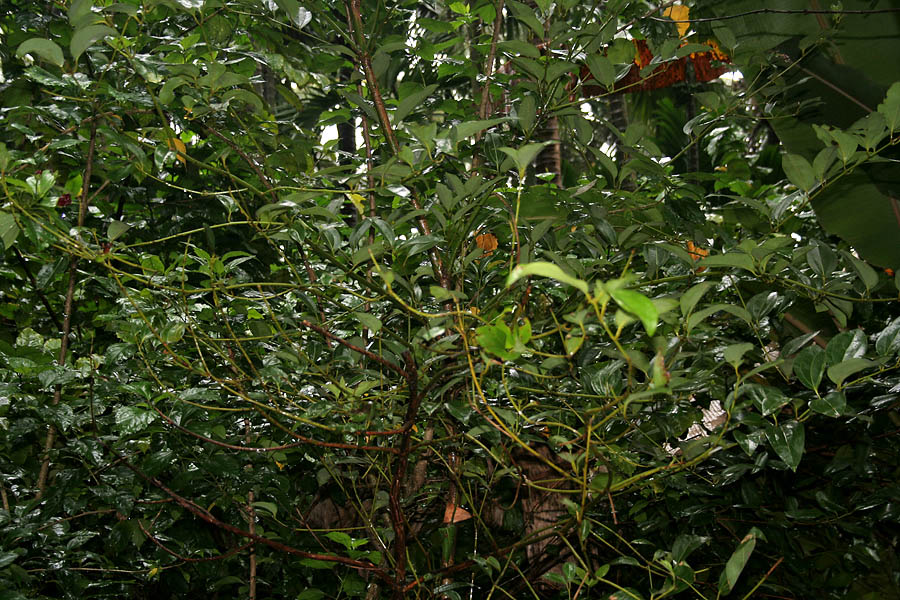
Photo: J.M.Garg · CC BY 3.0 · Wikimedia Commons

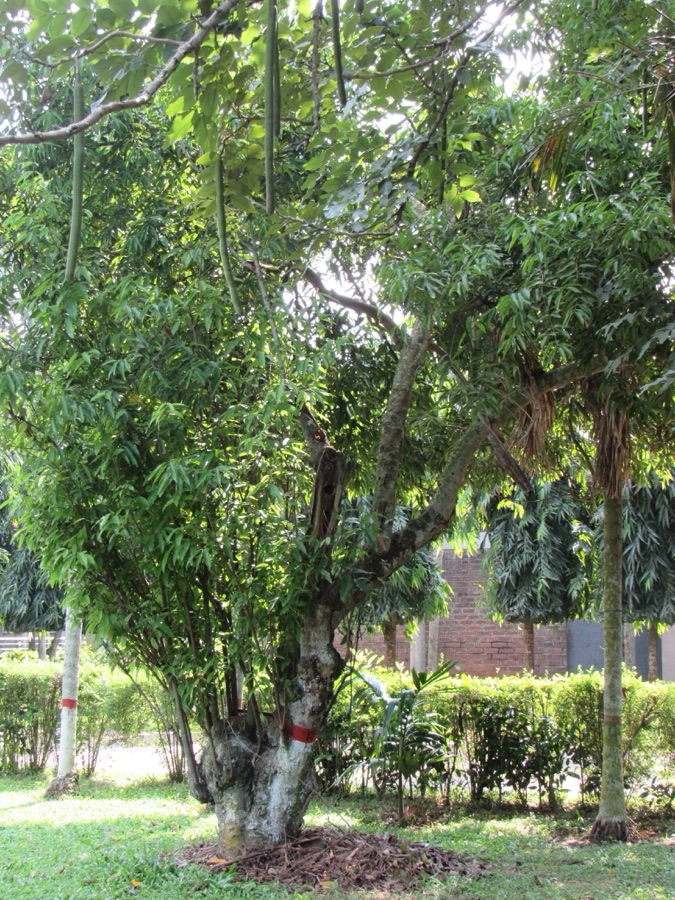
Photo: Afifa Afrin · CC BY-SA 3.0 · Wikimedia Commons

Matra and anupana
AS THE CLASSICAL TEXTS AND THE API PRESCRIBE
| Churna | 1–3 g |
| Anupana | Madhu · Ushnodaka |
| Kala | Adhobhakta |
One of the Trijata and Chaturjata groups with twak and ela.
Reported from Sharangadhara Samhita and the Ayurvedic Pharmacopoeia of India. Laisha states what the texts prescribe; it does not recommend. No quantity here is adjusted for a particular person — not for agni, koshtha, bala, age, pregnancy, kidney or liver function, or anything already being taken.
Rasapanchaka
| Rasa | KatuMadhura |
| Guna | LaghuTikshna |
| Virya | Ushna |
| Vipaka | Katu |
| Prabhava | Grouped with the aromatics as one of the four of Chaturjata, and the texts treat the four as acting together rather than singling this one out. |
| Doshakarma | Kaphavatahara. Being ushna it increases pitta. |
Katu with madhura, ushna virya and katu vipaka.
Karma and part used
These are the actions the classical texts record. They are statements about what the tradition holds, and this library does not restate them as findings about a human body.
| Upayukta anga | Patra (the leaf) |
| Why it matters | The dried leaf is the dravya. It is recognised by three prominent veins running the length of the leaf from the base, which Laurus nobilis does not have. |
Paryaya
The bare name Patra — simply leaf — is what the classical formulations use, and a student is expected to know that in Chaturjata and in Sitopaladi, Patra means this leaf and no other.
Names, by language
| English | Indian bay leaf |
| Sinhala | Kurundu kola |
| Nepali | Tejpat |
| Hindi | Tejpatta |
| Kannada | Dalchini ele |
| Tamil | Talisapatram |
| Telugu | Akupatri |
| Malayalam | Vazhanayila |
| Marathi | Tamalpatra |
| Gujarati | Tamalpatra |
| Bengali | Tejpata |
| Punjabi | Tajpat |
| Odia | Tejapatra |
| Urdu | Sazaj hindi |
Classical references
Rasa, guna, virya, vipaka and karma are recorded as the classical texts give them, with the text and section named so a student can open the book and check. Where an exact chapter and verse could not be confirmed, this library names the section rather than inventing a number.
Formulations it appears in
| Chaturjata Churna | One of the four aromatics, with ela, twak, patra and nagakeshara. |
| Sitopaladi Churna | Among the dravya of the formulation. |
| Chyawanprash | Among the dravya of the formulation. |
| Eladi Churna | Among the dravya of the formulation. |
Adulterants and substitutes
Laurus nobilis, the European bay, is sold as tejpatra in cities and is a different genus with a different aroma. The three-veined leaf is the test and it is easy. Leaves of other Cinnamomum species are also collected, and leaves that have lost their aroma with age are bulked in with fresh.
Identity
Matched live against the GBIF backbone on 28 September 2026 at 99 per cent confidence. This is not the bay leaf of European cooking, which is Laurus nobilis, a different genus — the two are sold under the same English name and are not interchangeable in a formulation.
A WAY TO REMEMBER IT
Cinnamomum, from kinnamomon. Tamala is the Sanskrit tamala Latinised. Teja-patra means sharp leaf, and the Latin keeps the Sanskrit whole.
What the tradition holds
Patra is named among the four aromatics of Chaturjata in the Bhavaprakasha Nighantu. That is what the tradition holds and where it is written down, not a finding about what the leaf does in a body.
Constituents. The leaf carries an essential oil whose composition varies by population — some chemotypes are rich in eugenol, others in cinnamaldehyde or linalool. Two honest samples can smell quite different.
What the evidence says
| Status | Traditional use is extensive and long recorded. Modern clinical evidence is limited. |
| Suggested | Health Canada publishes monographs covering Ayurvedic ingredients and permits specific traditional-use claims, which reflects a regulator accepting a documented tradition rather than a body of clinical trial evidence. |
| Not established | There is not enough good clinical evidence to establish an effect on any named health condition. Long traditional use is not a substitute for that evidence, and this library does not present it as one. |
| The honest gap | The chemotype variation above means published work on one population may not describe another. |
Safety
Used daily as a cooking spice and no serious harm is documented at culinary use. Whole leaves are not eaten — they are removed after cooking — because a stiff leaf swallowed whole can injure the gut, which is a practical caution rather than a pharmacological one. Anyone on medication, pregnant, or managing a diagnosed condition should speak to a doctor or a qualified practitioner first.
| Side effects | Digestive irritation in quantity |
| Contraindications | No absolute contraindication is documented here. This is written deliberately rather than left blank. |
| Interactions | Antidiabetic medicines — glucose-lowering effect reported. Sedatives — additive sedation reported in animal work. |
| Pregnancy and breastfeeding | Ordinary culinary use is long established. Medicinal quantities in pregnancy or breastfeeding should be discussed with a qualified practitioner first. |
Growing it
| Climate | Subtropical Himalayan foothills and north-east India. |
| Soil | Moist, well-drained hill ground. |
| Planting | A tree, raised from seed. |
| Harvest | Mature leaves are picked and dried in shade so the oil is kept. |
| What is not stated | This library has not verified region-specific spacing, variety and yield figures against a named agricultural authority for every growing country, and does not state them rather than guessing. |
Check this page
Print it and the code still works. It goes to this page and nowhere else.
What this is not
- This is a study and clinical reference for practitioners and students. The matra and anupana it records are what the classical texts and the Ayurvedic Pharmacopoeia of India PRESCRIBE — Laisha reports them, it does not recommend them. They are not a prescription for any particular person, and they are not adjusted for your age, agni, koshtha, bala, pregnancy, kidney or liver function, or anything else you are already taking. Only a qualified practitioner who has examined you can do that.
- Traditional classification is recorded as what the classical texts say, with the text and the place in it named so it can be checked. It is not restated as a finding about a human body.
- Nothing here replaces a qualified Ayurvedic practitioner or a doctor.
Sources
https://api.gbif.org/v1/species/match?name=Cinnamomum%20tamala
https://pcimh.gov.in/
https://www.canada.ca/en/health-canada/services/drugs-health-products/natural-non-prescription/applications-submissions/product-licensing/compendium-monographs.html
https://niimh.nic.in/ebooks/esharangadhara/