 Laisha
AI Operating System for Agriculture
Enter Laisha
Laisha
AI Operating System for Agriculture
Enter Laisha
Trachyspermum ammi · Also called: Carom seed, Ajowan, Bishop's weed, Omam, Ayamodakam, Vaamu, Joan, Nankhah
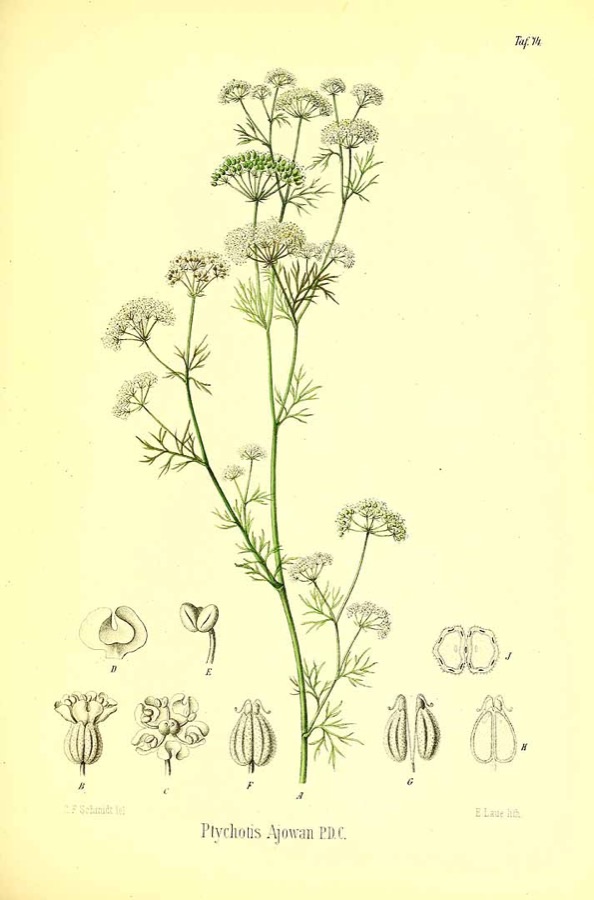
Photo: C.F. Schmidt, Public domain (Wikimedia Commons)
Ajwain is a small, fast, undemanding winter crop that produces one of the most concentrated flavours in the spice trade. The seed is tiny and looks unremarkable, and a pinch of it will carry a whole dish. That concentration is not just a kitchen fact: ajwain is the world's main plant source of thymol, the substance that gives thyme its smell, and a serious share of the crop is distilled for it rather than sold whole. India grows most of it, chiefly in Rajasthan, Gujarat and Madhya Pradesh, with Iran, Afghanistan and Egypt also producing. For a smallholder it fits neatly into a cool dry season, asks for very little water, and produces a light crop that is cheap to carry and keeps for years.
If you see: A white powdery coating spreading over leaves, stems and flower heads, with the plants later going yellow and the seed shrivelled.
It likely means: Powdery mildew. It is the main disease of ajwain and the main reason crops fail, and it hits hardest right when the crop is flowering and filling.
Do this: Thin the crop properly and keep the rows open so air moves through it.
If you see: Lush green plants that look magnificent, fall over, and then set very little seed.
It likely means: Too much water and too much feeding. This is a crop of dry country and kindness harms it.
Do this: Water sparingly, and treat every irrigation as a decision rather than a routine.
If you see: Seed all over the ground under the plants, and heads that are nearly empty when cut.
It likely means: The crop was left too long. Ripe heads shatter, and with a seed this small the loss is almost invisible until you weigh the harvest.
Do this: Check the crop daily once the first heads begin to turn.
If you see: Much less seed in the bag than the crop looked like it should have given, after threshing and winnowing.
It likely means: The seed is extremely light, and careless winnowing blows a great deal of it out with the chaff.
Do this: Winnow in a light breeze rather than a strong wind.
If you see: Clean-looking seed that a buyer says is weak, or that fails a strength test for distilling.
It likely means: Usually drying in strong sun, or storing warm, damp or in an open container. The substance that is being paid for is volatile and leaves.
Do this: Dry the cleaned seed in shade rather than strong direct sun.
If you see: A lot rejected because the buyer says it is not ajwain, or a sown crop that came up looking like something else.
It likely means: The seed was sold under a shared common name. Bishop's weed, carom and several other names cover more than one plant.
Do this: Buy planting seed by the botanical name, Trachyspermum ammi, not by a common name.
Growing the crop is only part of the job. The last part is knowing what a normal harvest looks like where you are, and knowing what your ajwain is worth before you agree a price with anybody.
If you forget every other page of this guide, keep these lines. They are the whole crop, in order, short enough to carry in your head.
What does the whole plant look like?
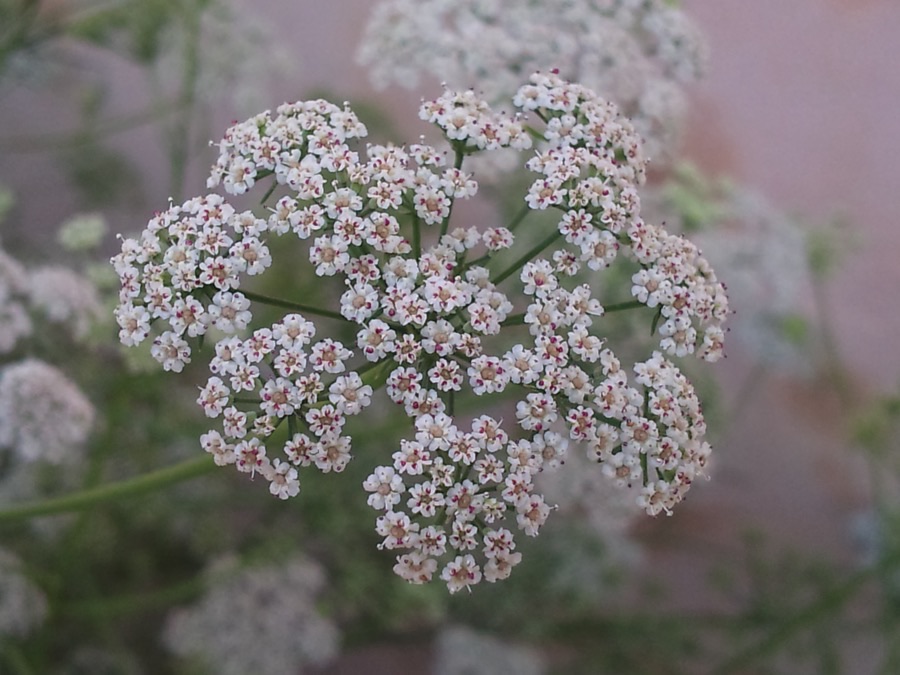
What do the flowers look like?
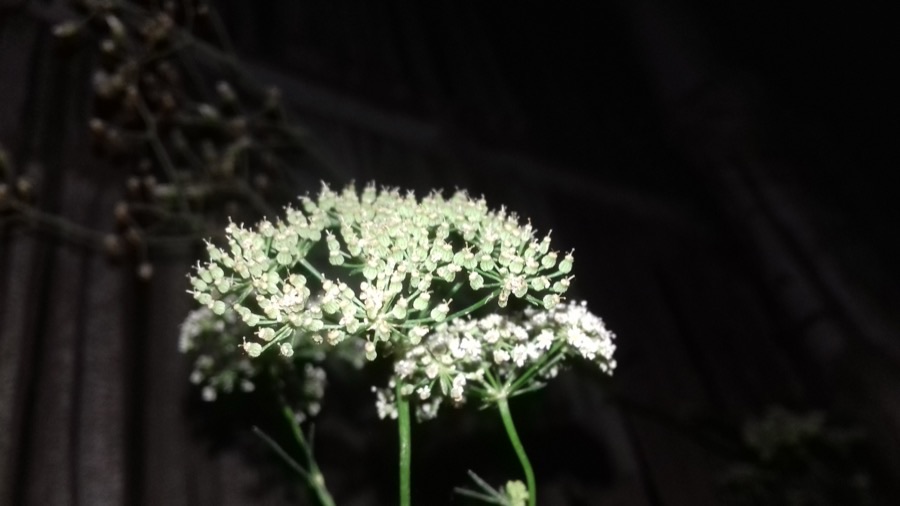
What does the crop look like in flower in the field?
This plant is also a dravya of Ayurveda. Yavani in Dravyaguna: its botanical identity, rasa, virya and karma, the part used, the dose the texts give, and its safety record.