 Laisha
AI Operating System for Agriculture
Enter Laisha
Laisha
AI Operating System for Agriculture
Enter Laisha
Elettaria cardamomum · Also called: Green cardamom, True cardamom, Small cardamom, Elaichi, Elakkai, Yelakki, Ensal, Cardamomo
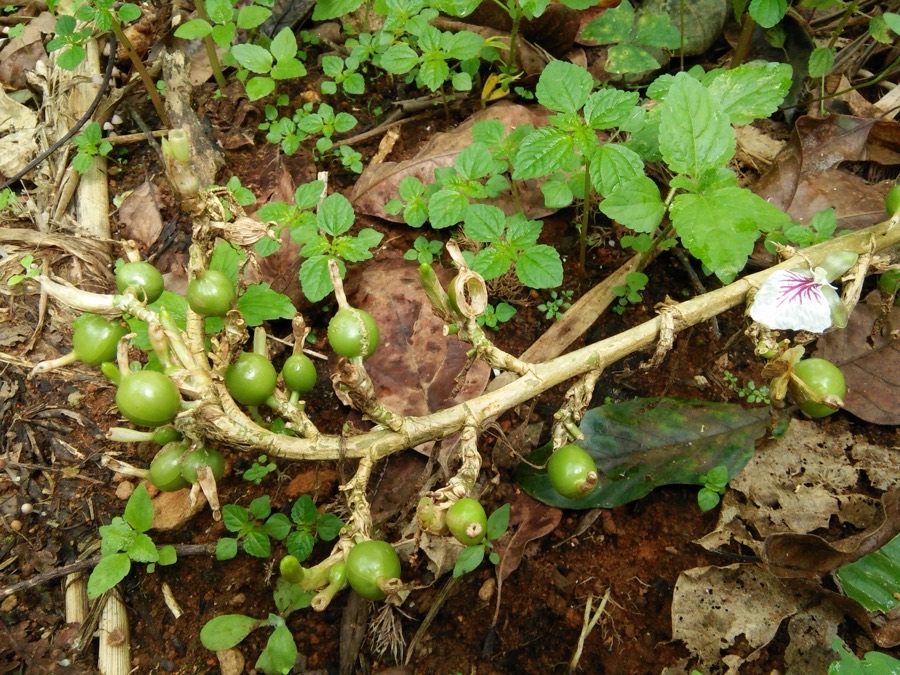
Photo: T. R. Shankar Raman, CC BY-SA 3.0 (Wikimedia Commons)
Cardamom is among the most valuable spices in the world, after saffron and vanilla, and it is grown almost entirely by smallholders on hill slopes under forest shade. Guatemala now produces the most, with India, Sri Lanka, Tanzania and Papua New Guinea also growing it. It suits a farm that already has trees: the plant wants shade, so it uses land under a canopy rather than replacing it, and a planting crops for ten to fifteen years. Its two peculiarities are worth knowing before anything else. The flowers and capsules are not up in the foliage at all but on long stalks trailing along the ground, so every step taken in a plantation can cost fruit. And the price is set mostly by the green colour of the dried capsule, which is decided in the drying shed rather than in the field.
If you see: Dried capsules that are pale straw or yellowish rather than bright green, and a buyer offering a fraction of the price you expected.
It likely means: They were dried too hot or in full sun. The green colour is what the price is based on and heat destroys it.
Do this: Dry with gentle warmth over a day or more rather than in strong sun or high heat.
If you see: Pale green stripes running along the length of the youngest leaves, clumps becoming stunted and thin, and yield falling away over two or three seasons.
It likely means: The mosaic virus known as katte. It is spread by aphids and in planting material, and it cannot be cured.
Do this: Dig out and destroy the whole affected clump including the rhizome, rather than cutting the shoots off.
If you see: Capsules going brown and soft and dropping off the panicle during prolonged heavy rain, often with the panicle rotting as well.
It likely means: Capsule rot, a fungal disease that takes hold in still, wet, heavily shaded conditions during the monsoon.
Do this: Thin the shade so that light and air reach the ground around the clumps.
If you see: Broken panicles and crushed young capsules on the ground around the clumps, especially along the paths people use.
It likely means: The crop was walked on. Cardamom flowers and fruits on stalks that trail along the soil, which surprises almost everybody the first season.
Do this: Mark clear paths through the planting and keep everybody on them.
If you see: Silvery or corky scarring on the skin of the capsules, with the seeds inside perfectly sound, and a lower grade offered.
It likely means: Thrips feeding on the young capsules. They damage only the skin, but the skin is what the grade is judged on.
Do this: Inspect young capsules regularly rather than waiting until picking.
If you see: Leaves scorched pale and brown at the tips and edges, plants small and yellowish, and very few panicles.
It likely means: Too little shade. Cardamom is a plant of the forest floor and does not tolerate full sun.
Do this: Plant or retain canopy trees to give roughly half shade over the ground.
If you see: Whole shoots yellowing and collapsing, pulling out easily with a soft rotted base, usually in the wettest part of the planting.
It likely means: Rot at the rhizome, which is a drainage problem before it is a disease problem.
Do this: Cut and keep open drainage channels across the slope before the rains.
Growing the crop is only part of the job. The last part is knowing what a normal harvest looks like where you are, and knowing what your capsules are worth before you agree a price with anybody.
If you forget every other page of this guide, keep these lines. They are the whole crop, in order, short enough to carry in your head.
Why are the flowers and fruit lying on the ground instead of up on the plant?
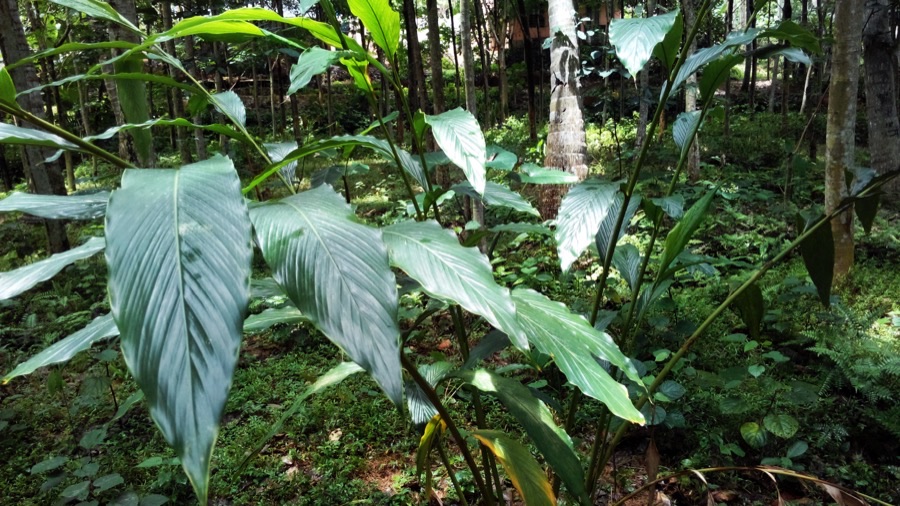
How much shade does this plant actually need?
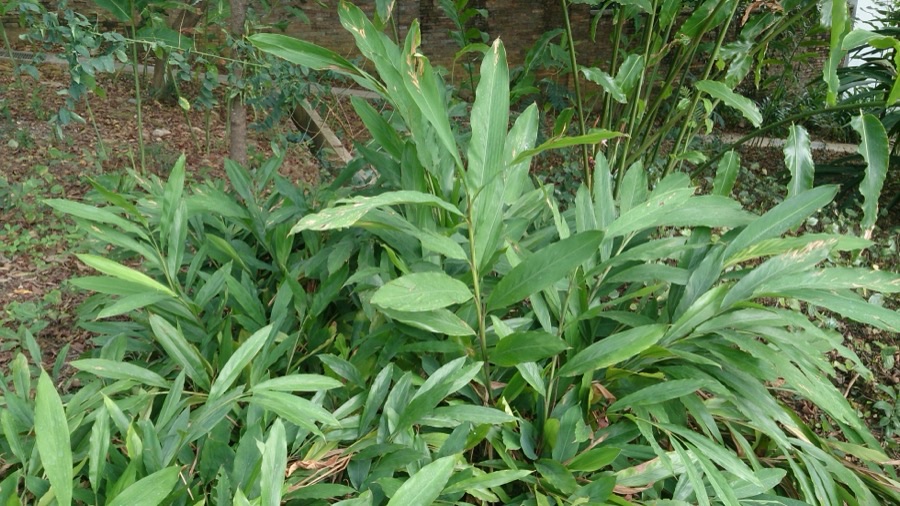
What is the plant itself, if these leafy stems are not real stems?
This plant is also a dravya of Ayurveda. Ela in Dravyaguna: its botanical identity, rasa, virya and karma, the part used, the dose the texts give, and its safety record.