Ela
एला
Elettaria cardamomum (L.) Maton
Zingiberaceae · Elettaria
Benefits & side effects
TRADITIONAL VIEW, WITH SAFETY LIMITS
Hindi name: Chhoti elaichi
What the texts say Ela does
- Deepana — kindles digestion (appetiser)
- Hridya — good for the heart
- Mutrala — diuretic
- Chhardinigrahana — relieves vomiting (anti-emetic)
- Mukhashodhana — cleans the mouth
What the evidence says. Traditional use is extensive and long recorded. Modern clinical evidence is limited.
Side effects and limits
- Digestive upset in quantity
Avoid or ask first: Gallstones — caution is traditionally advised.
A traditional classification, not a recommendation. The full safety record is below.
Stands in 8 groups
- Hikkanigrahana — Arresting hiccough
- Shwasahara — Relieving breathlessness
- Sheetaprashamana — Allaying cold
- Vishaghna — Counteracting poison (named there as Sukshmaila)
- Pippalyadi — Agni, Kapha, and the digestive disorders
- Eladi — Vata and Kapha, poison, and itching
- Chaturjata — The four aromatics
- Trijata — The three aromatics
A Samhita can only be read forwards, from the group to its members. This is the same list read backwards.
Photographs
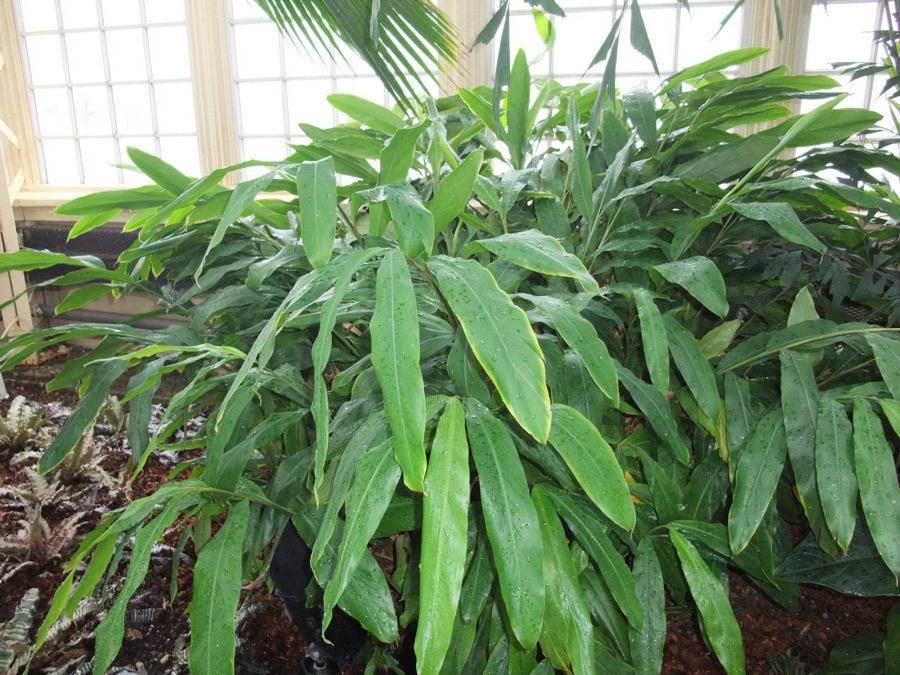
Photo: Chhe (talk) · Public domain · Wikimedia Commons

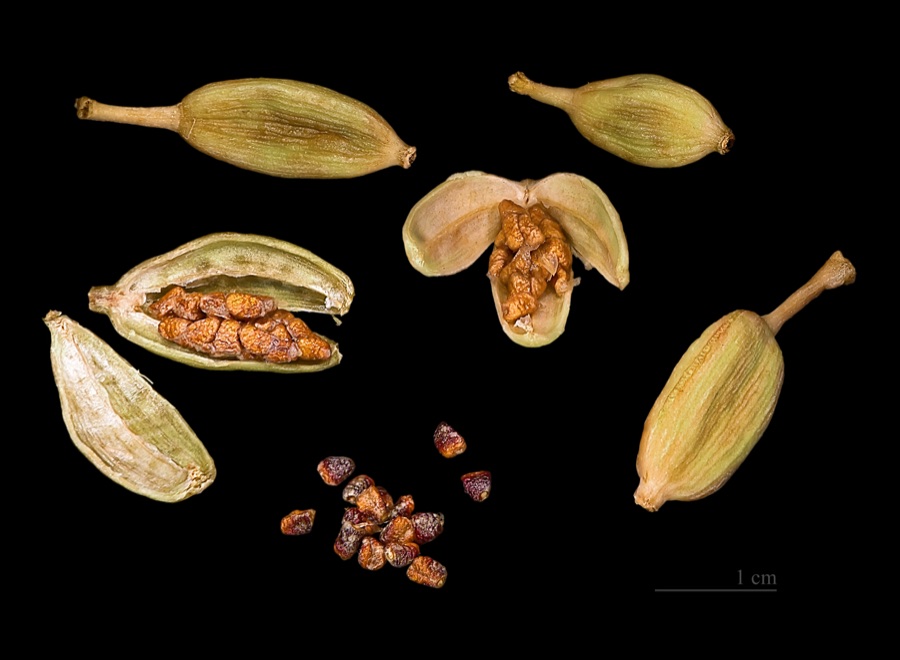
Photo: Didier Descouens · CC BY-SA 4.0 · Wikimedia Commons

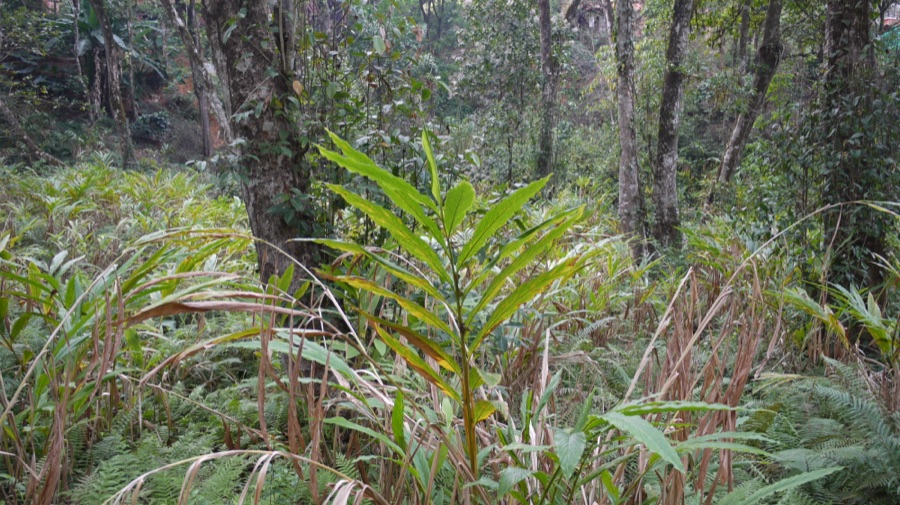
Photo: Dinesh Valke from Thane, India · CC BY-SA 2.0 · Wikimedia Commons

Matra and anupana
AS THE CLASSICAL TEXTS AND THE API PRESCRIBE
| Churna | 0.5–1 g |
| Anupana | Madhu · Ushnodaka |
| Kala | Adhobhakta |
Sukshma Ela is the drug; Brihat Ela (Amomum subulatum) is a different plant.
Reported from Sharangadhara Samhita and the Ayurvedic Pharmacopoeia of India. Laisha states what the texts prescribe; it does not recommend. No quantity here is adjusted for a particular person — not for agni, koshtha, bala, age, pregnancy, kidney or liver function, or anything already being taken.
Rasapanchaka
| Rasa | KatuMadhura |
| Guna | LaghuRuksha |
| Virya | Sheeta |
| Vipaka | Madhura |
| Prabhava | The texts single out ela as acting on the urinary passage and on nausea, and treat its sheeta virya despite a katu rasa as its distinctive feature. |
| Doshakarma | Kaphavatahara. Being sheeta it does not aggravate pitta as the other aromatics do. |
Katu with madhura, and — unusually among the aromatics — sheeta virya. That is the detail that separates it from lavanga and twak in an examination.
Karma and part used
These are the actions the classical texts record. They are statements about what the tradition holds, and this library does not restate them as findings about a human body.
| Upayukta anga | Beeja (the seed) Phala (the capsule) |
| Why it matters | The seed inside the capsule is the dravya. The capsule is kept whole until use because the aroma leaves ground cardamom quickly, and a powder that has stood is a weaker article than the texts describe. |
Paryaya
Sukshmaila, the small ela, exists to distinguish it from Brihat Ela and is the paryaya a student should reach for when precision matters.
Names, by language
| English | Green cardamom |
| Sinhala | Enasal |
| Nepali | Sukumel |
| Hindi | Chhoti elaichi |
| Kannada | Yalakki |
| Tamil | Elakkai |
| Telugu | Yelakulu |
| Malayalam | Elam |
| Marathi | Velchi |
| Gujarati | Elchi |
| Bengali | Elach |
| Punjabi | Illaichi |
| Odia | Alaichi |
| Urdu | Heel khurd |
Classical references
Rasa, guna, virya, vipaka and karma are recorded as the classical texts give them, with the text and section named so a student can open the book and check. Where an exact chapter and verse could not be confirmed, this library names the section rather than inventing a number.
Formulations it appears in
| Chaturjata Churna | One of the four aromatics, with ela, twak, patra and nagakeshara. |
| Sitopaladi Churna | Among the dravya of the formulation. |
| Elladi Churna | Named for the dravya. |
| Chyawanprash | Among the dravya of the formulation. |
Adulterants and substitutes
Brihat Ela is cheaper and is substituted for Sukshma Ela, and because the texts assign them different properties this is a substitution that changes the formulation and not only the price. Spent capsules — those whose oil has been distilled off — are dried and sold as whole cardamom, and they look right and smell of almost nothing.
Identity
Matched live against the GBIF backbone on 28 September 2026 at 99 per cent confidence. This is Sukshma Ela, the small cardamom. Brihat Ela, the large one, is Amomum subulatum, a different genus, and the texts treat them as two dravya with different properties.
A WAY TO REMEMBER IT
Elettaria is from the Malayalam elettari. Cardamomum is kardamon + amomon, two old Greek spice names welded together.
What the tradition holds
Ela is described in the Bhavaprakasha Nighantu among the aromatics and is recorded as hridya and as acting on nausea. That is what the tradition holds and where it is written down, not a finding about what the seed does in a body.
Constituents. The seed carries an essential oil rich in alpha-terpinyl acetate and cineole. The oil is volatile, which is the chemical reason behind the tradition's insistence on keeping the capsule whole.
What the evidence says
| Status | Traditional use is extensive and long recorded. Modern clinical evidence is limited. |
| Suggested | Health Canada publishes monographs covering Ayurvedic ingredients and permits specific traditional-use claims, which reflects a regulator accepting a documented tradition rather than a body of clinical trial evidence. |
| Not established | There is not enough good clinical evidence to establish an effect on any named health condition. Long traditional use is not a substitute for that evidence, and this library does not present it as one. |
| The honest gap | Published work uses oil or extract of varying age, and a volatile oil that has stood is not the article that was studied. |
Safety
Eaten daily as a spice across India and beyond, and no serious harm is documented at culinary use. Anyone with gallstones should be aware that cardamom is traditionally cautioned against in that condition. Anyone on medication, pregnant, or managing a diagnosed condition should speak to a doctor or a qualified practitioner first.
| Side effects | Digestive upset in quantity |
| Contraindications | Gallstones — caution is traditionally advised. |
| Interactions | Antiplatelets — mild antiplatelet activity reported. Antihypertensives — modest additive lowering reported in trials. |
| Pregnancy and breastfeeding | Ordinary culinary use is long established. Medicinal quantities in pregnancy or breastfeeding should be discussed with a qualified practitioner first. |
Growing it
| Climate | Wet tropical, under shade, on hill slopes of the Western Ghats. |
| Soil | Deep, humus-rich, well-drained forest loam. |
| Planting | A rhizomatous perennial grown under a shade canopy, from suckers or seed. |
| Harvest | Capsules are picked just before they split, then cured slowly so the green colour is kept. |
| What is not stated | This library has not verified region-specific spacing, variety and yield figures against a named agricultural authority for every growing country, and does not state them rather than guessing. |
Grown as a crop: how to grow cardamom, from sowing to harvest, in Laisha's grow guides.
Check this page
Print it and the code still works. It goes to this page and nowhere else.
What this is not
- This is a study and clinical reference for practitioners and students. The matra and anupana it records are what the classical texts and the Ayurvedic Pharmacopoeia of India PRESCRIBE — Laisha reports them, it does not recommend them. They are not a prescription for any particular person, and they are not adjusted for your age, agni, koshtha, bala, pregnancy, kidney or liver function, or anything else you are already taking. Only a qualified practitioner who has examined you can do that.
- Traditional classification is recorded as what the classical texts say, with the text and the place in it named so it can be checked. It is not restated as a finding about a human body.
- Nothing here replaces a qualified Ayurvedic practitioner or a doctor.
Sources
https://api.gbif.org/v1/species/match?name=Elettaria%20cardamomum
https://pcimh.gov.in/
https://www.canada.ca/en/health-canada/services/drugs-health-products/natural-non-prescription/applications-submissions/product-licensing/compendium-monographs.html
https://niimh.nic.in/ebooks/esharangadhara/