Apium graveolens · Also called: Stalk celery, Leaf celery, Cutting celery, Chinese celery, Smallage, Ajmoda, Céleri, Sellerie
Photo: ליזי שאנן (PikiWiki Israel), CC BY 2.5 (Wikimedia Commons)
Celery is a marsh plant that people have persuaded to live in a field, and almost everything difficult about it follows from that one fact. It wants water constantly and it will not forgive a dry week, so it is a crop for growers who have reliable irrigation and are willing to use it. In return it is a high-value vegetable with a long selling season, and in much of Asia the leaf types are grown as a herb on very small plots and sold by the bunch all year. It is worth being honest at the start: this is one of the harder vegetables in this library. The seed is slow and fussy, the plant bolts if it is chilled when young, and the stalks go stringy at the first check in growth. Growers who succeed with it are usually the ones who understood before they sowed that it cannot be left alone.
Growing Celery, Stage by Stage
1. Get the land ready — Rich, deep, moisture-holding ground near water you can actually use.
2. Sow the seed in a nursery — Tiny seed, sown on the surface, kept damp and warm for a long time.
3. Transplant into the field — Move them once the cold has gone, and never before.
4. Weed, water and feed — Water is not a task here. It is the whole job.
5. Watch for trouble — Spots on the leaves, tunnels in the leaves, and a dead heart from bad watering.
6. Harvest the heads — Cut the whole plant at the base, once, with a sharp knife.
7. Keep it cold and sell it — This crop is mostly water, and it starts losing it the moment it is cut.
Common Problems & Troubleshooting
If you see: Stalks that are tough, stringy, hollow in the middle and bitter to eat.
It likely means: The crop was checked, almost always by going short of water. Celery is a marsh plant and it never recovers its quality after a dry spell.
Do this: Water often and never let the soil dry out at any stage.
If you see: A tall flower stalk rising out of the middle of the plant instead of a head of ribs.
It likely means: The young plant was chilled. A spell of cold weather on a seedling tells the plant it has been through a winter, so it flowers instead of growing.
Do this: Do not transplant until the weather is reliably warm.
If you see: Plants that look healthy outside but whose centre has gone brown or black and soft when cut open.
It likely means: Blackheart. It is a calcium problem in the growing point, but the cause is almost always uneven watering rather than a lack of calcium in the soil.
Do this: Water evenly and often rather than letting the soil swing between dry and flooded.
If you see: Small brown spots on the leaves and stalks, each with tiny black dots in it, spreading in wet weather.
It likely means: Celery leaf spot. It is carried on the seed, which is why it can appear in a field that has never grown celery before.
Do this: Buy seed from a reliable supplier, since this disease travels on the seed itself.
If you see: Pale winding blisters and tunnels inside the leaves, with a small grub at the end of each.
It likely means: Leaf miner. The grub lives between the two surfaces of the leaf, which is why spraying the outside often does nothing.
Do this: Squash the grubs inside the tunnels between finger and thumb.
If you see: Heads that were crisp when cut and are limp and rubbery by the time they are sold.
It likely means: Heat and dry air. Celery is mostly water and it loses it very quickly once the plant is cut off from its roots.
Do this: Cut in the early morning and get the crop into shade immediately.
Yield & Market Value
Growing the crop is only part of the job. The last part is knowing what a normal harvest looks like where you are, and knowing what your celery is worth before you agree a price with anybody.
Remember It This Way
If you forget every other page of this guide, keep these lines. They are the whole crop, in order, short enough to carry in your head.
It is a marsh plant. Everything follows from that.
Sow the seed on the surface. Burying it kills the batch.
Be patient: three weeks to come up is normal.
Do not transplant until the cold has truly gone.
Cold on a young plant means flowers, not stalks.
Never let it dry out. Not once, not for a week.
Uneven water gives a black dead heart you cannot see.
Buy clean seed: the leaf spot comes in on it.
Cut the whole plant at the base with a knife.
Cool it fast and keep it damp, or it is limp by market.
Test Yourself: Identification
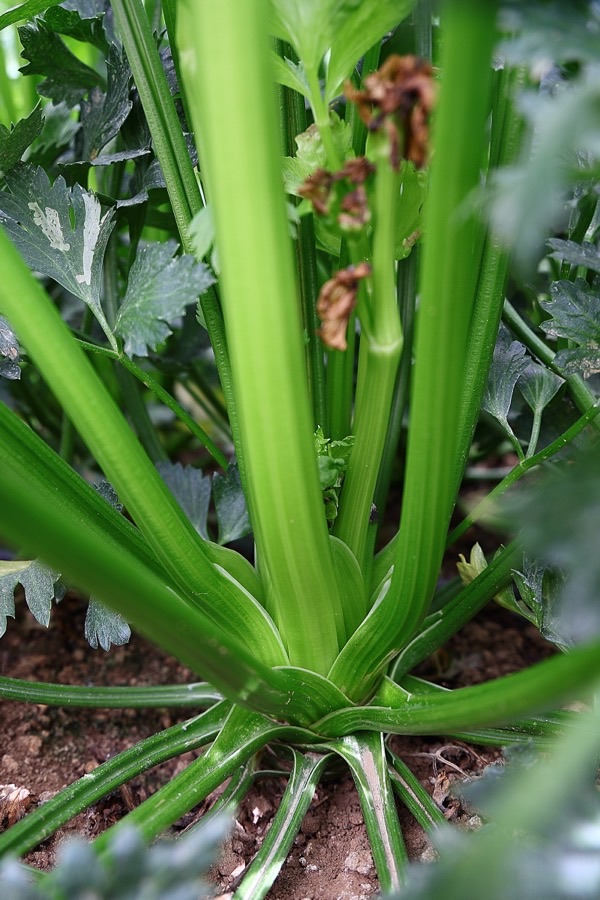
What does a growing plant look like?
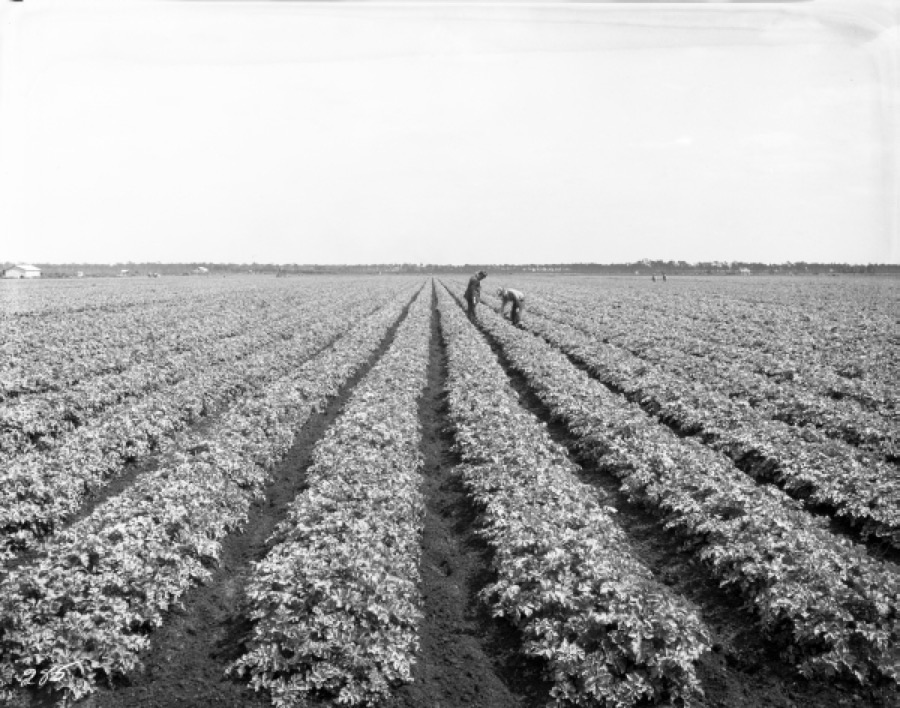
What does the crop look like in the field?
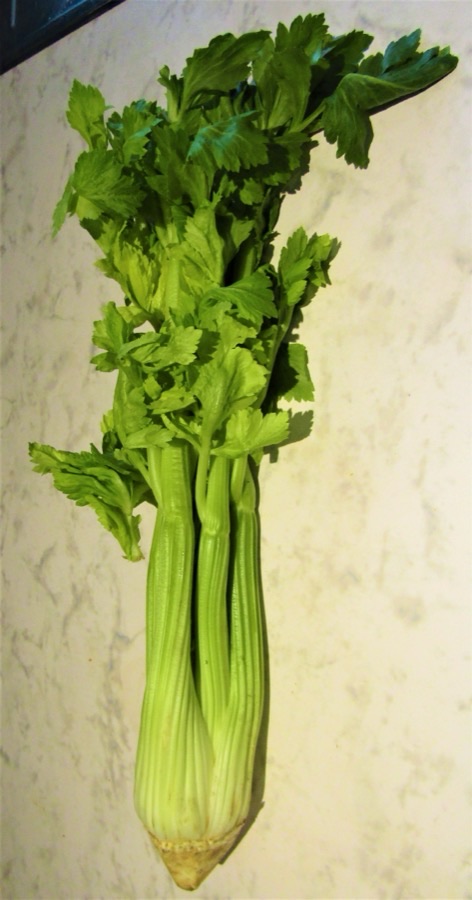
What does a harvested head look like?
Honest Limits of This Guide
Timings here are given by season and by the state of the plant rather than in named months, because celery is grown in both hemispheres and year-round in some climates. Count from your own sowing.
The photograph of a celery field is an archive photograph rather than a recent one, because no usable modern picture of a celery field is available under a licence this library can use. What it shows — close even rows on level ground — has not changed, but the machinery and varieties of a modern farm are not in it.
One photograph shows wild celery rather than the crop, and it is labelled as such. It is used deliberately to show what bolting looks like and what the plant reverts to, which is more useful than another picture of a tidy crop.
This guide covers stalk celery. Celeriac and leaf celery are the same species and share the pests and diseases described, but they are spaced, grown and sold differently and are not set out here.
Variety advice is deliberately local. Varieties differ greatly in how readily they bolt and how much cold they will take, and which one suits a district is a question for a local supplier.
No chemical treatments are named here. The stalks are eaten raw, leaf miner grubs sit inside the leaf where sprays do not reach, and what is permitted differs by country and by buyer.
The warning about celery sap burning skin in sunlight is real and worth taking seriously, particularly when handling diseased plants or large quantities. It is not an allergy and it affects people who have handled celery for years without trouble.
In Ayurveda
This plant is also a dravya of Ayurveda. Ajamoda in Dravyaguna: its botanical identity, rasa, virya and karma, the part used, the dose the texts give, and its safety record.
Sources
GBIF Backbone Taxonomy species-match record for Apium graveolens L. — Global Biodiversity Information Facility (GBIF), Copenhagen (source)
EPPO Global Database — Apium graveolens (EPPO code APUGV) — European and Mediterranean Plant Protection Organization (EPPO), Paris (source)
Apium graveolens and its pests and diseases — CABI Compendium datasheets — CABI, Wallingford (source)
FAO guidance on smallholder vegetable production, nursery raising and post-harvest handling — Food and Agriculture Organization of the United Nations (FAO), Rome (source)
Laisha knows Celery better than this page can show.Photo diagnosis for pests and disease, live market prices, and an agronomist you can ask at two in the morning. Ten days free, no card. After that 10 US dollars a month, one price worldwide.Start ten free days
 Laisha
AI Operating System for Agriculture
Enter Laisha