 Laisha
AI Operating System for Agriculture
Enter Laisha
Laisha
AI Operating System for Agriculture
Enter Laisha
Syzygium aromaticum · Also called: Cengkeh, Cengkih, Karafuu, Girofle, Clou de girofle, Clavo de olor, Cravo-da-índia, Laung
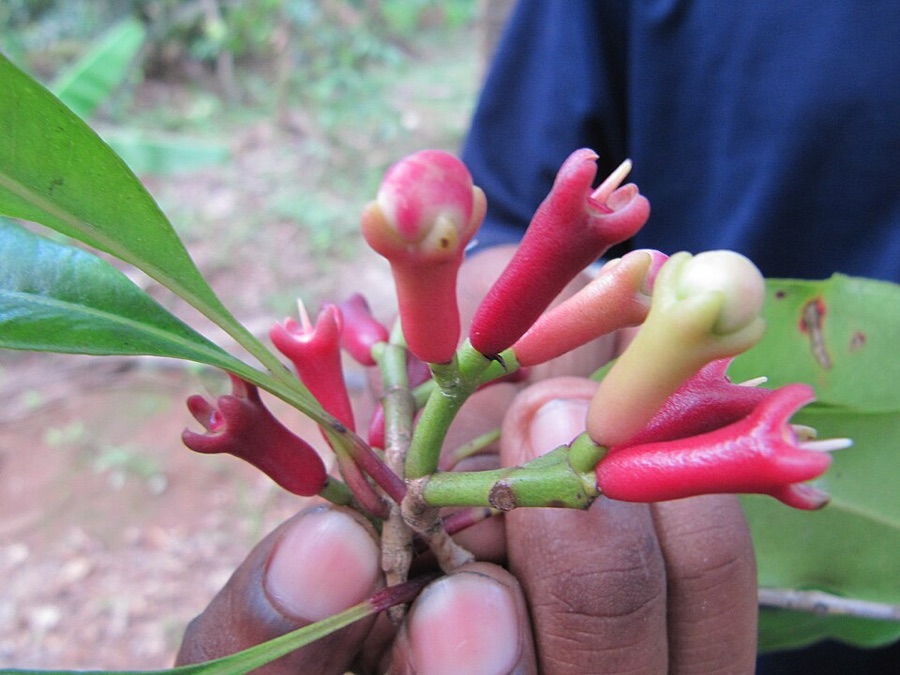
Photo: AmonHeijne, CC BY-SA 3.0 (Wikimedia Commons)
Clove is one of the highest-value things a smallholding in the wet tropics can grow, and a single tree can keep producing for a century. Indonesia, Madagascar and Tanzania produce most of the world's supply, and on Zanzibar and Pemba it has shaped the whole economy for two hundred years. A few trees around a house, with vegetables growing beneath them, can be worth more than a field of anything else. What makes it difficult is that the spice is an unopened flower bud, and the tree tells you when it is ready over a few days rather than a few weeks. Pick early and the buds are small and light. Let them open and they are worth almost nothing at all.
If you see: Clusters on the tree where the buds have opened into small flowers with a brush of pale stamens, and the picked crop dries pale, light and shrivelled rather than dark and plump.
It likely means: The harvest came a few days too late. Once a bud opens it stops being a clove and both its weight and its oil are lost.
Do this: Pick at the pink stage with the tips still closed rather than waiting for the whole cluster to colour deeply.
If you see: A mature tree whose leaves yellow and fall from the top or from one side over a few months, with branches dying back, and the tree dead within a year or two.
It likely means: One of the diseases that kill established clove trees. Several different ones behave this way and none of them can be cured once a tree shows it clearly.
Do this: Remove dead and dying trees and take the wood right out of the planting rather than leaving it lying.
If you see: Small holes in the trunk or main branches with sawdust or gum around them, and branches above those holes wilting or dying back.
It likely means: A beetle grub is tunnelling inside the wood. It cuts off the flow to everything above it, which is why the dieback appears some distance from the hole.
Do this: Look over the trunk of every mature tree regularly, because the holes are small and easily missed until a branch dies.
If you see: Healthy well-grown trees six or seven years old that have never produced a single flower bud, growing strongly and putting on leaf every year.
It likely means: Most likely they are simply not old enough. Clove commonly takes six to eight years to flower at all and fifteen or more to crop fully.
Do this: Check the age of the planting honestly, because impatience with this tree is the commonest reason people give up on it.
If you see: A very heavy crop in one year followed by one or two years with almost nothing, repeating across the whole planting.
It likely means: Irregular bearing, which is normal in clove. A heavy crop uses the tree's reserves and it takes a year or two to build them again.
Do this: Plan income across several years rather than one, because a budget built on a heavy year will fail in the light ones.
If you see: Dried cloves with a musty smell, grey or white growth on them, or cloves that bend rather than snap when pressed between the fingers.
It likely means: They were not dried enough, or they were rewetted by rain or dew part way through drying, or they were bagged while still warm.
Do this: Dry until a clove snaps cleanly rather than bending, which is the only reliable test in the field.
If you see: Fewer and fewer flower clusters on the parts of the tree that were picked hardest last season, with broken and stubby branch ends where pickers worked.
It likely means: The small flowering branchlets were damaged during picking. Cloves are carried on those branchlets and breaking them removes next year's crop from that spot.
Do this: Pick the buds off by hand rather than stripping or breaking whole branchlets.
Growing the crop is only part of the job. The last part is knowing what a normal harvest looks like where you are, and knowing what your cloves are worth before you agree a price with anybody.
If you forget every other page of this guide, keep these lines. They are the whole crop, in order, short enough to carry in your head.
Which of these buds should I be picking, and which have I left too long?
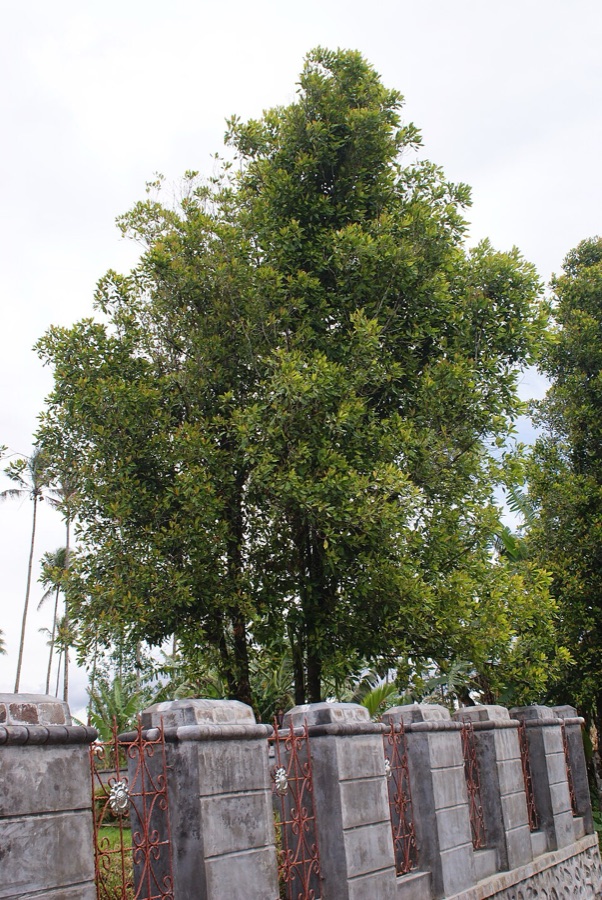
What is this tall dense evergreen tree with a narrow pointed crown and glossy leaves?
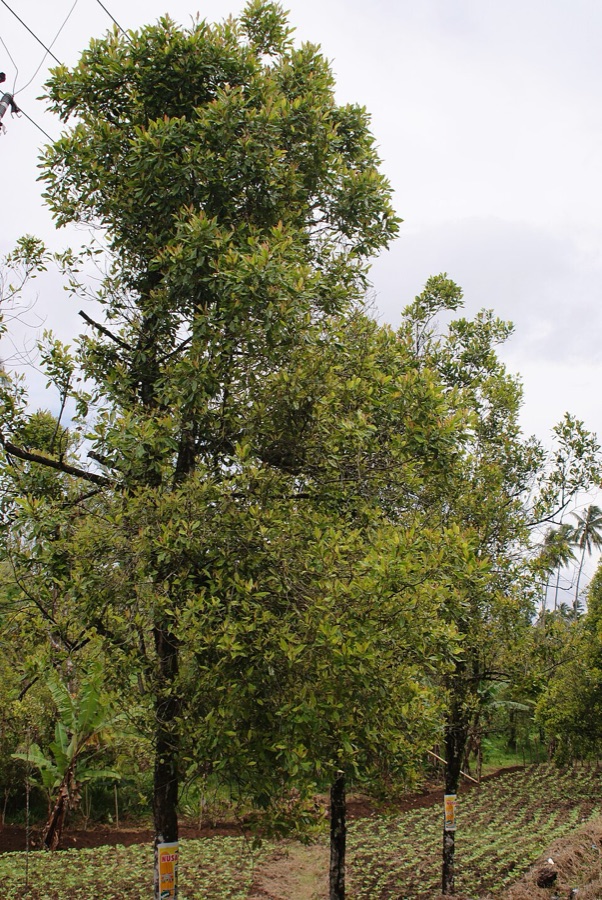
What is this row of tall clove trees with a vegetable crop growing on the ground beneath them?
This plant is also a dravya of Ayurveda. Lavanga in Dravyaguna: its botanical identity, rasa, virya and karma, the part used, the dose the texts give, and its safety record.