Photo: Photo by David J. Stang, CC BY-SA 4.0 (Wikimedia Commons)
Dill gives two quite different crops off one plant, and the hard part of growing it is that you cannot have both well. Cut for leaf and you get a soft, intensely aromatic herb that sells fresh and is worth a great deal for the little land it takes. Let it flower and you get seed, which keeps for years, travels anywhere and sells by weight long after the leaf would have rotted. India and Egypt are the main sources of the seed, and the leaf is a household vegetable across northern and western India, the Middle East, eastern Europe and Scandinavia. It is fast, needs nothing rich, is sown straight into the ground and gives something to sell within weeks. It is also one of the best plants there is for bringing helpful insects into a field.
Growing Dill, Stage by Stage
1. Get the land ready — Full sun, well-drained, and nothing rich.
2. Sow the seed straight into the ground — Shallow, thin, and never in a pot to be moved later.
3. Weed, water and thin — The seedlings are small and lose to weeds quickly.
4. Decide whether this is a leaf crop or a seed crop — The plant will not give you both, and it decides early.
5. Watch for trouble — Aphids on the heads, and rot at the base in wet weather.
6. Harvest the leaf young, and the seed just before it falls — The leaf will not wait hours and the seed will not wait days.
7. Dry it, store the seed, and sell it — The seed keeps for years. The leaf keeps for a day.
Common Problems & Troubleshooting
If you see: Plants shooting up a tall stem and going thin and sparse when you wanted leaf.
It likely means: It has bolted. Heat, long days, dry soil and root disturbance all bring the flower stem on, and once it rises the leaf crop is finished.
Do this: Sow again every two or three weeks, so a young sowing is always coming on behind.
If you see: Seed all over the ground under the plants, and heads that are nearly empty when you cut them.
It likely means: The crop was left too long. Ripe dill heads shatter, and they do it within a day or two of being ready.
Do this: Cut the heads when most seeds have just gone pale brown at the edges, not when the head is dry and brittle.
If you see: Cut leaf gone limp, yellowing and smelling of little by the time it reaches the market.
It likely means: It was cut too warm or held too long. Dill leaf is among the most perishable things a grower can carry.
Do this: Cut only in the cool of the early morning.
If you see: Tall plants lying flat across the rows after wind or rain.
It likely means: A hollow stem carrying a heavy head, made worse by rich ground and by plants left too thick.
Do this: Do not feed the crop heavily, since soft growth is what falls.
If you see: Dark spots and blackening spreading over the flower heads, with shrivelled seed inside.
It likely means: A fungal disease of the heads, which comes in wet weather and ruins the part you are selling.
Do this: Thin the crop and keep the rows open so air moves and the heads dry after rain.
If you see: Long gaps in the rows where nothing came up, or seedlings that collapsed at soil level.
It likely means: Either the seed was buried too deep or the surface dried out, or young plants rotted at the base in wet crowded soil.
Do this: Cover the seed with no more than about half a centimetre of soil.
Yield & Market Value
Growing the crop is only part of the job. The last part is knowing what a normal harvest looks like where you are, and knowing what your dill is worth before you agree a price with anybody.
Remember It This Way
If you forget every other page of this guide, keep these lines. They are the whole crop, in order, short enough to carry in your head.
Sow it where it will grow. It hates being moved.
Cover the seed half a centimetre, no more.
Full sun, light water, poor ground. Rich ground makes it fall over.
Leaf or seed. Not both from one plant.
For leaf, sow again every two or three weeks.
Thin it. Crowded dill rots and falls.
Cut leaf in the cool of the morning and sell it the same day.
Cut the heads when the seed just browns at the edges.
Hold a cloth under every head. Ripe heads shatter.
Dry the seed in shade, never sun. Sun takes the smell.
Test Yourself: Identification
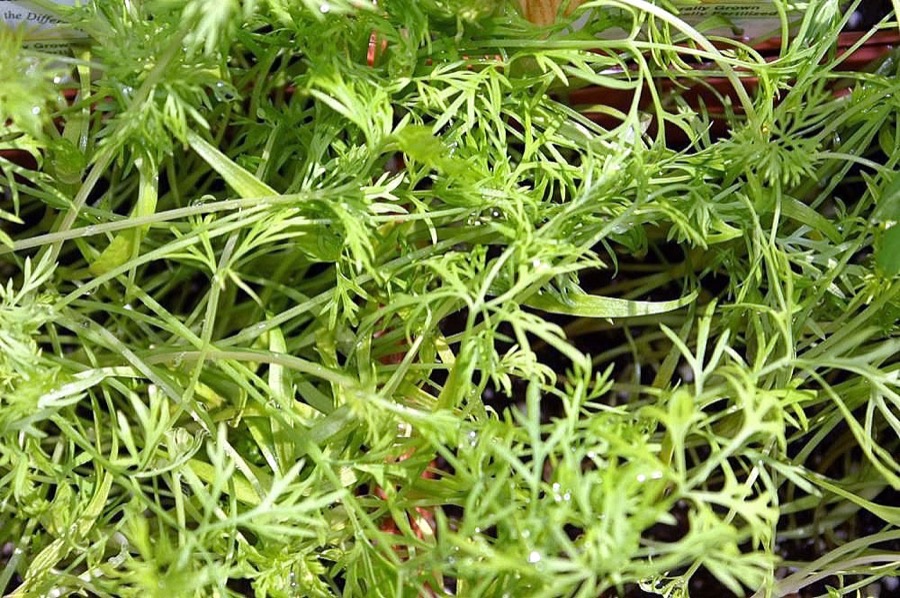
What does the leaf look like?
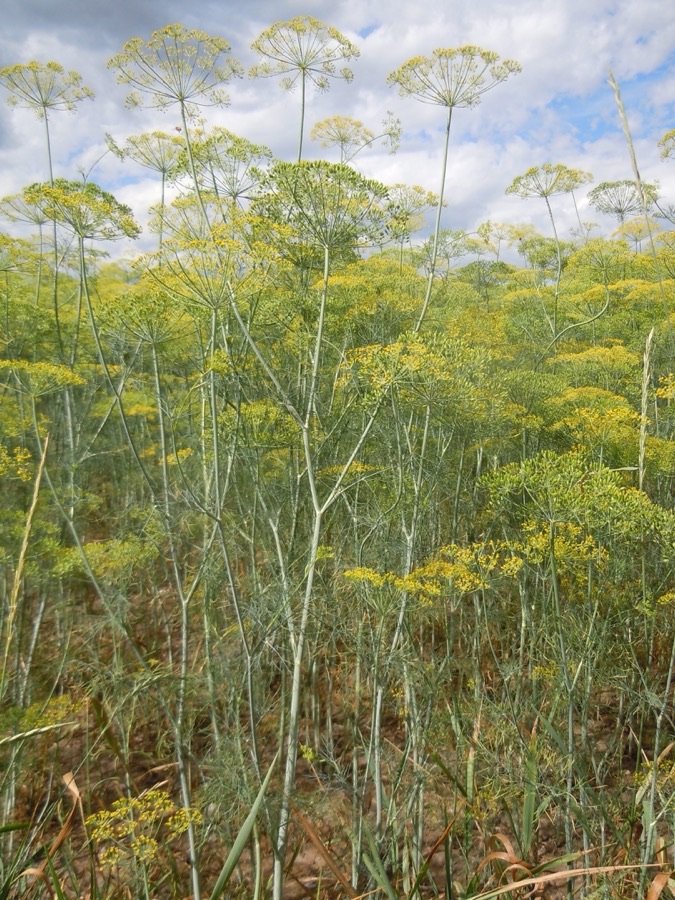
What does the standing crop look like?
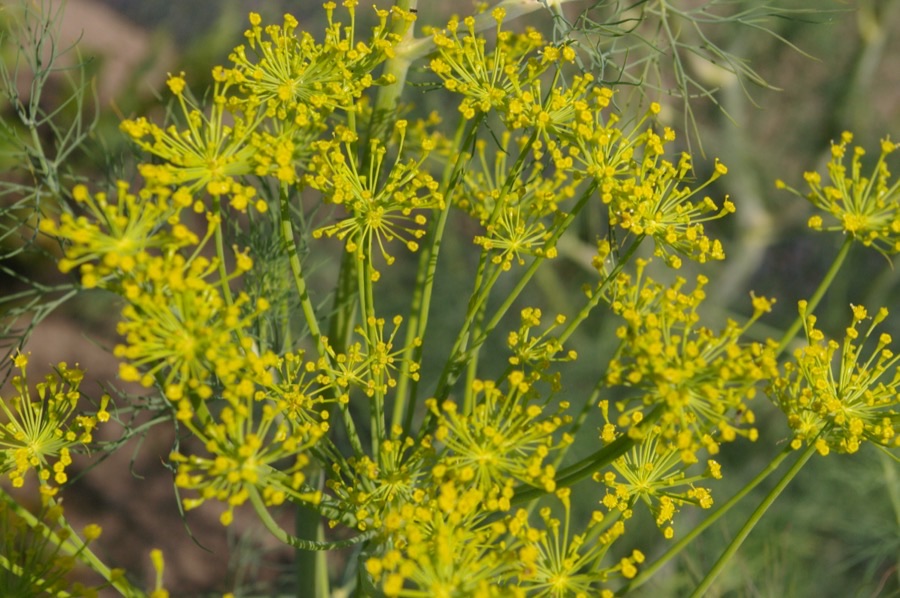
What do the flowers look like?
Honest Limits of This Guide
Timings here are given by weeks from sowing and by the state of the plant rather than in named months, because dill is grown in both hemispheres and in several seasons in the same place. Count from your own sowing.
Whether Indian dill (sowa, shepu) is a separate species, Anethum sowa, or a variety of this one is genuinely unsettled among botanists. This guide covers both as one crop because they are grown the same way, but their seed is traded separately and smells different.
Yield figures for leaf and for seed cannot be compared with each other, and both vary enormously with how many cuttings were taken and whether the seed heads were caught before shattering.
The photographs show the leaf, a standing seed crop, the flower, leaf being cut, and a crop whose seed has already shed. There is deliberately no photograph of a head at the exact moment it should be cut, because no usable picture of that is available under a licence this library can use — which is why the last question shows what being too late looks like instead.
No varieties are named here. Types differ in how quickly they bolt and in whether they lean towards leaf or seed, and which suits a district is a question for a local seed dealer.
No chemical treatments are named here. The leaf is eaten fresh and often uncooked, insects must work the flowers for there to be seed, and what is permitted differs by country and by buyer.
In Ayurveda
This plant is also a dravya of Ayurveda. Shatapushpa in Dravyaguna: its botanical identity, rasa, virya and karma, the part used, the dose the texts give, and its safety record.
Sources
GBIF Backbone Taxonomy species-match record for Anethum graveolens L. — Global Biodiversity Information Facility (GBIF), Copenhagen (source)
EPPO Global Database — Anethum graveolens (EPPO code AFEGR) — European and Mediterranean Plant Protection Organization (EPPO), Paris (source)
FAO guidance on growing culinary and aromatic herbs and spice seeds — Food and Agriculture Organization of the United Nations (FAO), Rome (source)
FAO guidance on post-harvest handling of leafy herbs and spice seeds — Food and Agriculture Organization of the United Nations (FAO), Rome (source)
Laisha knows Dill better than this page can show.Photo diagnosis for pests and disease, live market prices, and an agronomist you can ask at two in the morning. Ten days free, no card. After that 10 US dollars a month, one price worldwide.Start ten free days
 Laisha
AI Operating System for Agriculture
Enter Laisha