 Laisha
AI Operating System for Agriculture
Enter Laisha
Laisha
AI Operating System for Agriculture
Enter Laisha
Brassica juncea · Also called: Indian mustard, brown mustard, rai, raya, sarson, sarso, toria, lai
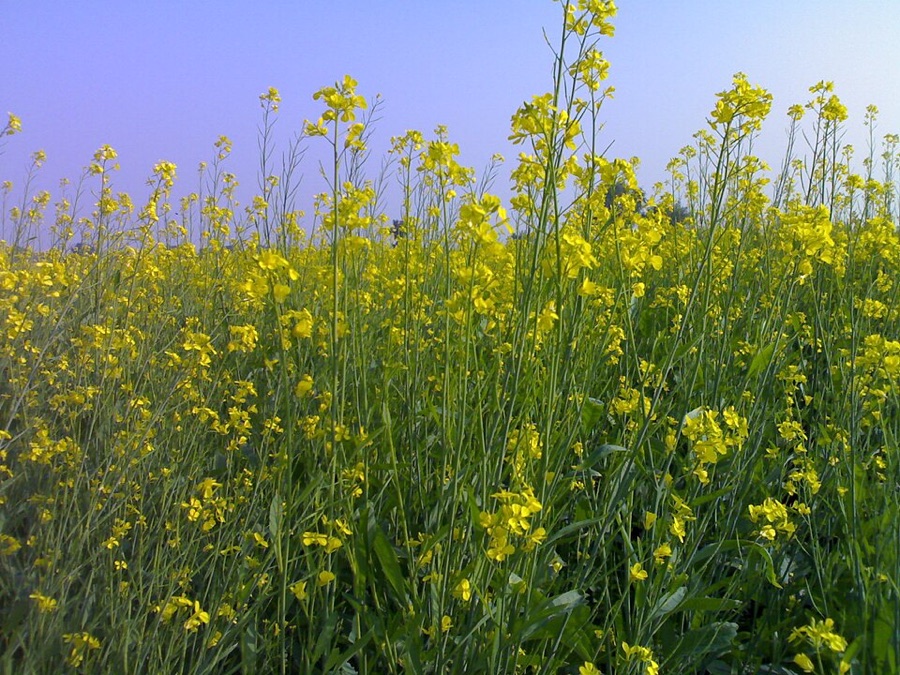
Photo: Shemaroo at English Wikipedia, Public domain (Wikimedia Commons)
Rapeseed and mustard together are India's largest home-grown source of edible oil, and mustard is the crop most of that comes from. It is grown in the cool dry months after the rice or the monsoon crop comes off, on land that would otherwise sit empty, and it needs less water than almost anything else that could go there. A farmer with a small field and no irrigation can still take a mustard crop on the moisture the soil is already holding. The oil is pressed locally and sold locally, the cake left behind feeds cattle, the young leaves are eaten as saag through the winter, and the flowers feed bees at a time of year when very little else is flowering. Very few crops do that many jobs for that little water.
If you see: Large bare patches across the field a week or two after sowing, with good rows of seedlings in between them, and no obvious insect damage on the plants that did come up.
It likely means: The seed was placed too deep, the seedbed was too cloddy, or the surface crusted after irrigation and the seedlings could not push through.
Do this: Dig into a bare patch and look for seed. Seed that has sprouted and died underground tells you it was sown too deep or crusted over.
If you see: Dense grey-green clusters of small soft insects packed along the flowering stems and the young pods, often with a sticky coating on the leaves below and a sooty black film growing on it.
It likely means: Mustard aphid, which builds up rapidly in cool weather during flowering and podding and is the most damaging insect of this crop across South Asia.
Do this: Check several places in the field, not just the edge, and look at the top of the plant where the colonies start.
If you see: Raised white or cream blisters on the underside of leaves, and later swollen, distorted, thickened flowering shoots that never form proper pods and look bent and club-like.
It likely means: White rust, a disease of this crop family that also produces the distorted flower heads farmers call staghead, and which spreads in cool humid weather.
Do this: Remove and destroy distorted shoots where the affected plants are few, rather than leaving them in the field to shed spores.
If you see: Dark brown or black round spots on the leaves with visible rings inside them like a target, spreading upwards from the older leaves, and similar spots later on the pods themselves.
It likely means: Alternaria blight, the most widespread leaf and pod disease of mustard, worst in humid weather and on crops that were sown late.
Do this: Sow within the recommended window, since late-sown crops meet the humid weather at the stage this disease attacks.
If you see: Seed lying loose on the soil under the crop before you have cut it, and pods on the plant that are already split open along their seam with nothing inside them.
It likely means: The crop was left standing past maturity. Mustard pods split and shed their seed as they dry, and the loss happens quickly once it starts.
Do this: Cut immediately. Everything still in the pods can be saved. what is on the ground is gone.
If you see: The youngest leaves at the top of the plant turning pale yellow-green while the older leaves lower down stay a normal colour, with cupping or inward curling of the pale leaves and a crop that flowers poorly.
It likely means: Most often a shortage of sulphur, which mustard needs more of than most crops because the oil it produces is built from it. Pale growth starting at the top rather than the bottom is the distinguishing sign.
Do this: Note that a nitrogen shortage yellows the oldest leaves first and from the bottom up, so the direction the paleness starts from tells you which of the two you are looking at.
If you see: Large areas of the crop flattened and lying over on the ground, usually after wind or rain, with the stems bent near the base rather than broken cleanly.
It likely means: The stand was too thick, or the crop received too much nitrogen or too much late water, producing tall soft stems that could not hold the weight of the pods.
Do this: Do not attempt to stand the crop up again. Harvest a badly lodged area first, because it will not dry evenly and will spoil where it touches the soil.
Growing the crop is only part of the job. The last part is knowing what a normal harvest looks like where you are, and knowing what your seed is worth before you agree a price with anybody.
If you forget every other page of this guide, keep these lines. They are the whole crop, in order, short enough to carry in your head.
What crop is this, a field of waist-high plants covered in small bright yellow four-petalled flowers in the cool season?
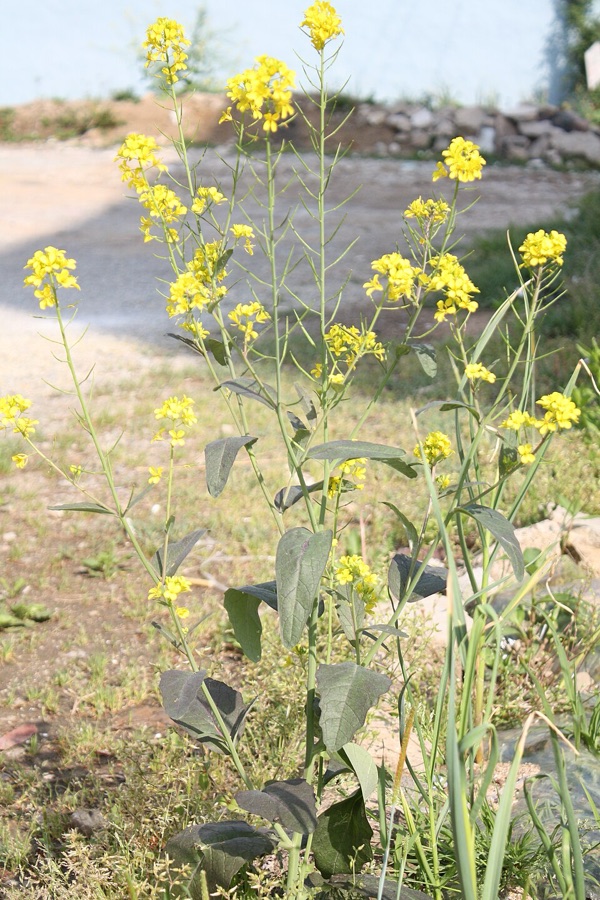
What is this single plant with yellow flowers at the tips and long narrow pods standing out along the stems below them?
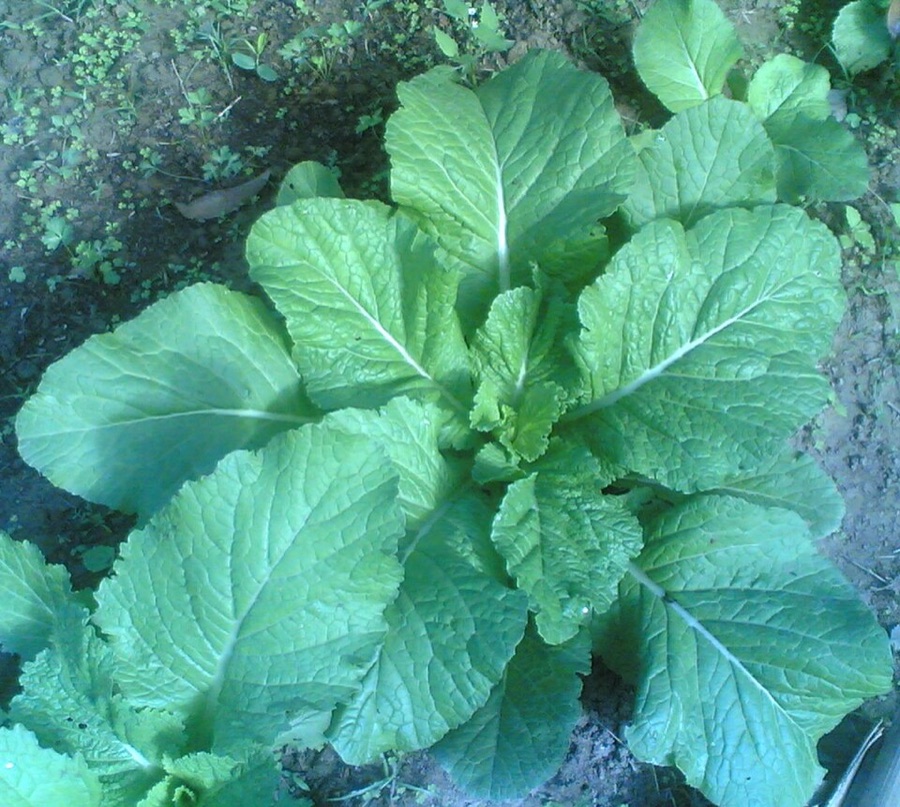
What is this young plant with a rosette of large, broad, crinkled leaves lying close to the ground?
This plant is also a dravya of Ayurveda. Sarshapa in Dravyaguna: its botanical identity, rasa, virya and karma, the part used, the dose the texts give, and its safety record.