 Laisha
AI Operating System for Agriculture
Enter Laisha
Laisha
AI Operating System for Agriculture
Enter Laisha
Myristica fragrans · Also called: Nutmeg & cardamom, Mace, Jaiphal, Javitri, Jathikka, Pala, Muscade, Nuez moscada
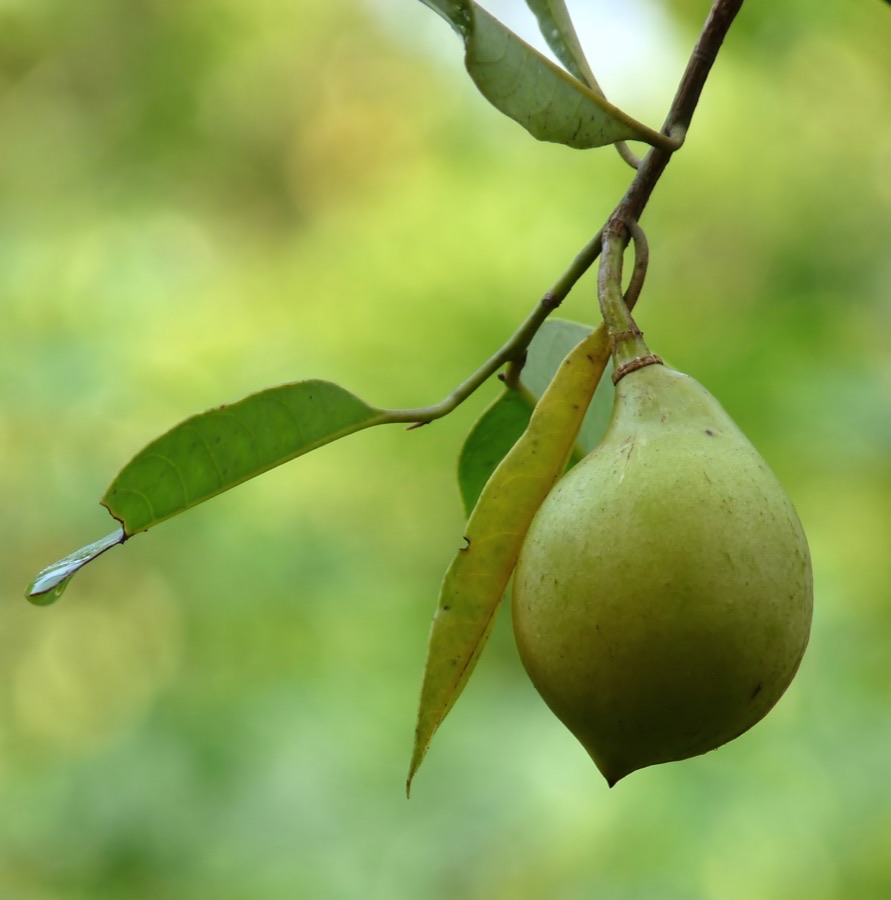
Photo: Jeevan Jose, CC BY-SA 4.0 (Wikimedia Commons)
Nutmeg is the only crop in this library that gives two separate spices out of one fruit. Inside the fleshy fruit sits a hard brown seed, which is the nutmeg, and wrapped around that seed is a scarlet net called mace, which is a different spice and usually worth more per kilogram than the nut it came from. Indonesia and Grenada dominate the world trade, with India, Sri Lanka, Guatemala and Papua New Guinea also producing. A nutmeg tree bears from about six to eight years, reaches full yield at fifteen to twenty, and goes on for sixty years or more, which makes a garden a family asset rather than a season's income. Its difficulty is unusual and worth understanding before you plant anything: nutmeg trees are male or female, only the females bear, and nobody can tell which is which until the tree flowers years later.
If you see: Trees that flower heavily at six or seven years old and never set a single fruit, year after year, with small flowers that simply drop off.
It likely means: They are male trees. Nutmeg is either male or female, only females bear, and about half of any batch of seedlings will be male.
Do this: Plant grafted or budded trees from a known heavy-bearing female, which is the only real way to know in advance.
If you see: Trees that are definitely female, flowering well and looking healthy, that still set very little fruit.
It likely means: Too few male trees, or all the males standing in one corner of the garden where the wind and insects cannot spread the dust evenly.
Do this: Count your males and keep about one for every ten females.
If you see: Stored nuts with visible mould, a musty smell, or a buyer who rejects a lot after testing it although it looked sound.
It likely means: The nuts were not dried far enough, or were stored damp. Badly dried nutmeg grows moulds that produce a toxin buyers test for.
Do this: Dry the seeds in the shell until the kernel rattles loose when shaken, which usually takes several weeks.
If you see: Mace that comes off in pieces rather than as one whole net, and a buyer who pays a much lower price for it.
It likely means: The fruit was handled roughly, harvested late, or the mace was pulled rather than eased off.
Do this: Harvest as soon as the fruit splits on the tree rather than letting it hang and dry.
If you see: Branches dying back from the tips inward, with leaves browning and hanging on, spreading slowly through the crown over a season.
It likely means: Die-back, which often follows wind damage, sun scorch after shade was removed too quickly, or waterlogged roots.
Do this: Cut out dying branches well back into clean healthy wood and burn what you cut.
If you see: Large numbers of small green fruit dropping from healthy female trees before they are anywhere near ripe.
It likely means: Usually water shortage, sometimes poor feeding, sometimes too few males for the number of females.
Do this: Water through the whole dry season, since this is much the commonest cause.
If you see: Trees leaning, split at a fork, or blown over entirely after a storm, with shallow root plates lifted out of the ground.
It likely means: Nutmeg is brittle and shallow-rooted, and it is one of the least wind-firm trees grown as a crop.
Do this: Plant windbreaks before the trees, not after, since they need years to become useful.
Growing the crop is only part of the job. The last part is knowing what a normal harvest looks like where you are, and knowing what your nut and your mace are worth before you agree a price with anybody.
If you forget every other page of this guide, keep these lines. They are the whole crop, in order, short enough to carry in your head.
What is this pale green fruit like a small pear hanging under the leaves?
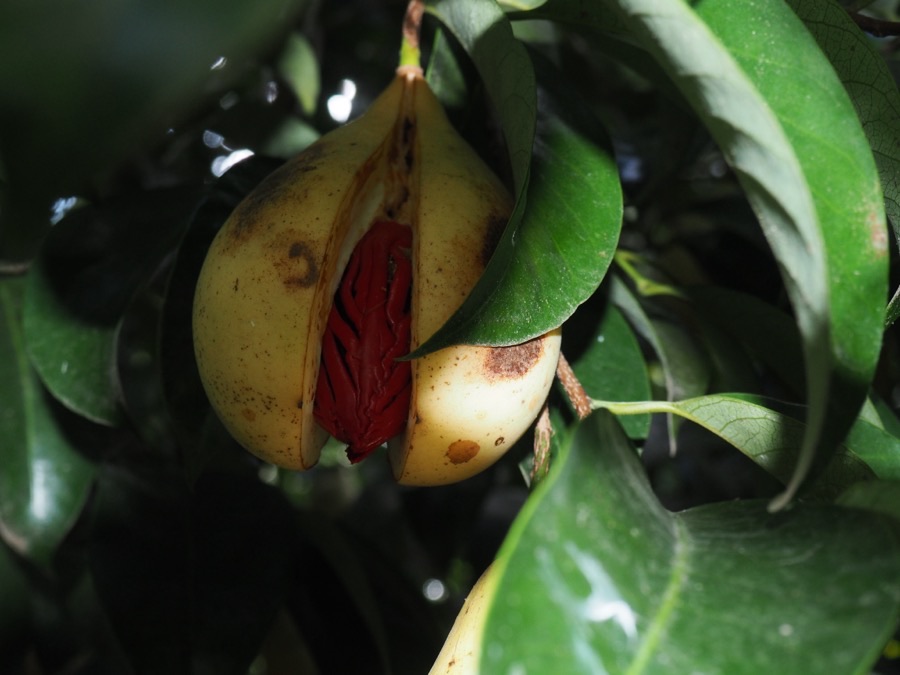
This fruit has split open and there is something bright red inside it. What is it?
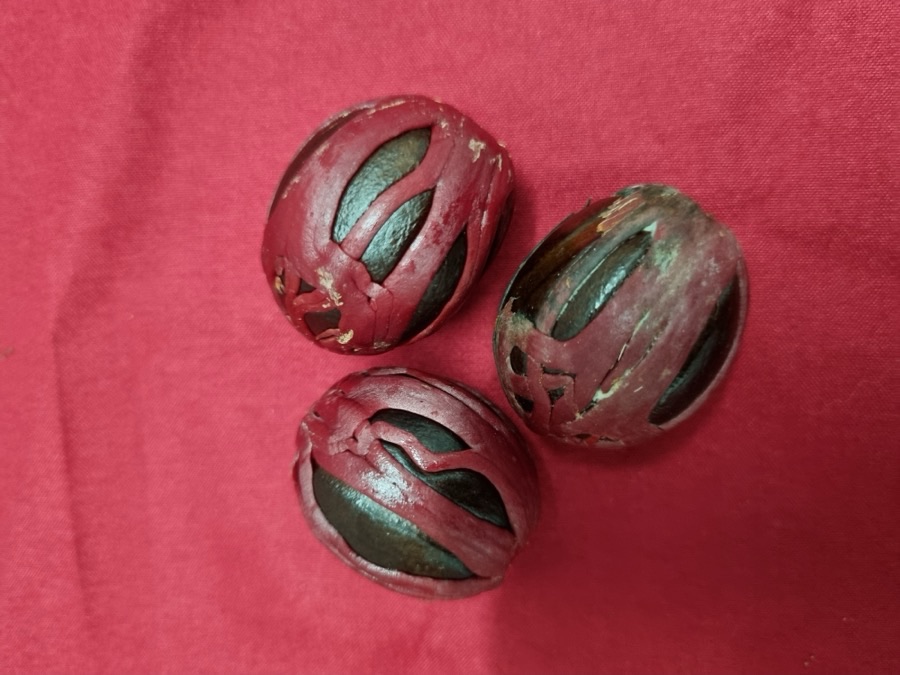
Which of the two spices am I holding, and how do I know it is dry enough?
This plant is also a dravya of Ayurveda. Jatiphala in Dravyaguna: its botanical identity, rasa, virya and karma, the part used, the dose the texts give, and its safety record.