Guggulu
गुग्गुलु
Commiphora wightii (Arn.) Bhandari
Burseraceae · Commiphora
Benefits & side effects
TRADITIONAL VIEW, WITH SAFETY LIMITS
What the texts say Guggulu does
- Lekhana — scraping, reduces excess tissue and fat
- Medohara — reduces fat
- Vatahara — pacifies vata
- Shothahara — reduces swelling
- Sandhaniya — unites tissue, helps fractures and wounds join
- Rasayana — rejuvenative
What the evidence says. Traditional use is extensive and long recorded. Modern clinical evidence is limited.
Side effects and limits
- Skin rash, which is the commonest reported effect
- Digestive upset and loose stool
- Headache
Avoid or ask first: Pregnancy.; Liver disease.; Bleeding disorders and the period before surgery.
A traditional classification, not a recommendation. The full safety record is below.
Stands in 2 groups
- Sanjnasthapana — Restoring consciousness (named there as Palankasha)
- Eladi — Vata and Kapha, poison, and itching
A Samhita can only be read forwards, from the group to its members. This is the same list read backwards.
Photographs
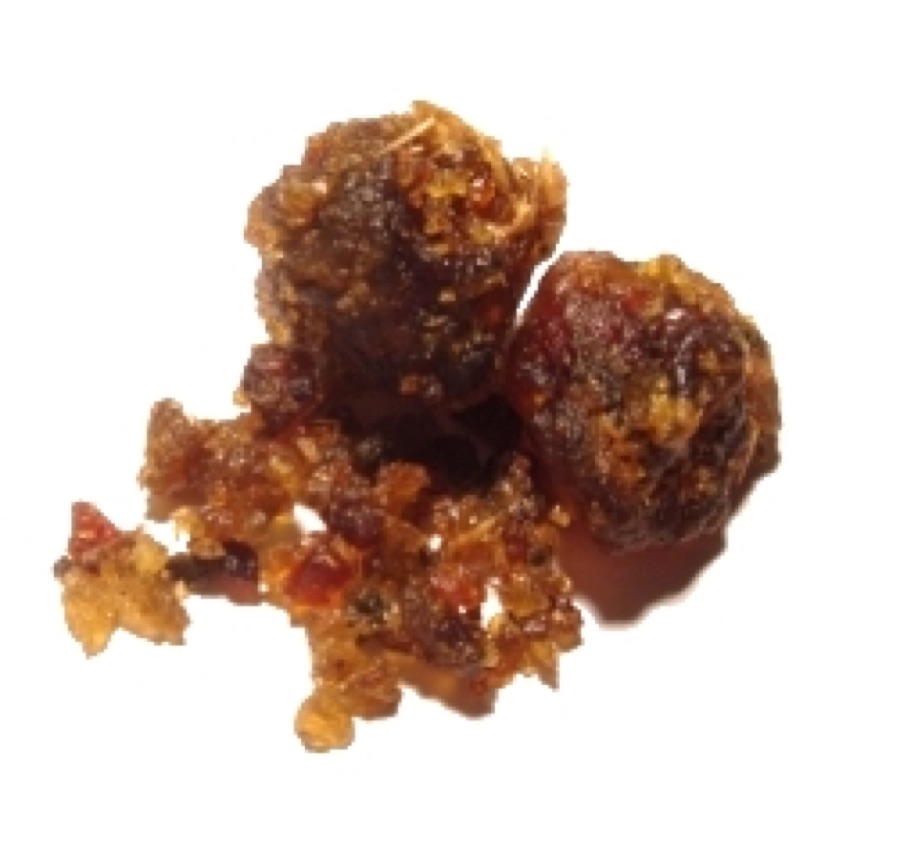
Photo: derivative work: Photohound (talk) IncenseWikiVers.jpg: Transferred from en.wikipedia to Commons by Trengarasu using CommonsHelper. The original uploader was Sj · CC BY-SA 2.5 · Wikimedia Commons

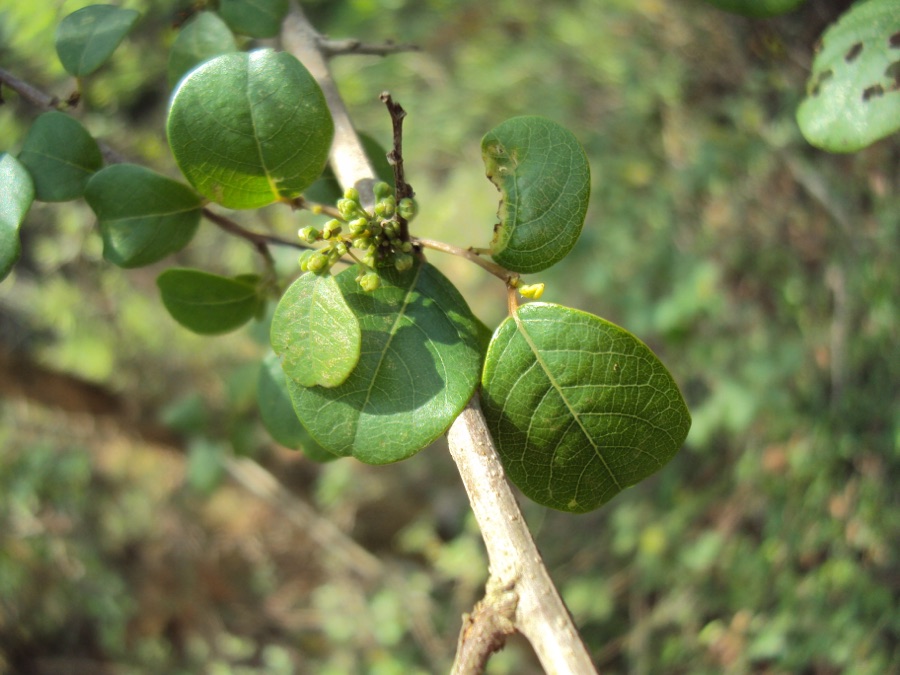
Photo: Vinayaraj · CC BY-SA 3.0 · Wikimedia Commons

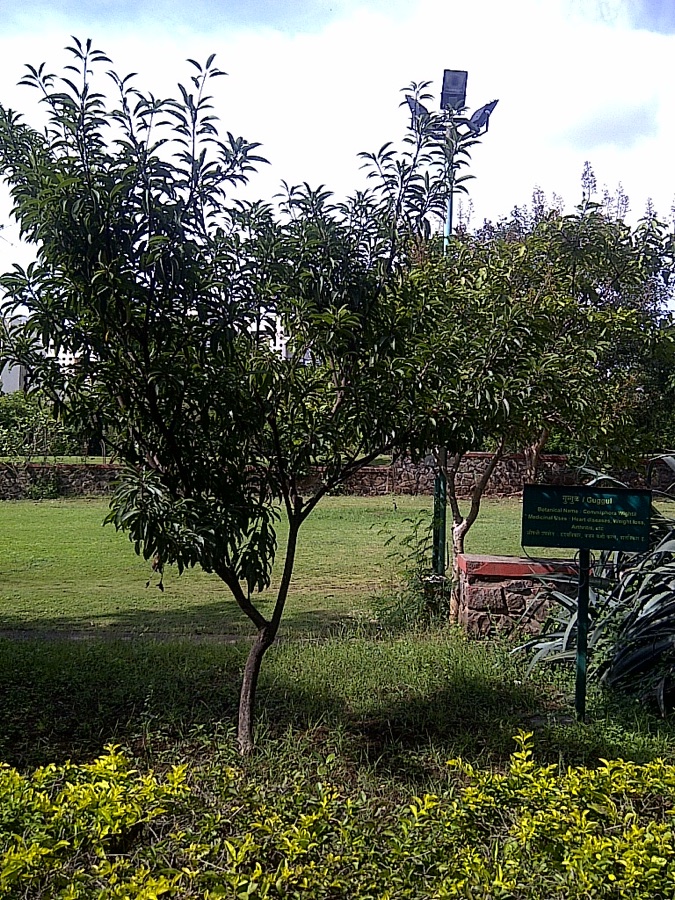
Photo: Tehniyatshaikh · CC BY-SA 3.0 · Wikimedia Commons

Matra and anupana
AS THE CLASSICAL TEXTS AND THE API PRESCRIBE
| Shodhita guggulu | 1–3 g |
| Anupana | Ushnodaka · Dugdha |
| Kala | Adhobhakta |
Used only after shodhana, and always inside a named yoga — Yogaraja, Kaishora, Triphala guggulu — never as raw resin.
Reported from Sharangadhara Samhita and the Ayurvedic Pharmacopoeia of India. Laisha states what the texts prescribe; it does not recommend. No quantity here is adjusted for a particular person — not for agni, koshtha, bala, age, pregnancy, kidney or liver function, or anything already being taken.
Pharmacopoeial standard
Ayurvedic Pharmacopoeia of India, Part I
| Marker | Guggulsterones E and Z |
| Assay | As the monograph gives |
| Total ash | Total ash not more than 5 per cent |
| Acid-insoluble ash | Not more than 1 per cent |
| Alcohol-soluble extractive | Alcohol-soluble extractive not less than 27 per cent |
| Water-soluble extractive | Water-soluble extractive not less than 50 per cent |
| Foreign matter | Foreign matter not more than 4 per cent |
Guggulu is sold heavily adulterated with other gum resins, sand and bark. A high acid-insoluble ash is the quickest sign of it.
These are the pharmacopoeial limits for the article, not a test Laisha has run on anything. They are here so a practitioner can ask a supplier for a certificate of analysis and know what the numbers on it should say.
Rasapanchaka
| Rasa | TiktaKatuKashaya |
| Guna | LaghuRukshaVishadaSukshma |
| Virya | Ushna |
| Vipaka | Katu |
| Prabhava | The texts single out guggulu as the chief of lekhana dravya, scraping away accumulation, and as the carrier that takes other dravya into the joints. It is the base of more named formulations than almost any other article. |
| Doshakarma | Tridoshahara, and particularly vatakaphahara. |
Tikta, katu and kashaya with ushna virya and katu vipaka.
Karma and part used
These are the actions the classical texts record. They are statements about what the tradition holds, and this library does not restate them as findings about a human body.
| Upayukta anga | Niryasa (the oleo-gum-resin) |
| Why it matters | The dravya is the gum resin that exudes from an incision in the bark. It is graded by age and colour, and old resin is considered better than new, which is the opposite of most dravya. |
Paryaya
Devadhupa means the incense of the gods and records its other use. Mahishaksha, buffalo-eyed, is one of the five named grades of the resin, distinguished by colour, and a student is expected to be able to name them.
Names, by language
| English | Indian bdellium |
| Sinhala | Guggulu |
| Nepali | Guggul |
| Hindi | Guggul |
| Kannada | Gugil |
| Tamil | Gukkulu |
| Telugu | Guggipannu |
| Malayalam | Gulgulu |
| Marathi | Guggul |
| Gujarati | Gugal |
| Bengali | Guggul |
| Punjabi | Guggal |
| Odia | Guggulu |
| Urdu | Muqil |
Classical references
Rasa, guna, virya, vipaka and karma are recorded as the classical texts give them, with the text and section named so a student can open the book and check. Where an exact chapter and verse could not be confirmed, this library names the section rather than inventing a number.
Formulations it appears in
| Yogaraja Guggulu | Guggulu is the base of the formulation. |
| Kaishora Guggulu | Guggulu is the base of the formulation. |
| Triphala Guggulu | Guggulu with the three fruits. |
| Gokshuradi Guggulu | Guggulu with gokshura. |
Adulterants and substitutes
Resin of other Commiphora species, chiefly African, is imported and sold as guggulu, and because the article is a lump of resin the substitution is nearly invisible. Sal resin, gum arabic and simple gum are bulked in. Sand and stone have been found in commercial lots, which is the crudest adulteration in this library and the easiest to find if anyone looks. Raw resin must also be purified before use by a specified process, and unpurified resin sold as finished material is a substitution of method rather than of substance.
Identity
Matched live against the GBIF backbone on 28 September 2026 at 99 per cent confidence. Commiphora mukul is a synonym. The dravya is not the plant but what bleeds from it, which makes it one of the few non-plant-part articles in this library. Assessed as critically endangered on the IUCN Red List — the most threatened dravya here.
A WAY TO REMEMBER IT
Commiphora is kommi (gum) + phoros (bearing) — gum-bearing, which is the whole point of the tree. Wightii honours Robert Wight.
What the tradition holds
Guggulu is described in the Bhavaprakasha Nighantu with its five grades and is named in the Sushruta Samhita among dravya used where the body accumulates. That is what the tradition holds and where it is written down, not a finding about what the resin does in a body.
Constituents. The resin carries guggulsterones E and Z, which are the compounds commercial extracts are standardised to, along with a volatile oil and gums.
What the evidence says
| Status | Traditional use is extensive and long recorded. Modern clinical evidence is limited. |
| Suggested | Health Canada publishes monographs covering Ayurvedic ingredients and permits specific traditional-use claims, which reflects a regulator accepting a documented tradition rather than a body of clinical trial evidence. |
| Not established | There is not enough good clinical evidence to establish an effect on any named health condition. Long traditional use is not a substitute for that evidence, and this library does not present it as one. |
| The honest gap | Published work uses standardised guggulsterone extracts of a concentration traditional purified resin does not reach. |
Safety
Two separate things need saying. First, the plant is critically endangered on the IUCN Red List — decades of tapping, much of it done badly, have destroyed wild stands across Rajasthan and Gujarat, and a tree tapped incorrectly dies. Buying guggulu without knowing its source is a real question and not a fastidious one. Second, on the body: guggulu is documented to reduce the absorption of several prescribed medicines, including propranolol and diltiazem, and it affects thyroid function. Skin rash is the commonest reported adverse effect and can be significant. Anyone on medication, pregnant, or managing a diagnosed condition should speak to a doctor or a qualified practitioner first.
| Side effects | Skin rash, which is the commonest reported effect Digestive upset and loose stool Headache |
| Contraindications | Pregnancy. Liver disease. Bleeding disorders and the period before surgery. |
| Interactions | Propranolol and diltiazem — guggulsterones induce CYP3A4 and were shown to REDUCE the bioavailability of both. This is a treatment-failure risk, not a toxicity one. Thyroid hormone — guggulsterones stimulate thyroid function and can add to levothyroxine. Warfarin and antiplatelets — antiplatelet activity reported. Oestrogens and tamoxifen — guggulsterone is a competitive antagonist at several steroid receptors. |
| Pregnancy and breastfeeding | Not to be used in pregnancy or breastfeeding. |
Growing it
| Climate | Arid and semi-arid; a thorny shrub of dry rocky country. |
| Soil | Poor, sandy, stony, very well drained. It wants hard ground. |
| Planting | Grown from cuttings, which strike more reliably than seed. Slow — many years before a plant can be tapped. |
| Harvest | The resin is taken by incising the bark of an established plant. Correct tapping leaves the plant alive; the over-tapping that destroyed the wild stands did not. |
| What is not stated | Cultivation has been established in Gujarat and Rajasthan precisely because the wild plant is nearly gone. Cultivated and correctly tapped resin should be preferred, and this library states that as a matter of record. |
Check this page
Print it and the code still works. It goes to this page and nowhere else.
What this is not
- This is a study and clinical reference for practitioners and students. The matra and anupana it records are what the classical texts and the Ayurvedic Pharmacopoeia of India PRESCRIBE — Laisha reports them, it does not recommend them. They are not a prescription for any particular person, and they are not adjusted for your age, agni, koshtha, bala, pregnancy, kidney or liver function, or anything else you are already taking. Only a qualified practitioner who has examined you can do that.
- Traditional classification is recorded as what the classical texts say, with the text and the place in it named so it can be checked. It is not restated as a finding about a human body.
- Nothing here replaces a qualified Ayurvedic practitioner or a doctor.
Sources
https://api.gbif.org/v1/species/match?name=Commiphora%20wightii
https://pcimh.gov.in/
https://www.canada.ca/en/health-canada/services/drugs-health-products/natural-non-prescription/applications-submissions/product-licensing/compendium-monographs.html
https://niimh.nic.in/ebooks/esharangadhara/