How to Grow Apple
Malus domestica · Also called: apple, common apple, dessert apple, table apple, eating apple, seb, tuffah, Apfel
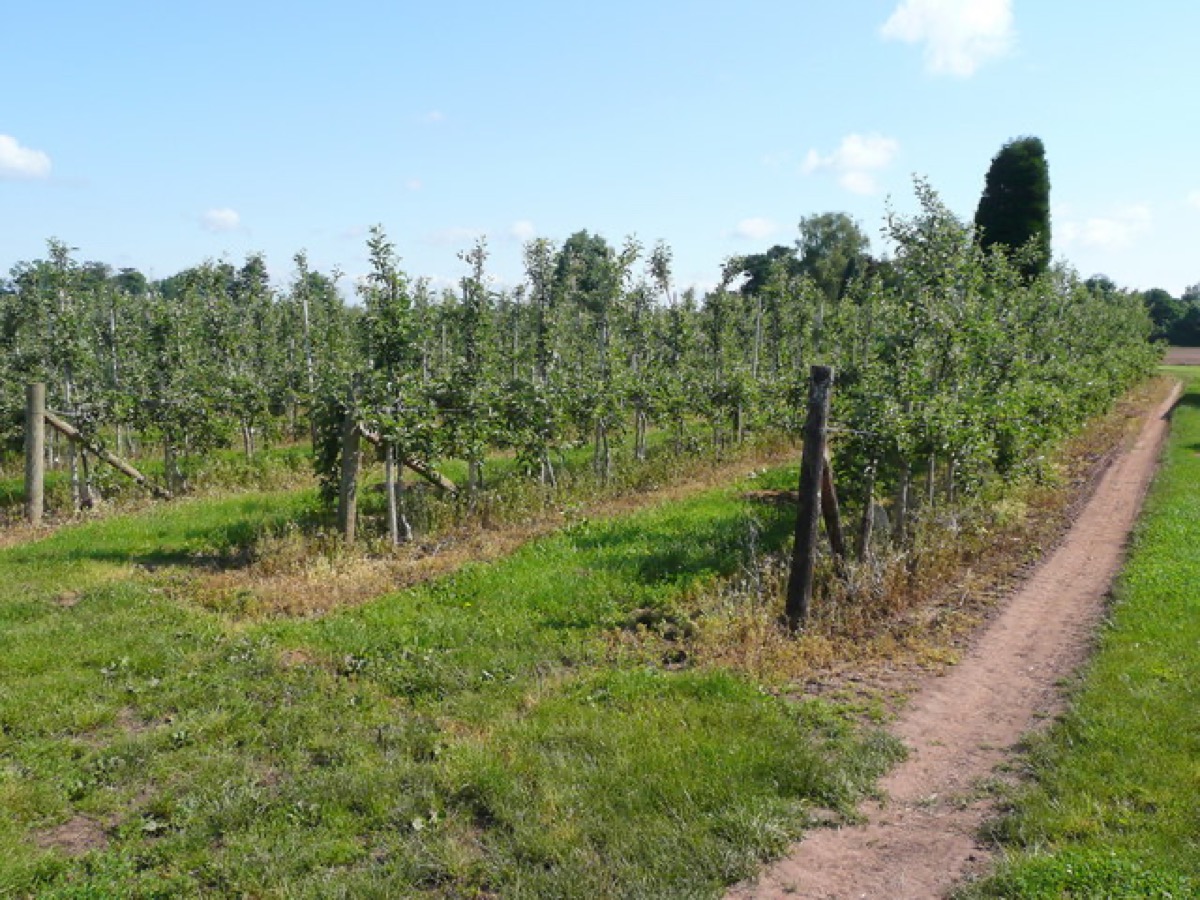
Photo: Jonathan Billinger, CC BY-SA 2.0 (Wikimedia Commons)
Apple is a real top-ten crop in 29 of the world's 195 countries, and it is the first crop from the rose family, Rosaceae, in this whole library -- a genuinely large, economically important plant family most readers will not have realised also holds pear, peach, plum, cherry, apricot, almond, quince, raspberry and strawberry (botanicalIdentity). Real, published FAOSTAT-sourced data reports 2022 world apple production at approximately 95.8 million tonnes, and that single figure hides a genuinely striking real concentration: China alone accounts for roughly half the entire world total. Unlike sunflower and grape elsewhere in this library, apple's own real curated country list carries an honest, distinctive pattern worth stating plainly: it is not recorded as the single biggest crop of all in any one of its 29 countries, a genuinely different shape from those two other guides' own country lists (globalImportance). Apple also carries one of the most genuinely surprising real facts in this entire library: almost every apple tree bearing fruit anywhere in the world today is not grown from seed at all but grafted, cutting by cutting, from a small number of original individual trees -- some of them, like the source tree behind Bramley's Seedling, still alive and still fruiting more than two centuries after they first grew from a pip (botanicalIdentity). Its real, documented ancestry runs through wild forests in Kazakhstan and along the ancient Silk Road, picking up real genetic material from a second, sourer wild species along the way, in a story genuinely different from -- and considerably older than -- the popular folk retelling many readers already think they know (botanicalIdentity). And apple carries a genuinely distinctive real climatic constraint few other crops in this library share so absolutely: without a real, sufficient winter chilling period, an apple tree simply will not flower properly the following spring, which is exactly why this crop cannot be grown just anywhere warmth and rainfall allow, the way many of this library's tropical crops can (beforeYouStart, growthHabitAndMethod). As with every crop in this library, any agrochemical used on this crop must be handled exactly according to this guide's own chemicalSafetyRule below, bought only from a licensed dealer, and never guessed at from a name half-remembered from a neighbour.
Global Importance
Apple is grown across a real, wide temperate belt on every populated continent, but its true production is genuinely lopsided toward one country: China alone accounts for roughly half of the entire world total, a real concentration this guide names honestly because it shapes the world apple-processing and juice-concentrate trade every grower using this guide is indirectly exposed to, wherever they farm.
Market Segments
Apple splits into a real, fundamental divide between fresh eating and processing that shapes variety choice, harvest timing and even how gently a fruit must be handled from the moment it leaves the tree -- and, inside the fresh side of that divide, a real, further split by standardised grading criteria most eaters never think about but every grower is honestly paid against.
Growth Habit
Three real, foundational facts decide almost everything else a real apple grower does: the tree is grafted, not seed-grown (botanicalIdentity), the rootstock beneath that graft is a genuinely major, deliberate decision in its own right, and the tree needs a real, minimum winter cold period before it will flower properly at all -- three decisions that together decide tree size, orchard spacing, time to first harvest, disease risk and whether this crop can be grown in a given place at all.
Growing Apple, Stage by Stage
- 1. Choose your land, climate and chill zone — Confirm your real local winter genuinely provides enough chill hours, pick well-drained land, and honestly assess your own climate against the specific market and variety you plan to grow for.
- 2. Decide which market you're really growing for — Choose honestly among fresh dessert eating, ordinary processing, and dedicated cider before choosing a single variety, because this decision changes which variety genuinely suits you, how you manage fruit quality, and how you harvest.
- 3. Choose variety and rootstock together — Pick a fruiting variety matched to your chosen market and a genuinely compatible pollinizer, then pick a rootstock matched to your real spacing, labour and management plan -- because these are two, or honestly three, separate decisions grafted together.
- 4. Source certified, virus-tested planting material — Buy grafted trees only from a reputable nursery that has tested its mother stock for real, named viruses this crop is genuinely prone to, because a virus carried in at planting cannot be cured later and can spread quietly for years before it is even noticed.
- 5. Prepare the site and build support where the rootstock needs it — Lay out rows to your chosen spacing and, for a dwarfing rootstock, build a real trellis or staking system before trees go in the ground, since a dwarfing rootstock's own smaller root system genuinely cannot support a heavy, fruit-laden tree upright on its own.
- 6. Plant the young tree and keep it weed-free — Plant at the correct depth, with the graft union safely above the soil line, and protect the young tree through its fragile first months -- the tree's whole later shape and health traces back to how carefully this one step is done.
- 7. Train the young tree -- the first few years — Build the tree's permanent framework -- a central leader or an open, spreading shape depending on your training system -- over its first several years in the ground, the real foundation every later season's pruning decisions will be built on top of.
- 8. Prune every dormant season — Prune the mature tree back every winter for its entire productive life, because an unpruned apple tree becomes crowded, shaded and disease-prone, and pruning is the one real, recurring decision that balances light penetration, fruit quality and next season's crop.
- 9. Bud break, blossom and the real frost risk — Watch buds swell and open into blossom in spring, take a real late spring frost seriously, and make sure real pollinator activity and a compatible pollinizer are both genuinely in place through the narrow bloom window.
- 10. Thin the fruit — Deliberately remove a real share of the young, developing fruitlets after fruit set, because an apple tree honestly sets far more fruit than it can properly size, and thinning is a genuine, necessary grower decision, not an optional extra.
- 11. Feed the tree — Base your programme on a real soil and, where possible, leaf tissue test, and pay particular attention to calcium, a real, specific nutrient this crop's own major storage disorder is directly linked to.
- 12. Water — Protect water supply hardest during fruit development, since a real shortage at this window costs the most yield and fruit size of the whole season, while avoiding waterlogging at any point in the tree's life.
- 13. Insect pests, stage by stage — Scout fruit and shoots regularly from bloom through harvest, and know honestly which real insect pests, above all codling moth, are most likely to threaten this specific crop in your own region.
- 14. Diseases, stage by stage — Apple scab and fire blight are this crop's own two most consequential diseases, and this guide states plainly that one is heavily fungicide-managed while the other genuinely cannot be cured once established -- real prevention, resistant genetics and disciplined pruning are this guide's own strongest real defences.
- 15. Harvest at the right maturity — Confirm real maturity by more than colour alone before picking, and hand-harvest every fresh-market fruit gently, since bruising at picking is one of the most common, avoidable causes of a downgraded fresh-market lot.
- 16. Store and move fruit to market — Cool fresh-market fruit promptly and, where the real infrastructure exists, use controlled-atmosphere storage to reach a buyer looking and tasting fresh for months after picking -- a genuinely distinctive, real part of how this crop actually reaches market compared with most crops in this library.
Fertiliser Programme
Apple is fed against real, tested soil and leaf status rather than a fixed blanket rate, and it carries one genuinely distinctive nutrient story worth naming specifically: calcium status inside the fruit itself, not just in the soil, directly decides whether this crop's own major storage disorder, bitter pit, develops months after harvest.
Common Problems & Troubleshooting
If you see: Olive-green to black, velvety spots on leaves, appearing first on the upper surface, spreading to the underside, and, on fruit, corky, dark, scab-like lesions that can crack the skin as the fruit grows -- most severe following wet spring weather.
It likely means: Apple scab, caused by the fungus Venturia inaequalis -- this crop's own single most economically significant disease worldwide, and the specific target of more than half of all fungicide use in commercial apple production (safetyWarningFirst).
Do this: Remove or shred fallen leaf litter after leaf drop, since the fungus overwinters there and releases spores that start the next season's infection cycle.
If you see: Blossoms and shoot tips wilting suddenly and turning black or dark brown as though scorched by fire, shoot tips bending over into a distinctive tight hook (a 'shepherd's crook'), dead leaves staying attached rather than dropping, and, on infected tissue, opaque white or amber droplets of bacterial ooze.
It likely means: Fire blight, caused by the bacterium Erwinia amylovora -- a real, incurable disease of genuine historical significance, the first bacterium ever proven to cause a plant disease at all (safetyWarningFirst), spreading through open blossom and succulent new shoots, especially in warm, wet bloom-season weather.
Do this: Prune out infected wood promptly, cutting well below the visible symptom into clean wood, following real, published guidance on safe cutting distance, and disinfect pruning tools between cuts, since this bacterium spreads readily on contaminated blades.
If you see: A white to greyish, powdery coating on young shoots, leaves and, in a severe case, fruit, with affected shoot tips and leaves often stunted, distorted or curled, most severe in warm, dry conditions rather than the wet weather apple scab favours.
It likely means: Powdery mildew, caused by the fungus Podosphaera leucotricha -- a real, widespread disease genuinely favoured by warm, dry conditions, distinguishing it from apple scab's own preference for wet weather.
Do this: Prune out visibly infected shoot tips during dormant pruning (Stage 8), since the fungus overwinters in infected buds and re-infects new growth directly from there each spring.
If you see: A small, dark entry hole in the fruit skin, often near the calyx (the blossom end) or where two fruit touch, surrounded by a real, visible mass of reddish-brown frass (insect droppings and chewed debris), with tunnelling continuing into the fruit's own core when cut open.
It likely means: Codling moth (Cydia pomonella), whose larvae hatch from eggs laid on or near developing fruit and tunnel directly into the flesh and core -- recognised by real, published pest research as one of the most economically damaging insect pests of apple production worldwide.
Do this: Use pheromone traps to monitor real, local adult flight timing, and time any treatment to the vulnerable window before larvae bore into fruit, since damage found only at harvest is damage already done.
If you see: Bright yellow-orange spots on the upper leaf surface, often with small black dots inside them, developing later into tube-like or hair-like orange structures on the underside of the leaf, most visible in mid-to-late summer.
It likely means: Cedar-apple rust (Gymnosporangium juniperi-virginianae) and related rust species, real fungal diseases that genuinely cannot complete their life cycle on apple alone -- they require a real, separate alternate host, typically a juniper or eastern red cedar tree, to complete their full life cycle each year.
Do this: Understand honestly that this disease cannot spread directly from one apple tree to another -- new infection each year genuinely depends on spores travelling from a nearby infected juniper or cedar host, so removing or treating nearby alternate hosts, where realistically possible, is a genuine, distinctive management option most other apple diseases in this guide do not offer.
If you see: Small, dark, slightly sunken spots on the fruit's own skin, commonly clustered nearer the calyx end, appearing either shortly before harvest or, more often, developing during storage -- cutting the fruit open shows dry, brownish, corky flesh directly beneath each spot.
It likely means: Bitter pit, a real physiological (non-infectious) disorder associated with a genuine calcium shortfall inside the fruit itself, honestly distinct from every other entry in this troubleshooting list because no pathogen or insect is involved at all (fertiliserProgramme).
Do this: Understand that soil calcium status alone does not predict this disorder reliably, since calcium genuinely moves poorly from soil into developing fruit through the tree's own vascular system -- a foliar calcium spray programme during fruit development is the real, targeted response, not simply more soil-applied calcium.
If you see: Real, distinctive white, cottony, wax-covered colonies clustered on shoots, pruning wounds, cracks in bark, and sometimes on roots when soil is disturbed near the trunk, with affected shoots often showing small, knotty swellings (galls) where colonies have fed over time.
It likely means: Woolly apple aphid (Eriosoma lanigerum), a real, sap-feeding insect that forms these genuinely recognisable cottony colonies and, distinctively among common apple aphid pests, can also colonise roots underground, weakening the tree from below as well as above.
Do this: Choose rootstock with real, known resistance to woolly apple aphid where this pest carries a genuine local history, since rootstock choice is a real, durable management lever this pest specifically responds to.
Real Farm Economics
Apple's real economics carry a genuinely different shape from an annual crop elsewhere in this library: a real, multi-year wait before first commercial harvest, a real, substantial up-front cost for a high-density dwarfing system's own trellis and irrigation infrastructure, and an ongoing, genuinely input-intensive season-long spray and thinning programme that repeats every year of the orchard's productive life.
Yield & Market Value
Growing the crop is only part of the job. The last part is knowing what a normal harvest looks like, and knowing what your apples are actually worth before you agree a price with anybody -- and for this specific crop, this guide states an honest, direct gap plainly: apple is not one of the crops Laisha's own live commodity price service currently tracks.
Remember It This Way
If you forget every other page of this guide, keep these lines. They are the whole crop, in order, short enough to carry in your head.
- Plant a seed and you get a stranger -- not the same apple, not a copy.
- Somewhere under the ground is a second plant entirely -- the rootstock decides the size, not the fruit.
- No real winter, no real crop. This tree needs the cold before it can give you the fruit.
- It cannot marry itself. Plant a second variety nearby, or plant none at all.
- The tree offers more fruit than it can honestly finish -- thin it hard, or every apple stays small.
- One disease paints the leaf like scorched fire and cannot be cured, only cut away and burned.
- The worst enemy of the fruit is smaller than your thumbnail and already inside before you see the hole.
- A calcium problem hides in the fruit, not the leaf -- it waits until the cold room to show itself.
- The cold room is not an ending. For this fruit, it can be half the journey to market.
Test Yourself: Identification
You are shown a real orchard of apple trees, deliberately kept small, planted close together in tidy rows. Why are these trees so much smaller than a full-size apple tree grown in an open field?
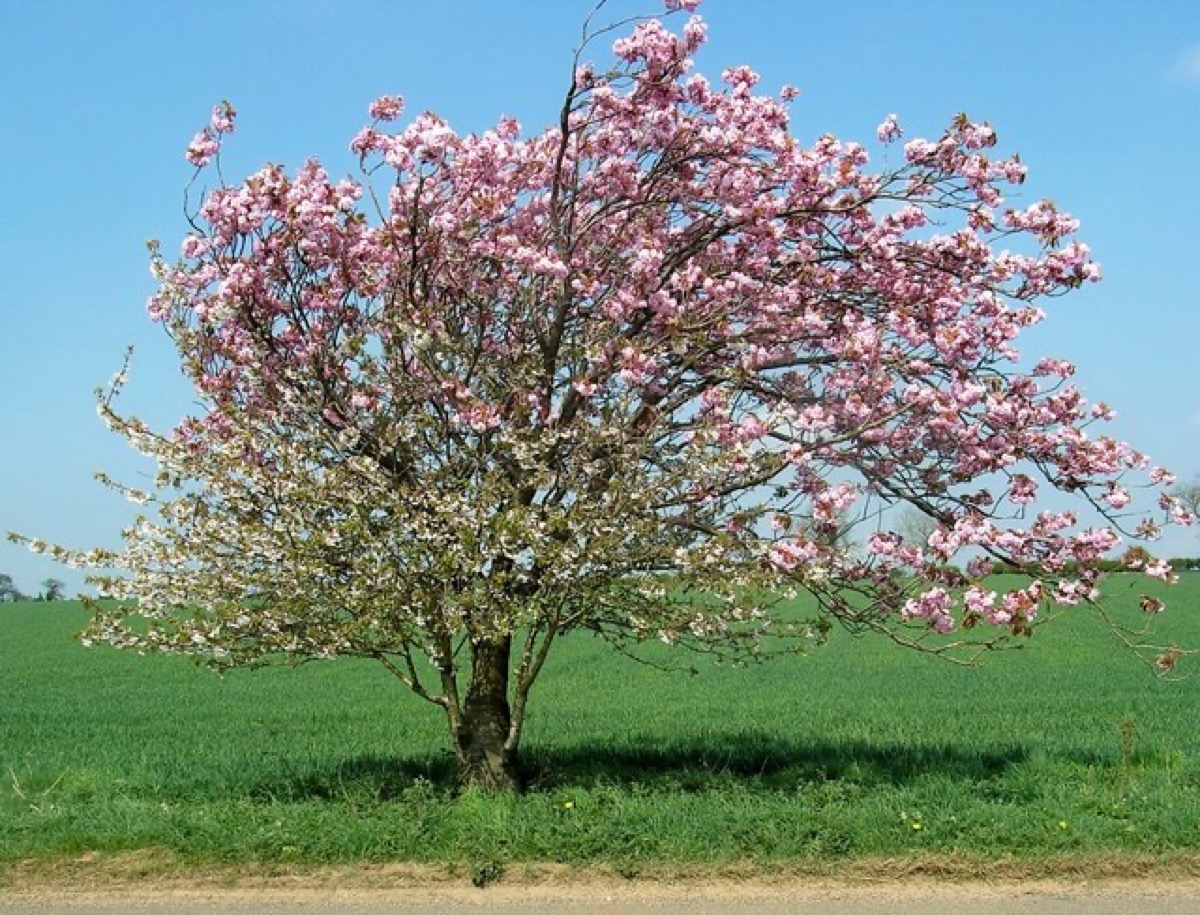
You are shown an apple tree in full blossom. A single named apple variety, planted alone with no other variety anywhere nearby, has bloomed beautifully this spring. Will it set a real commercial crop of fruit?
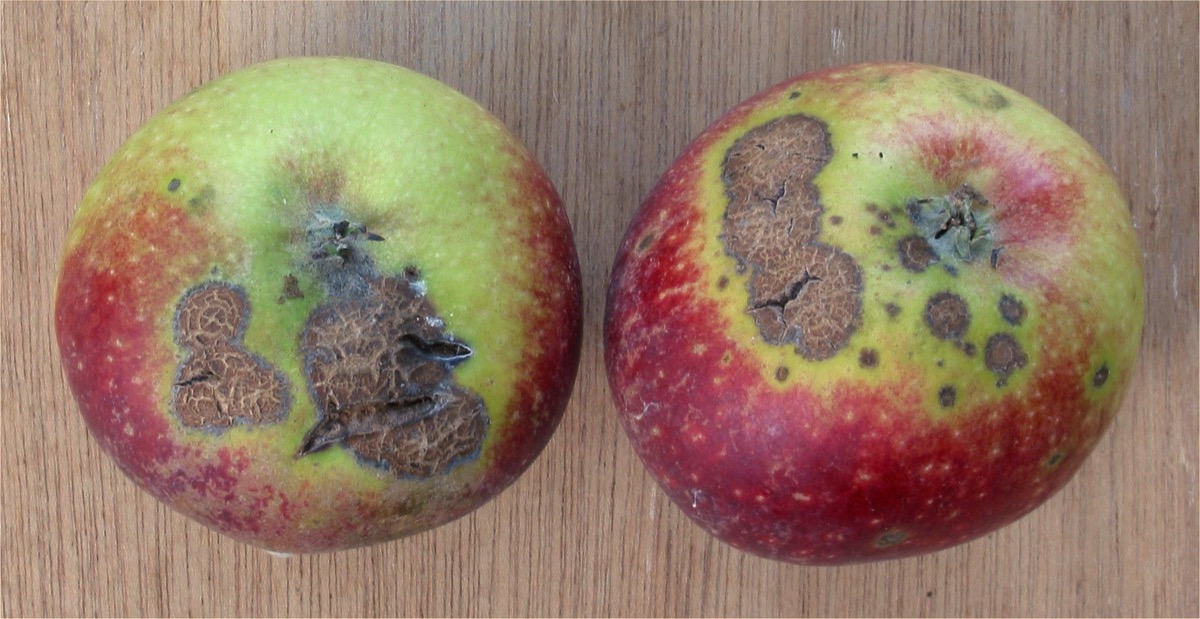
What disease is this?
Honest Limits of This Guide
- There is no single right planting month or bloom season for the whole world in this guide. Your own right dormant-season planting window and your own real bloom timing are set by your own local winter and spring, not by a fixed calendar date this guide could honestly print once for every one of its own 29 countries (Stage 6, Stage 9).
- World and country production figures in this guide come from a secondary compilation that itself cites FAOSTAT's own 'Apples' 2022 dataset directly, because this session did not independently re-verify a single live FAOSTAT bulk-data query for this specific crop and year, the same real limitation this library's own grape, cotton and soybean guides record for their own figures.
- This guide does not print one single, unified per-hectare yield figure for apple, because real yield differs by a large factor between traditional wider-spaced orchards and intensively managed high-density dwarfing systems -- averaging them into one number would honestly mislead more than it would inform (yieldAndMarketValue).
- Apple's own real world area-harvested figure is stated as a range rather than tied to the same 2022 production year, since this session's own research did not find one single, directly comparable live source for both figures together in the same year (globalImportance).
- Apple is honestly NOT one of the ten crops Laisha's own live Global Commodity Price service currently tracks. This guide states that gap plainly in yieldAndMarketValue rather than inventing a number or implying a live reference exists where none currently does.
- This guide does not name any pesticide, fungicide, herbicide or seed-treatment product or compound. It names mode-of-action groups and general practice categories, and the toxicity colour-band principle, only. If you decide to use a product, buy only from a licensed dealer and follow the label on the actual package.
- The toxicity colour band is a principle, not a fixed chemical-to-colour list. The same active substance can sit in a different band in a different formulation or country, and registrations change. Read the real triangle on the real package.
- This guide did not independently confirm a single, national clean-plant or virus-certification standard for every one of its own 29-country list -- the National Clean Plant Network programme named in seedGradingAndCertification is specifically a real, checkable United States example, not a claim that an identical scheme exists everywhere.
- This guide's own real establishment-cost figures in farmEconomics are drawn from published United States high-density orchard cost studies, in one currency -- they illustrate the real SHAPE of apple's establishment-versus-ongoing cost pattern, not a forecast for any other country's costs, currency or scale of operation.
- This guide names cedar-apple rust, bitter pit and woolly apple aphid honestly in words, but no adequately licensed, freely reusable Commons photograph specifically showing their own field symptoms could be found this session; a grower facing a suspected case of any of them should confirm with a real local extension visit rather than relying on this guide's own written description alone to self-diagnose (troubleshooting, images).
- This guide's own real chill-hour ranges and variety examples are drawn from published horticultural extension and nursery sources cross-checked in this same session, not from one single, universal global chill-hour dataset covering every variety and every one of this guide's own 29 countries.
Related Laisha Tools
- Global Market Price Outlook — Check today's price and trend
- Crop Calendar — Build a season-long sowing plan
- Pest & Disease Intelligence — Risk reasoning and a global pest & disease library
- Crop Health — Photo-based first read on a field problem
- Soil Health — Track soil test results across seasons
Open the free Applied Agriculture Library in the Laisha app →
Sources
- GBIF Backbone Taxonomy species-match record for Malus domestica (Suckow) Borkh. (usage key 3001244) — Global Biodiversity Information Facility (GBIF), Copenhagen (source)
- EPPO Global Database taxon record for Malus domestica, code MABSD — European and Mediterranean Plant Protection Organization (EPPO), Paris (source)
- Review of the real, published history of Bramley's Seedling apple, its 1809 origin and the surviving original tree — Multiple real, cross-checked horticultural and historical sources (source)
- Review of the real, published genetics of apple heterozygosity and why apple varieties do not breed true from seed — Multiple real, cross-checked horticultural and genetics sources (source)
- Review of the real, published genomic research tracing apple domestication to Malus sieversii in Kazakhstan and its hybridisation with Malus sylvestris along the Silk Road — Multiple real, cross-checked genomics and horticultural-history sources including Cornell Chronicle and Smithsonian Magazine (source)
- Review of the real, published historical record of John Chapman ('Johnny Appleseed') planting seed-grown apple orchards chiefly for cider — Multiple real, cross-checked historical sources (source)
- Apple production in major countries, 2022 (secondary compilation citing FAOSTAT) — Multiple real, published secondary trade and statistics sources compiling FAOSTAT's own 'Apples' dataset (source)
- Laisha Global Crop Priority Research -- Apple entry — Laisha internal curated research (backend/database/globalCropPriorityResearch.json) (source)
- United States Standards for Grades of Apples for Processing — USDA Agricultural Marketing Service (source)
- More than half of apples available for U.S. consumption are used in juices — USDA Economic Research Service (source)
- Review of the real, published classification of dedicated cider apple varieties, including the Long Ashton bittersweet and bittersharp categories — Multiple real, cross-checked cider-industry and horticultural sources (source)
- United States Standards for Grades of Apples — USDA Agricultural Marketing Service (source)
- Review of the real, published apple rootstock classification (dwarfing, semi-dwarfing, semi-vigorous, vigorous), tree size, spacing and time to bearing — Multiple real, cross-checked horticultural extension and nursery sources including Washington State University Tree Fruit and the RHS (source)
- Review of the real, published apple chill-hour requirement ranges and low-, medium- and high-chill variety classification — Multiple real, cross-checked horticultural extension and nursery sources (source)
- Review of the real, published apple self-incompatibility, pollinizer compatibility, triploid variety and pollinator dependence — Multiple real, cross-checked horticultural extension sources including Penn State Extension and the Vermont Agency of Agriculture (source)
- Review of the real, published scab-resistance breeding using the Vf gene from Malus floribunda 821 and documented resistance-breakdown against new pathogen races — Multiple real, cross-checked peer-reviewed plant-pathology and breeding sources (source)
- Fruit Trees -- National Clean Plant Network programme overview and history — National Clean Plant Network (NCPN), United States (source)
- Review of the real, published high-density apple orchard establishment cost studies and time to first commercial bearing — Multiple real, cross-checked university extension cost-of-production studies including Michigan State University Extension (source)
- Review of real, published apple yield ranges by orchard system and the real agronomic principle and purpose of fruit thinning — Multiple real, cross-checked horticultural extension sources including Good Fruit Grower (source)
- Bitter Pit and Calcium Deficiencies in Apple Fruit, and Is calcium deficiency the real cause of bitter pit? A review — eXtension Foundation ('Apples' community of practice) and a real, peer-reviewed review article cross-checked in this same session (source)
- Review of real, published general apple orchard nutrition guidance covering nitrogen, potassium, calcium and boron — Multiple real, cross-checked horticultural extension sources (source)
- Laisha's own agrochemical safety reference: mode-of-action grouping and the India colour-band toxicity principle — Laisha internal curated reference, built from the Insecticides Act 1968 / Insecticide Rules 1971 (India) and IRAC/FRAC/HRAC mode-of-action classification systems (source)
- Review of real, published apple harvest maturity indices including background colour, firmness and starch-iodine testing — Multiple real, cross-checked horticultural extension sources (source)
- Controlled Atmosphere Storage of Apples — University of Maryland Extension and cross-checked against the WFLO Commodity Storage Manual (source)
- Review of real, published variety-specific apple storage duration differences under controlled-atmosphere storage — Multiple real, cross-checked peer-reviewed postharvest-science sources (source)
- Critical Review on Apple Scab (Venturia inaequalis) Biology, Epidemiology, Economic Importance, Management and Defense Mechanisms — Peer-reviewed plant-pathology research, cross-checked against Cornell University Hudson Valley Research Laboratory extension guidance (source)
- Fire blight of apple and pear — American Phytopathological Society (APS) Education Center (source)
- Review of the real, published history establishing Erwinia amylovora as the first bacterium proven to cause a plant disease, T. J. Burrill (1878) and J. C. Arthur (1885) — Multiple real, cross-checked peer-reviewed plant-pathology history sources (source)
- Review of real, published apple powdery mildew (Podosphaera leucotricha) symptoms, epidemiology and management — Multiple real, cross-checked horticultural extension sources (source)
- Mapping the Potential Global Codling Moth (Cydia pomonella L.) Distribution Based on a Machine Learning Method, and related real, published pest-management research — Scientific Reports (Nature Publishing Group), peer-reviewed, cross-checked against Pacific Northwest Pest Management Handbooks (source)
- Review of real, published cedar-apple rust (Gymnosporangium juniperi-virginianae) biology, alternate-host life cycle and management — Multiple real, cross-checked university extension plant-pathology sources (source)
- Review of real, published woolly apple aphid (Eriosoma lanigerum) biology, root colonisation and rootstock-resistance management — Multiple real, cross-checked university extension entomology sources (source)
- Review of the real, published managed ('club') apple variety licensing system, including Honeycrisp derivatives, Cosmic Crisp, Envy and Jazz — Multiple real, cross-checked horticultural and agricultural-economics sources (source)