How to Grow Cocoa
Theobroma cacao · Also called: cocoa, cacao, cocoa tree, cacao tree, chocolate tree, cacaoyer, cacaotier, kakao
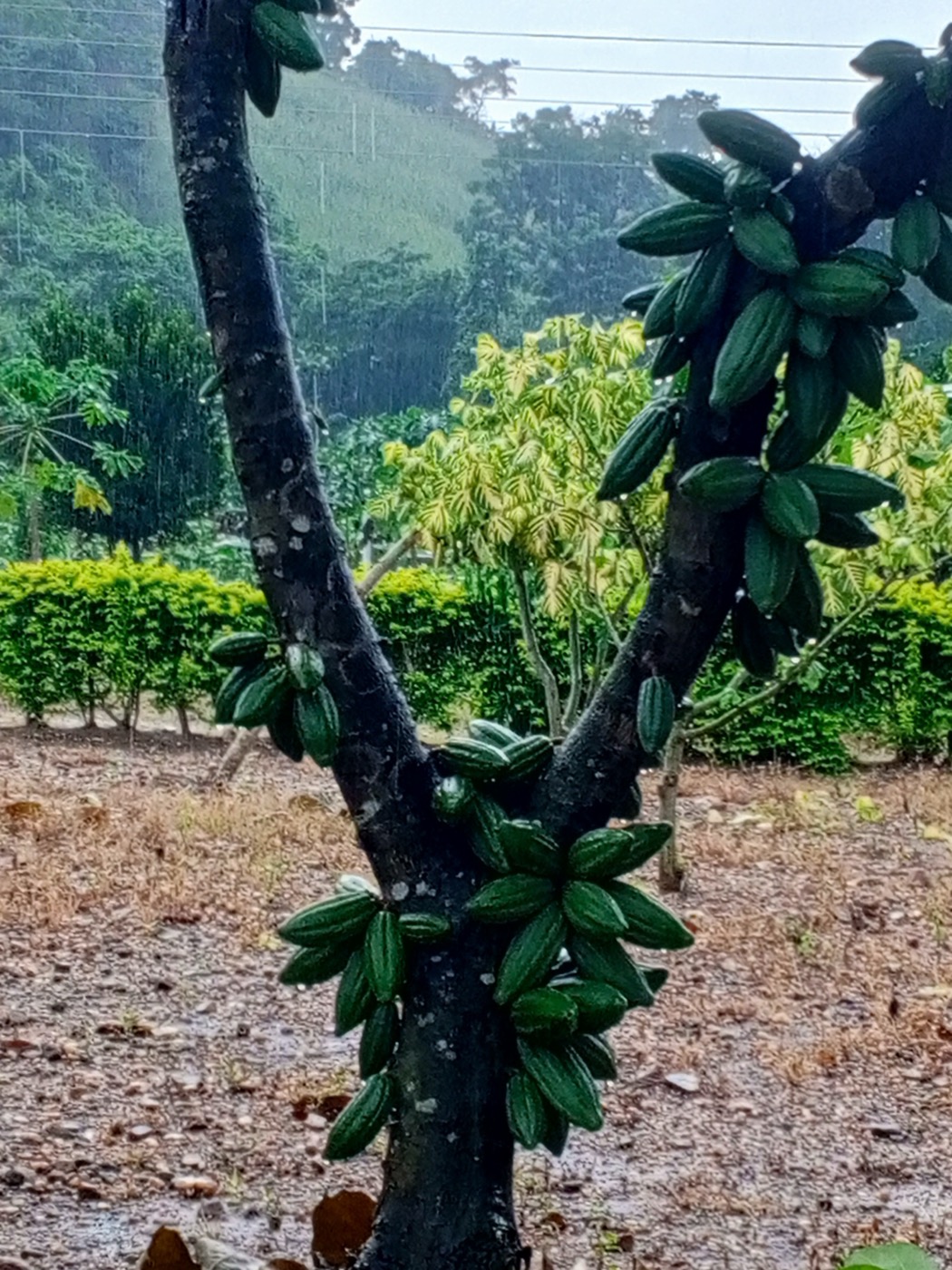
Photo: Kewl Sunshine, CC BY-SA 4.0 (Wikimedia Commons)
Cocoa is a real top-ten crop in 27 of the world's 195 countries, and the single biggest crop of all in five of them: Cote d'Ivoire, Dominica, Ecuador, Ghana and Sao Tome and Principe. World production for the 2023/24 cocoa season is estimated by the International Cocoa Organization at approximately 4.382 million tonnes, with Africa alone supplying roughly 71 percent of the world total (globalImportance). What makes cocoa genuinely unusual among this library's own tree crops is a single, real, distinctive botanical fact: cocoa flowers and pods grow directly out of the trunk and older branches of the tree itself, a real trait called cauliflory, rather than from the outer twigs the way almost every fruit tree a farmer has ever grown actually fruits. This is not a minor curiosity -- it shapes how a cocoa tree is pruned, how it is harvested, and how a careless cut can cost a tree years of future crop (growthHabitAndMethod, harvestMethods). Cocoa's own real value chain is also unusually dependent on a single, essential post-harvest step most consumers never think about: raw cacao beans are genuinely bitter, astringent and without real chocolate flavour until they are fermented, a real 3 to 7 day microbial process this guide treats as the defining part of the whole crop (harvestMethods, processingAndEndUses) -- skip it, and the beans a farmer worked years to grow are honestly close to worthless to a real chocolate buyer. Cocoa's own real global supply is also genuinely concentrated in a way few other crops in this library are: West Africa, led by Cote d'Ivoire and Ghana together, supplies the large majority of the world's cocoa, and the crop's own real economics carry a well-documented, genuinely serious smallholder poverty and child-labour concern this guide names honestly rather than glossing over (safetyWarningFirst, farmEconomics). As with every crop in this library, any agrochemical used on this crop must be handled exactly according to this guide's own chemicalSafetyRule below, bought only from a licensed dealer, and never guessed at from a name half-remembered from a neighbour.
Global Importance
Cocoa grows across a real tropical belt within about 20 degrees of the equator, but its true position within that belt is genuinely lopsided: West Africa alone, led overwhelmingly by Cote d'Ivoire, produces the large majority of the world's real tonnage, and millions of smallholder families across Africa, Latin America and Southeast Asia depend on this single crop as their own most important real source of cash income.
Market Segments
Cocoa splits into real, materially different markets, broadly analogous to the commodity-versus-specialty split this library's own coffee guide describes, and the split starts before a single pod is picked: which real genetic type you grow, and how carefully your own fermentation and drying are done, decide which of these markets you can realistically sell into at all.
Growth Habit
Three real, foundational facts decide almost everything else a cocoa grower does: cauliflory, the genuinely unusual real habit of flowers and pods growing directly from the trunk and older branches rather than from outer twigs; a real, live debate over whether cocoa should be grown under taller shade trees or in more intensive full-sun systems; and cocoa's own real dependence on tiny insects, not bees, for pollination -- a dependence so poor in practice that hand pollination is a genuine, growing real practice in parts of the world.
Growing Cocoa, Stage by Stage
- 1. Choose your land, climate and shade system — Confirm your own real climate genuinely suits cocoa, decide shade or full sun deliberately, and choose land with real drainage before a single seed is sown -- these decisions shape everything else in this guide.
- 2. Choose your genetic type and source healthy planting material — Get seed or seedlings from a known, healthy, regionally recommended source, and understand honestly which real genetic type -- Criollo, Forastero or Trinitario -- your own planting material actually is before you commit years of land to it.
- 3. Raise nursery seedlings — Germinate seed and raise seedlings under real, protected shade for 4 to 6 months before they are strong enough for the field -- cocoa's own real germination is genuinely fast, but the nursery period that follows still demands real care.
- 4. Prepare the field and transplant — Dig planting holes to real, sensible spacing, and transplant hardened-off seedlings at the start of a real, reliable rainy season.
- 5. Establish the young planting through its unproductive years — Manage the real, multi-year gap between transplanting and a first meaningful harvest with real temporary shade, formation care, and steady, patient management, rather than treating these years as wasted time.
- 6. Feed the crop — Base your programme on a real soil test where possible, feed a young non-bearing tree lightly and a mature bearing tree heavily, and treat potassium as cocoa's own single biggest real nutrient demand.
- 7. Water — Cocoa needs real, consistent moisture year-round, with no long unbroken dry season, and a shortage at flowering or pod fill costs the most real yield.
- 8. Weeds — Control weeds hardest around young, establishing trees and keep mature rows reasonably clear, using mulch as your main real tool alongside careful, shallow physical weeding.
- 9. Prune and manage shade every year — Prune bearing trees every year to keep them productive, open and manageable, respecting cocoa's own real jorquette growth habit, and maintain any shade canopy deliberately -- both are genuinely ongoing, whole-life tasks in a perennial crop, not one-off jobs.
- 10. Support pollination — Cocoa's own real natural pollination is genuinely poor, and this stage covers the two real things a grower can actually do about it: encourage the tiny midges that do most of the work, and where labour allows, hand-pollinate.
- 11. Insect pests, stage by stage — Capsid bugs matter most across West Africa, where their feeding wounds both damage the tree directly and open the door to black pod infection. The cocoa pod borer matters most across Southeast Asia, where it can devastate a planting's own real bean quality from inside the pod.
- 12. Diseases, stage by stage — Black pod disease is the single most widespread, most consistently damaging disease in world cocoa production. Witches' broom disease is the single most historically devastating, having genuinely collapsed an entire regional industry within a decade. Cacao swollen shoot virus and frosty pod rot each carry their own real, serious, documented economic history.
- 13. Harvest the ripe pods — Harvest carefully with a machete or a pod hook, cutting the pod's own stalk cleanly without ever cutting into the trunk or branch flower cushion it grew from -- the single most important real technique point in this whole stage.
- 14. Ferment, dry and store the cocoa — Ferment wet beans for 3 to 7 real days, since this single microbial step is the essential reason cocoa has any real chocolate flavour at all, then dry to a safe, stable moisture and store correctly to protect the value this whole guide has helped you grow.
Fertiliser Programme
Cocoa is fed in real, staged amounts that scale up sharply from a light programme for a young, non-bearing tree to a genuinely heavy one for a mature, high-yielding planting, with potassium as the crop's own single biggest real nutrient demand throughout.
Common Problems & Troubleshooting
If you see: Small, translucent spots on a pod that develop whitish spore growth within a few days and then spread until the whole pod turns black and mummified, often within a week of the first spot appearing.
It likely means: Black pod disease, caused by the oomycetes Phytophthora megakarya (the most aggressive) or Phytophthora palmivora -- the single most widespread real cause of cocoa yield loss worldwide, with typical losses of 20 to 25 percent of pods and untreated losses reaching up to 80 percent in a bad year.
Do this: Remove and destroy infected pods promptly and regularly through the whole wet season -- this is genuinely the core, most effective control, not an optional extra.
If you see: Dense, abnormal, broom-like clusters of shoots, green and swollen at first and drying brown one to two months later but staying attached, where a single normal shoot should be, sometimes alongside deformed, seedless pods.
It likely means: Witches' broom disease, caused by the fungus Moniliophthora perniciosa (formerly Crinipellis perniciosa) -- the single most historically devastating disease named anywhere in this guide, having collapsed Brazil's Bahia state cocoa industry from around 380,000 tonnes a year before 1989 to roughly 90,000 tonnes by the late 1990s, taking Bahia from the world's third-largest cocoa exporter to a net importer.
Do this: Remove diseased brooms and pods systematically and completely -- near-total removal is genuinely required to make a real difference.
If you see: Red banding along the veins of the newest, youngest leaves on a flush, followed weeks to months later by conspicuous swellings on stems or roots, small mottled pods, and eventual dieback.
It likely means: Cacao swollen shoot virus, a real viral disease of the genus Badnavirus spread by mealybugs, first identified in Ghana in 1936 and still endemic across Ghana, Togo and Nigeria -- one of the largest disease-driven tree-removal programmes in agricultural history, with over 28 million trees removed in Ghana alone between 2006 and 2010 and over 200 million trees lost overall across its history.
Do this: Inspect new flush regularly for red vein banding specifically, since it appears well before the swellings and is the earliest real warning sign.
If you see: Irregular, water-soaked lesions on a pod that develop a distinctive white to cream powdery spore layer across the pod surface as the infection progresses.
It likely means: Frosty pod rot, caused by the fungus Moniliophthora roreri, a major real disease across parts of Central and South America believed to have originated in the Colombian and Ecuadorian Andes and spread through the region over the 20th century, with published losses reaching 80 to 90 percent in susceptible, unmanaged plantings.
Do this: Remove and destroy infected pods before the white spore layer fully develops and disperses, since removing a pod after sporulation has already begun genuinely spreads rather than prevents further infection.
If you see: Small, dark, sunken lesions on green shoots and on pods, sometimes with dieback on young shoots where repeated feeding has effectively girdled the stem.
It likely means: Capsid (mirid) bug damage, caused by sap-feeding insects including Sahlbergella singularis and Distantiella theobroma, among the single most economically damaging insect pests of cocoa across West Africa specifically -- and a real, documented entry point for black pod infection through the same feeding wounds.
Do this: Improve airflow and reduce excess shade through regular pruning, since capsids favour dense, humid, poorly ventilated canopies.
If you see: Ripening pods showing premature, irregular yellow patches rather than an even colour change, with beans inside clumped together, small and discoloured when the pod is cut open.
It likely means: Cocoa pod borer (Conopomorpha cramerella), a small moth whose larvae tunnel inside the pod to feed directly on the pulp and developing beans -- a major, well-documented economic pest across Indonesia, Malaysia and neighbouring Southeast Asian cocoa regions specifically.
Do this: Harvest promptly and completely at real ripeness on a tighter cycle, since this genuinely interrupts the pest's own life cycle.
If you see: A tree that looks healthy, flowers normally, but sets very few pods relative to the number of flowers it produces, with most flowers simply dropping without developing.
It likely means: Genuinely poor natural pollination, a real, normal but often underappreciated fact of cocoa biology -- fewer than 5 percent of flowers on an average tree are typically pollinated at all, since cocoa depends almost entirely on tiny midges rather than bees (growthHabitAndMethod).
Do this: Understand this is a real, direct pollination limitation rather than a disease, and no fungicide or pesticide fixes it.
Real Farm Economics
Cocoa's real economics carry two honest, defining facts this guide states plainly rather than softening: a genuine multi-year wait before any income at all, and a real, extensively documented history of smallholder poverty and a genuinely serious child-labour concern in parts of the West African cocoa supply chain that this guide's own safetyWarningFirst already names.
Yield & Market Value
Growing the crop is only part of the job. The last part is knowing what a normal harvest looks like, and knowing what your cocoa is actually worth before you agree a price with anybody -- and for this specific crop, this guide has an honest, direct answer that matters a great deal: cocoa is not one of the crops Laisha's own live commodity price service tracks by name.
Remember It This Way
If you forget every other page of this guide, keep these lines. They are the whole crop, in order, short enough to carry in your head.
- The pods grow from the trunk itself, not the twigs. Cut carelessly and you cut off years of future fruit.
- Three real families share one name: rare and delicate, tough and common, and the hybrid of the two.
- It gives you nothing for years, then keeps giving for decades.
- A tiny fly pollinates it, not a bee -- and misses almost every flower.
- A fungus once turned an exporting nation into an importer within a single decade.
- Raw beans taste of nothing good -- only days of fermenting heat make chocolate possible.
- Break the pod, save the bean, waste the fermentation -- and you have wasted the whole crop.
- The world price can double in a year -- rarely for the farmer first.
Test Yourself: Identification
What crop is growing on this farm, and why do the pods look like they are growing straight out of the trunk?
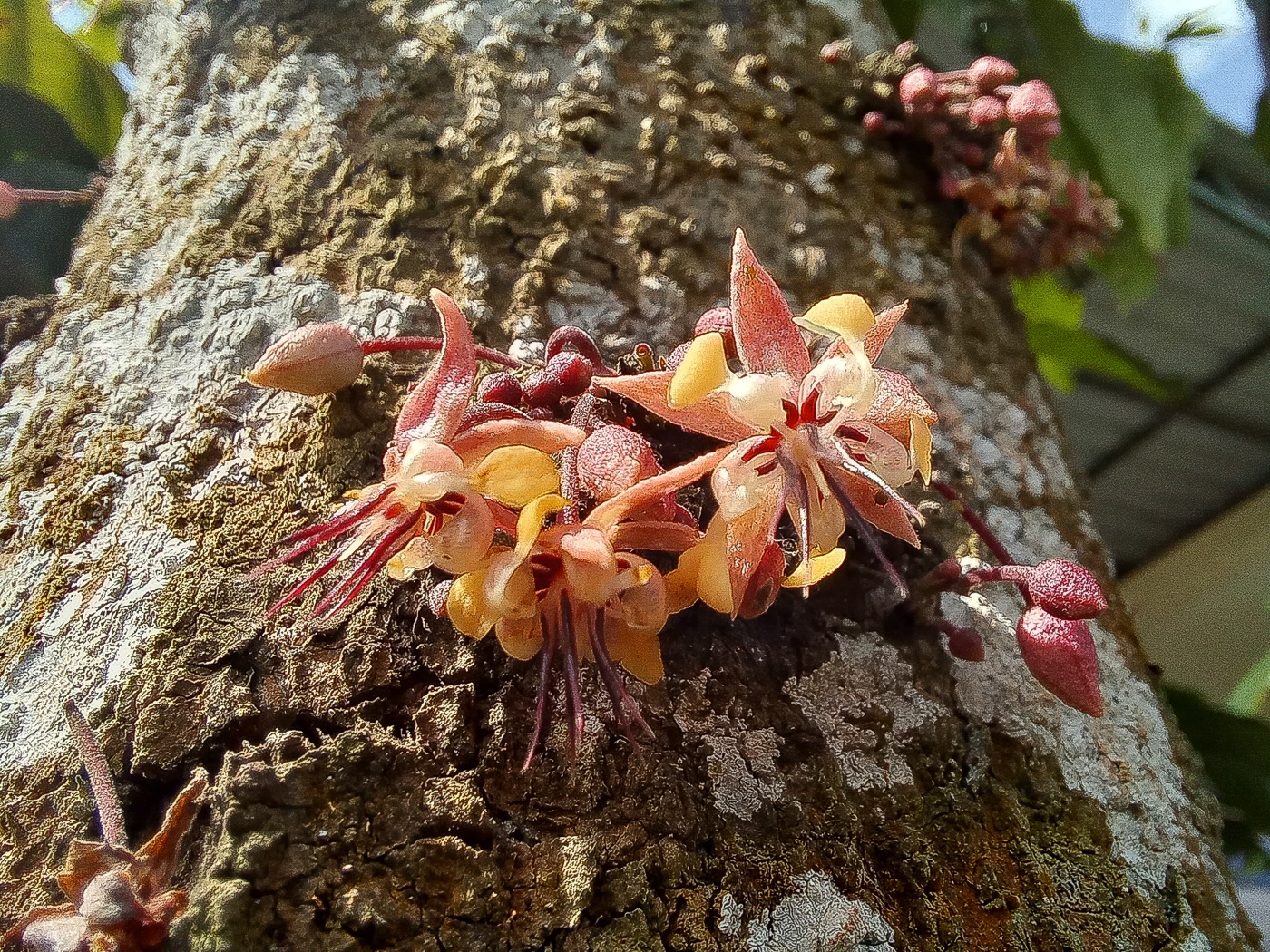
What is this small flower growing on the trunk, and why does it matter?
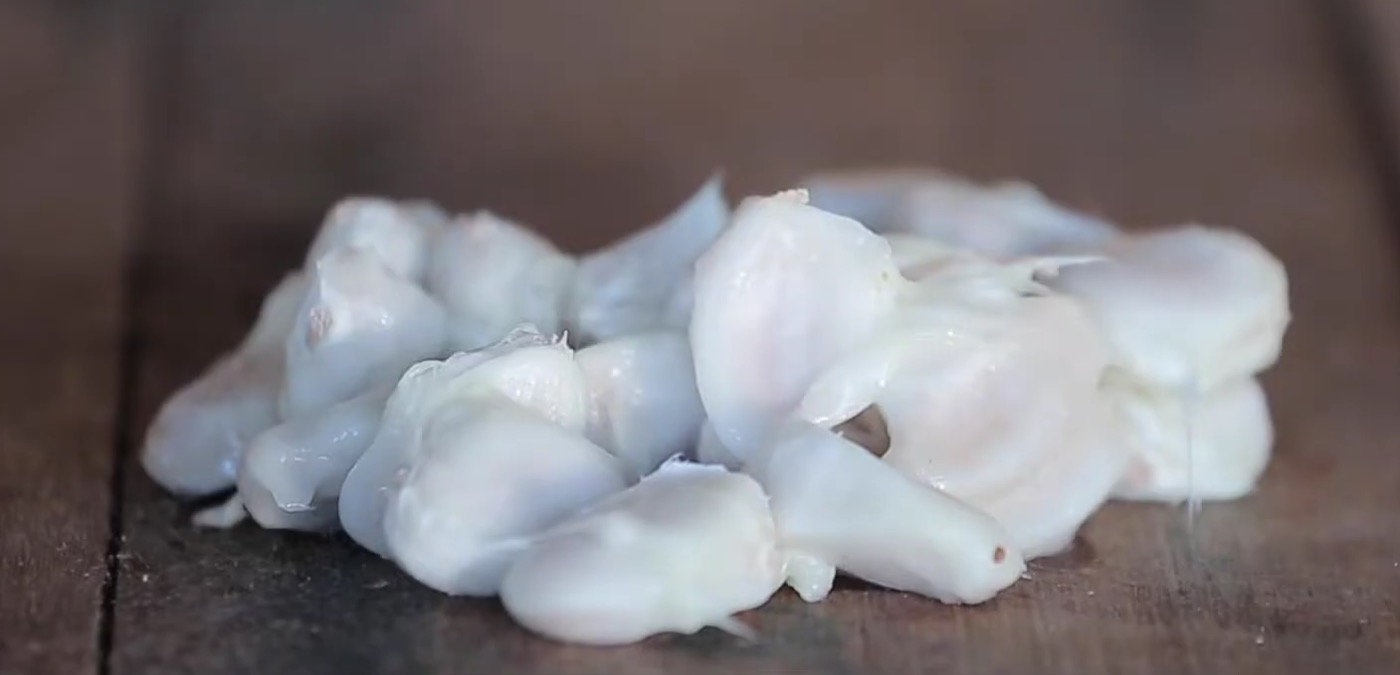
What are these pale, wet beans, and are they ready to eat?
Honest Limits of This Guide
- The right planting month is different in every real cocoa-growing region, because it depends on your own local rainy season, not a fixed calendar date. This guide gives you the rule (Stage 1) instead of a date.
- World production figures in this guide come from two separately sourced compilations covering two different accounting periods -- a FAOSTAT-sourced 2024 calendar-year country table via Wikipedia, and the International Cocoa Organization's own separately published 2023/24 cocoa-season bulletin -- because this session did not find a way to query FAOSTAT's own bulk data service directly for cocoa, the same real limitation this library's own coffee guide records for its own figures.
- This guide does not print a single, unified per-hectare yield figure for cocoa, because cocoa is genuinely grown across traditional smallholder plantings and intensive full-sun estates whose real yields can differ by several times over -- averaging them into one number would honestly mislead more than it would inform (yieldAndMarketValue).
- The real per-hectare fertiliser figures in this guide come from published agronomic guidance describing general cocoa nutrient uptake and one specific reference yield level, not a universal recommendation for every real climate, soil and growing system this guide's own 27-country list spans.
- No detailed, published per-hectare cost-of-production and returns dataset specific to cocoa, covering land establishment, labour and processing costs together, was found this session, unlike this library's own soybean guide. This guide states that gap honestly in farmEconomics rather than presenting an invented or borrowed figure as cocoa's own.
- Cocoa is not one of the ten crops Laisha's own live Global Commodity Price service tracks by name (wheat, rice, cotton, palm oil, maize, sorghum, barley, soybean, groundnut and sugar). This guide states that plainly in yieldAndMarketValue rather than guessing at a world reference price that does not actually exist inside Laisha's own live data for this crop.
- This guide does not name any pesticide, fungicide or herbicide product or compound. It names mode-of-action groups and the toxicity colour-band principle only. If you decide to use a product, buy only from a licensed dealer and follow the label on the actual package.
- The toxicity colour band is a principle, not a fixed chemical-to-colour list. The same active substance can sit in a different band in a different formulation or country, and registrations change. Read the actual triangle on the actual package.
- This guide does not carry a real, published EU, US or Canadian seed-law-style certification standard for cocoa the way several other crops in this library do, because no such formal legal standard was found to exist for cocoa seed the way it does for cereal and vegetable seed (seedGradingAndCertification). This is stated honestly as a real gap in the world's own cocoa seed systems, not a gap in this guide's own research.
- This guide's own frosty pod rot and cocoa pod borer sections draw on general published agronomic and entomological sources rather than on Laisha's own internal leaf visual diagnostic reference, which currently carries full curated entries only for black pod disease, cacao swollen shoot virus and witches' broom disease specifically; a grower facing a suspected frosty pod rot or pod borer case in the field should still confirm with a real local extension visit where a borderline case matters economically.
- The child-labour figures named in this guide's own safetyWarningFirst and farmEconomics sections come from a single, real, landmark 2020 survey covering Cote d'Ivoire and Ghana specifically for the 2018/19 harvest season; this guide does not claim these exact figures apply uniformly across every one of its own 27-country list, and states that honestly rather than generalising a two-country finding into a global one.
Related Laisha Tools
- Global Market Price Outlook — Check today's price and trend
- Crop Calendar — Build a season-long sowing plan
- Pest & Disease Intelligence — Risk reasoning and a global pest & disease library
- Crop Health — Photo-based first read on a field problem
- Soil Health — Track soil test results across seasons
Open the free Applied Agriculture Library in the Laisha app →
Sources
- GBIF Backbone Taxonomy species-match record for Theobroma cacao L. (usage key 3152205) — Global Biodiversity Information Facility (GBIF), Copenhagen (source)
- EPPO Global Database taxon record for Theobroma cacao, code THOCA — European and Mediterranean Plant Protection Organization (EPPO), Paris (source)
- Cocoa bean -- overview article — Wikipedia, citing a wide range of primary botanical, agronomic, historical and market sources (source)
- List of countries by cocoa production — Wikipedia, citing Food and Agriculture Organization of the United Nations 2024 data (source)
- November 2025 Quarterly Bulletin of Cocoa Statistics, covering the 2023/24 cocoa season — International Cocoa Organization (ICCO) (source)
- Market coverage of the 2024 ICE cocoa futures price record — Barchart.com and Nasdaq market news coverage (source)
- Assessing Progress in Reducing Child Labor in Cocoa Growing Areas of Cote d'Ivoire and Ghana, 2018/19 Survey Round, Final Report (October 2020) — NORC at the University of Chicago, in partnership with Tulane University, under a cooperative agreement with the US Department of Labor (source)
- Chocolate, bioterrorism and the birth of Brazilian funk — Engadget, corroborated against IntechOpen's academic chapter 'Cocoa Production and Distribution in Bahia (Brazil) after the Witch's Broom' (source)
- Fine or Flavor Cocoa — International Cocoa Organization (ICCO) (source)
- Cocoa: Fertilizer Requirements — Applied Agricultural Resources Sdn Bhd (AARSB), Malaysia (source)
- Cacao Fertilization and Nutrient Requirements — Wikifarmer (source)
- Laisha Global Crop Priority Research -- Cocoa entry — Laisha internal curated research (backend/database/globalCropPriorityResearch.json) (source)
- Laisha Leaf Visual Diagnostic Reference -- Black pod disease, Cacao swollen shoot virus disease and Witches' broom of cacao entries — Laisha internal curated reference (backend/database/leafVisualDiagnosticReference.json) (source)
- Laisha's own agrochemical safety reference: mode-of-action grouping and the India colour-band toxicity principle — Laisha internal curated reference, built from the Insecticides Act 1968 / Insecticide Rules 1971 (India) and IRAC/FRAC/HRAC mode-of-action classification systems (source)