How to Grow Coffee
Coffea arabica · Also called: coffee, coffee plant, coffee tree, coffee bush, coffee shrub, Arabica coffee, Robusta coffee, green coffee
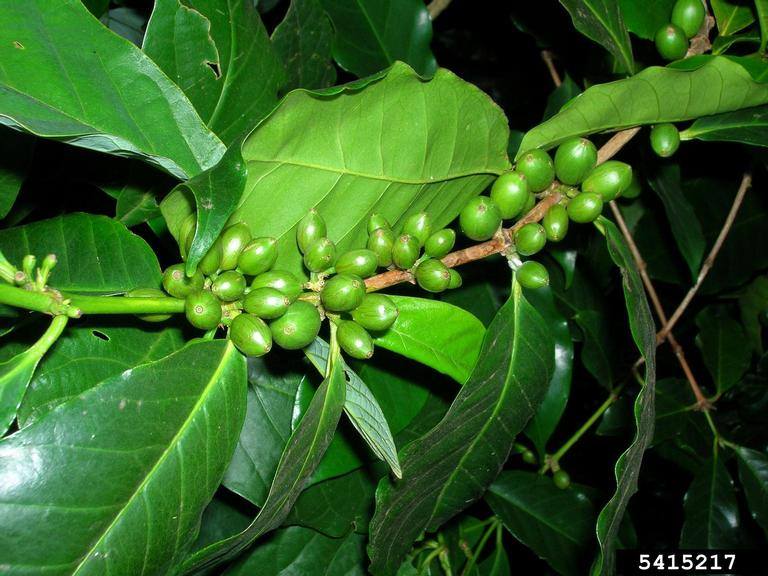
Photo: Forest and Kim Starr, Starr Environmental, Bugwood.org, CC BY 3.0 (Wikimedia Commons)
Coffee is a real top-ten crop in 34 of the world's 195 countries, and the single biggest crop of all in four of them: the Central African Republic, Colombia, Costa Rica and Trinidad and Tobago. World production reached approximately 11.06 million tonnes of green coffee in 2023, led by Brazil at roughly 3.4 million tonnes -- close to a third of the entire world total on its own -- followed by Vietnam, Indonesia, Colombia and Ethiopia. A popular claim says coffee is the world's second most traded commodity after oil. This guide states honestly that the claim is false and has been for decades: independent trade-complexity analysis places coffee closer to 121st among all globally traded goods by value, well behind soybeans, wheat, aluminium, copper and iron ore, and coffee is not even the most-traded agricultural product, sitting behind both soybeans and wheat. The claim traces to a real period, the 1960s and 1970s, when coffee genuinely was one of the most valuable exports of the developing world, and it has simply outlived the decades in which it was true (globalImportance). What makes coffee genuinely unusual in this library is not its scale but its real duality: almost everything else in this guide, from climate need to disease risk to final price, is decided by which of two entirely separate species -- Coffea arabica or Coffea canephora -- a grower is actually growing (botanicalIdentity). Coffee's own real history is a genuine story of colonial-era plant movement on a scale few other crops in this library can match: Ethiopian highland forests are its true wild home, Yemeni Sufi monks around the Port of Mocha were cultivating and drinking it by at least the 15th century, and from there it reached the world almost entirely through a handful of real, documented cuttings and seedlings carried by hand across oceans -- Dutch traders establishing it in Java and on Réunion (then Bourbon) in the early 1700s, the French naval officer Gabriel de Clieu's own well-documented 1720s voyage carrying a single seedling to Martinique under his personal care, and the Portuguese officer Francisco de Melo Palheta's 1727 mission to French Guiana, from which Brazil's own coffee industry -- the industry that still leads the world today -- is traditionally said to descend. As with every crop in this library, any agrochemical used on this crop must be handled exactly according to this guide's own chemicalSafetyRule below, bought only from a licensed dealer, and never guessed at from a name half-remembered from a neighbour.
Global Importance
Coffee is grown across a real tropical belt roughly between the Tropic of Cancer and the Tropic of Capricorn, but its true position within that belt is anything but even: a handful of countries, led overwhelmingly by Brazil, account for the great majority of the world's real tonnage, and the crop's own honest global importance rests less on raw scale than on how many smallholder economies in Africa, Latin America and Asia genuinely depend on it as their single most important cash crop.
Market Segments
Coffee splits into real, materially different markets more sharply than almost any other crop in this library, and the split starts before a single cherry is picked: which species you grow decides which of these markets you can realistically sell into at all.
Growth Habit
Three real, foundational facts decide almost everything else a coffee grower does: which of the two real species this planting actually is; the genuinely long, multi-year wait between planting and a first meaningful harvest, typical of a perennial tree crop rather than an annual one; and the real, live debate between growing coffee under shade or in full sun, which this guide covers honestly rather than picking a side for you.
Growing Coffee, Stage by Stage
- 1. Choose your land, your species, and your shade system — Decide Arabica or Robusta, honestly matched to your real altitude and climate, and decide shade or full sun, before a single seed is sown -- these two decisions shape everything else in this guide.
- 2. Choose your variety and source healthy seed — Get seed or seedlings from a known, healthy, regionally recommended source, and understand honestly that coffee's own real seed and nursery system is far less formally regulated than a cereal crop's own certified seed law.
- 3. Raise nursery seedlings — Germinate seed and raise seedlings under real, protected shade for 6 to 12 months before they are strong enough for the field -- coffee's own nursery stage is genuinely longer than almost any annual crop in this library.
- 4. Prepare the field and transplant — Dig planting holes to real, sensible spacing matched to your chosen species and shade system, and transplant hardened-off seedlings at the start of a real, reliable rainy season.
- 5. Establish the young planting through its unproductive years — Manage the real, multi-year gap between transplanting and a first meaningful harvest with real intercropping, formation pruning, and steady, patient care, rather than treating these years as wasted time.
- 6. Feed the crop — Base your programme on a real soil test where possible, feed a young non-bearing tree lightly and a mature bearing tree heavily, and treat potassium as seriously as nitrogen once cherries begin to fill.
- 7. Water — Coffee needs real, consistent moisture, especially through flowering and cherry fill, and a real, honest dry rest period at another point in the year in many climates -- getting this timing right, not just the total volume, is what actually matters.
- 8. Weeds — Control weeds hardest around young, establishing trees and keep mature rows reasonably clear, using mulch as your main real tool alongside careful, shallow physical weeding.
- 9. Prune and manage shade every year — Prune bearing trees every year to keep them productive and manageable, and maintain any shade canopy deliberately -- both are genuinely ongoing, whole-life tasks in a perennial crop, not one-off jobs.
- 10. Insect pests, stage by stage — One pest matters more than the rest in this crop worldwide: the coffee berry borer, a small beetle that tunnels directly into the bean itself. Scale insects and leaf miners also take a real, if smaller, share of coffee's own worldwide loss.
- 11. Diseases, stage by stage — Coffee leaf rust is the single most historically significant disease in this whole guide, having ended Sri Lanka's entire 19th-century coffee industry outright. Coffee berry disease and coffee wilt disease take much of Africa's own remaining real loss.
- 12. Harvest the ripe cherry — How coffee is harvested genuinely depends on which market it is grown for, and on the real, uneven way cherries ripen on the same branch -- quality-focused Arabica is picked selectively by hand, pass after pass, while commodity-grade Robusta is often stripped or machine-harvested in one pass.
- 13. Process, dry and store the coffee — Choose your real processing method deliberately, since it genuinely and significantly shapes the final cup, then dry the coffee to a safe, stable moisture and store it correctly to protect the value this whole guide has helped you grow.
Fertiliser Programme
Coffee is fed in real, staged amounts that scale up sharply from a light programme for a young, non-bearing tree to a genuinely heavy one for a mature, high-yielding planting, with potassium demand rising in real step with cherry fill each season.
Common Problems & Troubleshooting
If you see: Dusty, yellow-orange powdery patches on the underside of leaves, beneath a pale yellow spot visible from above, spreading and causing heavy leaf drop as infection worsens.
It likely means: Coffee leaf rust, caused by the fungus Hemileia vastatrix -- the disease that destroyed Sri Lanka's entire 19th-century coffee industry and caused a real, documented billion-dollar epidemic across Latin America as recently as 2012 to 2014.
Do this: Check the underside of leaves regularly, especially in warm, humid conditions this fungus favours.
If you see: Dark, sunken lesions on green, unripe cherries, often causing the whole cherry to shrivel, blacken and drop or mummify on the branch before it ever ripens.
It likely means: Coffee berry disease, caused by the fungus Colletotrichum kahawae, first identified in Kenya in 1922 and still a major real threat to African Arabica production, with published losses reaching up to 80 percent on susceptible varieties in a favourable season.
Do this: Check green, unripe cherries specifically and regularly, since this disease attacks fruit rather than mature leaves.
If you see: Sudden yellowing and wilting of leaves that stay attached to the branch rather than dropping, progressing to whole-branch dieback and eventual tree death.
It likely means: Coffee wilt disease, a real fungal disease -- not a bacterial one, despite the common name -- caused by Fusarium xylarioides, historically devastating to Robusta in Uganda and Central Africa, with roughly 14.5 million Robusta trees destroyed in Uganda by 1999 alone.
Do this: Confirm the diagnosis where possible by checking for internal discolouration in a cut stem, alongside the leaf symptoms described above.
If you see: A small, round entry hole near the tip of a coffee cherry, often with fine boring dust visible around it, and tunnelling damage inside the bean itself when the cherry is opened.
It likely means: Coffee berry borer (Hypothenemus hampei), a tiny beetle whose larvae feed inside the bean, the single most economically damaging insect pest of coffee worldwide, causing more than half a billion US dollars in documented annual losses.
Do this: Harvest promptly and completely, leaving no ripe or overripe cherries on the tree or fallen on the ground, since both are real breeding sites for the pest.
If you see: Small, immobile or slow-moving insects clustered on stems, leaf undersides or cherries, often alongside a black, sooty coating on nearby leaves.
It likely means: Scale insects or mealybugs, sap-feeding pests that weaken the tree directly and produce sugary waste that grows a black sooty mould, which further reduces the leaf's ability to capture sunlight.
Do this: Check stems and leaf undersides regularly, especially in shaded, humid conditions these pests favour.
If you see: Flowers open in a normal-looking flush but then wither and drop without setting fruit, especially following an unusually dry spell or an irregular water supply.
It likely means: Blossom drop linked to real water stress -- coffee flowering is often triggered by rain after a dry period, and an irregular or inadequate water supply around flowering genuinely disrupts fruit set.
Do this: Understand this is a real, direct water-timing response rather than a disease, and no fungicide or pesticide fixes it.
Real Farm Economics
Coffee's real economics carry two honest, defining facts this guide states plainly rather than softening: a genuine multi-year wait before any income at all, and a real, well-documented history of smallholder vulnerability to sharp world price swings that this guide's own safetyWarningFirst already names as a root cause of real, documented labour concerns in parts of the supply chain.
Yield & Market Value
Growing the crop is only part of the job. The last part is knowing what a normal harvest looks like, and knowing what your coffee is actually worth before you agree a price with anybody -- and for this specific crop, this guide has an honest, direct answer that matters a great deal: coffee is not one of the crops Laisha's own live commodity price service tracks by name.
Remember It This Way
If you forget every other page of this guide, keep these lines. They are the whole crop, in order, short enough to carry in your head.
- Two real plants share one name. Pick the one your hills can actually grow.
- Highland and cool is Arabica's home. Hot and low is Robusta's.
- It gives you nothing for years, then keeps giving for decades.
- One branch can wear green, yellow and red fruit on the same day.
- A fungus once ended a whole island's coffee trade and started its tea trade.
- The tiny beetle inside the bean beats every spray with one habit: pick it all, drop nothing.
- Washed, natural or honey -- the same tree can taste three different ways.
- A world price crash once cost smallholders more than any pest ever did.
Test Yourself: Identification
What crop is growing on this farm?
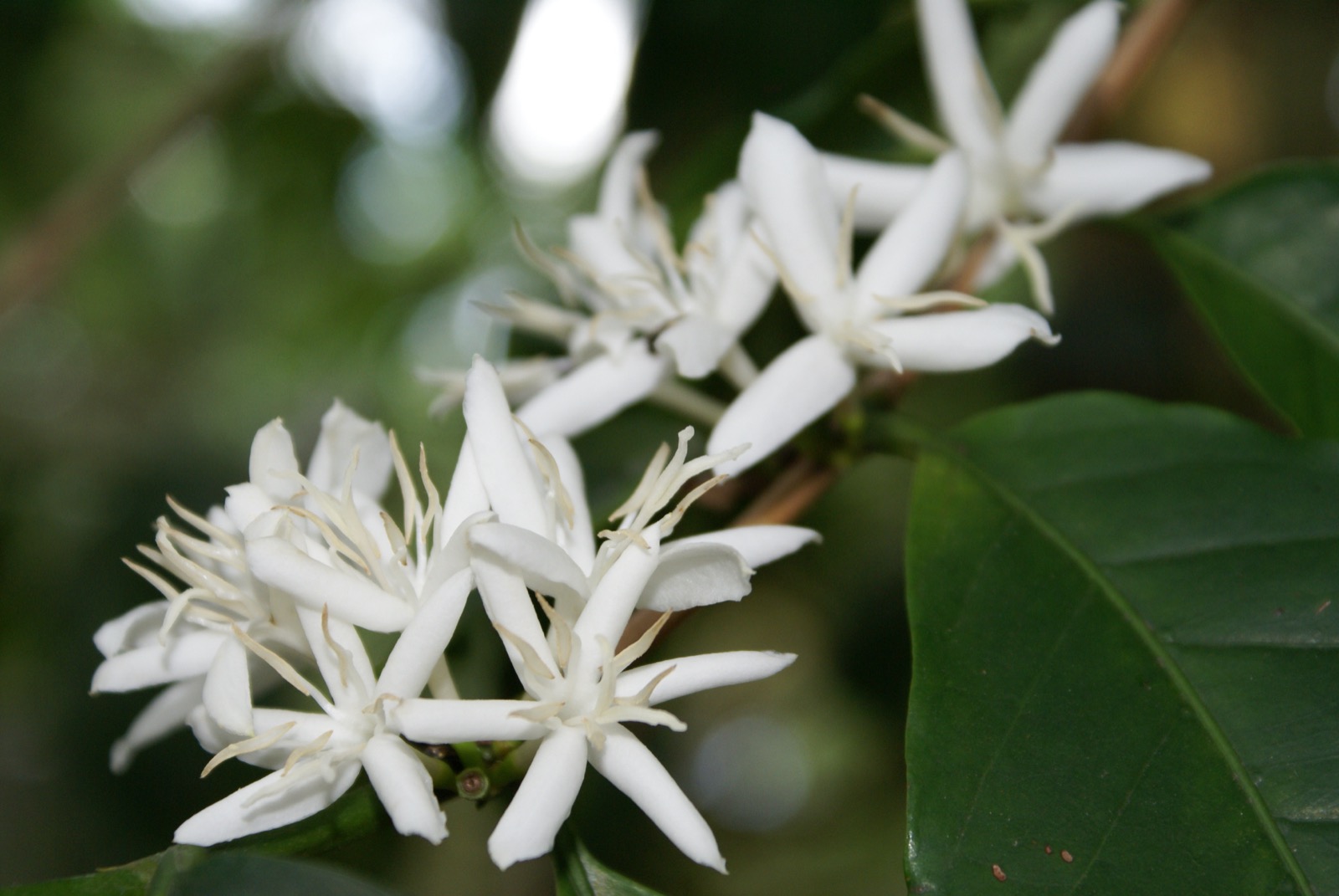
What is this flower, and why does it matter?
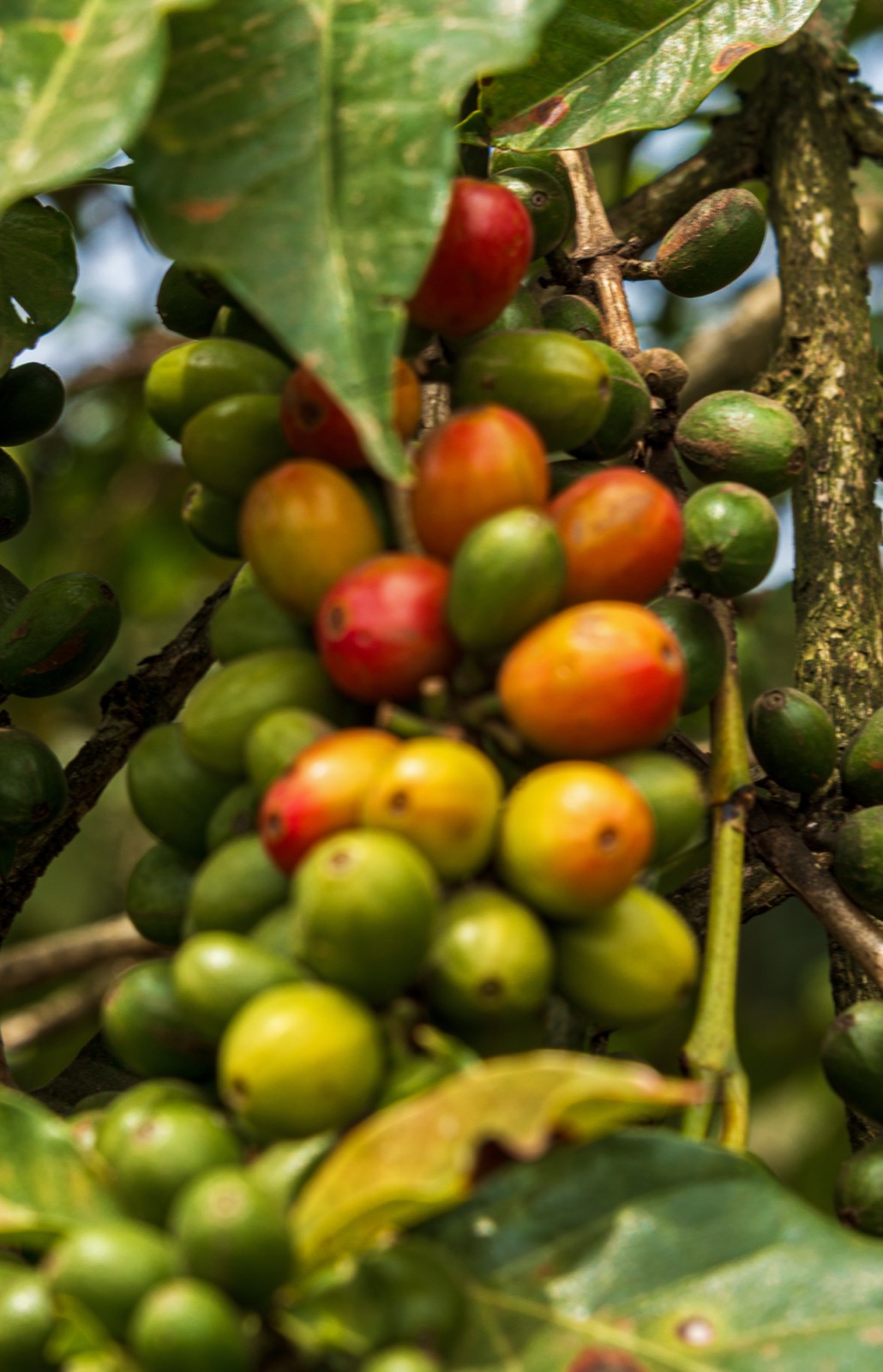
Are these cherries ready to pick?
Honest Limits of This Guide
- The right planting month is different in every real coffee-growing region, because it depends on your own local rainy season, not a fixed calendar date. This guide gives you the rule (Stage 4) instead of a date.
- World production figures in this guide come from a Wikipedia country-production table that itself cites FAOSTAT's own 'Coffee, green' 2023 dataset directly, because this session did not find a way to query FAOSTAT's own bulk data service for coffee, the same real limitation this library's own tomato and coconut guides record for their own figures.
- This guide does not print a single, unified per-hectare yield figure for coffee, because coffee is genuinely grown across smallholder shaded plantings and intensive full-sun estates whose real yields can differ by several times over -- averaging them into one number would honestly mislead more than it would inform (yieldAndMarketValue).
- The real per-hectare fertiliser figures in this guide come from published agronomic guidance describing general coffee nutrient uptake and one specific reference yield level, not a universal recommendation for every real climate, soil and altitude this guide's own 34-country list spans.
- No detailed, published per-hectare cost-of-production and returns dataset specific to coffee, covering land establishment, labour and processing costs together, was found this session, unlike this library's own soybean guide. This guide states that gap honestly in farmEconomics rather than presenting an invented or borrowed figure as coffee's own.
- Coffee is not one of the ten crops Laisha's own live Global Commodity Price service tracks by name (wheat, rice, cotton, palm oil, maize, sorghum, barley, soybean, groundnut and sugar). This guide states that plainly in yieldAndMarketValue rather than guessing at a world reference price that does not actually exist inside Laisha's own live data for this crop.
- This guide does not name any pesticide, fungicide or herbicide product or compound. It names mode-of-action groups and the toxicity colour-band principle only. If you decide to use a product, buy only from a licensed dealer and follow the label on the actual package.
- The toxicity colour band is a principle, not a fixed chemical-to-colour list. The same active substance can sit in a different band in a different formulation or country, and registrations change. Read the real triangle on the real package.
- This guide does not carry a real, published EU, US or Canadian seed-law-style certification standard for coffee the way several other crops in this library do, because no such formal legal standard was found to exist for coffee seed the way it does for cereal and vegetable seed (seedGradingAndCertification). This is stated honestly as a real gap in the world's own coffee seed systems, not a gap in this guide's own research.
- This guide's own coffee berry disease and coffee wilt disease sections draw on published plant pathology literature rather than on Laisha's own internal leaf visual diagnostic reference, which currently carries a full entry only for coffee leaf rust specifically; a grower facing a suspected berry disease or wilt case in the field should still confirm with a real local extension visit or laboratory test where a borderline case matters economically.
Related Laisha Tools
- Global Market Price Outlook — Check today's price and trend
- Crop Calendar — Build a season-long sowing plan
- Pest & Disease Intelligence — Risk reasoning and a global pest & disease library
- Crop Health — Photo-based first read on a field problem
- Soil Health — Track soil test results across seasons
Open the free Applied Agriculture Library in the Laisha app →
Sources
- GBIF Backbone Taxonomy species-match record for Coffea arabica L. (usage key 2895345) — Global Biodiversity Information Facility (GBIF), Copenhagen (source)
- EPPO Global Database taxon record for Coffea arabica, code COFAR — European and Mediterranean Plant Protection Organization (EPPO), Paris (source)
- GBIF Backbone Taxonomy species-match record for Coffea canephora Pierre ex A.Froehner (usage key 2895528) — Global Biodiversity Information Facility (GBIF), Copenhagen (source)
- EPPO Global Database taxon record for Coffea canephora, code COFCA — European and Mediterranean Plant Protection Organization (EPPO), Paris (source)
- Coffee -- overview article — Wikipedia, citing a wide range of primary botanical, agronomic, historical and market sources (source)
- List of countries by coffee production — Wikipedia, citing FAOSTAT's 2023 'Coffee, green' dataset (source)
- Coffee Report and Outlook, December 2023, and coffee year 2023/24 production forecast — International Coffee Organization (ICO) (source)
- No, coffee is not the second-most traded commodity after oil — PolitiFact (source)
- Coffee Value Assessment — Specialty Coffee Association (SCA) (source)
- The Fall of Coffee and the Rise of Tea in Ceylon: A Tale of Ruin and Resilience — History of Ceylon Tea, corroborated against NPR's own coverage of the pathogen's history (source)
- Laisha Leaf Visual Diagnostic Reference -- Coffee leaf rust entry — Laisha internal curated reference (backend/database/leafVisualDiagnosticReference.json) (source)
- Coffee berry disease: a century-old anthracnose of green berries of Arabica coffee (Coffea arabica L.) in Africa — Journal of Plant Diseases and Protection, Springer Nature (source)
- Historical genomics reveals the evolutionary mechanisms behind multiple outbreaks of the host-specific coffee wilt pathogen Fusarium xylarioides — PubMed Central (National Center for Biotechnology Information) (source)
- Coffee Berry Borer (Hypothenemus hampei), a Global Pest of Coffee: Perspectives from Historical and Recent Invasions, and Future Priorities — PubMed Central (National Center for Biotechnology Information) (source)
- Seed and Nursery Verification Program — World Coffee Research (source)
- Optimizing Nutrient Management in Coffee Plantations, and TNAU Agritech coffee cultivation guidance — Agriculture.Institute and Tamil Nadu Agricultural University (TNAU) Agritech Portal (source)
- Trouble in Coffee Lands — Federal Reserve Bank of Boston, Regional Review (source)
- Laisha Global Crop Priority Research -- Coffee entry — Laisha internal curated research (backend/database/globalCropPriorityResearch.json) (source)
- Laisha's own agrochemical safety reference: mode-of-action grouping and the India colour-band toxicity principle — Laisha internal curated reference, built from the Insecticides Act 1968 / Insecticide Rules 1971 (India) and IRAC/FRAC/HRAC mode-of-action classification systems (source)