How to Grow Common bean
Phaseolus vulgaris · Also called: bean, beans, dry bean, dry beans, haricot bean, kidney bean, navy bean, pinto bean
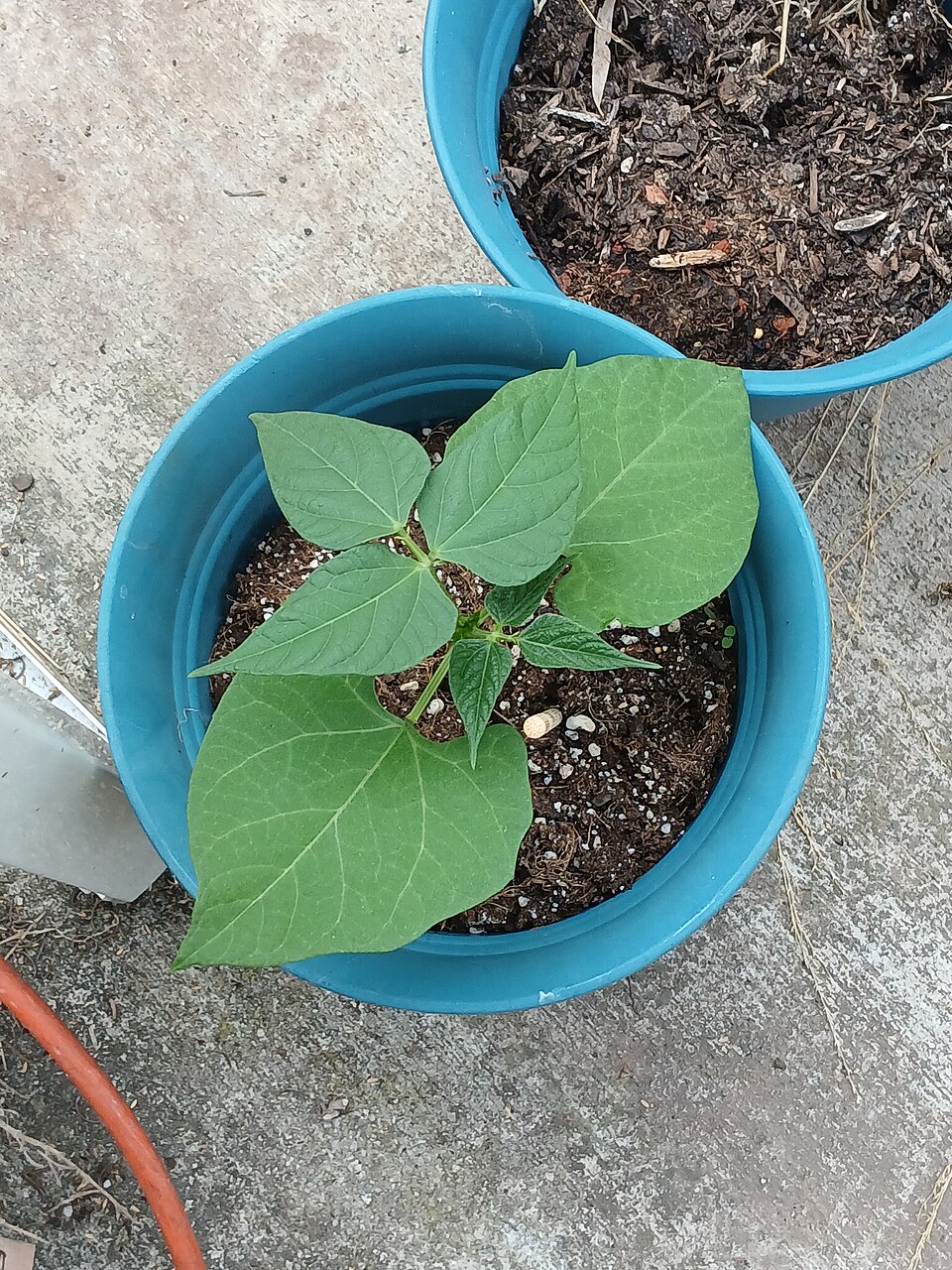
Photo: Datadoggieein, CC0 (Wikimedia Commons)
The common bean is the most important food legume eaten directly by people anywhere in the world. It is a top-ten crop in 52 of the world's 195 countries, and it is the single biggest crop of all in four of them: Burundi, Djibouti, Haiti and Rwanda. For millions of families it is the only protein they can afford, and it is grown mostly by small farmers, often by women, on small plots, by hand. It is also the crop that quietly feeds the soil, because it makes its own nitrogen and leaves some behind for whatever you plant next.
Global Importance
The common bean is the most important food legume eaten directly by people anywhere in the world. It is not a rich country's crop or a poor country's crop. It is grown in the Andes, across eastern and southern Africa, through Central America and the Caribbean, and across South and Southeast Asia, almost always by small farmers on small plots.
Growing Common bean, Stage by Stage
- 1. Get the land ready — Loose, clean, well-drained soil. Not fine dust, not hard clods. Beans need air at the root more than most crops.
- 2. Choose your bean type and your seed — Two decisions, in this order. Bush or climbing. Then which colour of bean your market actually wants.
- 3. Plant the seed — Straight into the ground where it will grow, into warm moist soil, not too deep, in rows you can walk between.
- 4. Water — Steady and moderate. Beans want damp, never soaked. And there is one week you must not let them go dry.
- 5. Weeds and feeding — Weed early and twice. Feed the soil, not the leaves. And understand what the lumps on the roots are doing for you.
- 6. Watch for pests, week by week — Different animals attack at different moments. Know which week to look for what, and you will catch nearly all of them in time.
- 7. Watch for disease, week by week — Almost every serious bean disease arrives inside the seed or waits in old plant rubbish. Clean seed and clean fields beat every spray.
- 8. Know when to harvest — There is a narrow window. Too early and the seed is soft and will not keep. Too late and the pods split and throw your crop on the ground.
- 9. Thresh, dry and store it so you do not lose it — More beans are eaten by weevils in stores than by any pest in any field. This stage is where a good crop is kept or thrown away.
Common Problems & Troubleshooting
If you see: Young seedlings in the first month wilt and die for no obvious reason. The stem just above the ground is swollen, cracked or split, and the lowest leaves have turned yellow. Splitting the stem lengthways shows a small white maggot, or a brown or black case, under the skin.
It likely means: Bean fly, also called bean stem maggot. A tiny shiny black fly laid eggs in the young leaves and the maggot tunnelled down inside the stem to the roots, cutting off the plant's food supply and killing the taproot.
Do this: Heap soil up around the base of every damaged plant that is still alive. The plant then grows new roots above the damage and can pull through.
If you see: Small raised reddish-brown or rust-coloured bumps scattered over the leaves, and sometimes on the pods and stems. When you rub them with a finger, a rusty powder comes off onto your skin. Badly hit leaves curl upward, dry and fall, and the whole field looks scorched.
It likely means: Bean rust, a fungus that needs more than about ten hours of water sitting on the leaf to get started, so it follows dew, cloud and cool moist weather.
Do this: Use the rub test to be sure. Rust powder comes off on your fingers. Bacterial blight and leaf spot do not.
If you see: Dark brown to black lines running along the veins on the underside of the leaves. On the pods, sunken spots ringed by a slightly raised black circle with a reddish border. Young pods shrivel and dry early, and the seed inside is discoloured and misshapen.
It likely means: Bean anthracnose, one of the most damaging bean diseases in the world. It is worst in cool to moderate weather with frequent rain and high humidity, and it came into your field inside the seed you planted.
Do this: Do not save seed from this crop under any circumstances. The fungus gets right inside the seed coat and will plant itself again next season.
If you see: Water-soaked spots that appear first on the underside of the leaves, then join up into large irregular brown patches edged with a narrow yellow band. General yellowing follows. Pods carry sunken circular spots with a narrow reddish-brown border, and in wet weather a yellow slimy ooze dries into a crust on them.
It likely means: Common bacterial blight, favoured by warm to hot weather with high humidity. Like anthracnose, its main source is the seed, and even a trace of infected seed can infect a whole field.
Do this: Do not save seed from this crop. Get clean seed for next season.
If you see: Leaves patterned in patchy light green or yellow and dark green, puckered, curled downward and distorted, on plants that are noticeably shorter than their neighbours. The affected plants flower late and carry fewer, smaller pods with fewer seeds. In some varieties the young leaves develop diffuse reddish-brown areas with black veins, and the tip of the plant wilts and dies back.
It likely means: Bean common mosaic virus, or its more damaging relative bean common mosaic necrosis virus, which causes that black-veined form. These are the most important bean virus diseases in Africa. The infection arrived in the seed and aphids are now spreading it plant to plant.
Do this: Accept honestly that there is no cure and no spray for a virus. Nothing you buy will fix an infected plant.
If you see: Plants that yellow from the bottom up, wilt and die in patches across the field, often in the lower or more compacted parts. Pulled up, the roots are few, brown and rotten. The lower stem may show reddish-brown streaks and cracks, or sunken dark cankers with brown edges, or a fan of silky white mould with small round seeds of fungus at the soil line.
It likely means: The bean root rot complex. Several different soil fungi cause it and they usually arrive together. It is really a disease of stress: poor soil, compacted soil, acid soil, waterlogging, drought, or land that has grown beans too many times.
Do this: Improve the soil first. Well rotted farmyard manure, compost or green manure does more against root rot than anything you can spray.
If you see: The plants look healthy and green and flower normally, but the flowers dry up and fall off without setting pods. The pods that do set are short, with two or three seeds instead of five or six. This happens most in very hot weather or during a dry spell.
It likely means: The crop was stressed at exactly the wrong moment. Beans abort their flowers under heat and under water shortage, and flowering plus the two weeks after it is the most sensitive fortnight in the whole crop.
Do this: If you have any water at all, use it now. Watering at flowering and pod fill is worth more than watering at any other time.
If you see: Neat round holes in the stored beans. Small beetles crawling in the sack. Fine powder like flour at the bottom. Sometimes tiny white egg shells glued to the outside of the seeds. The beans get lighter and lighter and eventually there is more dust than food.
It likely means: Bean weevils. If the eggs are glued onto the seeds with the shells left behind, it is the Mexican bean weevil, which starts and multiplies in the store. If not, it is more likely the common bean weevil, which laid its eggs out in the field in pods that had already split open, and came home with your harvest.
Do this: Take the beans out, dry them hard in the sun again, and sort out every holed and damaged seed by hand.
Yield & Market Value
Growing the crop is only part of the job. The last part is knowing what a normal harvest looks like, and knowing what your beans are worth, and in which grade, before you agree a price with anybody.
Remember It This Way
If you forget every other page of this guide, keep these lines. They are the whole crop, in order, short enough to carry in your head.
- Beans drown before they thirst. Ridge the ground and let the water out.
- Choose the colour your market pays for before you choose your seed.
- Stakes cost work. Climbing beans pay it back three times over.
- Clean seed from a clean plant. Almost every bean disease rides inside the seed.
- Feed the soil, not the leaves. Too much nitrogen means tall plants and few pods.
- One dry fortnight at flowering costs more than a dry month at any other time.
- Never touch a wet bean crop. Wet leaves carry blight from plant to plant.
- If the rust rubs off on your finger, it is rust. Nothing else does that.
- Cut when most pods rattle, before they split and throw your harvest on the ground.
- Dry till it cracks, tie the air out, and the weevils starve instead of you.
Test Yourself: Identification
This leaf is of which plant?
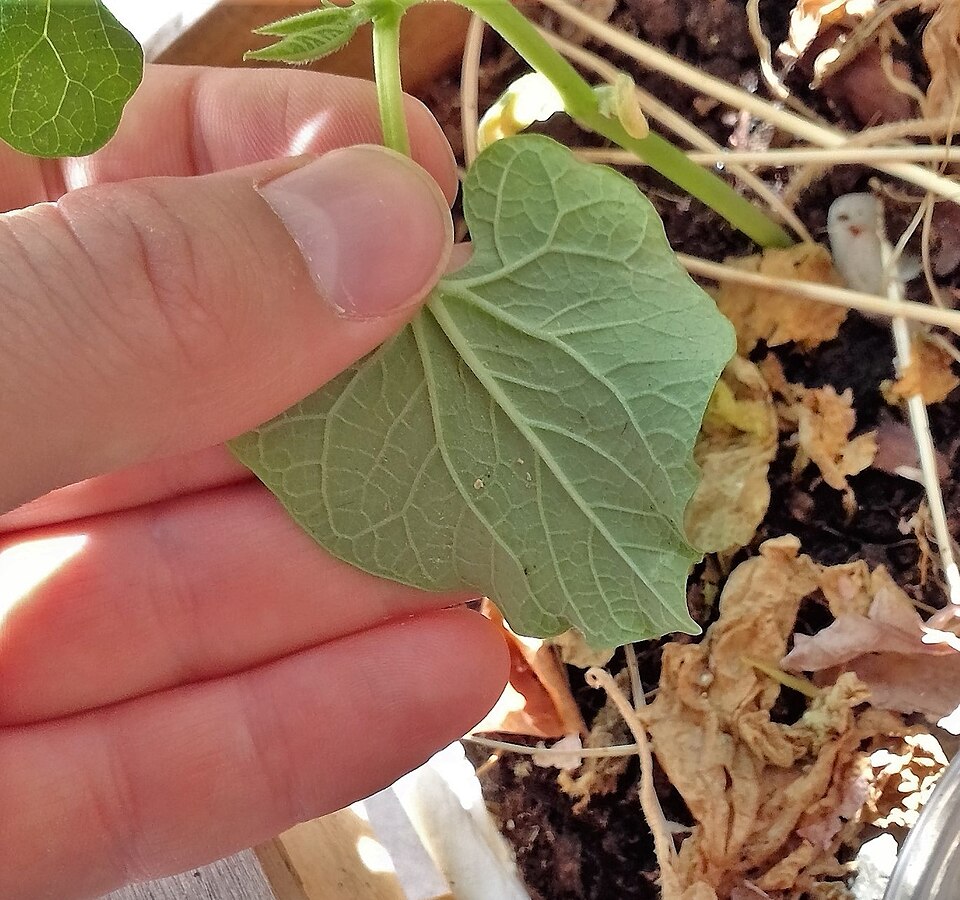
Why should you turn a bean leaf over, and what are you looking for underneath?
Which crop is this, and is it a bush type or a climbing type?
Honest Limits of This Guide
- The right month to plant is different in every country and even in every valley. This guide gives you the rule instead: plant at the onset of your own rains, so that the pods dry down as the weather turns dry.
- How much water your field needs cannot be given as one number. Use your finger in the soil, and protect the flowering fortnight above everything else.
- Spacing figures in this guide are honest working starting points, not universal law. Real spacing depends on your variety, your soil fertility and whether you are intercropping. Ask locally.
- Variety names are local, and a variety that resists a disease in one country is often susceptible to it in the next. Ask your neighbours and your local agricultural officer which variety does well on land like yours.
- This guide does not name any pesticide, weedkiller or fungicide product or active ingredient. It names only mode-of-action classes and the label colour band principle. If you decide to use a product, buy only from a licensed dealer, read the label, and follow it.
- Cost of cultivation and profit figures are deliberately not printed as currency amounts, because they are different in every country and stale within a season. This guide gives you the method to work them out for your own farm instead.
- FAOSTAT's category 'Beans, dry' is broader than Phaseolus vulgaris. In South Asia in particular it absorbs Vigna pulses such as mung, urad and moth bean. Where a country figure in this guide comes from that category, treat it as dry beans broadly, not as common bean exactly. India's very large area figure is the clearest example.
- Rhizobium inoculants are genuinely useful for some legumes. For common bean specifically the published evidence is weak and inconsistent, and this guide says so rather than selling you something.
Related Laisha Tools
- Global Market Price Outlook — Check today's price and trend
- Crop Calendar — Build a season-long sowing plan
- Pest & Disease Intelligence — Risk reasoning and a global pest & disease library
- Crop Health — Photo-based first read on a field problem
- Seed Quality Intelligence — Check a seed lot before you plant it
- Post-Harvest Loss Prevention — Real storage science by crop
Open the free Applied Agriculture Library in the Laisha app →
Sources
- GBIF Backbone Taxonomy record for Phaseolus vulgaris L. (usage key 5350452) — Global Biodiversity Information Facility (GBIF), Copenhagen (source)
- World Checklist of Vascular Plants (WCVP), the checklist behind Plants of the World Online — Royal Botanic Gardens, Kew (source)
- Standard system for the evaluation of bean germplasm — International Center for Tropical Agriculture (CIAT), Cali, Colombia (source)
- Bean disease and pest identification and management (Handbooks for Small-Scale Seed Producers, Handbook Four; CIAT Publication No. 371) — International Center for Tropical Agriculture (CIAT) and Pan-Africa Bean Research Alliance (PABRA), Kampala, Uganda (source)
- Maize-legume cropping guide — Africa Soil Health Consortium (ASHC), CABI (source)
- Atlas of common bean production in Africa, 2nd edition — Pan-Africa Bean Research Alliance (PABRA) and International Center for Tropical Agriculture (CIAT) (source)
- Pan-Africa Bean Research Alliance (PABRA) and the Alliance of Bioversity International and CIAT — PABRA, facilitated by the Alliance of Bioversity International and CIAT, part of CGIAR (source)
- The Alliance of Bioversity International and CIAT — Alliance of Bioversity International and CIAT (CGIAR), Rome and Cali (source)
- FAOSTAT: Production, Crops and livestock products (item 'Beans, dry', item code 176) — Food and Agriculture Organization of the United Nations, Rome (source)
- Laisha global crop priority research dataset (backend/database/globalCropPriorityResearch.json) — Laisha, built on FAOSTAT Production, Crops and livestock products, 2021-2023 three-year means (source)
- Dry bean yields (dataset), built on FAOSTAT: Production, Crops and livestock products — Food and Agriculture Organization of the United Nations, with major processing by Our World in Data (source)
- CODEX STAN 171-1989 (Rev. 1-1995), Standard for Certain Pulses, in Codex Alimentarius: Cereals, Pulses, Legumes and Vegetable Proteins, first edition (FAO document A1392E) — Joint FAO/WHO Food Standards Programme, Codex Alimentarius Commission, FAO, Rome (source)
- Laisha grain visual diagnostic and global trade grading reference (backend/database/grainVisualDiagnosticReference.json) — Laisha, compiled from the primary standards texts including Codex, EAS, AGMARK, EU and US instruments (source)
- Council Directive 2002/55/EC on the marketing of vegetable seed, Annex II point 3(a), consolidated version — European Union, Official Journal / EUR-Lex (source)
- Laisha global seed certification standards reference (backend/database/globalSeedCertificationStandards.json) — Laisha, compiled from the primary certification instruments of the EU, India, the United States, Canada and other systems (source)
- Effect of storage conditions on pectic polysaccharides in common beans (Phaseolus vulgaris) in relation to the hard-to-cook defect — Food Research International, volume 76, pages 105-113, Elsevier (source)
- Detailed analysis of seed coat and cotyledon reveals molecular understanding of the hard-to-cook defect of common beans (Phaseolus vulgaris L.) — Food Chemistry, volume 210, pages 481-490, Elsevier (source)
- Reversibility of the hard-to-cook defect in dry beans (Phaseolus vulgaris) and cowpeas (Vigna unguiculata) — Journal of Food Science, Institute of Food Technologists (source)
- Soaking beans for 12 h reduces split percent and cooking time regardless of type of water used for cooking — Heliyon, volume 8, issue 9, article e10561, Elsevier (source)
- Microsatellite marker diversity in common bean (Phaseolus vulgaris L.) — Theoretical and Applied Genetics, volume 113, issue 1, pages 100-109, Springer (source)
- How do climbing beans fit in farming systems of the eastern highlands of Uganda? Understanding opportunities and constraints at farm level — Agricultural Systems, pages 97-110, Elsevier (source)
- Training manual for small-scale bean producers in the Southern Highlands of Tanzania — Pan-Africa Bean Research Alliance (PABRA) (source)
- IRAC Mode of Action Classification, FRAC Code List and HRAC Global Classification — Insecticide, Fungicide and Herbicide Resistance Action Committees (IRAC, FRAC, HRAC), CropLife International (source)
- Insecticides Act 1968 and Insecticide Rules 1971, colour-coded hazard triangle labelling — Central Insecticides Board and Registration Committee (CIBRC), Government of India (source)
- Laisha leaf visual diagnostic reference, 53 named diseases (backend/database/leafVisualDiagnosticReference.json) — Laisha, compiled from cited primary plant pathology sources (source)
- Purdue Improved Crop Storage (PICS) hermetic bags — Purdue University PICS network, West Lafayette, Indiana (source)