 Laisha
AI Operating System for Agriculture
Enter Laisha
Laisha
AI Operating System for Agriculture
Enter Laisha
Laisha
AI Operating System for Agriculture
Enter Laisha
Laisha
AI Operating System for Agriculture
Enter Laisha
Allium sativum · Also called: Lahsun, Rasona, Ail, Ajo
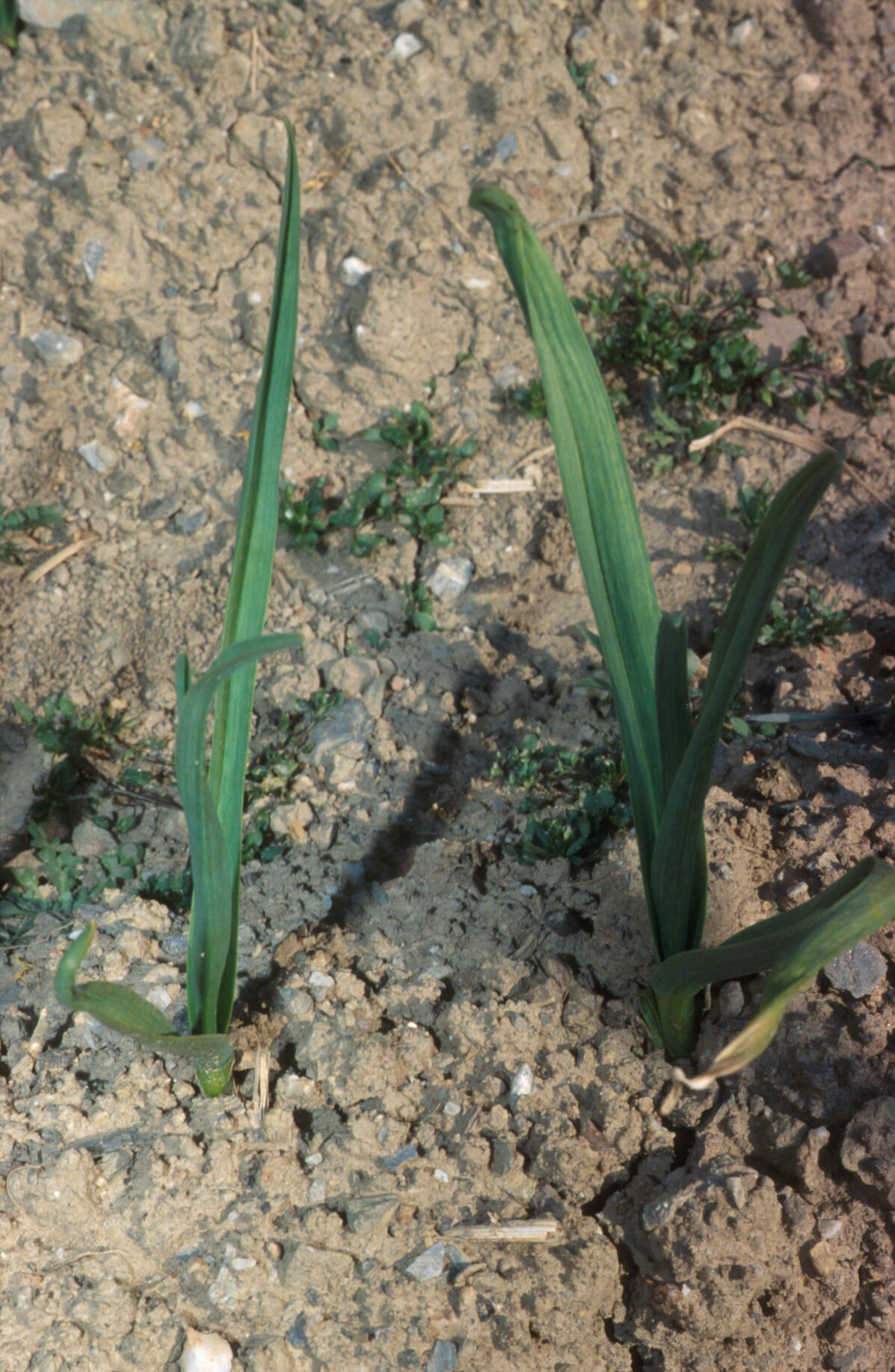
Photo: Perito Francesco, CC BY-SA 3.0 (Wikimedia Commons)
Garlic is one of the few crops that a household can grow from its own harvest, year after year, without ever buying planting material again. Each bulb you keep back becomes next season's seed. That is unusual, and it is why garlic is grown at every scale from a windowbox to a hundred hectares. Because the planting material is the crop, garlic rewards a grower who plans a year ahead and punishes one who does not. The bulbs you choose to hold back in July decide what you plant in October and what you harvest the following July.
Garlic is grown on every inhabited continent and keeps well enough to be traded across the world. The production figure this guide previously said it did not hold is now recorded below, and it tells a blunter story than 'grown everywhere': one country grows roughly three-quarters of it.
A cool-season bulb crop, grown from cloves rather than seed, planted in autumn and lifted the following summer.
Feed the leaves through spring growth and stop at bulbing, because every leaf becomes a wrapper around the finished bulb.
If you see: Bulbs lifted at the end of the season that are a single solid round, with no separate cloves inside the skin at all.
It likely means: The crop did not get the cold period it needs to divide — usually because it was planted too late, or in spring, or is a variety unsuited to that winter.
Do this: Plant in autumn rather than spring, early enough to root before the soil freezes.
If you see: Plants that looked green and healthy all season, but lift as disappointingly small bulbs with thin cloves.
It likely means: Small cloves were planted, spacing was too tight, weeds competed through spring, or nitrogen ran out while the leaves were still forming.
Do this: Plant only your largest cloves — clove size largely sets bulb size, and the effect compounds every year you replant.
If you see: White, fluffy fungal growth at the base of the bulb where the roots join it, later carrying small black resting bodies, with leaves yellowing and dying back earlier than the crop should mature.
It likely means: White rot, the most serious soil-borne disease of garlic, which most often arrives on infected planting stock rather than appearing from nowhere.
Do this: Get a local diagnosis before writing off a field, since Fusarium damage can look similar at the basal plate.
If you see: Bulbs rotting from the basal plate upwards, softening and browning at the base, especially on ground where water stands after rain.
It likely means: Fusarium bulb rot, which Penn State Extension associates strongly with poorly drained soils.
Do this: Improve drainage before replanting, and avoid ground where water pools.
If you see: A crop that looked sound at harvest but sprouts, softens or rots in the store within weeks rather than keeping for months.
It likely means: It was cured too briefly, lifted from wet ground, or stored in conditions too damp or too warm for garlic.
Do this: Cure for about three weeks, or until the outer two leaves are completely dry.
If you see: Leaves that look bronzed or whitened rather than green, or plants that are stunted with distorted leaves and undersized bulbs.
It likely means: Bronzing or whitening of the foliage points to onion thrips. Stunting with distorted leaves and small bulbs points to allium leaf miner. They are different pests needing different responses.
Do this: Identify which pest it actually is before acting, since the two look nothing alike up close and respond differently.
If you see: Planted cloves sitting on the soil surface in late winter, pushed clear of the ground with their roots exposed to the air.
It likely means: Frost heaving, where repeated freezing and thawing of wet soil lifts the clove out of the ground.
Do this: Replant any exposed cloves promptly and firm the soil around them.
The real economics of garlic turn on planting rate, because the seed is the crop.
Growing the crop is only part of the job. The last part is knowing what a normal harvest looks like, and knowing what your garlic is actually worth before you agree a price with anybody.
If you forget every other page of this guide, keep these lines. They are the whole crop, in order, short enough to carry in your head.
What crop is this, growing in upright flat leaves with a strong smell when a leaf is crushed?
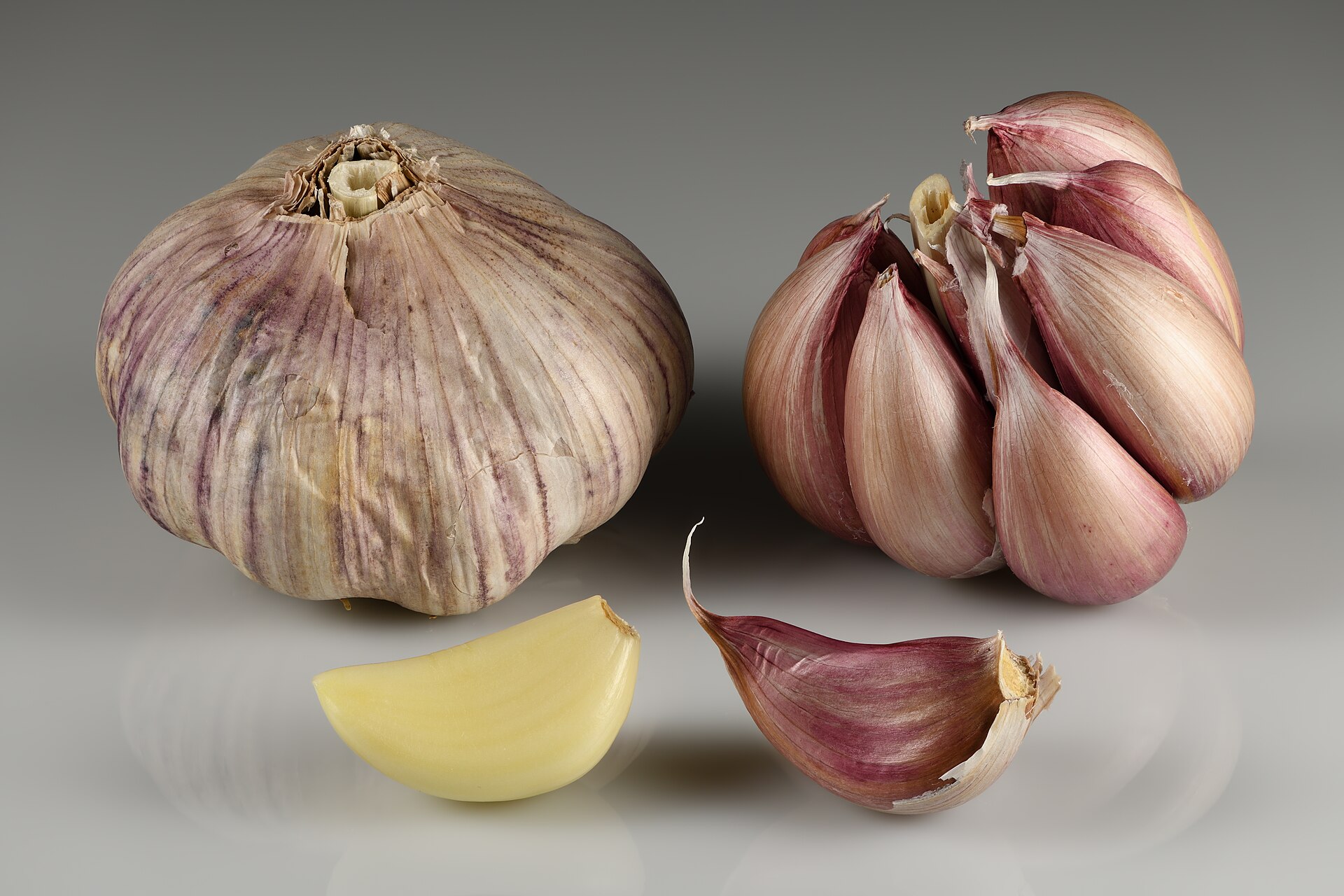
Is this a proper divided bulb, or a single round?
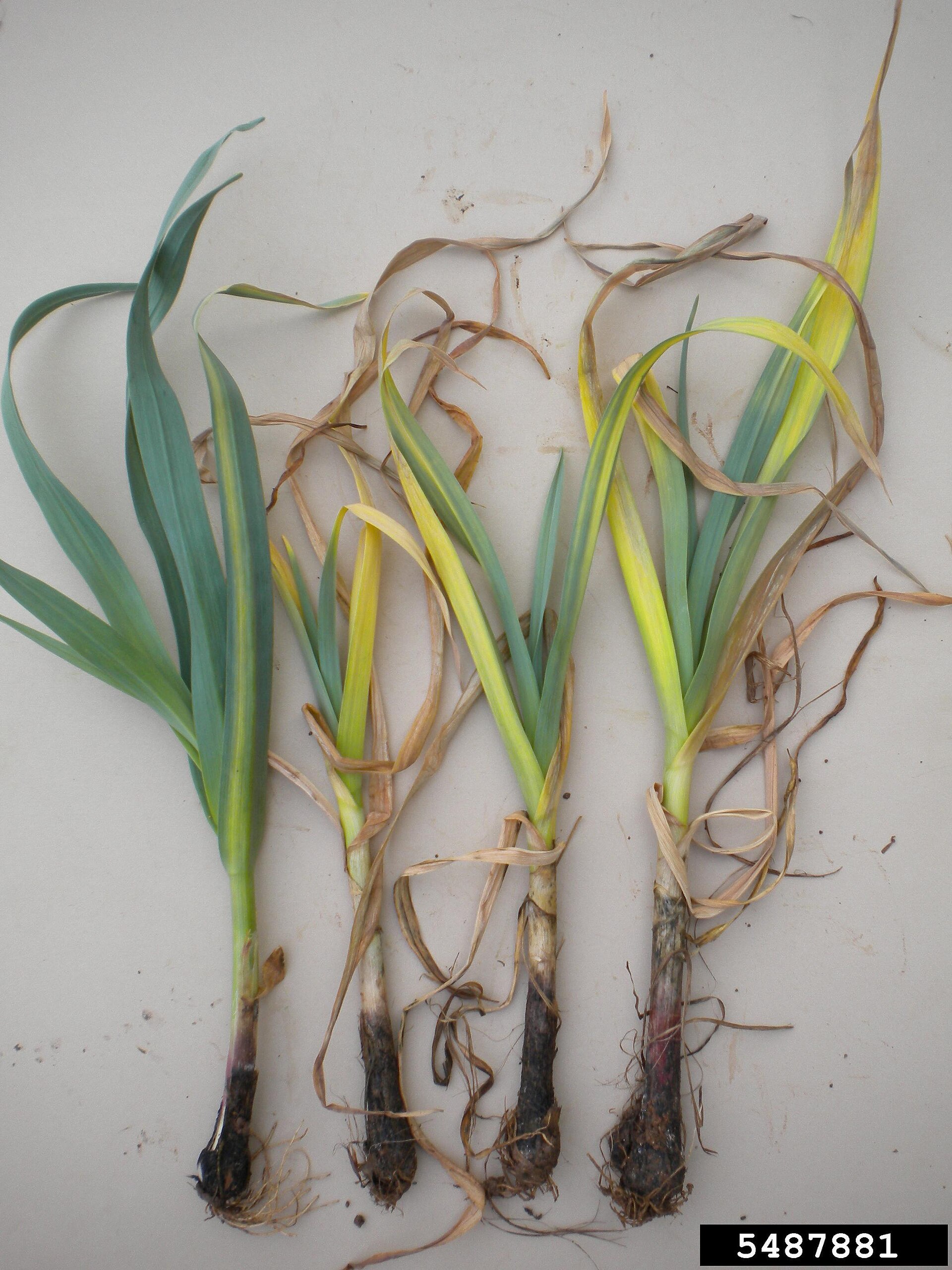
There is white fluffy growth at the base of the bulb and the plant is dying back early. What is it?