How to Grow Oat
Avena sativa · Also called: oat, oats, common oat, cultivated oat, milling oat, food oat, food-grade oat, feed oat
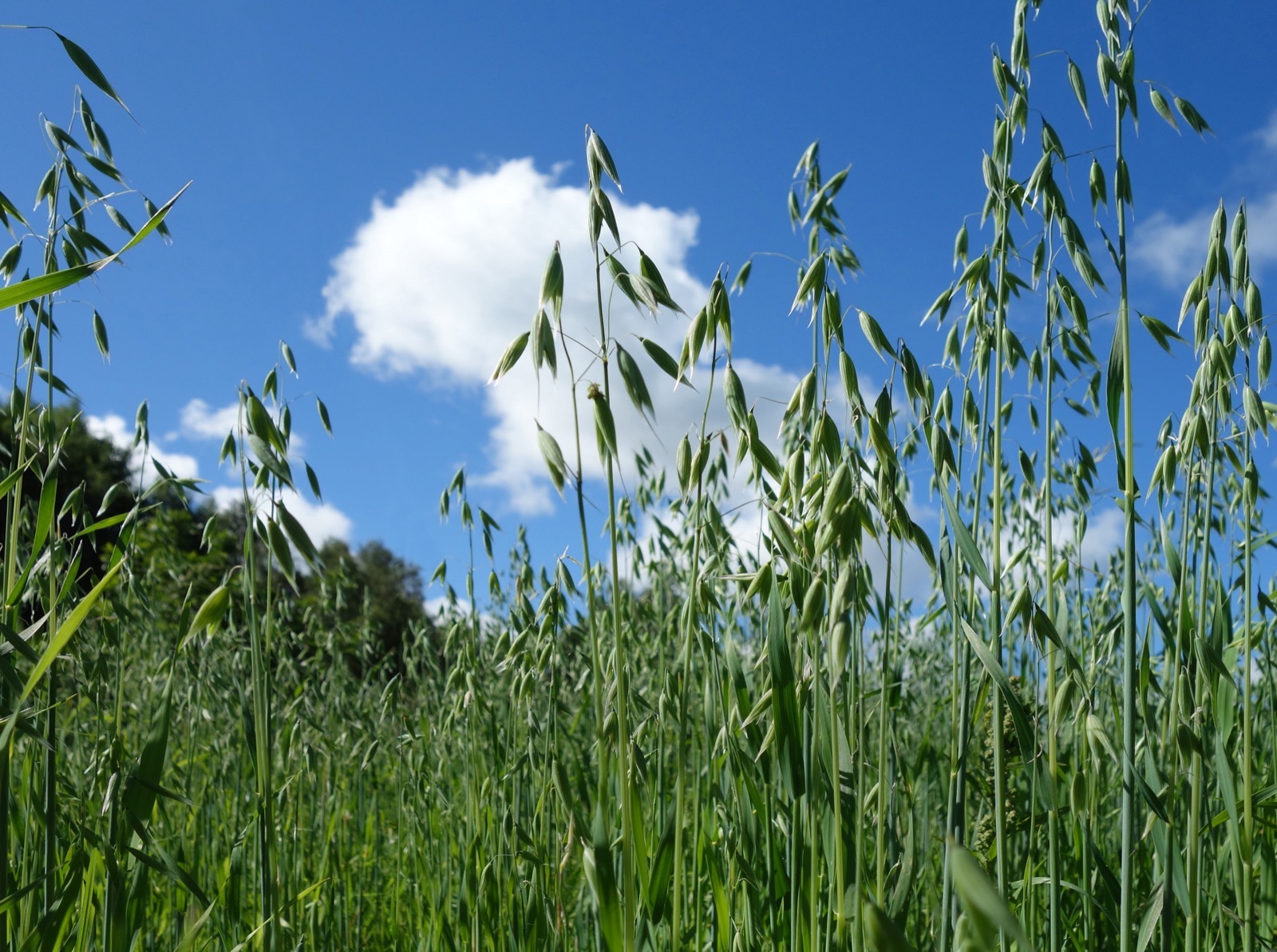
Photo: W.carter, CC0 (Wikimedia Commons)
Oat is a real top-ten crop in 35 of the world's 195 countries -- but, honestly and genuinely unlike almost every other crop in this library, it is not the single biggest crop of all in any one of them. World production reached approximately 22.3 to 22.4 million tonnes in 2024, led by Canada and the Russian Federation, which together supply close to a third of the world total -- a real, minor-cereal scale next to maize, wheat, rice or even this library's own soybean (roughly 349 million tonnes) and barley (roughly 155 million tonnes) guides. Yet oat earns its place here through a genuinely unusual double life no other crop in this collection quite matches. For most of its long farming history, oat's single biggest real job was not feeding people at all: it was feeding the horse, the literal engine of farms, armies and cities everywhere before the tractor and the automobile existed, and it was that horsepower-fuel role, not a food role, that made oat one of the most economically important crops on Earth for centuries (marketSegments). Samuel Johnson's own 1755 Dictionary of the English Language captured the old class divide this crop once carried in one honest sentence, defining oats as 'a grain, which in England is generally given to horses, but in Scotland supports the people' -- a real historical put-down of a crop that modern nutrition science has since turned almost completely on its head. Regular oat consumption is now genuinely linked in published research to lower blood cholesterol, carrying a real, government-recognised heart-health claim in the United States since 1997, and oat's newest real market, oat milk, overtook soy milk to become the second-largest plant-based milk category in the United States by 2020 -- a genuinely fast-growing modern food category built on a grain once fed almost exclusively to animals (processingAndEndUses). Botanically, oat is also its own distinct story: a real hexaploid grass, like bread wheat, but one that reached that same chromosome count through a completely separate evolutionary path, and a crop honestly less cold-tolerant than wheat, barley or rye but far more tolerant of acid soil than any of them (growthHabitAndMethod, botanicalIdentity) -- which is exactly why it thrives at the cool, wet margins of world agriculture named in globalImportance rather than competing head-on with wheat in the hot, dry cereal belts of the world.
Global Importance
Oat is grown across a genuinely wide range of cool, wet climates -- from the Canadian and Russian plains through Northwest Europe and Scandinavia to smaller, real pockets in the Southern Hemisphere -- but it is honestly one of the smaller major cereals by tonnage, and this guide states that plainly rather than inflating its scale to match wheat or maize.
Market Segments
Oat splits into real, genuinely different markets, and more than for most crops in this library, one of those splits is a straight reversal of the crop's own historic identity: for most of its farming history oat was overwhelmingly an animal-feed crop, and only in modern times has milling for direct human food become the market most growers actually chase for the best price.
Growth Habit
Three real, distinct facts about oat's own biology shape almost everything else in this guide: it is honestly less cold-tolerant than wheat, barley or rye even though it needs a genuinely cooler, wetter summer than any of them; it needs meaningfully less nitrogen than those same cereals to reach a comparable yield; and it carries a real, still-current history as a nurse crop for establishing forage legumes, distinct from its role as a harvested grain crop on its own.
Growing Oat, Stage by Stage
- 1. Choose your land, decide your market, and plan the rotation — Pick well-drained land with a real, honest cereal-free gap, and decide before anything else whether this crop is really for milling, feed, or a nurse-crop role -- oat's own real markets and its own real disease list both make this an early, not a late, decision.
- 2. Choose seed and treat it properly — Decide hulled or naked, buy certified seed with a real treatment against seed-borne smuts, and know the real, different germination standard each type is held to.
- 3. Sow — Sow winter oat in autumn and spring oat as soon as the soil has warmed, evenly and at a sensible depth, deciding at the same time whether this crop is a straight grain planting or a nurse crop for an establishing forage legume.
- 4. Feed the crop -- less than wheat or barley, but not nothing — Oat is a grass with no nitrogen-fixing partner of its own, so it genuinely needs a real nitrogen programme -- but real UK research shows it needs meaningfully less total nitrogen than wheat or barley for a comparable yield, applied in a staged pattern that builds canopy without pushing the crop toward lodging.
- 5. Water — Oat genuinely needs more reliable rain through its season than wheat, barley or rye, but still dislikes standing water, especially early on -- get the timing of your own real rainy season lined up with sowing rather than chasing an irrigation fix alone.
- 6. Weeds — Oat is honestly one of the more naturally weed-competitive cereals in this library, thanks to its own thick, vigorous early growth -- but real, herbicide-resistant wild oat populations remain one of the most notorious weed problems in wheat and barley fields worldwide, a genuinely ironic point worth understanding clearly.
- 7. Insect pests and the aphid that matters most — The insect that matters most in oat is not the one that eats the most leaf -- it is the aphid that carries Barley Yellow Dwarf Virus, and the real damage is decided by when it arrives, not by how many there are.
- 8. Diseases and the cereal cyst nematode, stage by stage — Crown rust is the single most damaging real disease of this crop worldwide, and it shares an unusual real life cycle with a specific alternate host plant. Alongside it, stem rust, two seed-borne smuts, a bacterial blight and a microscopic cyst nematode take most of the world's remaining lost oat yield.
- 9. Know when to harvest -- and the real risk of waiting too long — Harvest once the grain is hard and moisture has dropped enough, because oat's own real seed-dispersal mechanism, and its real risk of lodging and brackling, both punish a crop left standing too long after it is ready.
- 10. Harvest, dry and store without losing quality — Harvest at the right moisture, dry gently, and remember that a hulled oat's own intact hull genuinely protects the grain in storage better than a naked oat's exposed grain can.
- 11. Grade it and sell it well — Know your own specific weight, screenings, kernel content and moisture before you go to market, because oat's own milling premium is decided against real, published quality measures, not by eye.
Fertiliser Programme
Oat is fed the same basic way this library's own barley guide describes for its crop -- it is a grass with no nitrogen-fixing partner, so it needs a genuine nitrogen programme -- but real UK research shows it needs meaningfully less total nitrogen than wheat or barley for a comparable yield, which changes the economics of choosing it as a rotation crop without changing the basic biology.
Common Problems & Troubleshooting
If you see: Orange-yellow, round to oblong pustules appear on leaves, sometimes larger than 5 millimetres, occasionally on leaf sheaths or floral parts, usually starting during warm, humid weather.
It likely means: Crown rust, caused by the fungus Puccinia coronata var. avenae -- the single most economically damaging disease of this crop worldwide, and one with a genuinely unusual life cycle involving a second, entirely different host plant.
Do this: Check leaves regularly through the growing season, especially in warm weather around 20 to 25 degrees Celsius with high humidity, the exact conditions this fungus favours.
If you see: Reddish-brown, elongated rust pustules appear mainly on stems and leaf sheaths, rubbing off as a coloured powder on your finger, generally later in the season than crown rust.
It likely means: Stem rust, caused by the related fungus Puccinia graminis f. sp. avenae, a real, separate rust disease from crown rust despite the shared genus.
Do this: Check stems as well as leaves through the season, since this rust concentrates lower down the plant more than crown rust does.
If you see: A panicle that should carry normal grain instead carries a mass of dark, powdery spores, either shattering away early to leave a bare stalk (loose smut) or staying intact inside a membrane through to harvest (covered smut).
It likely means: Loose smut (Ustilago avenae) or covered smut (Ustilago segetum), two real, separate seed-borne fungal diseases that both replace developing grain with fungal spores.
Do this: Understand there is no way to see infected seed by eye before it is sown -- both fungi travel on or inside the seed itself, invisibly, from one season to the next.
If you see: The field looks patchy and stunted in places for no obvious reason, sometimes with yellowing, but there is no clear wound, spot or visible pest anywhere on the plant.
It likely means: Cereal cyst nematode (Heterodera avenae), also called the oat or European cyst nematode -- a microscopic, soil-dwelling worm shared by oat, wheat, barley and rye, very often producing no obvious above-ground symptom until damage is already significant.
Do this: Dig up a few plants from the patchy area and wash the roots gently, looking for an abnormally branched, swollen root system, and for tiny cysts on the roots distinct from anything a legume would carry.
If you see: Leaves show a reddish discolouration, sometimes described as 'oat red leaf', with affected plants stunted and often standing out in patches or along field edges.
It likely means: Barley Yellow Dwarf Virus, carried by aphids -- most importantly the bird cherry-oat aphid, the same real vector this library's barley guide names as barley's own most important aphid species.
Do this: Understand that this virus cannot be treated by any spray once a plant is infected -- only the aphid vector can be managed, and only before infection happens.
If you see: Water-soaked spots appear on leaves, sometimes surrounded by a pale halo, spreading in wet or humid weather.
It likely means: Bacterial blight (halo blight), caused by the bacterium Pseudomonas coronafaciens -- a real, genuinely separate disease from the fungal rusts, smuts and leaf blotches covered elsewhere in this guide.
Do this: Confirm the diagnosis is bacterial rather than fungal where possible, since the two are managed differently and a fungicide will not help a bacterial problem.
If you see: Either the whole plant leans or falls over before harvest (lodging), or the stem buckles and kinks partway up, typically around the middle internodes, while the base stays upright (brackling).
It likely means: Two real, separate physical failures of the stem, both genuinely more common in oat than in wheat or barley because conventional-height oat plants are often taller, but both also genuinely reduced by modern varieties' thicker stems and stronger root-plate anchorage.
Do this: Review your own nitrogen timing from Stage 4 -- excess or late nitrogen is the single biggest real driver of lodging risk in this crop.
If you see: Small, hard, dark purple-to-black growths (sclerotia) replace individual grains in the panicle, usually noticed at or after harvest.
It likely means: Ergot, caused by the fungus Claviceps purpurea infecting the open flower at flowering time -- the same real toxin risk this guide's own safetyWarningFirst names, and the same fungus this library's barley and wheat guides describe for their own crops.
Do this: Rotate away from cereals and grasses that can host the fungus, and control grass weeds in and around the field, since they can host the same fungus and raise local spore load.
Real Farm Economics
Oat's own real economic position in most modern farming systems is honestly humbler than wheat's or barley's -- it is very often grown as a lower-input break or rotation crop rather than as the main cash crop, and this guide states that plainly rather than inflating its economics to match its larger cereal neighbours.
Yield & Market Value
Growing the crop is only part of the job. The last part is knowing what a normal harvest looks like, and knowing what your oat is actually worth before you agree a price with anybody -- and for this specific crop, this guide has an honest, direct answer that is genuinely different from several of its neighbours in this library: oat is not one of the crops Laisha's own live commodity price service tracks by name.
Remember It This Way
If you forget every other page of this guide, keep these lines. They are the whole crop, in order, short enough to carry in your head.
- Cool and wet is oat's happy place. Scorching heat is not.
- A grass with no bacteria of its own -- feed it real nitrogen, just less than wheat wants.
- Watch the buckthorn's neighbour crop. Crown rust remembers it exists.
- One light aphid, arriving early, does more harm than a heavy one arriving late.
- Hulled keeps its coat in the store. Naked threshes free, like wheat, but bruises easier.
- Lodging is the whole plant falling. Brackling is just the middle giving way.
- It once fed the horse that pulled the plough. Now it is poured into a glass as milk.
- Pure oat carries no gluten of its own -- but the truck and the mill usually do.
Test Yourself: Identification
What crop is growing in this field?
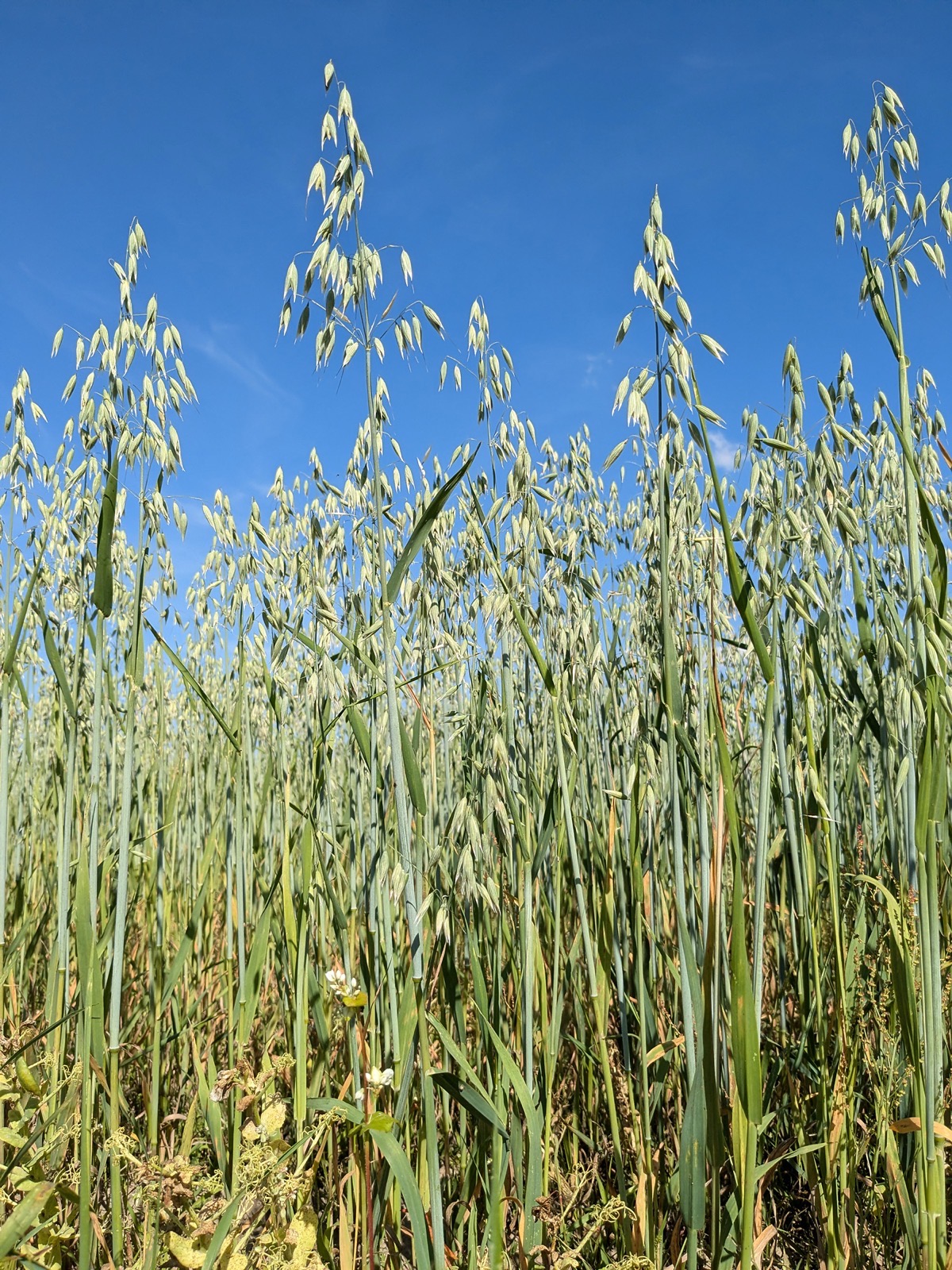
Whose seed head is this?
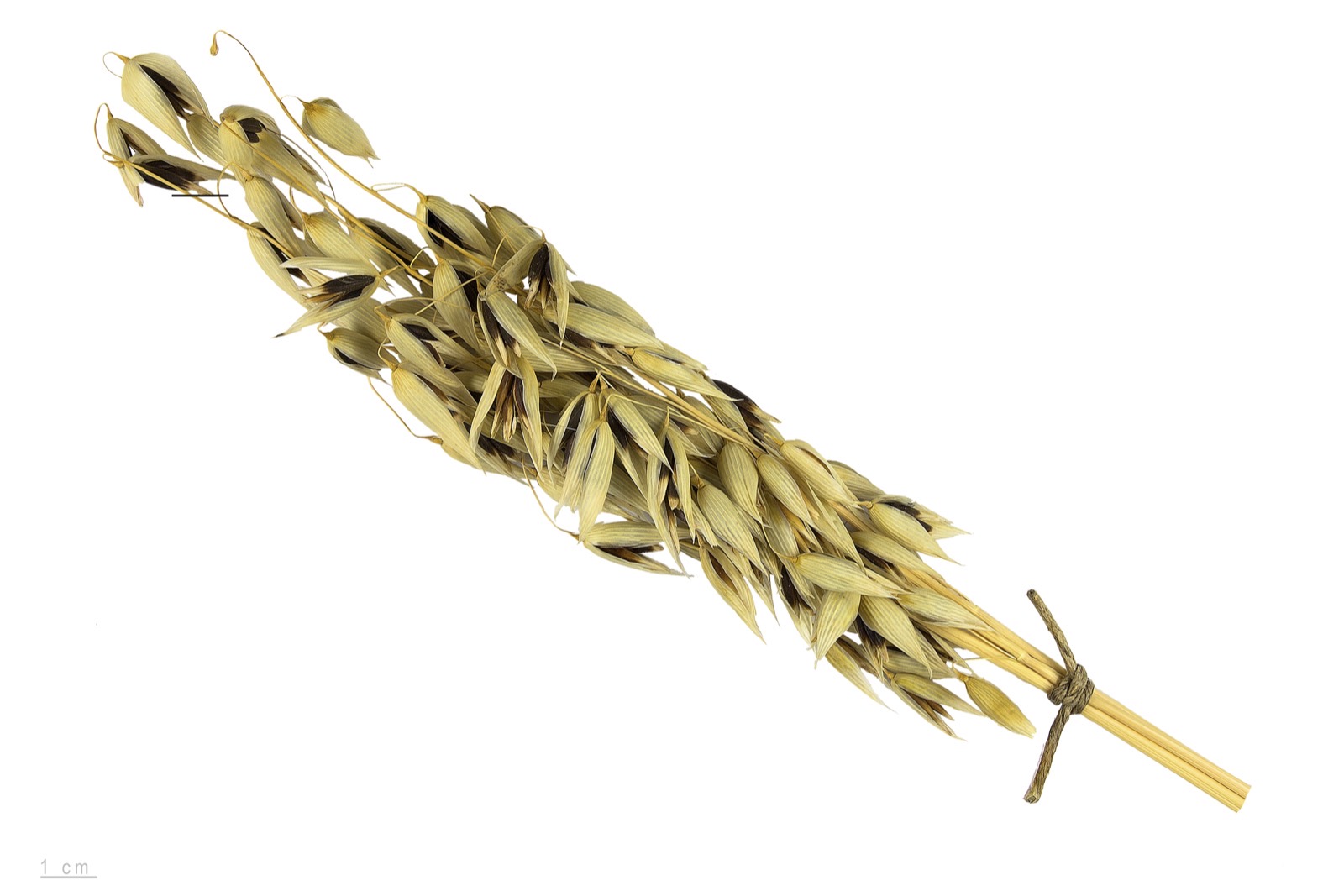
What is this close-up of?
Honest Limits of This Guide
- The right month to plant is different in every country, and even in every region within a country, because it depends on your own real rainy or irrigation season and your own real frost dates, not a fixed calendar date. This guide gives you the rule (Stage 3) instead of a date.
- World production and yield figures in this guide come from two independent secondary compilations (a Wikipedia table citing FAOSTAT, and USDA's own Foreign Agricultural Service estimates compiled by IndexMundi) for 2024, because a direct, live query to FAOSTAT's own bulk and API services did not return usable data this session. The two sources agree closely on the world total (22.3 to 22.4 million tonnes) and on Canada and Russia as the two largest producers, but neither is a live pull from FAOSTAT's own primary database.
- The USDA-compiled international yield comparison used in this guide is rounded to the nearest whole tonne per hectare in its own source data, which is genuinely too imprecise for fine country-to-country comparison. This guide states those figures as directional, not exact.
- The detailed agronomic benchmarks in this guide -- nitrogen uptake curves, lodging and height data, and grain-quality figures such as specific weight, screenings, kernel content and beta-glucan -- come from one specific, real, published UK research project (Opti-Oat, 2014-2017 reference trials plus commercial field monitoring) covering hulled milling oat varieties in a high-input, temperate system. No comparably detailed, published dataset was found this session for oat agronomy in lower-input regions, other climates, or naked-oat varieties specifically.
- No detailed, published per-hectare cost-of-production and returns dataset specific to oat was found this session, unlike this library's own soybean guide. This guide states that gap honestly in farmEconomics rather than presenting an invented or borrowed figure as oat's own.
- This guide states real, historical oat-production decline honestly through one specific, checkable United States example (Iowa's own switch away from oat toward maize and soybean after 1989), but could not independently verify a precise figure for how far oat's own global production has fallen from its historic horse-feed-era peak. That broader global decline is real and well documented in general agricultural history, but this guide does not print a specific world tonnage figure it could not check this session.
- Oat is not one of the ten crops Laisha's own live Global Commodity Price service tracks by name (wheat, rice, cotton, palm oil, maize, sorghum, barley, soybean, groundnut and sugar). This guide states that plainly in yieldAndMarketValue rather than guessing at a world reference price that does not actually exist inside Laisha's own live data for this crop.
- This guide does not name any pesticide, fungicide or herbicide product or compound. It names mode-of-action groups and the toxicity colour-band principle only. If you decide to use a product, buy only from a licensed dealer and follow the label on the actual package.
- The toxicity colour band is a principle, not a fixed chemical-to-colour list. The same active substance can sit in a different band in a different formulation or country, and registrations change. Read the real triangle on the real package.
- The real gluten cross-contamination facts in this guide are stated as generally documented findings from published research and regulatory guidance, not as a guarantee about any single grower's own field, equipment or buyer. A grower or processor supplying a genuinely gluten-free market should confirm current local testing and labelling requirements directly, since these vary by country.
- Crown rust, stem rust, cereal cyst nematode and Barley Yellow Dwarf Virus cannot be reliably diagnosed from this guide's photographs alone, since several of these threats, especially the cyst nematode, produce no clear above-ground symptom at all in an early or mild infestation. A real local soil test or extension visit remains the honest way to know for certain.
- The oat genome and domestication facts in this guide (the hexaploid AACCDD genome, the Vavilovian-mimic domestication story, and the naked-versus-hulled divergence estimate) are drawn from real, cited published genetic and archaeological research, but this guide does not claim these settle every open question in oat's own evolutionary history -- some of the underlying dating estimates in the source literature themselves carry real, acknowledged uncertainty ranges this guide has not attempted to fully reproduce.
Related Laisha Tools
- Global Market Price Outlook — Check today's price and trend
- Crop Calendar — Build a season-long sowing plan
- Pest & Disease Intelligence — Risk reasoning and a global pest & disease library
- Crop Health — Photo-based first read on a field problem
- Seed Quality Intelligence — Check a seed lot before you plant it
Open the free Applied Agriculture Library in the Laisha app →
Sources
- GBIF Backbone Taxonomy species-match record for Avena sativa L. (usage key 2705290) — Global Biodiversity Information Facility (GBIF), Copenhagen (source)
- EPPO Global Database taxon record for Avena sativa, code AVESA — European and Mediterranean Plant Protection Organization (EPPO), Paris (source)
- Oat (Avena sativa) -- overview article — Wikipedia, citing a wide range of primary agronomic, nutritional and historical sources (source)
- List of oat diseases — Wikipedia, citing the American Phytopathological Society's Common Names of Diseases resource (source)
- The mosaic oat genome gives insights into a uniquely healthy cereal crop — Kamal, N. et al., Nature, volume 606, 2022 (source)
- Oat evolution revealed in the maternal lineages of 25 Avena species — Fu, Yong-Bi, Scientific Reports, volume 8, 2018 (source)
- Genome resequencing reveals independent domestication and breeding improvement of naked oat — Nan, Jinsheng et al., GigaScience, volume 12, 2022 (source)
- Autonomous Cultivation Before Domestication — Weiss, Ehud, Kislev, Mordechai E. and Hartmann, Anat, Science, volume 312, 2006 (source)
- Oats Production by Country, 2024 estimate — United States Department of Agriculture, Foreign Agricultural Service (PSD Online), compiled by IndexMundi (source)
- Laisha Global Crop Priority Research -- Oat entry — Laisha internal curated research (backend/database/globalCropPriorityResearch.json) (source)
- Oat Growth Guide — The Quaker Oats Company / PepsiCo, produced by the Opti-Oat project (James Hutton Institute, ADAS, Aberystwyth University and NIAB; co-funded by Innovate UK and the BBSRC), June 2019 (source)
- Puccinia coronata f. sp. avenae: a threat to global oat production — Nazareno, Eric S. et al., Molecular Plant Pathology, volume 19, 2018 (source)
- Heterodera avenae (cereal cyst nematode / European cyst nematode) — Wikipedia, citing AgroAtlas and USDA wheat pest guidance (source)
- Test weight — Wikipedia, citing USDA official grain-standards figures under the United States Grain Standards Act (source)
- Iowa has world's largest cereal plant, but state's farmers lack market for oats — Eller, Donnelle, Des Moines Register, 5 October 2017 (summarised via the Oat Wikipedia article's own citation) (source)
- Oatmilk edges past soymilk for #2 slot in US plant-based milk retail market as almondmilk continues to drive category sales — Watson, Elaine, FoodNavigator-USA, 25 September 2020 (source)
- Title 21, Part 101, Section 101.81: Health claims: Soluble fiber from certain foods and risk of coronary heart disease — US Department of Health and Human Services, Food and Drug Administration (source)
- Celiac Disease and Gluten-Free Oats: A Canadian Position Based on a Literature Review; Role of oats in celiac disease — La Vieille, Sebastien et al., Canadian Journal of Gastroenterology and Hepatology, 2016; and Comino, Isabel, Moreno, M. de L. and Sousa, C., World Journal of Gastroenterology, volume 21, 2015 (source)
- Laisha Global Seed Certification Standards -- EU cereal seed directive, Canada seed grade tables, and FAO Quality Declared Seed system entries for oats — Laisha internal curated reference (backend/database/globalSeedCertificationStandards.json) (source)
- Laisha's own agrochemical safety reference: mode-of-action grouping and the India colour-band toxicity principle — Laisha internal curated reference, built from the Insecticides Act 1968 / Insecticide Rules 1971 (India) and IRAC/FRAC/HRAC mode-of-action classification systems (source)