Photo: State Government Photographer, CC0 (Wikimedia Commons)
Orange is the world's most widely grown citrus fruit, feeding a real, enormous fresh-eating and juice industry that spans warm subtropical and tropical regions on every inhabited continent. World production reached approximately 67 million tonnes in 2024, with Brazil alone growing about 23 percent of that total, mostly bound for the global juice trade rather than the fresh fruit counter (globalImportance). Laisha's own curated crop-priority research finds orange among the top ten crops grown in 22 of the world's 195 countries, spanning the Caribbean, Central America, North and Southern Africa, the Middle East and Southern Europe -- and, tellingly, orange is not the single biggest crop in any one of those 22 countries, a real, honest pattern this guide states plainly rather than smoothing over (globalImportance). Unlike most of the annual crops in this library, orange is a genuine multi-decade tree crop, bearing real, marketable fruit for 20 years or more from a single planting. It also carries a real, ongoing global crisis worth naming here rather than only deep in troubleshooting: Huanglongbing, also called citrus greening, has cut orange production in one of the world's historically largest growing regions, Florida, in half since 2005, and has no cure (growthHabitAndMethod, troubleshooting). As with every crop in this library, any agrochemical used on this crop must be handled exactly according to this guide's own chemicalSafetyRule below, bought only from a licensed dealer, and never guessed at from a name half-remembered from a neighbour.
Global Importance
Orange is grown across a genuinely wide subtropical and tropical belt, and one country, Brazil, alone grows close to a quarter of the world's entire supply, overwhelmingly for the global juice trade rather than its own domestic fresh market.
Market Segments
One orange harvest genuinely feeds several real, separate markets at once, and each one judges the same fruit on something different, from a peeled fresh dessert fruit to a frozen concentrate traded on a real, global futures exchange.
Growth Habit
Three real, foundational facts decide almost everything else an orange grower does: it is a genuine long-lived evergreen tree, not an annual crop; almost every commercial tree is a budded scion joined onto a deliberately chosen rootstock, for real reasons this guide states honestly are different from mango's own reasons; and, distinctively for this crop right now, one real, incurable disease shapes almost every serious modern planting decision worldwide.
Growing Orange, Stage by Stage
1. Choose land, climate and site — Confirm your own real climate is genuinely warm with only light frost risk, and choose land with real drainage, because both decisions are far harder to correct once a tree is years into the ground.
2. Choose your planting material -- a genuine budded tree on the right rootstock — Buy only a genuine budded tree of a known, named variety, on a rootstock chosen for your own real soil and disease pressure, from a real, checkable nursery.
3. Plant the tree — Plant at the right depth, at the start of your local wet season, and protect the young tree through its first fragile months.
4. The juvenile years -- formative pruning and a tree that gives you nothing yet — Use the real wait before first bearing productively: shape the young tree's branches while they are still small, and consider a real intercrop for real income while it establishes.
5. Water — A young tree needs real, regular water to establish. A mature tree needs real, consistent moisture through flowering and fruit development, without ever standing in water.
6. Weed the base and feed the tree — Keep the ground under the canopy clear of weeds, and feed an orange tree per tree, not per hectare, increasing the dose gradually as the tree ages, following a real, published schedule rather than guessing.
7. Flowering and fruit set — Recognise the real flowering window, understand honestly how the flowers set fruit, and protect the pollinating insects your crop genuinely depends on.
8. Manage the bearing tree -- pruning and canopy care — Prune to keep the canopy open, manageable and productive for decades, and check for rootstock growth and disease symptoms every time you are in the orchard.
9. Watch for Huanglongbing and stop the other pests and diseases getting in — One real disease matters more than everything else in this crop. The rest are far easier to keep out or catch early than to clear once established.
10. Know when to harvest — Orange is genuinely non-climacteric, meaning it never ripens further once picked, so real harvest timing matters more here than for a fruit that keeps improving after harvest, and skin colour alone is honestly not a reliable test.
11. Harvest and handle carefully — Clip the fruit cleanly, leaving neither a torn rind nor a long, sharp stalk stub, since both real mistakes shorten this fruit's own real shelf life after picking.
12. Grade, store and sell it — Because this fruit never ripens further once picked, real storage is about slowing decay, not waiting for ripeness, and knowing which real market you are selling into shapes the whole process.
Fertiliser Programme
Orange is fed per tree, not per hectare, and the dose is meant to grow with the tree -- a small amount for a young, non-bearing tree, rising every year until a mature tree reaches its own real, settled adult ration.
Common Problems & Troubleshooting
If you see: Blotchy, asymmetrical yellow mottling on leaves that does not mirror itself across the leaf's own midrib the way a simple nutrient deficiency does, alongside small, lopsided, bitter fruit that stays partly green even when fully mature.
It likely means: Huanglongbing, also called citrus greening, caused most commonly by the bacterium Candidatus Liberibacter asiaticus and spread by the Asian citrus psyllid -- this crop's own single most economically destructive disease worldwide, with no known cure.
Do this: Confirm the diagnosis with your local extension or plant health authority as soon as you suspect it, since early confirmation is the only real tool that limits its spread.
If you see: Small, roughly 4-millimetre insects with a fawn and brown mottled body and a whitish, waxy coating, feeding in a distinctive head-down, tail-up posture on new shoots and young leaves.
It likely means: The Asian citrus psyllid, Diaphorina citri -- the real insect that spreads Huanglongbing, and this crop's own single most consequential pest for that reason alone, beyond any direct feeding damage it causes on its own.
Do this: Scout new flush growth regularly, since this insect breeds specifically on soft, new shoots rather than mature leaves.
If you see: A tree budded on sour orange rootstock that declines suddenly, sometimes within days of the first visible wilting, or a slower, months-long dieback with chlorotic, honeycombed leaves on other rootstocks.
It likely means: Citrus tristeza virus (CTV), a real, aphid-spread virus, most efficiently by the brown citrus aphid, that causes real, documented quick decline specifically on sour orange rootstock, and slower decline on some others.
Do this: Never plant on sour orange rootstock where this virus is known to be present locally, and choose a genuinely tolerant rootstock such as trifoliate orange instead (growthHabitAndMethod).
If you see: Raised, brown, water-soaked lesions with a distinctive yellow halo on leaves, stems and fruit, often starting at a wound or an insect entry point.
It likely means: Citrus canker, caused by the bacterium Xanthomonas citri -- a real, serious disease that spreads mainly through wind-driven rain and contaminated equipment, often entering through wounds made by citrus leafminer.
Do this: Control citrus leafminer where present, since its tunnelling wounds genuinely make canker infection easier (below).
If you see: Winding, silvery, thread-like tunnels through the surface of young leaves, often with a leaf curled or distorted around the tunnel's own path.
It likely means: Citrus leafminer, Phyllocnistis citrella, a real, small moth whose larvae tunnel through young leaf tissue, first found outside its native Asia in Florida in 1993 and now present in most of the world's citrus-growing regions.
Do this: Focus scouting and any real control on new flush growth specifically, since mature, hardened leaves are not attacked.
If you see: A tree with stunted, sparse, small leaves and generally poor vigour despite good feeding and water, worst on older, established trees rather than young ones.
It likely means: Citrus root nematode, Tylenchulus semipenetrans, a real, microscopic soil pest feeding on roots that published Indian horticultural research names among the significant real causes of citrus decline.
Do this: Confirm with a local extension or soil-testing service, since nematode damage looks similar to several other causes of general poor vigour.
If you see: Pale, narrow, undersized new leaves, especially noticeable at a new growth flush, without the blotchy, asymmetrical mottling pattern of Huanglongbing.
It likely means: Little leaf malady, a real, well-documented zinc deficiency in citrus, distinct from any pest or pathogen.
Do this: Confirm it is genuinely a nutrient issue, not Huanglongbing, by checking whether the pattern is even and uniform rather than blotchy and asymmetrical (troubleshooting, above).
Real Farm Economics
Orange's real economics carry a genuine long horizon worth stating plainly: several years of real cost before a single fruit is sold, followed by two decades or more of real, ongoing income once bearing begins, and, distinctively for this crop, a real global futures market that most other crops in this library honestly do not have.
Yield & Market Value
Growing the crop is only part of the job. The last part is knowing what a normal harvest looks like, and knowing what your orange is actually worth before you agree a price with anybody -- and for this specific crop, this guide states a real, honest gap plainly: orange is not one of the crops Laisha's own live Global Commodity Price service currently tracks, even though it genuinely has its own real futures market elsewhere (farmEconomics).
Remember It This Way
If you forget every other page of this guide, keep these lines. They are the whole crop, in order, short enough to carry in your head.
Bud it onto a chosen rootstock. A seed grows too slowly and skips the protection roots alone provide.
Choose the rootstock like it matters, because it does, for decades.
Watch every leaf for a blotchy pattern that never mirrors itself -- the one disease with no cure.
Green skin does not mean unripe. Taste the fruit, not the colour.
Once picked, it never gets sweeter. Pick it right the first time.
Clip the button close. Do not tear it, do not leave a spike.
One tree, two real markets -- know whether you are feeding a juicer or a fruit bowl.
One mutant tree in Brazil, two centuries ago, is why your navel orange has no seeds.
Test Yourself: Identification
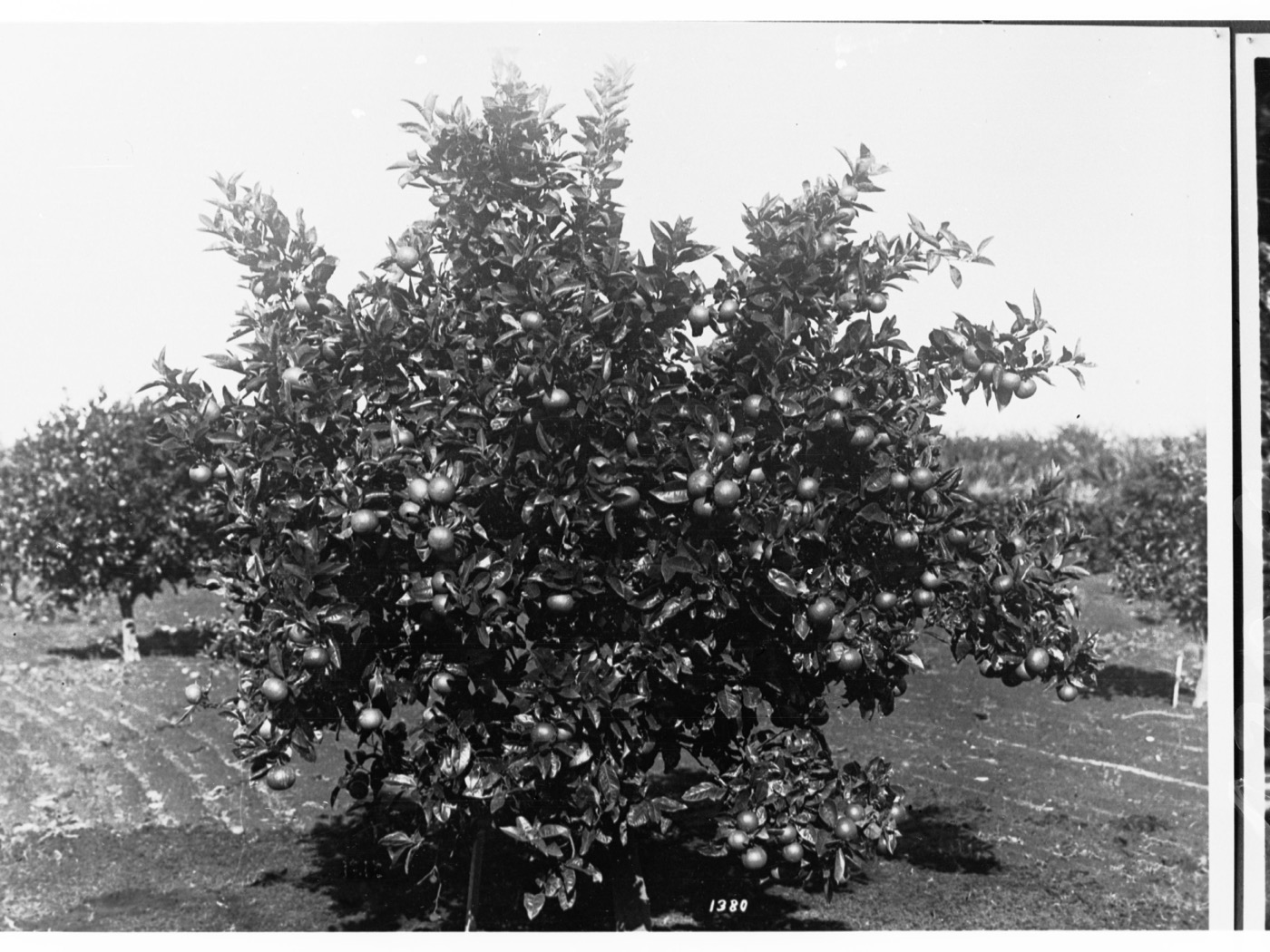
What crop is this, a moderate-sized evergreen tree with a dense, glossy canopy growing in a planted orchard?
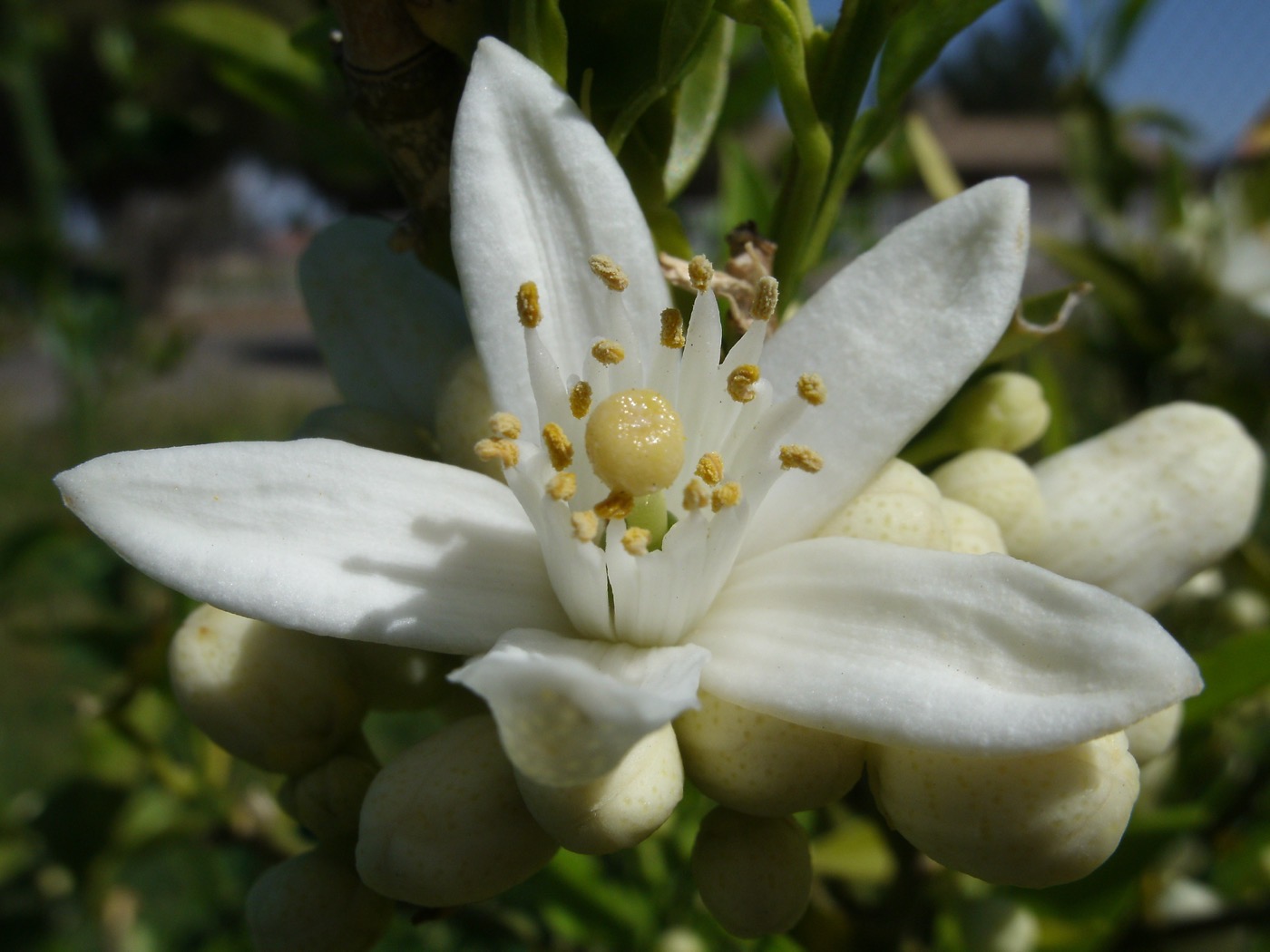
What is this small, fragrant, white, five-petalled flower growing among glossy green leaves?
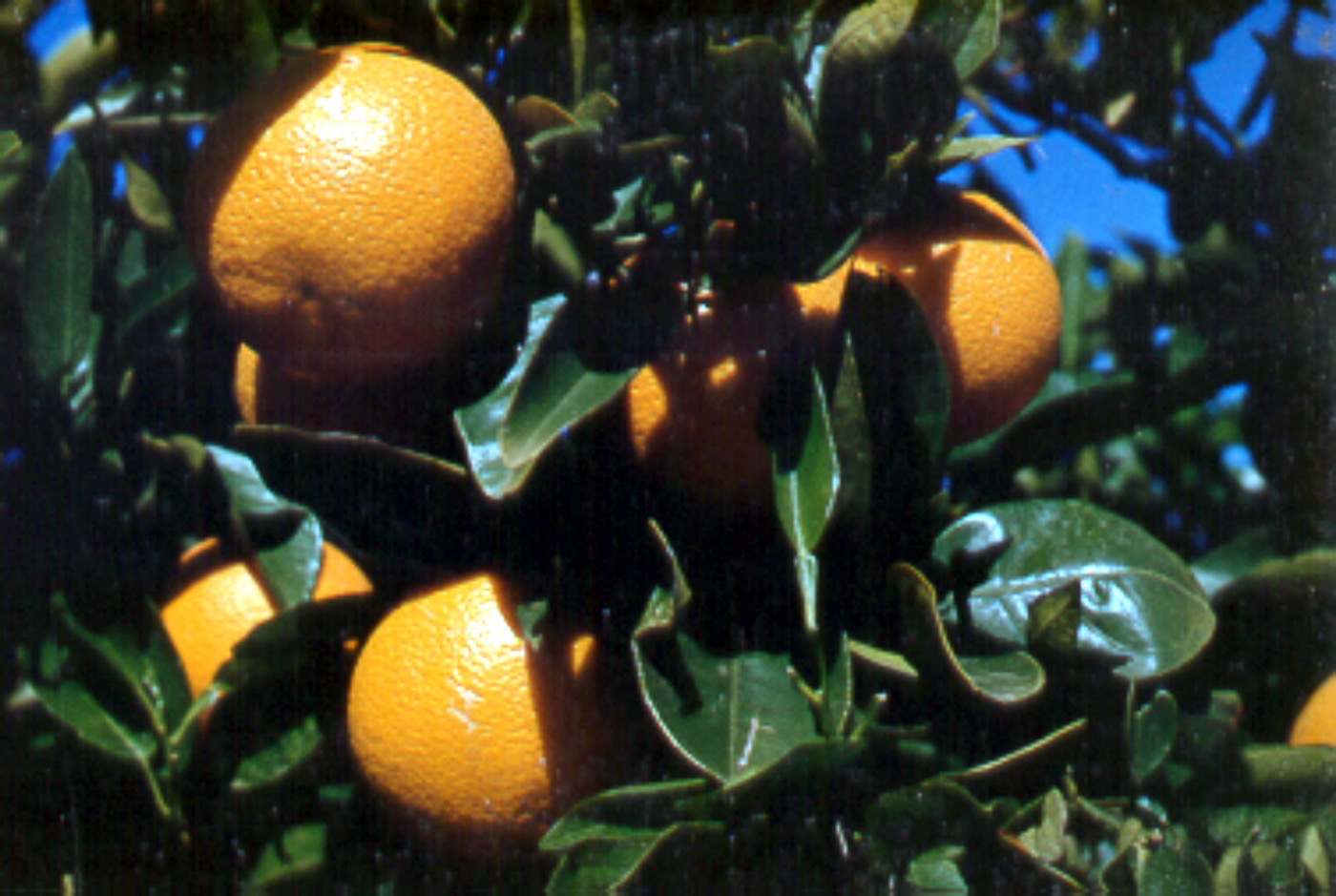
What are these round, orange fruits still attached to the tree by a short stem?
Honest Limits of This Guide
This guide's own real world production figure (globalImportance) is drawn from a live, published article citing FAOSTAT data for 2024, not from a fresh, direct FAOSTAT query run this session for every figure quoted -- a real, honest distinction from a handful of other guides in this library that could query a live figure directly for every number.
This guide's own real yield range (yieldAndMarketValue) is computed directly from Laisha's own curated crop-priority research across 22 real countries, plus one real, published national example from India, not from a single live global FAOSTAT query for orange alone run this session.
No single, published per-hectare or per-tree cost-of-production and returns dataset covering land preparation, tree cost, fertiliser, pruning, harvest and post-harvest handling was found this session that honestly applies across this crop's genuinely different real production systems worldwide, the same real, honest gap this library's own mango and field pea guides record for their own crops (farmEconomics).
This guide does not name any pesticide, fungicide or herbicide product or compound. It names mode-of-action groups and the toxicity colour-band principle only. If you decide to use a product, buy only from a licensed dealer and follow the label on the actual package.
The toxicity colour band is a principle, not a fixed chemical-to-colour list. The same active substance can sit in a different band in a different formulation or country, and registrations change. Read the actual triangle on the actual package.
This guide's own seed and planting-material section (seedGradingAndCertification) names a real, honest gap rather than a single unified worldwide legal standard, because no such single standard for budded citrus planting material was found this session, unlike the formal seed laws several grain and legume crops in this library carry.
This guide's own fertiliser and yield figures (fertiliserProgramme, yieldAndMarketValue) are drawn from one real, published national example, most directly Indian horticultural extension guidance, and genuinely vary by variety, rootstock, soil and season -- a grower elsewhere should confirm the real, locally applicable figure with their own extension service.
This guide does not state a precise, universal Brix-to-acid ratio or juice-content maturity standard for harvest timing, because that real regulatory figure genuinely varies by country and by season and was not independently confirmed live this session beyond the real, published minimum Brix figures for finished juice quoted in marketSegments -- a grower should confirm their own local maturity standard, where a legal one exists, with their own extension service.
This guide's own real timing figures -- the 3-to-4-year first-bearing window for a budded tree, and the flowering-to-harvest timing -- are given as real, published ranges rather than a fixed calendar, because orange's actual rhythm genuinely shifts by region, variety and season: a grower should time flowering expectations and harvest against their own real local season, not against a month number copied from a different climate.
The rest of this Orange guide is inside Laisha
Every stage, the full fertiliser programme, the economics and the pest
diagnosis for Orange live in the app — alongside photo-based
diagnosis, live market prices, and an agronomist you can actually ask.
This guide's own real world production figure (globalImportance) is drawn from a live, published article citing FAOSTAT data for 2024, not from a fresh, direct FAOSTAT query run this session for every figure quoted -- a real, honest distinction from a handful of other guides in this library that could query a live figure directly for every number.
This guide's own real yield range (yieldAndMarketValue) is computed directly from Laisha's own curated crop-priority research across 22 real countries, plus one real, published national example from India, not from a single live global FAOSTAT query for orange alone run this session.
No single, published per-hectare or per-tree cost-of-production and returns dataset covering land preparation, tree cost, fertiliser, pruning, harvest and post-harvest handling was found this session that honestly applies across this crop's genuinely different real production systems worldwide, the same real, honest gap this library's own mango and field pea guides record for their own crops (farmEconomics).
This guide does not name any pesticide, fungicide or herbicide product or compound. It names mode-of-action groups and the toxicity colour-band principle only. If you decide to use a product, buy only from a licensed dealer and follow the label on the actual package.
The toxicity colour band is a principle, not a fixed chemical-to-colour list. The same active substance can sit in a different band in a different formulation or country, and registrations change. Read the actual triangle on the actual package.
This guide's own seed and planting-material section (seedGradingAndCertification) names a real, honest gap rather than a single unified worldwide legal standard, because no such single standard for budded citrus planting material was found this session, unlike the formal seed laws several grain and legume crops in this library carry.
This guide's own fertiliser and yield figures (fertiliserProgramme, yieldAndMarketValue) are drawn from one real, published national example, most directly Indian horticultural extension guidance, and genuinely vary by variety, rootstock, soil and season -- a grower elsewhere should confirm the real, locally applicable figure with their own extension service.
This guide does not state a precise, universal Brix-to-acid ratio or juice-content maturity standard for harvest timing, because that real regulatory figure genuinely varies by country and by season and was not independently confirmed live this session beyond the real, published minimum Brix figures for finished juice quoted in marketSegments -- a grower should confirm their own local maturity standard, where a legal one exists, with their own extension service.
This guide's own real timing figures -- the 3-to-4-year first-bearing window for a budded tree, and the flowering-to-harvest timing -- are given as real, published ranges rather than a fixed calendar, because orange's actual rhythm genuinely shifts by region, variety and season: a grower should time flowering expectations and harvest against their own real local season, not against a month number copied from a different climate.
Crop Health — Photo-based first read on a field problem
Soil Health — Track soil test results across seasons
Sources
GBIF Backbone Taxonomy species-match record for Citrus sinensis (Mill.) Pers. (usage key 3190158) — Global Biodiversity Information Facility (GBIF), Copenhagen (source)
World Checklist of Vascular Plants (WCVP) search results for Citrus sinensis, queried live through GBIF's own hosted copy of the checklist — Royal Botanic Gardens, Kew, hosted via GBIF (dataset f382f0ce-323a-4091-bb9f-add557f3a9a2) (source)
EPPO Global Database record for Citrus x aurantium var. sinensis (EPPO code CIDSI) — European and Mediterranean Plant Protection Organization (EPPO) (source)
Orange (fruit) — Wikipedia, citing FAOSTAT production data (source)
Laisha's own curated global crop build-priority research, built on FAOSTAT's own 'Oranges' item category — Laisha (internal curated research, sourced from FAOSTAT QCL 2025) (source)
Sweet orange cultivation guidelines — Tamil Nadu Agricultural University (TNAU) Agritech Portal (source)
Laisha's own curated agrochemical mode-of-action and hazard-band reference — Laisha (internal curated research) (source)
Laisha's own curated seed-certification standards research — Laisha (internal curated research) (source)
Laisha knows Orange better than this page can show.Photo diagnosis for pests and disease, live market prices, and an agronomist you can ask at two in the morning.Open Laisha
 Laisha
AI Operating System for Agriculture
Enter Laisha
Laisha
AI Operating System for Agriculture
Enter Laisha