How to Grow Soybean
Glycine max · Also called: soya bean, soya beans, soybeans, soyabean, soya, soja, edamame (the immature green form of the same plant, picked and cooked as a vegetable rather than left to dry)
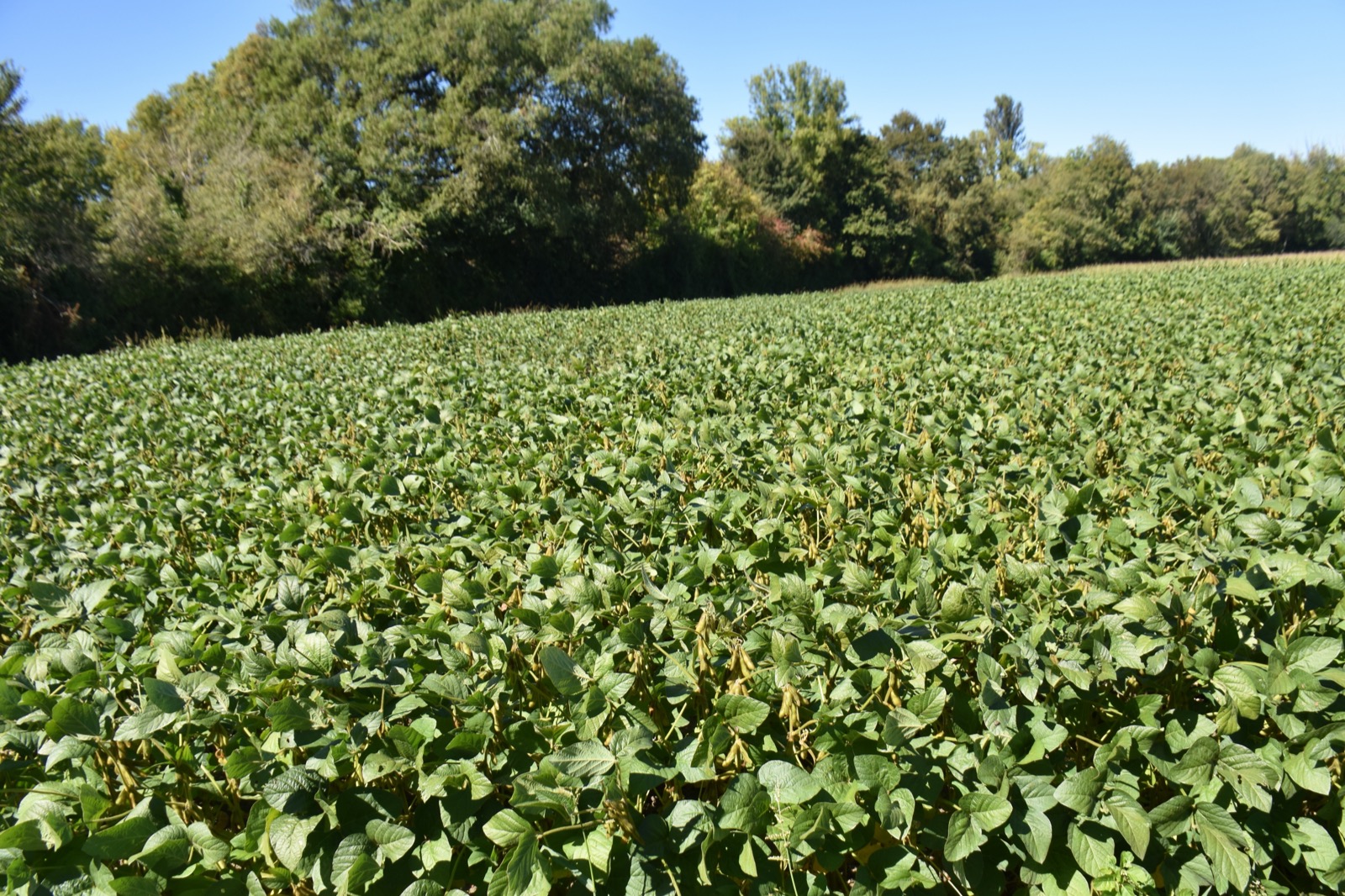
Photo: Renhour48, CC0 (Wikimedia Commons)
Soybean is a real top-ten crop in 40 of the world's 195 countries, and the single biggest crop grown of all in six of them: Argentina, Bolivia, Brazil, Paraguay, the United States and Uruguay. World production reached approximately 348.9 million tonnes in 2022, making soybean one of the very largest crops grown anywhere on Earth by tonnage, and it earns that scale through a genuinely unusual double role no other crop in this library plays in quite the same way: it is simultaneously the world's leading source of animal-feed protein, through the soybean meal left over after its oil is pressed out, and one of the world's leading vegetable oils in its own right, through that same pressed-out oil — one crop, crushed once, feeding two enormous and largely separate global markets at the same time. Soybean also carries a genuinely distinctive biological trick that sets it apart even from groundnut and common bean elsewhere in this library: it hosts its own dedicated species of nitrogen-fixing bacteria, Bradyrhizobium japonicum, found nowhere else in this collection, and its flowering is driven by a real, measurable sensitivity to day length so precise that the world's soybean varieties are sorted into thirteen numbered 'maturity groups' purely by the latitude band each one is bred to flower correctly in (growthHabitAndMethod). And unlike almost every other crop in this library, soybean carries a real, large, and honestly documented split in how it is grown and sold depending on genetics alone: the overwhelming majority of the world's soybean crop is a genetically modified, herbicide-tolerant variety, while a real, smaller, separately segregated and separately priced non-GM and food-grade market exists alongside it, feeding products from tofu and soy milk to natto and miso (marketSegments) — a genuine trade-level fact this guide states plainly and neutrally, without taking any position on the underlying safety debate. Soybean's own real history also carries one of agriculture's most consequential recent land-expansion stories: Brazil's vast Cerrado savanna, long considered agriculturally marginal because of naturally acidic soil and this crop's then-narrow range of temperate varieties, was transformed from the 1970s onward through Embrapa's own real, published work on large-scale soil liming and tropical-latitude soybean breeding into what many now call a global breadbasket, directly behind Brazil's own rise to become the world's single largest producer (globalImportance) — a real, checkable demonstration of exactly how far this crop's science can move a landscape once thought unsuitable for it at all.
Global Importance
Soybean is grown across a real, published world harvested area of about 134 million hectares, with total world production reaching approximately 348.9 million tonnes in 2022 — behind only maize, wheat and rice among the world's biggest crops by tonnage, and the single largest oilseed crop grown anywhere on Earth. Reaching that scale took real, deliberate agricultural science: Brazil's own rise from a marginal soybean producer to the world's largest is a genuinely recent, documented transformation, covered honestly below (theCerradoStory), not an inherited advantage of climate or soil alone.
Market Segments
Soybean splits into real, genuinely different markets that pay differently, are handled differently, and in one real case are grown from a genetically different kind of seed entirely. Knowing honestly which market you are really growing for changes your variety choice, your handling after harvest, and who will actually buy your crop.
Growth Habit
Two real, distinct facts about soybean's own biology shape almost everything else in this guide, and both are genuinely different from groundnut and common bean elsewhere in this library: soybean hosts its own dedicated species of nitrogen-fixing bacteria, found in no other crop this library covers, and its flowering is controlled by day length so precisely that the entire world's soybean seed supply is sorted into a numbered latitude system before a farmer ever buys a bag.
Growing Soybean, Stage by Stage
- 1. Choose your land and plan the rotation — Pick well-drained land with a real, honest history of what grew there before, because soybean's own biology genuinely rewards a break from itself and rewards land that has grown it recently for a different reason: the bacteria it needs are probably already there.
- 2. Choose your maturity group and variety — Match a real maturity group to your own real latitude before anything else, because soybean's own photoperiod sensitivity means the wrong group can flower at the wrong time on perfectly good soil, and decide honestly which market this planting is really for.
- 3. Source certified seed and inoculate it with the right rhizobium — Buy real, certified seed of your chosen variety, then inoculate it with a correctly labelled Bradyrhizobium japonicum product unless your land has a real, recent soybean history — this single step is the cheapest fertiliser decision most soybean growers ever make.
- 4. Prepare the ground and plant — Prepare a firm, level seedbed and plant at the right depth and spacing for your chosen variety, timed so the crop's flowering window lands inside your own reliable rainy season rather than at its edges.
- 5. Weed and water the young stand — Keep the young crop weed-free through its early vegetative growth and make sure it never runs short of water in its first weeks, since a small soybean plant loses proportionally far more to competition than a large, established one does.
- 6. Flowering and the pod-set window — Watch the crop move into flowering and understand that this window, roughly stages R1 through R3 in the real staging system agronomists use, is when a water shortage costs the most yield of the entire season.
- 7. Pod fill: watch for pests and disease — Keep scouting through the pod-fill window, roughly R4 through R6, since this is when stink bugs, sudden death syndrome and Asian soybean rust do the most real damage, and act early rather than waiting for obvious symptoms.
- 8. Harvest at the right moisture — Wait for the crop to reach real physiological and harvest maturity, roughly R7 through R8, and harvest at the right seed moisture, since harvesting too wet or too dry both cost real yield and quality.
- 9. Store the crop safely — Dry the crop fully, clean out broken seed and trash, and store it cool, dry and pest-free, since soybean's own real oil content makes stored seed genuinely more prone to rancidity and insect damage than a plain cereal grain.
Fertiliser Programme
Soybean is fed differently from maize, rice or wheat for the same real reason groundnut is in this library: it makes most of its own nitrogen. Getting this programme right means spending on phosphorus, potassium and real inoculation, not on nitrogen the crop can make for free.
Common Problems & Troubleshooting
If you see: The field looks patchy and stunted in places for no obvious reason, sometimes with a slight yellowing, but there is genuinely no clear wound, spot or visible pest anywhere on the plant.
It likely means: Soybean cyst nematode, a microscopic soil-dwelling worm feeding on the roots, very often the single most damaging soybean pest present without any obvious above-ground symptom at all.
Do this: Dig up a few plants from the patchy area and wash the roots gently, looking for tiny, pinhead-sized white, yellow or brown cysts on the roots, distinct from the pink-centred nitrogen-fixing nodules.
If you see: Small tan, orange-brown or reddish-brown spots appear on the undersides of lower leaves first, sometimes with a fine, powdery texture, before spreading upward through the canopy.
It likely means: Asian soybean rust, caused by the fungus Phakopsora pachyrhizi, a real, historically fast-spreading disease capable of severe yield loss within weeks of first appearing.
Do this: Check the undersides of lower, older leaves first and regularly through the flowering and pod-fill window, since this disease genuinely starts low in the canopy before moving upward.
If you see: Patchy yellow blotches appear between the leaf veins while the veins themselves stay clearly green, usually starting during flowering or pod fill, sometimes followed by leaves dropping while petioles remain attached.
It likely means: Sudden death syndrome, caused by the soil-borne fungus Fusarium virguliforme, genuinely worse where soybean cyst nematode is also present in the same field.
Do this: Check roots and the lower stem for a real, visible internal discolouration if this disease is suspected, since the fungus infects through the root system before symptoms appear on leaves.
If you see: Pods look normal from the outside but seeds inside are shrivelled, deformed, small or carry small discoloured puncture marks, especially from the flowering-to-pod-fill window onward.
It likely means: Stink bugs feeding directly on developing pods and seeds, a real late-season pest capable of lowering both yield and market grade even without destroying the plant itself.
Do this: Scout pods directly from the R3 beginning-pod stage onward, since stink bug feeding from R3 through R6 causes the most real seed damage.
If you see: A white, cottony fungal growth appears on stems and pods, usually in a dense, closed canopy during cool, humid weather around flowering, sometimes with hard, dark, irregular structures embedded in the stem.
It likely means: White mould, or Sclerotinia stem rot, a real fungal disease favoured by a dense canopy that traps humidity, genuinely worse in wetter seasons and thicker stands.
Do this: Reduce canopy density where this disease is a known local risk, through wider row spacing or a slightly lower seeding rate, since a denser canopy traps the humidity this fungus needs.
If you see: Seedlings emerge unevenly or fail to emerge at all in patches, sometimes with a soft, water-soaked or discoloured area on the young stem near the soil line where a seedling did emerge.
It likely means: Seedling blight from soil-borne fungi such as Phytophthora or Pythium, genuinely favoured by cold, wet soil at or soon after planting.
Do this: Check soil temperature before planting rather than only the calendar date, since planting into genuinely cold, wet soil is a common, avoidable cause of this problem.
If you see: A weed that a herbicide programme used to control cleanly keeps surviving and setting seed in the same field, spreading noticeably wider year on year despite repeated treatment.
It likely means: A genuinely resistant weed population building up under repeated use of the same mode-of-action group, a real, widely documented problem in soybean's own herbicide-tolerant cropping systems worldwide.
Do this: Rotate herbicide mode-of-action groups deliberately season to season rather than repeating the same group, following this guide's own chemicalSafetyRule exactly and never assuming two brand names are automatically different groups.
If you see: Circular to angular spots appear on leaves with a distinct purple to dark brown margin around a tan or grey centre, usually starting during flowering and worsening through pod fill.
It likely means: Frogeye leaf spot, caused by the fungus Cercospora sojina, a real disease capable of cutting yield by more than 30 percent in an unmanaged outbreak through lost leaf area and early leaf drop.
Do this: Check leaves regularly from flowering onward for the distinctive purple-margined, tan-centred spot pattern, especially in warm, humid weather that favours this fungus.
Real Farm Economics
Real cost and return figures for soybean, from the United States Department of Agriculture's own published Economic Research Service data, the largest, most consistently tracked commercial soybean economics dataset this session could find. These are US commercial-scale figures, and this guide states that limit honestly rather than presenting them as universal. Read alongside globalImportance's own honest account of Brazil's Cerrado transformation and the real African smallholder yield gap, these US figures are one real, checkable data point among genuinely different national soybean economies, not a single global truth.
Yield & Market Value
Growing the crop is only part of the job. The last part is knowing what a normal harvest looks like, and knowing what your soybean is actually worth before you agree a price with anybody — and for this specific crop, Laisha genuinely has a live, direct answer, not a gap.
Remember It This Way
If you forget every other page of this guide, keep these lines. They are the whole crop, in order, short enough to carry in your head.
- Match the maturity group to your own latitude first.
- Feed the seed its own bacteria, not a borrowed one.
- Pink inside a nodule means it is working.
- Flowering is thirsty work. Do not let it run dry.
- Walk the field at pod fill. Rust and bugs move fast.
- Ninety-five percent brown pods, then bring it in.
- Dry it, clean it, then let it rest cool and dry.
- One bean, two industries: the meal and the oil.
- Ask which market before you ask which variety.
Test Yourself: Identification
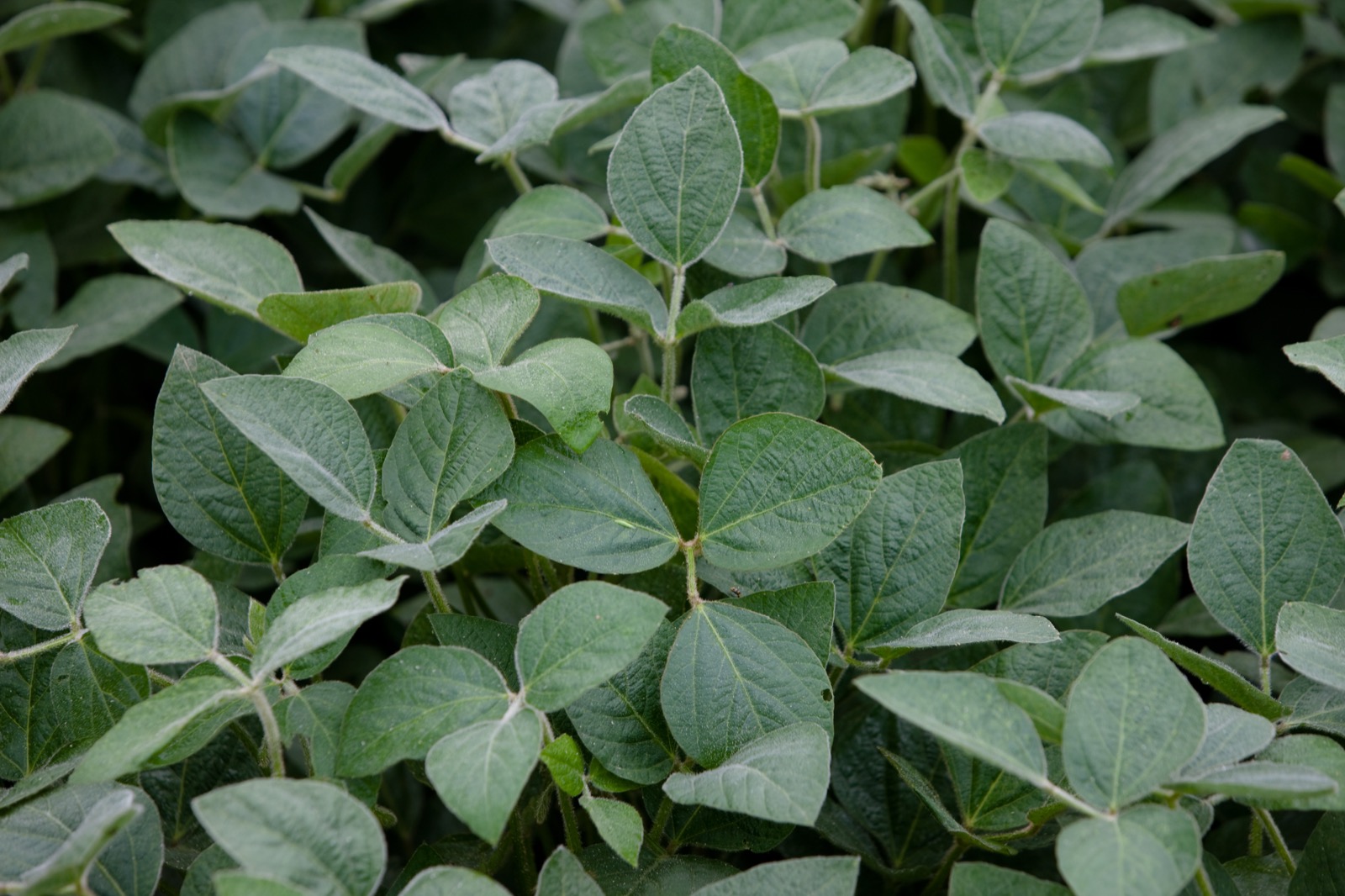
Whose leaf is this?
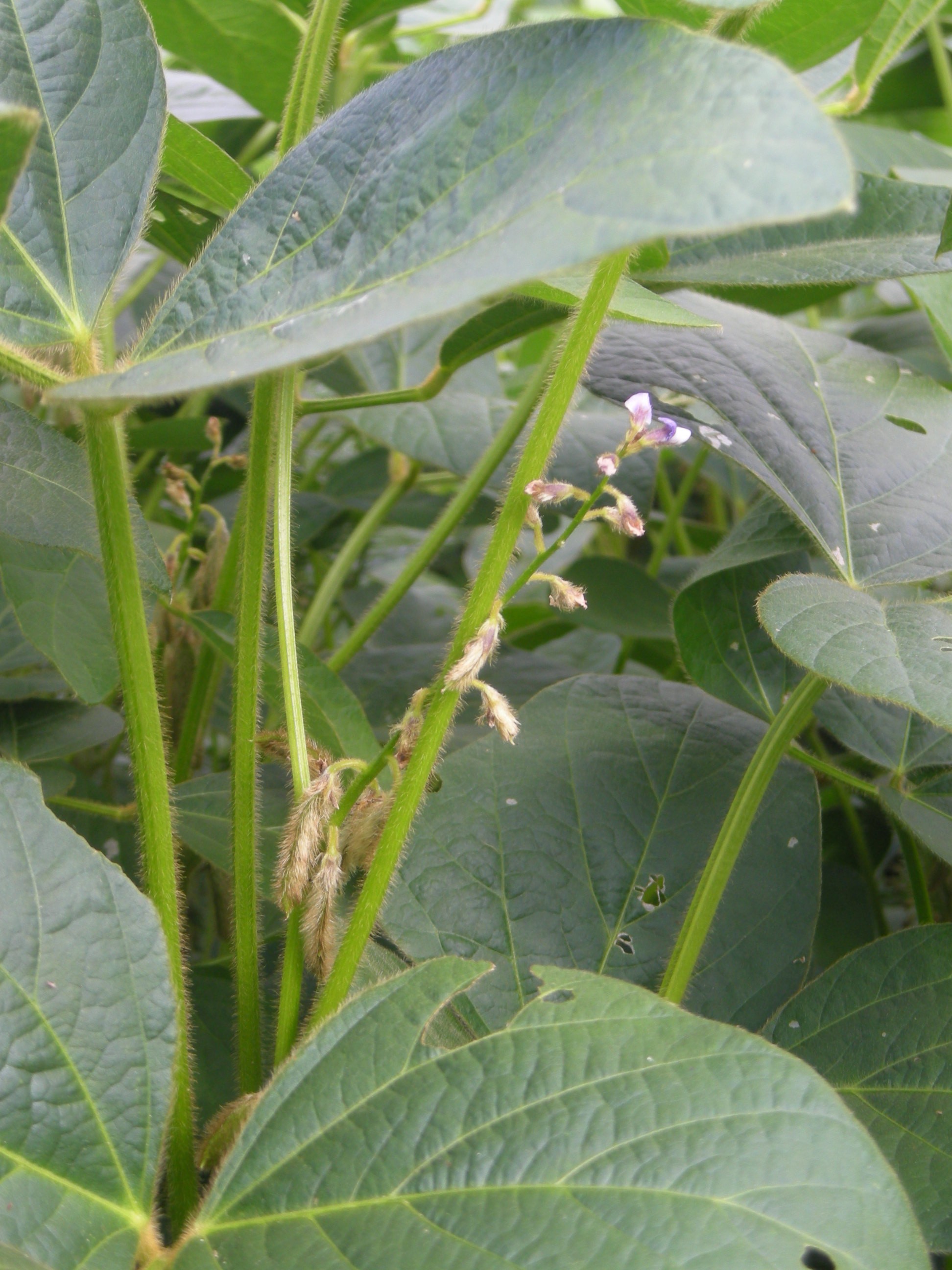
What crop's flower is this?
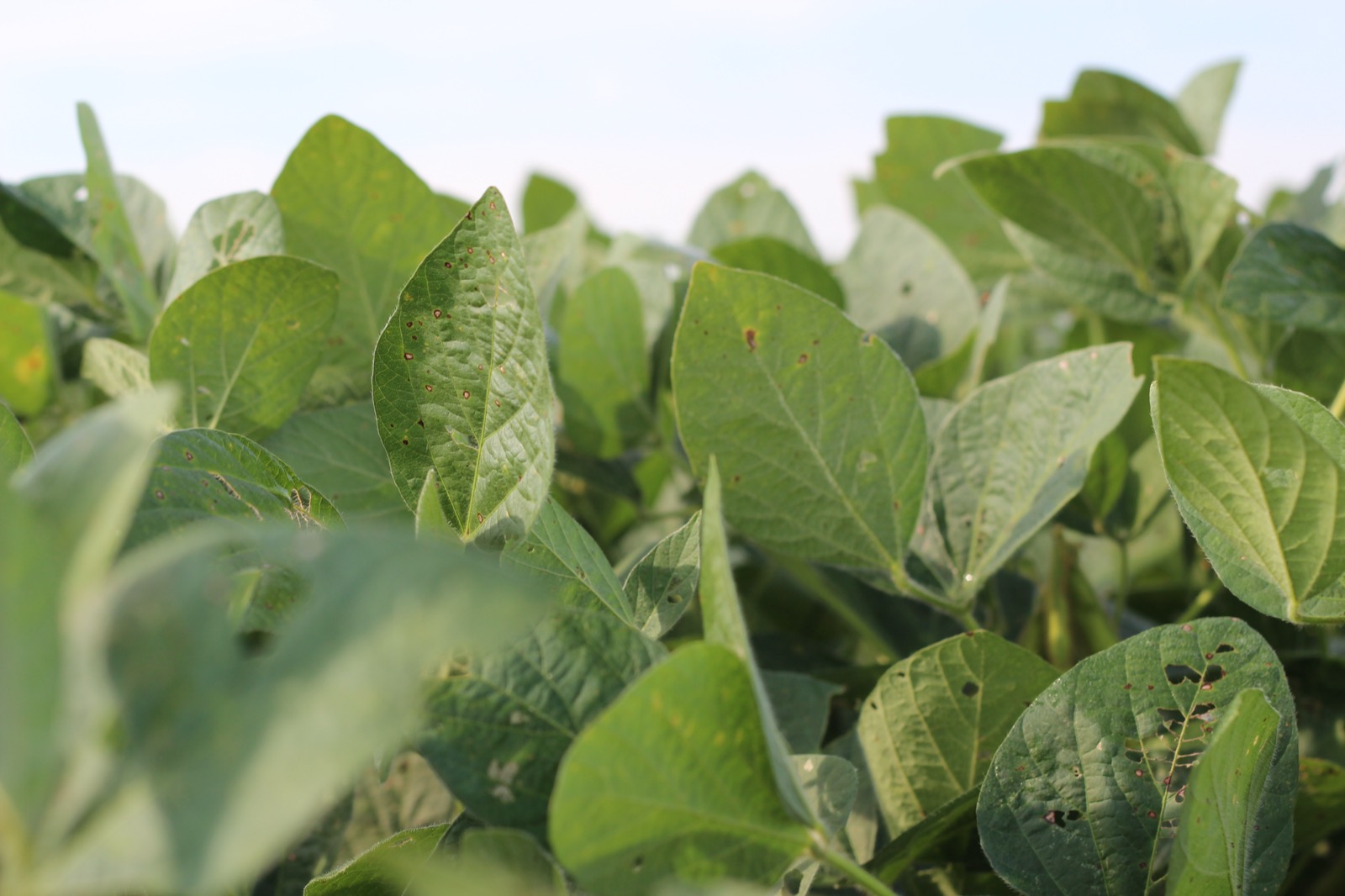
What crop's pods and seeds are these?
Honest Limits of This Guide
- The right month to plant is different in every country, and even in every region within a country, because it depends on your own real rainy or irrigation season, not a fixed calendar date. This guide gives you the rule (Stage 4) instead of a date.
- Maturity group recommendations genuinely differ by latitude and by country, and this guide names the real system rather than inventing a single global recommendation. Take your own region's specific recommended group from a local extension service or seed dealer.
- The farm economics figures in this guide are United States commercial-farm figures in US dollars, from one national dataset, in specific years. They show the real shape of soybean economics honestly, but they are not a forecast for a smallholder farm on another continent.
- This guide does not name any pesticide, fungicide or herbicide product or compound, including herbicide-tolerance trait brand names. It names mode-of-action groups and the toxicity colour-band principle only. If you decide to use a product, buy only from a licensed dealer and follow the label on the actual package.
- The toxicity colour band is a principle, not a fixed chemical-to-colour list. The same active substance can sit in a different band in a different formulation or country, and registrations change. Read the real triangle on the real package.
- This guide states real, published domestication-date estimates for soybean honestly as a range (roughly 3,000 to 9,000 years ago) rather than picking one figure to sound more certain than the underlying genetic and archaeological evidence actually is.
- Soybean oil and soybean meal are not separately tracked by Laisha's own live global commodity price service. Only whole soybean itself is tracked directly, through the World Bank's Commodity Markets Outlook. A grower selling meal or oil specifically should ask their buyer's own reference price directly.
- This guide does not attempt to reproduce the full academic Fehr and Caviness R1-R8 staging table in complete technical detail. It names the real system and its practical field markers honestly, and a grower wanting the complete original technical descriptions should consult an extension publication built specifically for that purpose.
- The identity-preservation premium figures for non-GM and food-grade soybean in this guide are drawn from published US market studies and change with world supply and demand. Ask your own real buyer for their own current premium rather than relying on a figure printed here.
- No photograph in this guide's identificationQuestions can confirm soybean cyst nematode, since this pest very often produces no visible above-ground symptom at all. A soil test or known field history, not a photograph, is the real way to confirm its presence.
- This guide names real molybdenum and manganese micronutrient issues honestly, but does not attempt to give a universal soil threshold for either, since real thresholds genuinely vary by soil type, pH and laboratory method. Ask a local soil-testing service for your own region's real figures.
- The determinate-versus-indeterminate growth habit trait is stated here as a genuine, real distinction, but this guide does not claim every named variety worldwide is clearly labelled one way or the other on every seed bag. Ask your dealer directly where the label itself does not say.
- Trade concentration figures such as China's world import share move with real geopolitical and economic events year to year. This guide states the real, general pattern rather than a figure that will still be exactly accurate by the time you read it.
- This guide names real, published soybean cyst nematode, sudden death syndrome, Asian soybean rust, stink bug, white mould and frogeye leaf spot facts honestly, but it cannot know which of these your own specific field actually carries. A real local soil test and a real local extension visit remain the honest way to know for certain.
- The Cerrado transformation named in globalImportance is a real, documented national-scale story, not a universal promise that any marginal soil anywhere can be turned productive at the same cost or on the same timeline. Brazil's own transformation took real, sustained decades of dedicated public agricultural research investment.
Related Laisha Tools
- Global Market Price Outlook — Check today's price and trend
- Crop Calendar — Build a season-long sowing plan
- Pest & Disease Intelligence — Risk reasoning and a global pest & disease library
- Crop Health — Photo-based first read on a field problem
- Seed Quality Intelligence — Check a seed lot before you plant it
- Post-Harvest Loss Prevention — Real storage science by crop
Open the free Applied Agriculture Library in the Laisha app →
Sources
- GBIF Backbone Taxonomy species-match record for Glycine max (L.) Merr. (usage key 5359660) — Global Biodiversity Information Facility (GBIF), Copenhagen (source)
- EPPO Global Database taxon record for Glycine max, code GLXMA — European and Mediterranean Plant Protection Organization (EPPO), Paris (source)
- The Soybean Plant: Botany, Nomenclature, Taxonomy, Domestication, and Dissemination — SoyInfo Center (William Shurtleff and Akiko Aoyagi) (source)
- List of countries by soybean production (compiled from FAOSTAT, 2022 data) — Wikipedia, citing FAOSTAT (Food and Agriculture Organization Corporate Statistical Database) (source)
- Soybean yields and area harvested, by country — Our World in Data, using FAOSTAT (source)
- Laisha Global Crop Priority Research — Soybean entry — Laisha internal curated research (backend/database/globalCropPriorityResearch.json) (source)
- Costs of producing soybeans in the United States rise as returns fluctuate over time — USDA Economic Research Service, Charts of Note (source)
- Oil Crops Outlook, February 2025 — USDA Economic Research Service (source)
- Soybean oil comprises a larger share of domestic biodiesel production — U.S. Energy Information Administration (EIA), Today in Energy (source)
- Soybean Crush in World's Top 3 Setting Records — DTN Progressive Farmer (source)
- AOSCA soybean certified-seed genetic and quality standards (Foundation, Registered, Certified classes) — Association of Official Seed Certifying Agencies (AOSCA), reproduced by member Crop Improvement Associations (source)
- Stage of Development Descriptions for Soybeans, Glycine max (L.) Merrill — Fehr, Caviness, Burmood and Pennington, Crop Science, 1971 (source)
- Soybean Maturity Groups — Plant Health Exchange (land-grant university extension network) and Saskatchewan Pulse Growers (source)
- Enhanced competitiveness of a Bradyrhizobium japonicum mutant strain improved for nodulation and nitrogen fixation, and related USDA strain trials — Plant and Soil (Springer) and associated Bradyrhizobium strain research (source)
- Soybean Cyst Nematode — Iowa State University Extension and Outreach, Integrated Crop Management (source)
- Asian Soybean Rust — CropWatch, University of Nebraska-Lincoln, and American Phytopathological Society first-report records (source)
- Relationship Between Sudden Death Syndrome caused by Fusarium virguliforme and Soybean Yield: A Meta-Analysis — Plant Disease (American Phytopathological Society), and Minnesota Department of Agriculture / NDSU Extension (source)
- Biology and Management of Brown Marmorated Stink Bug in Mid-Atlantic Soybean, and Stink Bug in Soybean — Virginia Cooperative Extension (Virginia Tech) and NC State Extension (source)
- Global Status of Commercialized Biotech/GM Crops, and related national biotech-adoption statistics — International Service for the Acquisition of Agri-biotech Applications (ISAAA), and USDA Foreign Agricultural Service country reports (source)
- The Market Potential for IP and Non-GMO Soybeans, and Non-GMO U.S. Soy Production Competes with High Commodity Prices — Michigan Soybean Committee (commissioned market study) and U.S. Soybean Export Council (source)
- Corn after soy: New study quantifies rotation benefits and trade-offs, and Why Do Farmers Rotate Corn and Soybeans? — University of Illinois College of Agricultural, Consumer and Environmental Sciences, and Nebraska Corn Board (source)
- 7. Soybean Diseases and Management, North Carolina Soybean Production Guide — NC State Extension (source)
- The State of Soybean in Africa: Soybean Yield in Africa, and Yield gap decomposition: quantifying factors limiting soybean yield in Southern Africa — farmdoc daily, University of Illinois, and npj Sustainable Agriculture (source)
- Frogeye Leaf Spot of Soybean — Crop Protection Network (a partnership of US and Canadian land-grant universities) and Purdue University Botany and Plant Pathology (source)
- Soybean Lecithin: Food, Industrial Uses, and Other Applications, and Adhesives and plastics based on soy protein products — ScienceDirect (Elsevier), compiling published food-science and industrial-chemistry research (source)
- China has emerged as the world's dominant importer of soybeans, bolstering demand for U.S. exports — USDA Economic Research Service, and World Bank / WITS trade data (source)
- Madhya Pradesh again became the largest producer of soybean — iGrain India (agricultural market news), reporting official Indian state-level crop statistics (source)
- Molybdenum fertilization enhances nodulation and seed yield of soybean under field conditions, and Manganese (Mn) Deficiency of Soybean — Discover Plants (Springer Nature) and Crop Protection Network (source)
- Embrapa and Brazil's Agricultural Revolution, and Lessons from the Brazilian Cerrado: Technological Achievement and Environmental Challenges — MIT Department of Economics working paper, and ReVista, Harvard Review of Latin America (David Rockefeller Center for Latin American Studies) (source)
- Laisha's own agrochemical safety reference: mode-of-action grouping and the India colour-band toxicity principle — Laisha internal curated reference, built from the Insecticides Act 1968 / Insecticide Rules 1971 (India) and IRAC/FRAC/HRAC mode-of-action classification systems (source)