How to Grow Barley
Hordeum vulgare · Also called: barley, barleys, common barley, six-row barley, six-rowed barley, two-row barley, two-rowed barley, malting barley
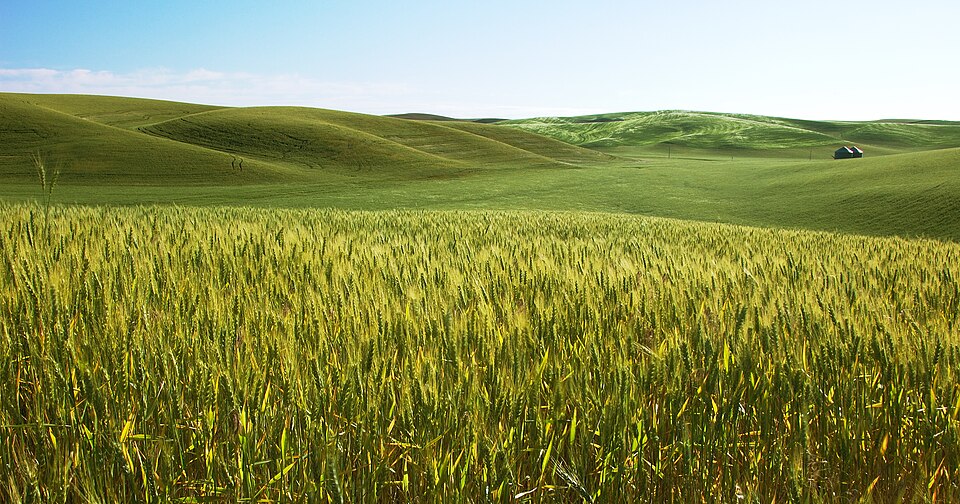
Photo: Victor Szalvay, CC BY-SA 2.0 (Wikimedia Commons)
Barley is one of the oldest crops human beings have ever grown, domesticated in the Fertile Crescent alongside wheat roughly ten thousand years ago, and it is still one of the four biggest cereals on Earth by tonnage, behind only maize, wheat and rice. It is a top-ten crop in 74 of the world's 195 countries, and the single biggest crop of all in six of them: Denmark, Finland, Iceland, Ireland, New Zealand and Norway. It earns that place because it will grow where wheat struggles — in short cold seasons, on poorer and more saline soils, and on less water — which is exactly why it is also a real staple food crop of the Ethiopian highlands, the Tibetan plateau and parts of the Middle East and North Africa, not only a brewing ingredient in rich countries. One crop genuinely does three different jobs: it malts into the base of most of the world's beer and whisky, it feeds livestock as one of the most widely traded feed grains on Earth, and, milled or pearled, it feeds people directly as a wholegrain food valued for its fibre.
Global Importance
Barley is grown on tens of millions of hectares across a wider range of climates than almost any other cereal — from the Arctic edge of Scandinavia to the highlands of Ethiopia and the deserts of North Africa. It sits fourth among the world's cereals by tonnage, and its true value is spread across three separate demands: malting and brewing, livestock feed, and direct human food.
Market Segments
Barley is not one product. It is sold into genuinely different markets that pay for genuinely different things, and — more than almost any crop in this library — the decision about which market you are growing for has to be made before you sow, because very little about grain quality for these markets can be fixed after the fact.
Growth Habit
Two decisions about habit shape almost everything else in this guide: whether your variety is a winter type or a spring type, and how it copes with lodging — falling over before harvest. Choosing wrongly for your season length, or feeding a lodging-prone crop too much late nitrogen, are two of the most expensive mistakes in this crop.
Growing Barley, Stage by Stage
- 1. Get the land ready — Choose land with a real gap since the last cereal, check the soil is not strongly acid, and work a fine, firm, well-drained seedbed.
- 2. Choose seed and treat it properly — Decide your market first, buy certified seed with a real treatment against seed-borne smuts, and never save seed from a diseased or sprouted field.
- 3. Sow — Sow winter barley in autumn and spring barley as soon as the soil has warmed, evenly, at a real seeding rate, and no deeper than about 3 to 5 cm.
- 4. Feed the crop — and the one thing everyone gets wrong — Barley cannot make its own nitrogen the way a legume can. It needs a real amount, put on at the right time — because too much, or nitrogen applied too late, is exactly what wrecks malting quality and causes the crop to fall over.
- 5. Water — Barley fears wet feet more than drought, but it needs reliable moisture at two real moments: stem extension and grain fill. Wet weather right at flowering is also when Fusarium head blight gets its chance.
- 6. Weeds — Barley competes with weeds reasonably well once established, but the first six weeks decide most of the outcome, and grass weeds are the hardest problem in this crop specifically.
- 7. Insect pests, stage by stage — The insect that matters most in barley is not the one that eats the most leaf. It is the aphid that carries a virus, and the best control is often watching, not spraying.
- 8. Diseases, stage by stage — Two leaf diseases, two seed-borne smuts, one aphid-carried virus and two grain-contaminating fungi take most of the world's lost barley. Almost all of them are fought before or at flowering, not after.
- 9. Know when to harvest — and the danger of waiting too long — Harvest as soon as the grain is hard and dry enough, because every extra day standing in the field after maturity is a day of real risk from sprouting, shedding and weather damage — and for malting barley, the crop must come off the field still alive.
- 10. Harvest, dry and store without losing quality — Handle the grain gently so the germ survives, dry it to a real safe moisture, and never mix a new, clean lot with old or contaminated grain.
- 11. Grade it and sell it well — Know your own nitrogen, moisture, screenings and cleanliness before you go to market, because a malting premium is decided against a real published laboratory specification, not by eye.
Fertiliser Programme
Barley is fed very differently from a legume like groundnut or common bean in this library, and differently again from a starch root crop like potato or sweet potato: it is a grass with no nitrogen-fixing partner, so it needs a genuine nitrogen programme — but for a malting crop, getting the AMOUNT and TIMING right matters as much as applying it at all.
Common Problems & Troubleshooting
If you see: Hard, dark purple-black to black growths, larger than a normal grain, sticking out of the ear where a grain should be.
It likely means: Ergot, caused by the fungus Claviceps purpurea. These bodies, called sclerotia, are genuinely poisonous and are covered in this guide's own safety warning for that reason.
Do this: Do not eat, sell or feed grain containing these bodies without physically sorting them out first. They cannot be made safe by cooking, malting or brewing.
If you see: Patches of stunted plants with leaves yellowing from the tip inward, the margins often turning a distinctive purple-red, sometimes starting near a field edge or in a broader patch across the field.
It likely means: Barley Yellow Dwarf Virus (BYDV), carried by aphids, most importantly the bird cherry-oat aphid. There is no cure for an infected plant.
Do this: Nothing will cure this season's infected plants. Note where and when infection appeared for next season's planning.
If you see: Narrow, dark brown streaks running along and across the leaf, forming a net-like pattern, or (in a different form of the same disease) small dark spots with a yellow halo.
It likely means: Net blotch, a fungal leaf disease found wherever barley is grown, carried over on infected crop residue and on infected seed.
Do this: For this season: where fungicides are a normal local practice, ask a licensed dealer for a product by FRAC mode-of-action group, timed to your local extension service's recommended growth stage, and prefer the lowest hazard colour band that genuinely does the job.
If you see: Pale, water-soaked, oval to irregular blotches on the leaf with a distinctive darker brown border, appearing especially after cool, wet weather.
It likely means: Scald, also called leaf blotch or rhynchosporium — a fungal disease favoured specifically by cool, wet conditions and, like net blotch, carried over on infected residue.
Do this: Manage it the same way as net blotch: rotate out of cereals for at least a year, remove or bury infected residue, choose a resistant variety where one is available for your area, and where you spray, use FRAC mode-of-action groups and rotate them.
If you see: A fluffy white to greyish powder coating the upper surface of leaves, sometimes greying to brown with age, most common on lush, dense, heavily fertilised crops.
It likely means: Powdery mildew, a fungus directly favoured by exactly the conditions produced by over-application of early nitrogen: a lush, dense, humid canopy.
Do this: Check your own nitrogen programme against Stage 4 before assuming this is simply bad luck. A crop that is unusually lush for its growth stage is more susceptible to this disease specifically.
If you see: The ear, at the point it should be filling with grain, is instead a mass of dark, powdery spores (loose smut) that shatters and blows away leaving a bare stalk, or a similar dark mass held inside an intact membrane through to harvest (covered smut).
It likely means: Loose smut or covered smut, two different seed-borne fungi that both replace developing grain with spores instead of a normal crop.
Do this: Nothing will save an infected head this season. If the field is small enough, rogue out and destroy visibly smutted heads before they shed spores, to reduce the amount of inoculum returned to the field and the harvested seed.
If you see: Individual spikelets or whole sections of the ear bleached prematurely white while the rest of the ear is still green, sometimes with a pink to salmon-coloured tinge, and shrivelled, lightweight grain inside at harvest.
It likely means: Fusarium head blight (scab), a fungal infection of the ear that occurs during warm, humid weather at flowering, and which can leave the mycotoxin deoxynivalenol (DON) in the grain even from a mild-looking infection.
Do this: Avoid sowing barley directly after maize where possible; maize residue is a major host for the same Fusarium species and raises local spore pressure at flowering.
If you see: Areas of the crop leaning or completely flat on the ground before or during ripening, often in patches following wind and rain.
It likely means: Lodging, usually caused by too much nitrogen, nitrogen applied too late, an overly thick plant stand, or a tall, weak-strawed variety — often several of these together.
Do this: Nothing will stand a lodged crop back up this season. Harvest it as carefully and promptly as conditions allow; lodged, damp grain lying near the ground is at real, elevated risk of sprouting and Fusarium mould, on top of the direct harvesting difficulty and yield loss.
If you see: Grain that has visibly begun to sprout — a small shoot or root emerging — while still in the ear in the field, usually after the mature crop has been rained on while still standing.
It likely means: Pre-harvest sprouting, caused by rain on a fully mature standing crop before it could be harvested.
Do this: Harvest the affected area as soon as conditions allow; further delay only allows more grain to sprout.
If you see: Younger leaves pale or yellowish, in a pattern that looks like nitrogen shortage, but the symptom does not improve after a nitrogen application, or the field is on notably peaty, very sandy, alkaline or heavily limed soil.
It likely means: Either sulphur shortage (more common on light, sandy or heavily leached soils) or manganese shortage (a real, distinct, well-documented barley disorder specifically on peaty, sandy, alkaline or over-limed soils), rather than plain nitrogen shortage.
Do this: Do not simply apply more nitrogen and hope; check which nutrient is actually short, ideally by soil or leaf testing, or by asking your extension service to look at the specific pattern of yellowing.
If you see: Visible mould, an off or musty smell, warm or damp patches deep in a stored bulk, or a pink to reddish tinge on some grain.
It likely means: Storage mould, and a real possibility of mycotoxin contamination, especially if the pink tinge suggests the grain was already carrying a field-level Fusarium infection into store.
Do this: Take the affected portion out and inspect it separately from the rest of the lot. Do not blend it back in to dilute the problem — that spreads risk rather than removing it.
Real Farm Economics
Real cost and return figures for barley, from a real, current, published UK arable budget rather than a guess. These are from the SAC Consulting Farm Management Handbook's Arable section, updated March 2025 — the standard UK reference for farm business budgeting — and are given in pounds sterling per hectare as published, for a 2025-harvest sale-price estimate.
Yield & Market Value
Growing the crop is only part of the job. The last part is knowing what a normal harvest looks like, and knowing what your barley is worth before you agree a price with anybody.
Remember It This Way
If you forget every other page of this guide, keep these lines. They are the whole crop, in order, short enough to carry in your head.
- It is a grass, not a bean — it makes none of its own nitrogen.
- Decide malting, feed or food before you buy seed. You cannot change your mind at harvest.
- Rotate away from cereals for at least a year. Last year's stubble is next year's disease.
- Feed the nitrogen early, not late. Late nitrogen ruins malting quality and knocks the crop flat.
- It hates wet feet more than dry weather — until flowering, when a wet spell brings ergot and Fusarium.
- Certified, treated seed beats saved seed, because the worst diseases in this crop travel inside the seed itself, invisibly.
- A hard, dry grain that bites clean means lift now. A rained-on ripe crop sprouts in the ear.
- Handle it gently after harvest. A maltster is buying a grain that is still alive.
- Sort out every dark ergot body and every mouldy grain. No cooking, malting or brewing removes what they carry.
Test Yourself: Identification
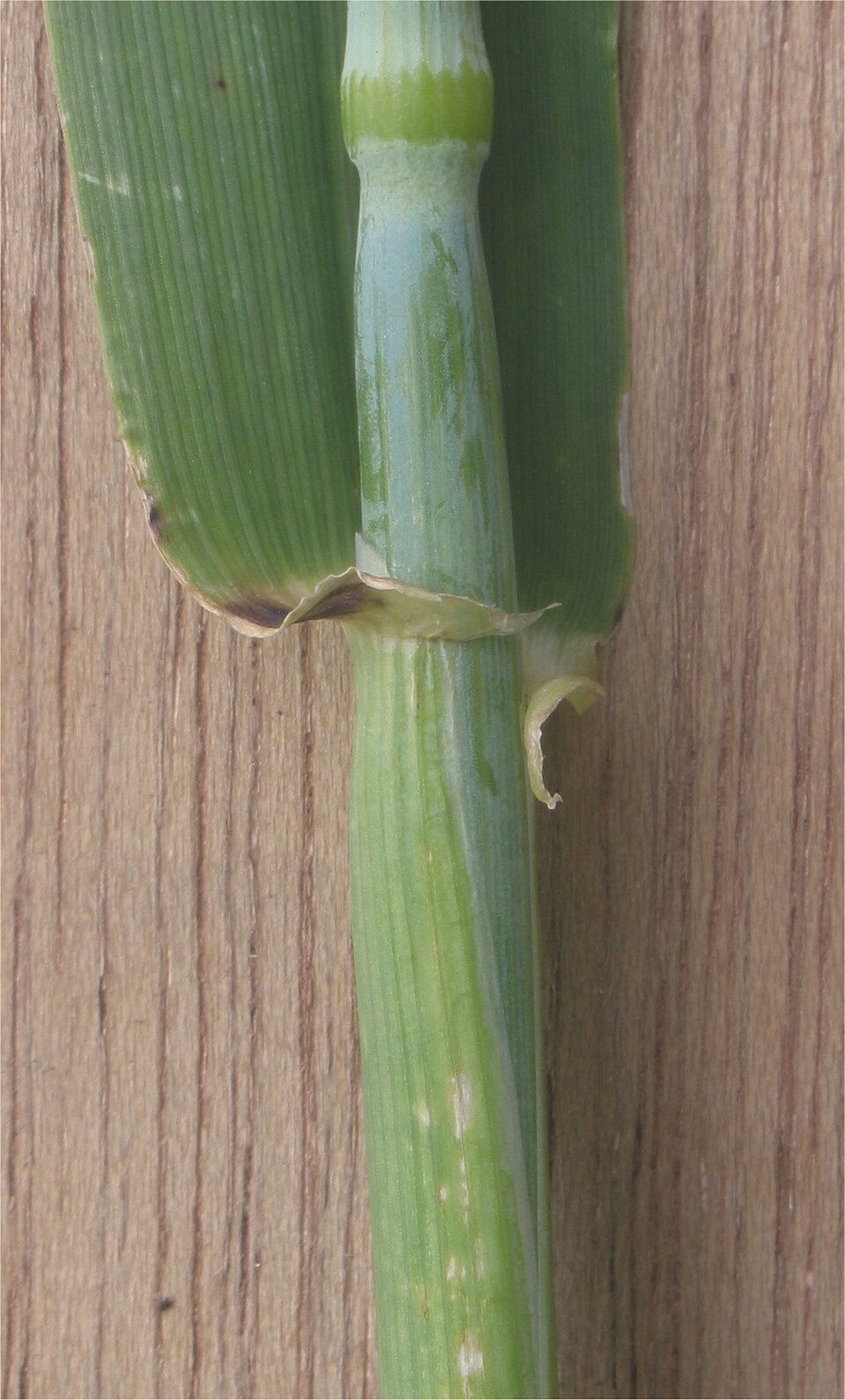
You are told this seedling is barley, wheat or oats, and only the leaf is in front of you. Which single feature tells barley apart fastest?
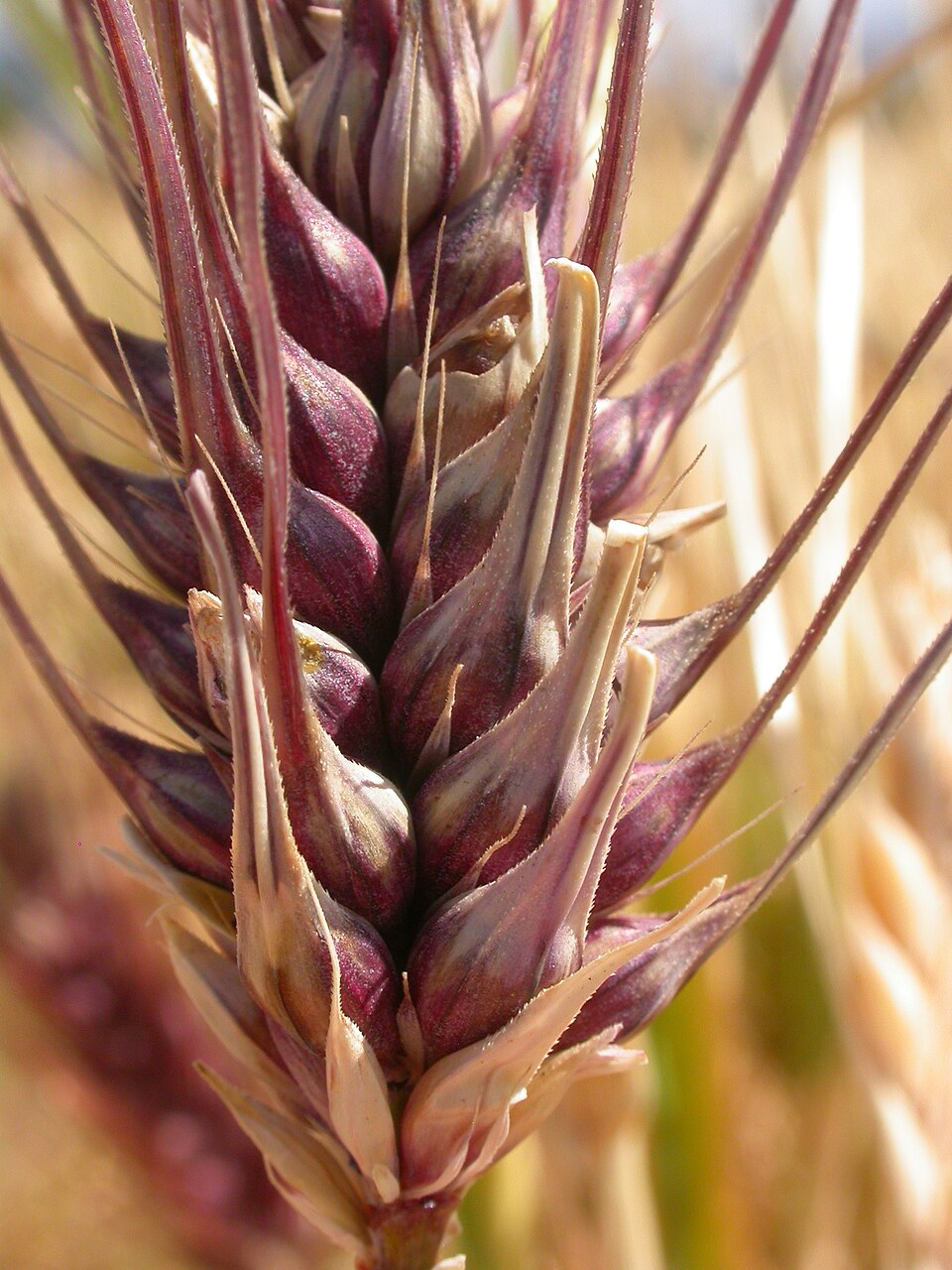
This mature ear has grain packed densely all the way around a thick, dense head. Two-row or six-row barley?
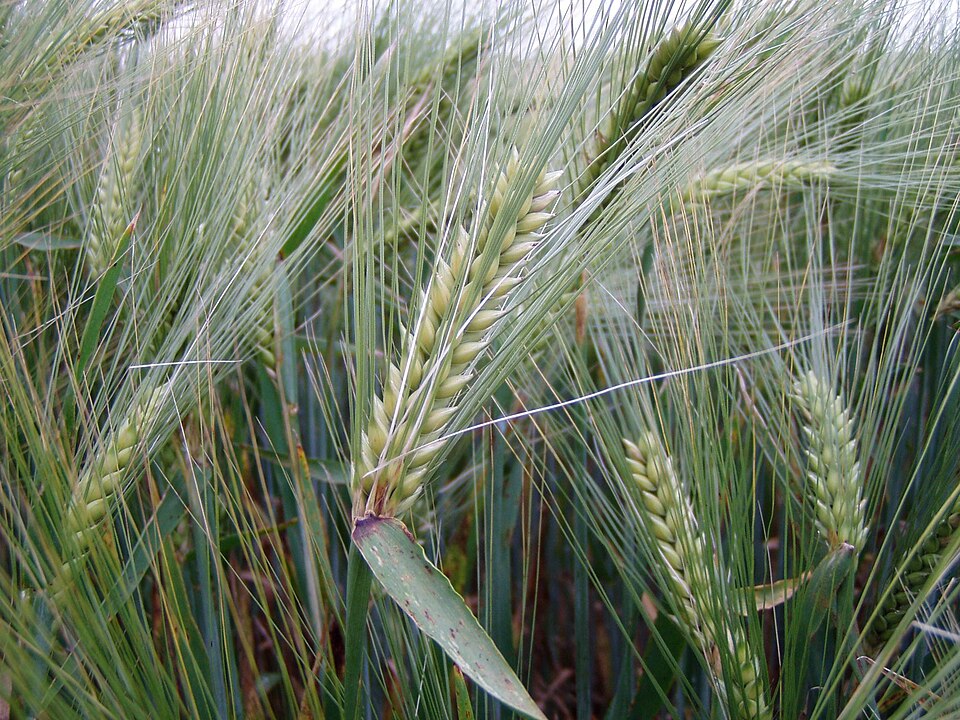
This whole, mature ear at full growth, just before ripening, still shows all its rows of well-formed heads clearly. What growth stage and row type is this?
Honest Limits of This Guide
- This session's live connection to FAOSTAT's own bulk data file and public query API both failed while this guide was being written (a server error from the bulk file host, and HTTP 521 'unknown status' from the API). The world and country production figures in this guide are therefore drawn from a secondary compilation of the same underlying FAOSTAT dataset, cross-checked across two independent sources that both cite FAOSTAT by name, rather than read directly from FAOSTAT's own published file the way this library's groundnut and potato guides were able to. This guide could not reproduce FAOSTAT's own per-country data-quality flags (official / estimated / imputed) as a result, and states its figures as 'approximately' throughout for that reason.
- This guide could not retrieve a long-run (1961-to-present) FAOSTAT time series for barley this session, so — unlike this library's groundnut guide — it does not print a historical yield-climb figure. That is a real gap, not a rounding choice.
- Laisha's own curated leaf-disease visual reference (leafVisualDiagnosticReference.json) does not yet contain barley-specific entries at the time this guide was written, unlike its coverage of several other crops in this library. The disease descriptions in this guide are grounded in the standard published plant pathology literature named in its sources, not in that internal reference file.
- The farm economics and malting-premium figures in this guide are real, current, and directly read from a named published UK arable budget (SAC Consulting's Farm Management Handbook, updated March 2025). They describe one country's cost structure, currency and farming system. They are a real, checkable illustration of the SHAPE of barley economics — the size of fertiliser cost relative to other inputs, the value of straw, the relative size of a malting premium — not a forecast for any other country's costs or prices.
- The malting quality figures (grain nitrogen ranges, germination, screenings, moisture) are read from the Maltsters' Association of Great Britain's own published barley requirements. Malting specifications genuinely vary between individual maltsters, countries and end uses (ale versus lager versus distilling); always confirm the exact figures in your own contract rather than assuming the UK ale-brewing figures in this guide apply everywhere.
- This guide does not name any pesticide, fungicide or herbicide product or compound. It names mode-of-action groups and the toxicity colour-band principle only. If you decide to use a product, buy only from a licensed dealer and follow the label on the actual package.
- The toxicity colour band is a principle, not a fixed chemical-to-colour list. The same active substance can sit in a different band in a different formulation or country, and registrations change. Read the real triangle on the real package.
- Seeding rates and total seasonal nutrient rates in this guide are real, current figures for one temperate, high-input farming system (Scottish/UK arable budgets). Take your own actual seeding rate and fertiliser programme from your local extension service, which will differ with your soil, seed size, sowing date and climate.
- No photograph or field observation can confirm or rule out a mycotoxin such as deoxynivalenol (DON) with certainty. Visible mould, bleaching, shrivelling and a pink tinge on the ear or grain are real risk indicators that justify laboratory testing. They are not a measurement, and their absence is not proof of safety.
- FAOSTAT-style country production figures used across this guide's secondary sources are themselves sometimes estimated or imputed rather than officially reported by the country in question; this guide was not able to independently verify which of the country figures above carry which data-quality flag this session, and states that limitation honestly rather than presenting every figure as equally certain.
Related Laisha Tools
- Global Market Price Outlook — Check today's price and trend
- Crop Calendar — Build a season-long sowing plan
- Pest & Disease Intelligence — Risk reasoning and a global pest & disease library
- Crop Health — Photo-based first read on a field problem
- Seed Quality Intelligence — Check a seed lot before you plant it
- Post-Harvest Loss Prevention — Real storage science by crop
Open the free Applied Agriculture Library in the Laisha app →
Sources
- GBIF Backbone Taxonomy species-match record for Hordeum vulgare L. (usage key 2706056) — Global Biodiversity Information Facility (GBIF), Copenhagen (source)
- EPPO Global Database entry for Hordeum vulgare (EPPO code HORVX) — European and Mediterranean Plant Protection Organization (EPPO), Paris (source)
- Global Crop Priority Research (globalCropPriorityResearch.json), Barley entry — Laisha internal reference data set, built on FAOSTAT (source)
- 2022 world and country-level barley production, area harvested and yield figures, as compiled from FAOSTAT by secondary published sources (Wikipedia's 'List of countries by barley production' and World Population Review's FAOSTAT-sourced country ranking) — Underlying data: Food and Agriculture Organization of the United Nations (FAOSTAT). Compiled via secondary sources after this session's own live connections to FAOSTAT's bulk data file and public API both failed. (source)
- The Barley Value Chain in Ethiopia, and related published research on Ethiopian barley yield trends — Published agricultural value-chain and smallholder-productivity research on Ethiopian barley, including Central Statistical Agency (CSA)-derived yield-trend figures (source)
- Australian Crop Report (ABARES / Department of Agriculture, Fisheries and Forestry) and associated published Australian barley yield figures — Australian Bureau of Agricultural and Resource Economics and Sciences (ABARES), Australian Government Department of Agriculture, Fisheries and Forestry (source)
- Cereal and Oilseed Rape Harvest 2023: Final Estimates — Barley production and yield average — Scottish Government (gov.scot) (source)
- The Farm Management Handbook — Arable (Barley - Winter and Barley - Spring sections: physical data and gross margin data) — SAC Consulting, part of Scotland's Rural College (SRUC), for the Farm Advisory Service (Scottish Government Rural Development Programme) (source)
- Barley Requirements — The Maltsters' Association of Great Britain (UK Malt) (source)
- Council Directive 66/402/EEC on the marketing of cereal seed, Annex II — barley (Hordeum vulgare) entry, including the naked-barley germination reduction and varietal purity figures — Council of the European Union, Official Journal of the European Union (source)
- Global Seed Certification Standards (globalSeedCertificationStandards.json), barley entries across the EU cereal seed directive, FAO Quality Declared Seed system, India's IMSCS and Canada's Seeds Regulations — Laisha internal reference data set, compiled from the primary legal instruments it cites (source)
- Grain Visual Diagnostic and Global Trade Grading Reference (grainVisualDiagnosticReference.json) — barley entries across US CFR, India's AGMARK rules, the EU's intervention quality regulation and the EU's contaminant-limits regulation — Laisha internal reference data set (source)
- Compendium of Barley Diseases, Second Edition — APS Press, The American Phytopathological Society, St. Paul, Minnesota. Edited by D. E. Mathre, Montana State University. (source)
- Barley yellow dwarf virus (BYDV) management in cereals, and associated published research on BYDV yield loss in barley — Agriculture and Horticulture Development Board (AHDB), United Kingdom, together with peer-reviewed published research on BYDV yield-loss severity (source)
- Agrochemical Reference (agrochemicalReference.json) — IRAC, FRAC and HRAC mode-of-action classifications, and the India Insecticides Act 1968 / Insecticide Rules 1971 colour-coded hazard triangle — Laisha internal reference data set, built on IRAC, FRAC, HRAC and the Central Insecticides Board & Registration Committee (CIBRC), Government of India (source)