How to Grow Maize
Zea mays · Also called: corn, mielie, mealie, makai, bhutta, maíz, maïs, mahindi
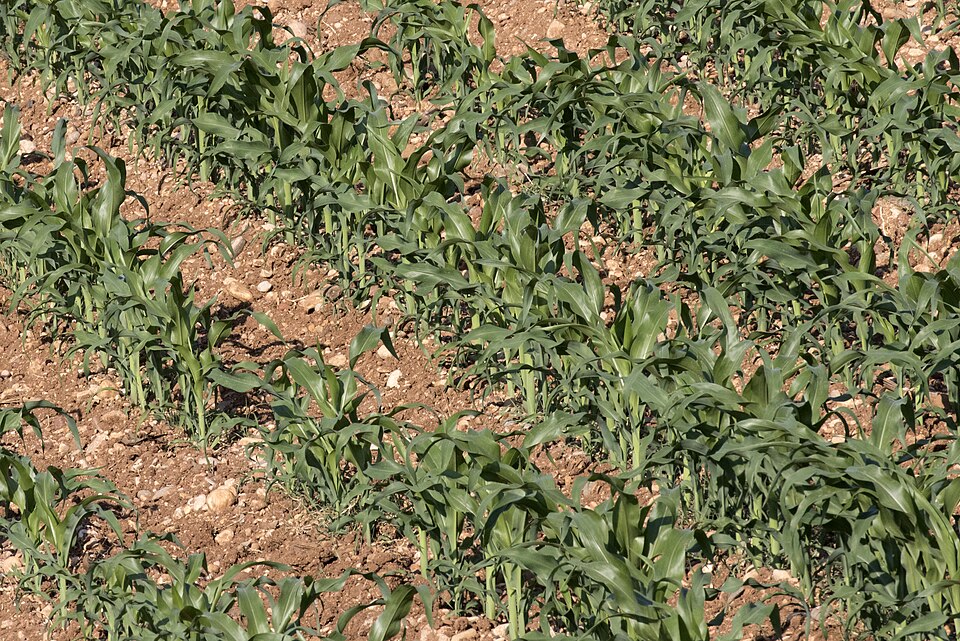
Photo: Zeynel Cebeci, CC BY-SA 4.0 (Wikimedia Commons)
Maize is the main food for hundreds of millions of people in Africa and Latin America, and food for animals almost everywhere. It grows fast. It grows in many kinds of soil. A small piece of land can feed a family.
Growing Maize, Stage by Stage
- 1. Get the land ready — Loosen the soil, take out the weeds, and give the water somewhere to go.
- 2. Choose and get your seed — Use big, whole, clean seed. Know whether your seed can be saved or not.
- 3. Plant the seed — One or two seeds per hole, not too deep, in straight rows with room to walk.
- 4. Water — Maize can take some dry days. It cannot take dry days when it is flowering.
- 5. Weeds and feeding — Keep the first six weeks clean. Feed the crop when it is knee high.
- 6. Walk your field twice a week — The cheapest pest control in the world is your own eyes and fingers.
- 7. Know when to harvest — For dry grain, wait until the husks are brown and the grain is hard as a stone.
- 8. Dry it and store it so you do not lose it — Damp maize grows a poison you cannot see. Dry it hard, then seal it away from air.
Common Problems & Troubleshooting
If you see: Ragged holes and torn windows in the young leaves. Wet sawdust looking droppings sitting in the funnel at the top of the plant. A striped caterpillar inside that funnel, with an upside down Y mark on its head.
It likely means: Fall armyworm, a caterpillar that lives down inside the whorl of young maize and eats it from the middle out.
Do this: Walk the field twice a week and crush the egg patches with your fingers before they hatch.
If you see: Small pretty plants with bright pink, purple or white flowers growing between your maize, while the maize around them is stunted, yellow and dying even though it has rain.
It likely means: Striga, also called witchweed. It attaches to your maize roots underground and drinks from them. By the time you see the flowers, it has already been feeding for weeks.
Do this: Pull every striga plant out by hand before it flowers and makes seed. One plant left can make tens of thousands of seeds that stay alive in your soil for many years.
If you see: Young plants that are small and stiff, with the leaves and stems turning purple or reddish, especially in cold or wet weather.
It likely means: The plant cannot take up phosphorus, one of the foods it needs for roots. Often the soil is cold, or waterlogged, or genuinely short of it.
Do this: If the soil is wet, open a channel and let the water off. Waterlogged roots cannot feed.
If you see: The older, lower leaves turning yellow from the tip inwards, in a shape like a V pointing back down the middle of the leaf, while the top leaves stay green.
It likely means: The plant is short of nitrogen. Maize is a hungry crop and this is the most common shortage of all.
Do this: Put on manure, compost or a nitrogen fertiliser between the rows now, and cover it with soil.
If you see: Cobs that are only part filled. Big gaps with no grain, or grain only on one side, or nothing at the tip.
It likely means: The dust from the tassel at the top of the plant never reached the soft threads on the young cob. That is called pollination, and without it a grain never forms. Almost always it failed because it was too dry, or too hot, at exactly that time.
Do this: You cannot fix these cobs. Learn the timing for next season.
If you see: Small round holes in a line across a young leaf when it unrolls. Later, the centre of the plant dies and pulls out easily while the outer leaves stay green. Later still, stems break and fall over in wind.
It likely means: A stem borer. A caterpillar has tunnelled inside the stem and eaten the growing point and the inside of the stalk.
Do this: Pull out and destroy plants whose centre has died. The caterpillar is inside.
If you see: Green, blue-green, white or pink fuzzy growth on the grain, usually starting at the tip of the cob. Grain that looks chalky or discoloured. A musty smell.
It likely means: Mould. It gets in when the cob is damaged by insects or birds, when rain falls on ripe cobs, or when grain is stored damp.
Do this: Do not eat it and do not feed it to your animals. Some of these moulds make a poison that cooking does not destroy and that you cannot see, smell or taste.
If you see: Small dark beetles with a long snout walking in the grain. Neat round holes in the grain. Fine powder like flour at the bottom of the sack. Grain that feels light and rattles.
It likely means: Grain weevils and borers. They very often came in from the field inside the cob, or were left in a dirty store from last year.
Do this: Dry the grain hard in the sun again. Heat and dryness kill many of them.
Yield & Market Value
Growing the crop is only part of the job. The last part is knowing what a normal harvest looks like, and knowing what your grain is worth before you agree a price with anybody.
Remember It This Way
If you forget every other page of this guide, keep these lines. They are the whole crop, in order, short enough to carry in your head.
- Rain first, then seed. Never plant into dust.
- Two knuckles deep, and a long stride between the rows.
- Maize is hungry. Feed it, or it feeds you less.
- The first month of weeds decides the whole harvest.
- Walk your field twice a week and look down the funnel.
- Silks brown, husks dry, grain hard. Getting close.
- Black spot at the base of a grain means it is finished growing. Cut.
- Dry it till it rattles, then shut the air out and it keeps.
Test Yourself: Identification
This leaf is of which plant?
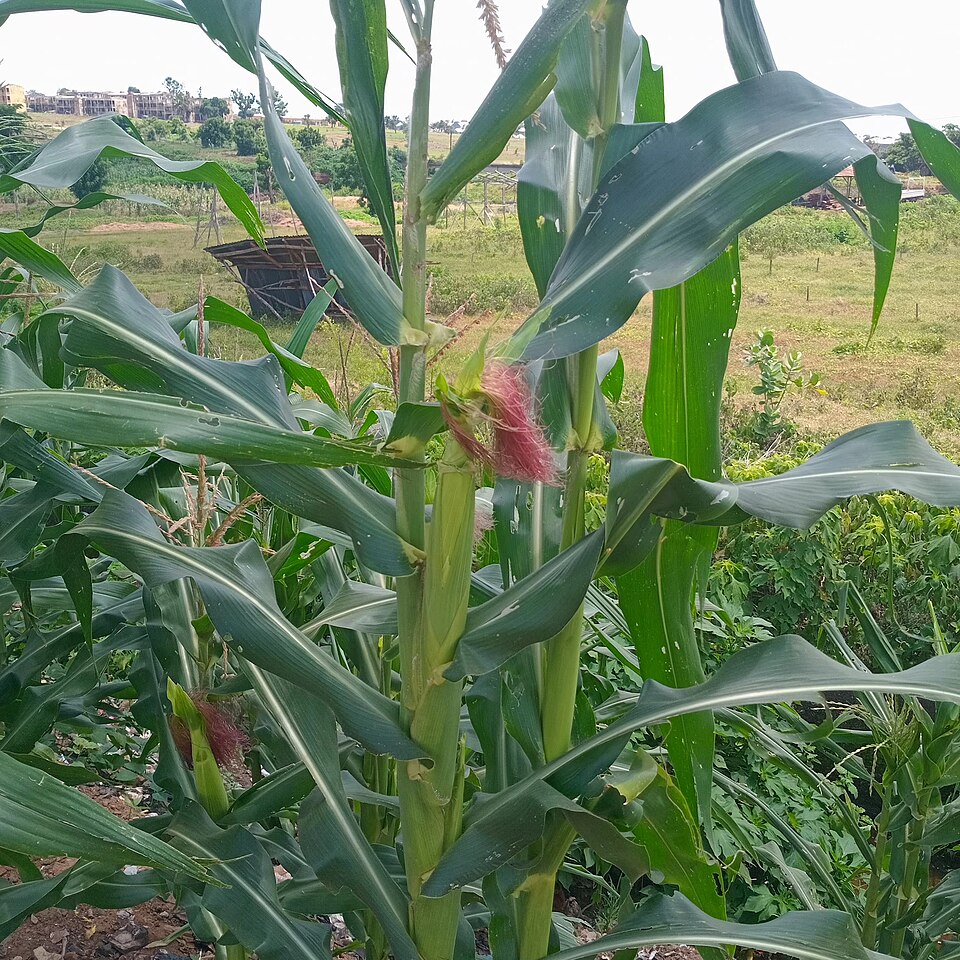
Which crop is this grown plant, and where is its grain?
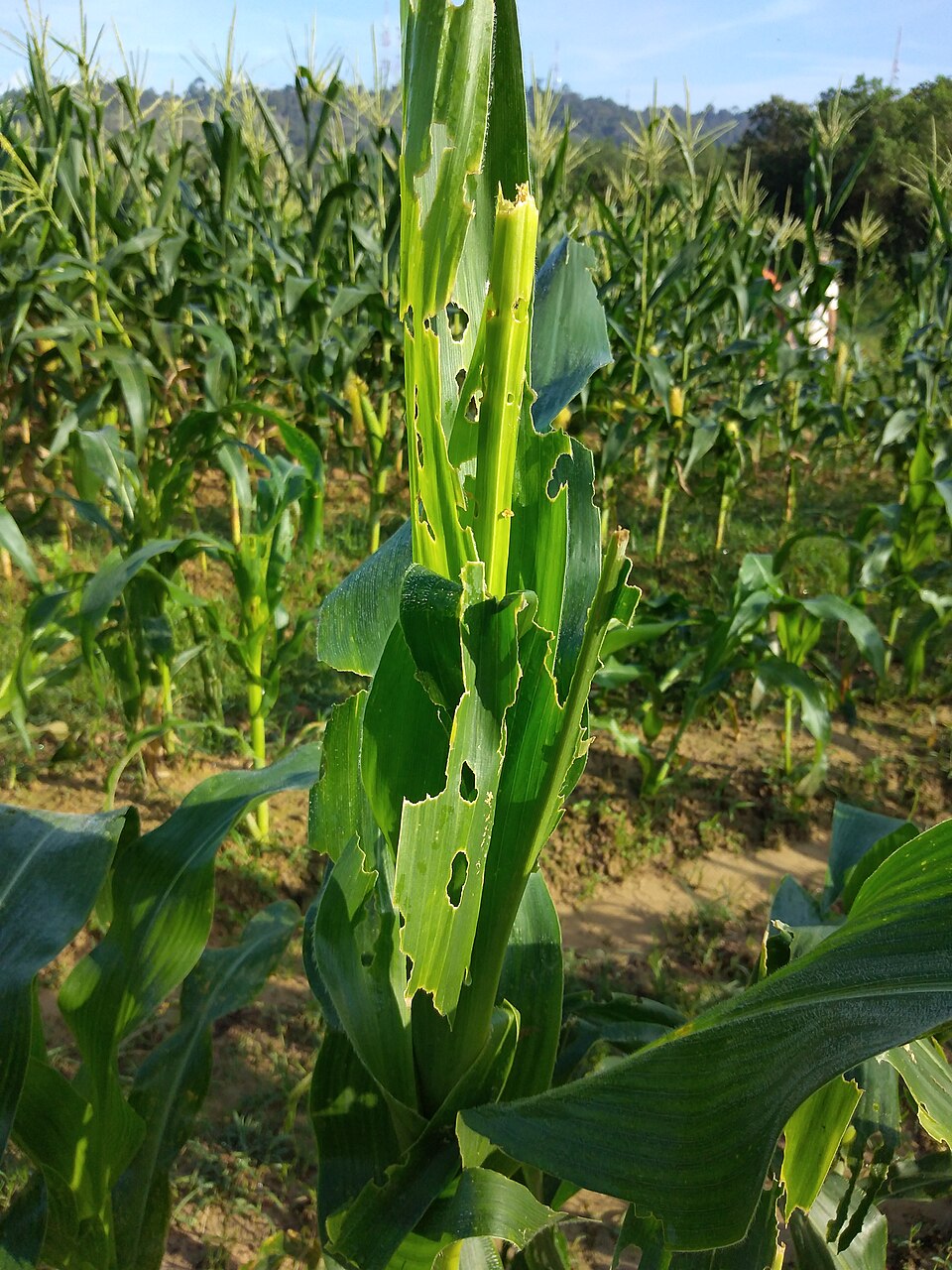
Which crop is this, and what has happened to the leaf?
Honest Limits of This Guide
- The right planting month is different everywhere. This guide gives you the rule instead: plant when the rain has soaked the ground deep, so that flowering falls in your wet weeks.
- Spacing figures here are a good general starting point. Where soil is poor or rain is short, farmers space plants wider on purpose so each plant gets more. Ask locally.
- Whether your seed can be saved depends on whether it is a local variety or a hybrid. Find out which you have before you plan on saving it.
- This guide does not name any pesticide, weedkiller or fungicide product. If you decide to use one, buy only from a licensed dealer and follow the label.
Related Laisha Tools
- Global Market Price Outlook — Check today's price and trend
- Crop Calendar — Build a season-long sowing plan
- Pest & Disease Intelligence — Risk reasoning and a global pest & disease library
- Crop Health — Photo-based first read on a field problem
- Post-Harvest Loss Prevention — Real storage science by crop
Open the free Applied Agriculture Library in the Laisha app →
Sources
- Integrated management of the Fall Armyworm on maize: A guide for Farmer Field Schools in Africa — Food and Agriculture Organization of the United Nations, Rome (source)
- Maize in human nutrition — Food and Agriculture Organization of the United Nations, Rome (source)
- Towards integrated commodity and pest management in grain storage — FAO in collaboration with NAPHIRE, Rome (source)
- Purdue Improved Crop Storage (PICS) hermetic bags — Purdue University PICS network (source)
- GBIF Backbone Taxonomy record for Zea mays L. — Global Biodiversity Information Facility (GBIF), Copenhagen (source)
- World Checklist of Vascular Plants (WCVP), the checklist behind Plants of the World Online — Royal Botanic Gardens, Kew (source)
- Flora of China, Volume 22 (Poaceae): Zea mays treatment, page 650 — Science Press, Beijing, and Missouri Botanical Garden Press, St. Louis, published online at eFloras.org by the Missouri Botanical Garden and the Harvard University Herbaria (source)
- Flora of China, Volume 22 (Poaceae): Sorghum bicolor treatment, pages 600-602 — Science Press, Beijing, and Missouri Botanical Garden Press, St. Louis, published online at eFloras.org (source)
- Maize yields (dataset), built on FAOSTAT: Production, Crops and livestock products — Food and Agriculture Organization of the United Nations, with major processing by Our World in Data (source)