How to Grow Potato
Solanum tuberosum · Also called: potatoes, irish potato, white potato, round potato, papa, patata, aloo, alu
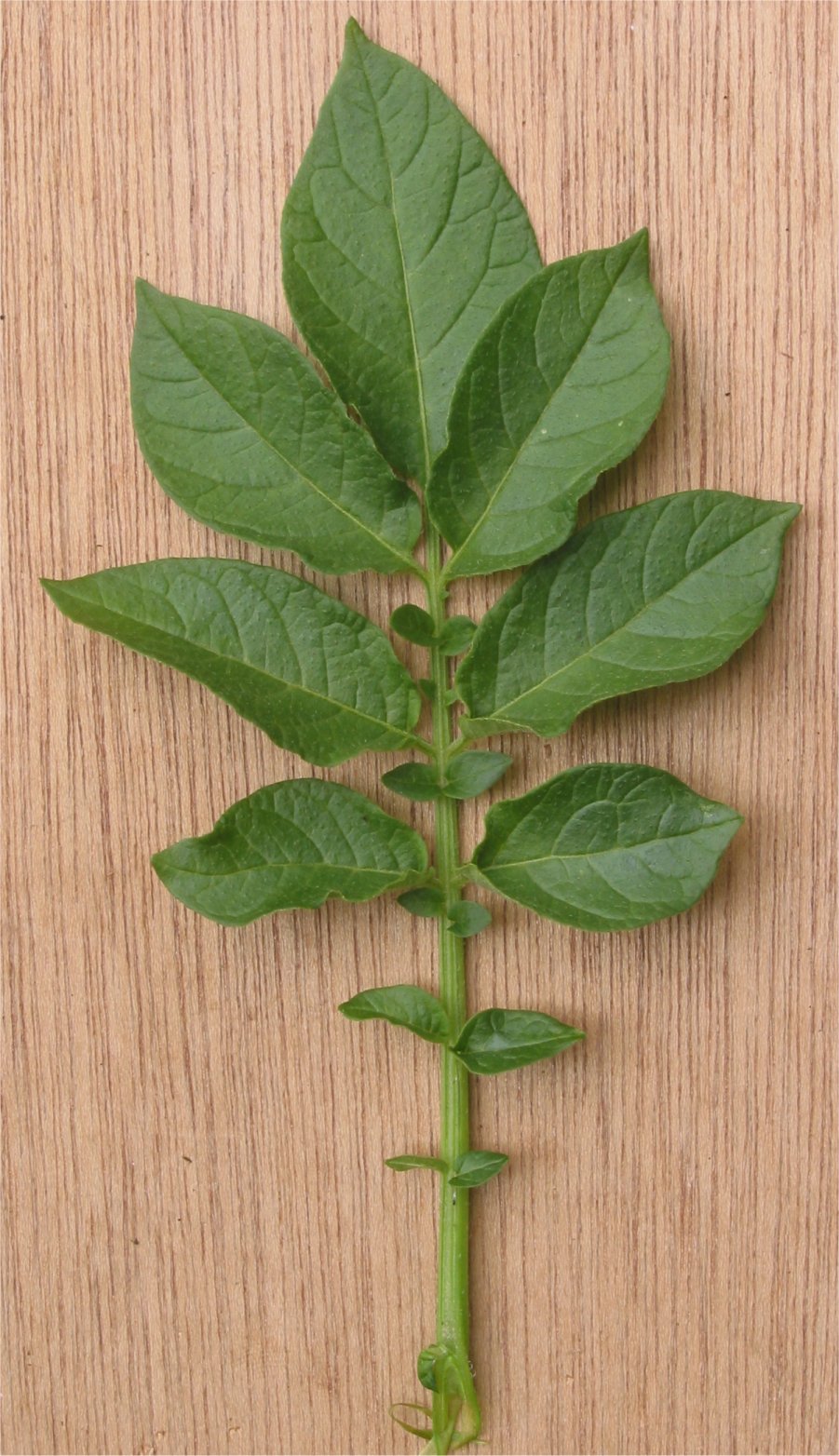
Photo: Rasbak, CC BY-SA 3.0 (Wikimedia Commons)
The potato gives more food, faster, from a small piece of land than almost any other crop a smallholder can grow. It is not a grain. You are not waiting for a seed head to fill and dry. You are growing swollen underground stems, and many kinds are ready to eat in three to four months. It grows where it is cool, which means the high land that grain often wastes -- mountain valleys, highlands, and the cool winter months of hot countries. It is eaten fresh without milling, so a family with no mill and no money still gets fed. And it is one of the very few food crops where a farmer can sell into three completely different markets from one field: eating potatoes, seed potatoes, and factory potatoes. This guide is built around that last fact, because knowing which of those three you are growing changes almost every decision you make, from the variety you plant to the day you cut the tops off.
Global Importance
The potato is one of the biggest food crops on earth. Knowing the real numbers is not showing off. It tells you honestly where your own field sits, and how much room there is to improve without inventing anything.
Growing Potato, Stage by Stage
- 1. Get the land ready — Loose, deep, well-drained soil, and a field that has not grown potato or its relatives for three or four years.
- 2. Choose your seed potatoes — This is the most important decision in the whole crop. A sick seed tuber gives a sick field, every time.
- 3. Wake the seed up and cut it safely — Sprout the seed before you plant it, and if you must cut it, cut it early and let the wounds heal.
- 4. Plant the seed tubers in the field — Plant into cool, moist, loose soil at the right depth, with the sprouts pointing up.
- 5. Water the crop at the right times — Steady moisture all the way through, and never let it go dry while the tubers are swelling.
- 6. Weed the crop, earth it up and feed it — Weed early, earth up twice, and feed the crop in stages rather than all at once.
- 7. Watch for insect pests, stage by stage — Look at the crop every week, know what you are looking at, and reach for a spray last, not first.
- 8. Watch for diseases, stage by stage — Late blight is the one that can take the whole field in a fortnight. Know it, and act before it is obvious.
- 9. Kill the haulm before you lift the crop — Cut or kill the tops about two weeks before digging. This is a real, standard, deliberate step, not an accident.
- 10. Harvest the tubers without damaging them — Lift in cool, dry-enough soil, handle every tuber as if it were an egg, and get it out of the sun.
- 11. Cure the crop and store it in the dark — Warm and humid first to heal the wounds, then cool and dark to hold it. The right temperature depends on what the potato is for.
- 12. Keep your own seed for next season — You can save your own seed, and millions of farmers must. Do it deliberately, and know exactly what it costs you.
Fertiliser Programme
A potato is a hungry plant with a weak root system. It cannot go looking for food, so the food has to be where the roots already are, at the time the plant needs it. This is a staged plan, not a single sack thrown on the field.
Common Problems & Troubleshooting
If you see: Dark, wet-looking patches spreading on the leaves, often starting at the leaf edge or tip where water collects. In damp weather a fine white fuzz on the underside of those patches. The patches join up and whole plants collapse within days, and the field smells sour.
It likely means: Late blight, caused by Phytophthora infestans. It is the most destructive disease this crop has, and in cool wet weather it moves through a field in a fortnight.
Do this: Act immediately. A day's delay in blight weather is a real amount of crop.
If you see: Tubers with a green tinge under the skin, sometimes only on one side or on the shoulder that faced upward. They may taste bitter. It happens in the field on tubers that pushed above the ridge, and in the store or on a market stall under light.
It likely means: The tuber has been exposed to light. Light makes it produce chlorophyll, which is the green you see, and alongside it bitter glycoalkaloids, which you cannot see.
Do this: Do not eat it and do not sell it. Cooking does not destroy glycoalkaloids. They are heat stable and are barely broken down by cooking.
If you see: A tall, dark green, lush, healthy-looking crop that flowered late or is still growing when it should be dying back. When you dig a test plant there are far fewer and far smaller tubers than the top growth suggests.
It likely means: Too much nitrogen, or nitrogen given too late. The plant put everything into leaves and stems instead of tubers, and the tuber-filling stage got delayed or shortened.
Do this: Do not add any more nitrogen. Nothing you add now will help.
If you see: Tubers with splits or growth cracks in the skin, knobbly second growth like a small potato attached to a big one, or a hollow star-shaped cavity in the middle when you cut a large tuber open.
It likely means: Irregular growth. Usually a dry spell followed by heavy watering or heavy rain, so the inside of the tuber suddenly grew faster than the skin could follow. Widely fluctuating temperatures do the same.
Do this: Water regularly and evenly rather than in heavy irregular bursts. Frequent irrigation reduces tuber malformation.
If you see: Rounded hard-backed yellow beetles with ten black stripes along the back, and fat soft orange-red grubs with black dots down each side, both eating the leaves. Bright orange egg clusters on the undersides of leaves. Plants stripped down to stems in bad cases.
It likely means: Colorado potato beetle. It occurs in North America, Europe and westward across Asia, and it can defoliate a crop very fast.
Do this: Hand-pick adults, larvae and the orange egg clusters, morning and evening. On a household or small plot this is genuinely effective and costs nothing.
If you see: Winding pale mines between the two surfaces of the leaves. Later, tunnels bored into the tubers, packed with dark droppings, sometimes with fine webbing around the eyes. The problem gets worse in store rather than better.
It likely means: Potato tuber moth. The attack begins in the field and continues in storage, which is what makes it the most damaging insect pest of potato in FAO's own assessment.
Do this: Earth up thoroughly and keep the ridge unbroken, so no tuber is exposed to the moth laying on it.
If you see: Plants that are shorter than they used to be, with mottled, curled, crinkled or unusually small leaves. The crop looks weaker every season although you are doing nothing differently, and the tubers get smaller. Often patchy across the field.
It likely means: Seed degeneration. Viruses and other pathogens have been building up in your own saved seed stock over successive cycles, mostly carried in by aphids and then replanted with the tubers.
Do this: Accept what this is. It is not your fault and it is not the soil. It is what happens to any crop replanted from pieces of itself, and it is documented as a serious threat across low and middle income countries.
If you see: A wet, soft, foul-smelling rot in the store, often starting where tubers were bruised or cut. Liquid at the bottom of the sack or heap. The middle of the pile feels warm to the hand.
It likely means: Soft rot bacteria, which FAO's compendium names as one of the most frequent causes of storage loss. They enter through lenticels, surface wounds, cracks and bruises, and they thrive on warmth, wetness and lack of air.
Do this: Open the pile and remove every rotting tuber now. One will take its neighbours.
If you see: Long white or purple sprouts pushing out of the eyes in the store. Tubers going soft, wrinkled and light in the hand. Weight loss you can feel when you lift a sack.
It likely means: The store is too warm, too dry, or both. Sprouting speeds up above about 4 degrees Celsius, and weight loss rises sharply once humidity falls below 90 percent.
Do this: Get the temperature down to the right level for what the crop is for: about 4 to 5 degrees for seed, 7 to 10 for fresh eating, 10 to 15 for frying, 15 to 20 for chipping varieties.
If you see: Chips or fries that come out brown, grey or almost black instead of golden, with a bitter or oddly sweet taste. The raw tubers themselves may taste faintly sweet. A processor has rejected or downgraded your consignment.
It likely means: Too much reducing sugar in the tuber. Most often the potatoes were stored too cold, which makes the potato turn its own starch into sugar. That sugar browns fiercely when it meets the heat of frying.
Do this: Check your store temperature first. Below about 6 degrees Celsius ware potatoes convert starch to sugar and fry dark. For frying, storage should be around 10 to 15 degrees, and for chipping varieties 15 to 20.
If you see: Weeks after planting, large gaps in the rows where nothing came up. Digging up the missing seed pieces shows them rotten, soft, dried out, or still sitting there with a single thin thread of a sprout.
It likely means: The seed was wrong for the conditions, or the conditions were wrong for the seed. Common causes are seed that was still dormant, seed that was too old, cut pieces planted before the cuts healed, planting into waterlogged ground, or planting too deep.
Do this: Fill the gaps now if it is early enough in the season. An empty gap grows nothing for the whole crop.
Real Farm Economics
This section is about money. It gives real, published figures from real studies, each attached to the country and year it came from, because a cost figure with no place and no date attached is worse than no figure at all.
Yield & Market Value
Growing the crop is only part of the job. The last part is knowing what a normal harvest looks like, knowing which of the three potato markets you are actually selling into, and knowing what your tubers are worth before you agree a price with anybody.
Remember It This Way
If you forget every other page of this guide, keep these lines. They are the whole crop, in order, short enough to carry in your head into the field.
- Never eat a potato that is green under the skin or tastes bitter.
- You plant a living potato, not a seed. Its diseases come with it.
- Buy the cleanest seed you can reach. It is half the cost and most of the yield.
- Cool weather, loose soil, and never after tomato, chilli or brinjal.
- Sprout the seed a month early. Short fat sprouts, not long white threads.
- Earth up twice. Soil over the tubers is what keeps them from going green.
- Do not overdo nitrogen. Big green tops mean small pale profits.
- Cut the tops two weeks before you dig, then let the skin set.
- Every bruise is a rot. Handle each tuber like an egg.
- Store dark and humid, and at the temperature your market wants.
Test Yourself: Identification
This leaf is of which plant?
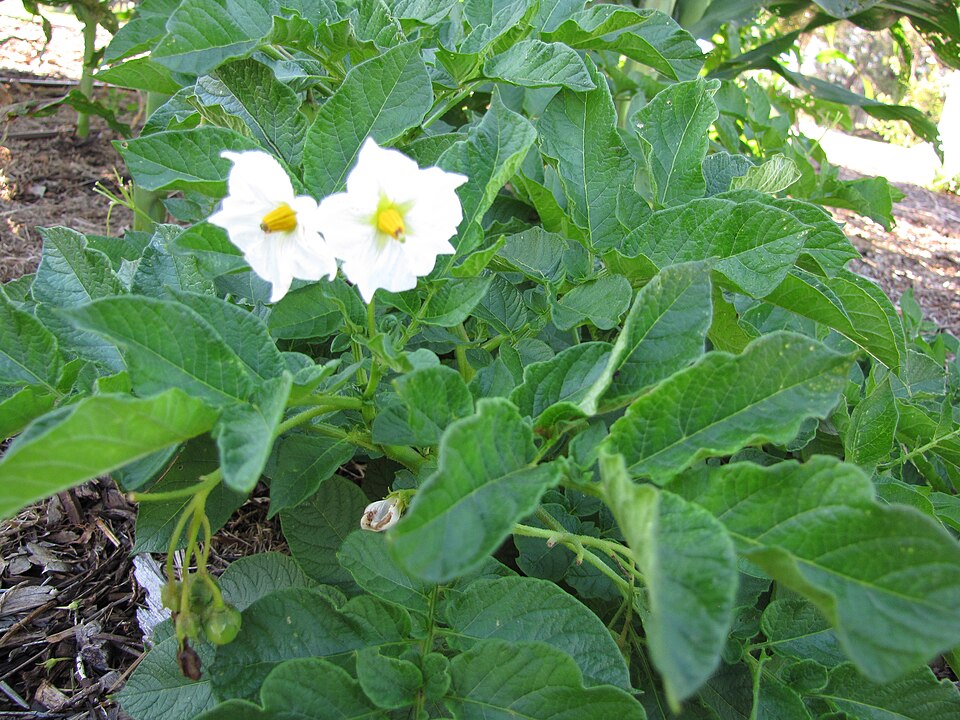
Which crop is this flowering plant, and what family does it belong to?
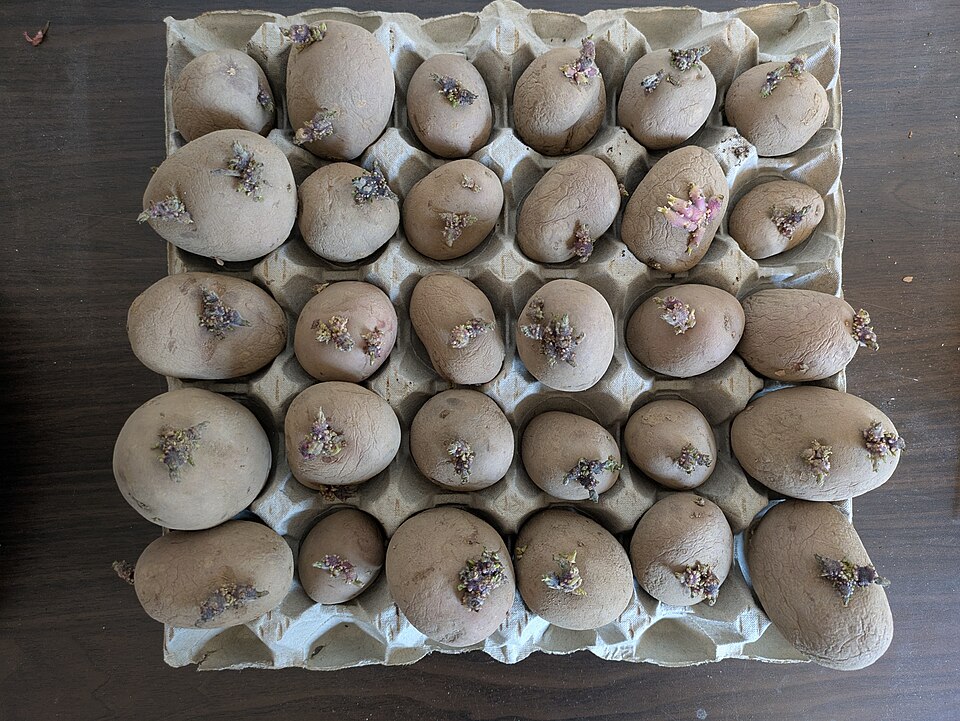
These tubers have short thick sprouts on them. What are they for, and are they ready?
Honest Limits of This Guide
- The right planting month is different everywhere. The rule that holds everywhere is: plant at the start of your cool season, because heat, not drought, is what stops a potato forming tubers.
- Which varieties are early, medium or late, and which resist late blight in your district, depends entirely on your country and altitude. The day-counts in this guide are real and typical, but only your agricultural officer or seed supplier can tell you about the variety in your hand.
- This guide does not name any pesticide, fungicide, weedkiller or desiccant product, and it never will. If you decide to use one, buy only from a licensed dealer, choose by mode-of-action group and hazard colour band, and follow the label.
- Specific gravity and dry matter numbers vary between measurement methods and laboratory calibrations. The figures in this guide are each attached to the study they come from. Use one method consistently and compare your field against your own field.
- The cost and profit figures in the economics section belong to the specific country, year and prices of the studies they came from. Carry the method, not the numbers.
- Laisha's global seed certification reference does not cover seed potato specifically, because seed potato is certified under a different system from true seed. This guide says what is genuinely known about the class structure and does not pretend the cereal thresholds apply.
- How often you must renew your seed stock depends entirely on local virus pressure, which no guide can know. Ask locally.
- Colorado potato beetle is absent from many potato-growing countries. If it is not in your region, ignore that section rather than looking for it.
- Chuño needs hard night frost at high altitude. It is included as real engineering, not as something every farmer can do.
Related Laisha Tools
- Global Market Price Outlook — Check today's price and trend
- Crop Calendar — Build a season-long sowing plan
- Pest & Disease Intelligence — Risk reasoning and a global pest & disease library
- Crop Health — Photo-based first read on a field problem
- Seed Quality Intelligence — Check a seed lot before you plant it
- Post-Harvest Loss Prevention — Real storage science by crop
Open the free Applied Agriculture Library in the Laisha app →
Sources
- GBIF Backbone Taxonomy record for Solanum tuberosum L. (usage key 2930262) — Global Biodiversity Information Facility (GBIF), Copenhagen (source)
- World Checklist of Vascular Plants (WCVP), the checklist behind Plants of the World Online — Royal Botanic Gardens, Kew (source)
- FAOSTAT, Production: Crops and livestock products domain (QCL), item Potatoes, year 2024 — Food and Agriculture Organization of the United Nations, Rome (source)
- Sustainable potato production: Guidelines for developing countries — Food and Agriculture Organization of the United Nations, Rome, with the International Potato Center (CIP), Wageningen University and Research Centre, and McCain Foods; edited by NeBambi Lutaladio, Oscar Ortiz, Anton Haverkort and Daniel Caldiz; ISBN 978-92-5-106409-2 (source)
- POTATO: Post-harvest Operations, in the FAO Post-harvest Compendium — Food and Agriculture Organization of the United Nations, prepared by Magno Meyhuay of the Instituto de Desarrollo Agroindustrial (INDDA), edited by AGSI/FAO (source)
- Potato, chapter by Ronald E. Voss (University of California, Davis), pages 505-508 of The Commercial Storage of Fruits, Vegetables, and Florist and Nursery Stocks, Agriculture Handbook Number 66 — United States Department of Agriculture, Agricultural Research Service (source)
- Evaluation of Quality Parameters of Seven Processing Type Potato (Solanum tuberosum L.) Cultivars in the Eastern Sub-Himalayan Plains, Foods 10(5):1138 (Europe PMC: PMC8161022) — Das, Mitra, Saha and others, Uttar Banga Krishi Viswavidyalaya, published by MDPI (source)
- An evaluation based on the analytic hierarchy process and GGEbiplot on French fry potato genotypes in Yunnan, China, Frontiers in Plant Science 14:1159848 (Europe PMC: PMC10544891) — Frontiers Media (source)
- Predicting End-Use Quality in Russet Potatoes Through Biochemical and Starch Analysis, Journal of Food Science (Europe PMC: PMC12972264) — Institute of Food Technologists, published by Wiley (source)
- Optimization of vine killing date for maximum seed-tuber yield and minimum exposure to late-season aphid vectors, Heliyon 10(19):e38639 (Europe PMC: PMC11470499) — Elsevier (source)
- Farmers Experiencing Potato Seed Degeneration Respond but Do Not Adjust Their Seed Replacement Strategies in Ecuador, American Journal of Potato Research (Europe PMC: PMC9769468) — The Potato Association of America, published by Springer (source)
- Seeding food security: Overcoming barriers to quality potato seed adoption among smallholders in Kenya, PLOS ONE (Europe PMC: PMC13155629) — Public Library of Science (source)
- Growth, productivity and profitability of potato (Solanum tuberosum L.) as influenced by nitrogen fertilizer and intra-row spacing, Scientific Reports (Europe PMC: PMC13125526) — Springer Nature (source)
- Selection and Evaluation of 21 Potato (Solanum tuberosum) Breeding Clones for Cold Chip Processing, Foods 8(3):98 (Europe PMC: PMC6462922) — MDPI (source)
- A Machine-Learning-Based Prediction Model for Total Glycoalkaloid Accumulation in Yukon Gold Potatoes, Foods 14(19):3431 (Europe PMC: PMC12524296), citing Health Canada's published guideline — MDPI (source)
- CXC 67-2009, Code of Practice for the Reduction of Acrylamide in Foods, adopted by the Codex Committee on Contaminants in Foods — Codex Alimentarius Commission, FAO and WHO, Rome (source)
- Insecticides Act 1968 and Insecticide Rules 1971, colour-coded hazard triangle, as held in Laisha's own agrochemical reference — Central Insecticides Board and Registration Committee (CIBRC), Government of India (source)
- Seeds Act 1966 and Seeds Rules 1968, Rule 14, and the Indian Minimum Seed Certification Standards, as held in Laisha's own global seed certification standards reference — Government of India, Central Seed Certification Board (source)
- Phytophthora infestans, the encyclopedia article cited by Laisha's own leaf visual diagnostic reference for late blight — Wikipedia / Wikimedia Foundation (source)
- Potato cyst nematode, the encyclopedia article cited by Laisha's own leaf visual diagnostic reference — Wikipedia / Wikimedia Foundation (source)