 Laisha
AI Operating System for Agriculture
Ask Laisha
Laisha
AI Operating System for Agriculture
Ask Laisha
Nilaparvata lugens (Stål, 1854) · formerly or also: Delphax lugens
A small brown sap-sucking insect that lives at the base of rice plants, often unseen until patches of the crop suddenly turn yellow, then brown, and collapse — 'hopperburn'. It also transmits two rice viruses. Outbreaks are very often caused by insecticides themselves, which kill the spiders and other natural enemies that normally keep it in check, so restraint is the core of its management.
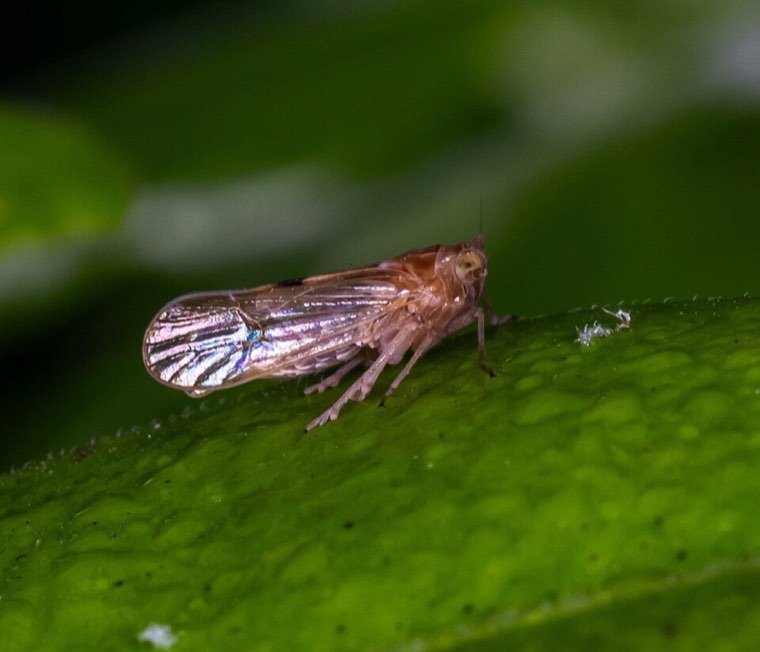
The scientific name of brown planthopper is Nilaparvata lugens (Stål, 1854), in the order Hemiptera, family Delphacidae.
Older or alternative scientific names: Delphax lugens.
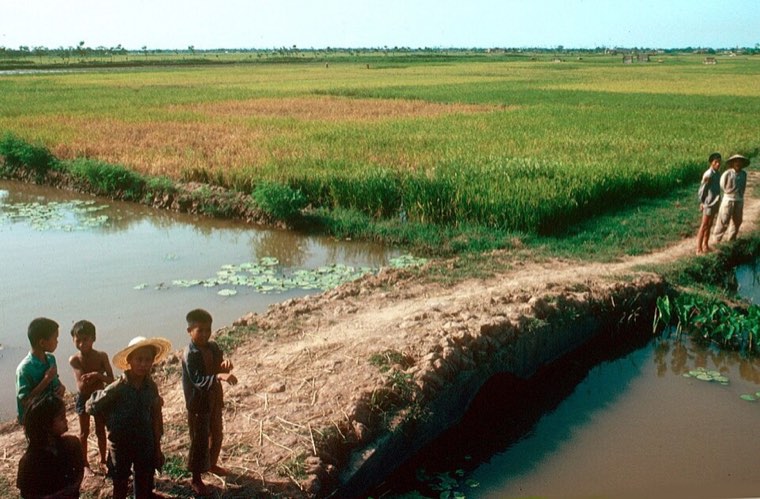
Found across rice-growing South, Southeast and East Asia, and in northern Australia and the Pacific islands. Populations breed all year in the tropics and migrate each year on monsoon winds from Indochina and southern China into central and northern China, the Korean peninsula and Japan, where they cannot overwinter.
| Region | Status |
|---|---|
| South Asia | Native; periodic severe outbreaks in irrigated rice |
| Southeast Asia | Native; major outbreaks linked to insecticide overuse since the 1970s |
| East Asia | Annual long-distance migrant; cannot overwinter in the north |
| Oceania and the Pacific | Present in northern Australia and Pacific islands |
Adults are 3.5-5 mm long, brown with a pale stripe in some, and occur in two wing forms: long-winged (macropterous) migrants and short-winged (brachypterous) females that stay and multiply. A spur at the tip of the hind leg identifies planthoppers. Nymphs are creamy white to brown and moult five times. Eggs are banana-shaped and laid in rows inside the leaf sheath, visible as brownish streaks when the sheath is split.
| Crop stage | What you see |
|---|---|
| Tillering | Insects clustered at the base of tillers near the water surface; yellowing of lower leaves; plants may show grassy or ragged stunt virus symptoms (stunting, excessive tillering, ragged leaves). |
| Booting to heading | Circular patches of yellowing and drying plants that spread outward — hopperburn; honeydew and sooty mould on stems. |
| Grain filling to maturity | Lodging and collapse of hopperburned patches; unfilled, light grain. |
Long-winged immigrants colonise a young crop and their offspring are mostly short-winged, multiplying for two or three generations at the base of the plants. As the crop ages and density rises, long-winged adults develop again and leave. This is why damage builds late, around booting to grain filling.
| Stage | Duration | Notes |
|---|---|---|
| Egg | About 7-11 days at 25-28 °C | Inserted in rows inside the leaf sheath or midrib. |
| Nymph (5 instars) | About 13-15 days at 25-28 °C | Feed at the plant base. |
| Adult | About 2-3 weeks | Short-winged females lay several hundred eggs; long-winged adults migrate. |
Development is fastest at about 25-30 °C; temperatures above about 33 °C or below 10 °C sharply reduce survival and reproduction. A generation takes roughly 25-30 days in the tropics.
Continuous breeding with many overlapping generations where rice grows all year; 2-4 generations a season in temperate East Asia after migrants arrive.
Dense planting, high nitrogen, continuous standing water, staggered or year-round rice cropping, and above all insecticide sprays early in the season that kill spiders, mirid bugs and other natural enemies. Some insecticides also stimulate planthopper reproduction ('resurgence'). Warm, humid weather under a closed canopy favours the pest.
Thresholds count planthoppers per hill (or per tiller) by tapping plants over a tray and rise as the crop ages; several programmes adjust them for the number of spiders and other predators present. Values published across Asia differ widely.
| Crop | Threshold | Unit | Crop stage | Region | Source |
|---|---|---|---|---|---|
| Rice | 5-10 | planthoppers per hill | Vegetative to reproductive | East Asia (Taiwan field study) | Field economic study of brown planthopper thresholds, Plant Protection Bulletin (Taiwan) |
| Rice | 2 at booting; 5 at heading (adjusted for spiders) | planthoppers per hill | Booting; heading | South Asia (Sri Lanka) | Department of Agriculture, Sri Lanka, rice pest management advice |
| Rice | More than 3-5 (considered high) | planthoppers per tiller | Any | Pacific islands | Pacific Pests, Pathogens and Weeds factsheet (Lucid) |
Thresholds are local. They depend on crop price, control cost, variety and natural-enemy activity, so use the figure your local extension service publishes where one exists.
Heavy feeding removes sap and blocks the plant's vascular tissue, causing hopperburn: whole patches die within days. Losses in hopperburned patches can be total, and regional outbreaks in Asia in the 1970s and again in the 2000s destroyed hundreds of thousands of hectares. The insect also transmits rice grassy stunt virus and rice ragged stunt virus, which cause losses even at low insect densities.
Control works best as a sequence: prevent, monitor, then act only when a threshold or a risk forecast says so, using the least disruptive option that works.
Spray only when counts exceed the local threshold after natural enemies are considered, and direct the spray to the base of the plants. Groups that cause resurgence must be avoided. What is registered differs by country and changes over time; follow the label and your local plant-protection authority.
| Scheme | Group | Mode of action | Notes |
|---|---|---|---|
| IRAC | 9B | Chordotonal organ TRPV channel modulators (pyridine azomethines) | Feeding inhibitor; relatively selective. |
| IRAC | 16 | Inhibitors of chitin biosynthesis, type 1 | Acts on nymphs; slow but selective. |
| IRAC | 4E | Nicotinic acetylcholine receptor competitive modulators (mesoionics) | Newer group for planthoppers. |
| IRAC | 4C | Nicotinic acetylcholine receptor competitive modulators (sulfoximines) | Monitor cross-resistance with 4A. |
| IRAC | 29 | Chordotonal organ modulators, undefined target site | Feeding inhibitor. |
Essentially specific to rice (Oryza sativa) and wild Oryza species. Adults may land on other grasses such as Leersia but do not develop well on them.
How to grow the crop well is the first line of defence. Laisha's free grow guides cover each crop from sowing to harvest:
Written by Laisha from the sources above, in its own words. This page is general reference, not a prescription: confirm identification locally and follow the label and your plant-protection authority.