 Laisha
AI Operating System for Agriculture
Ask Laisha
Laisha
AI Operating System for Agriculture
Ask Laisha
Echinochloa crus-galli (L.) P. Beauv., 1812 · formerly or also: Panicum crus-galli
Barnyard grass is the most damaging weed of rice in the world and a serious weed of maize, soybean, cotton and vegetables. Young plants look so much like rice that they are often missed until they overtop the crop. It grows fast, produces many thousands of seeds per plant and has evolved resistance to many herbicide groups, so prevention and integrated control are essential.
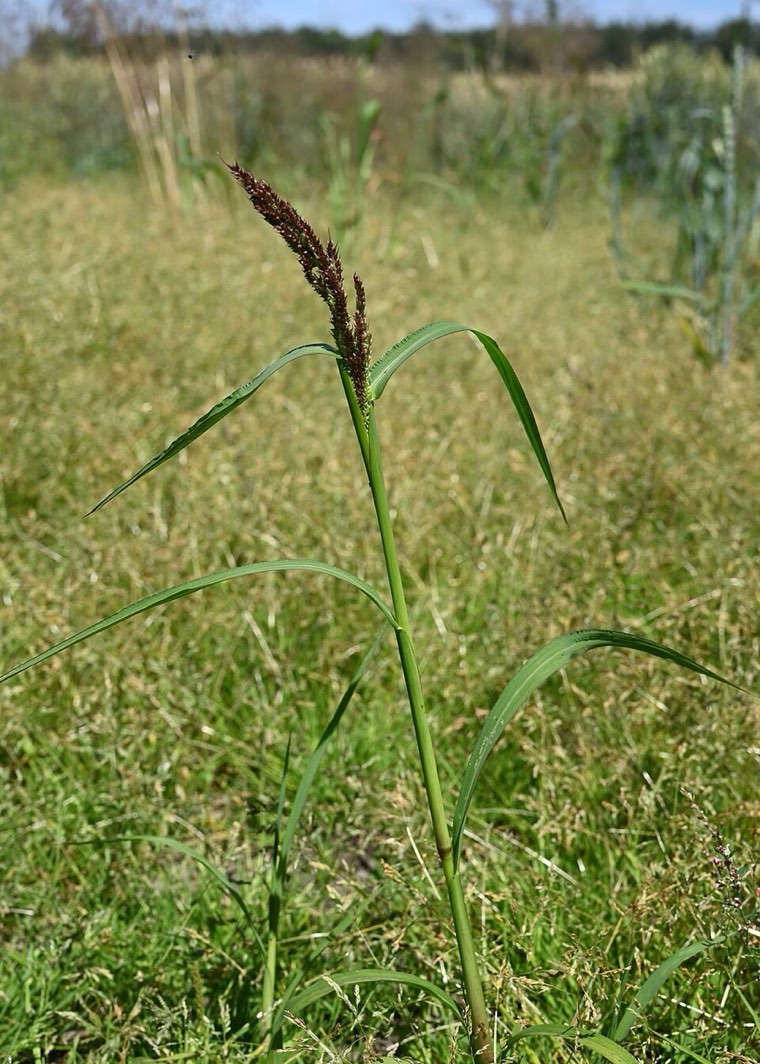
The scientific name of barnyard grass is Echinochloa crus-galli (L.) P. Beauv., 1812, in the order Poales, family Poaceae.
Older or alternative scientific names: Panicum crus-galli.
Native to Eurasia, it now occurs in warm temperate and tropical regions on every continent and is especially troublesome in irrigated rice.
| Region | Status |
|---|---|
| South, Southeast and East Asia | Widespread; the main grass weed of rice |
| Europe and the Mediterranean | Widespread in rice and maize |
| Americas | Widespread in rice, maize and soybean |
| Africa and the Middle East | Widespread in irrigated crops |
| Oceania | Widespread in rice and summer crops |
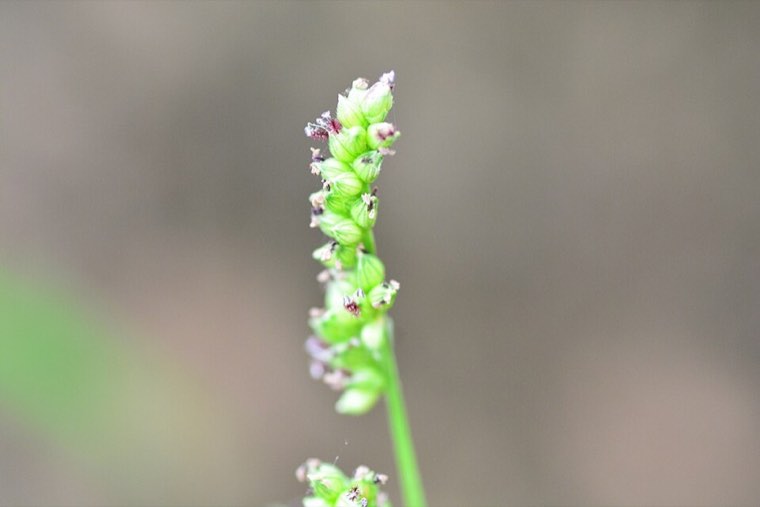
A tufted annual grass, 0.5-1.5 m tall, often with reddish-purple stem bases. The key feature: the leaf has no ligule (the small collar of tissue where the leaf blade meets the sheath), whereas rice has a ligule and two small ear-like auricles. Leaf blades are smooth with a white midrib. Seed heads are branched panicles of crowded, often bristly (awned) spikelets, green to purple. Each plant can produce many thousands to over 40,000 seeds.
| Crop stage | What you see |
|---|---|
| Crop emergence and early tillering | Grass seedlings that resemble rice but lack a ligule, often growing faster and with paler leaves. |
| Tillering to panicle initiation | Dense clumps competing strongly for nitrogen, light and water; crop plants become thin and yellowish. |
| Crop maturity | Weed panicles above the crop canopy shedding seed before rice harvest; contamination of harvested grain. |
Seeds germinate in moist soil, mainly from the top few centimetres, in flushes after cultivation and irrigation. The plant grows quickly as a C4 grass under warm conditions, flowers about 6-9 weeks after emergence and sheds seed over several weeks. Seeds are dormant at first and can survive several years in soil; they spread in irrigation water, machinery, contaminated rice seed and animals.
| Stage | Duration | Notes |
|---|---|---|
| Seed in soil | Several years | Most germinate from shallow depths. |
| Emergence and seedling | Within days of moist, warm conditions | Flooding to 5-10 cm suppresses many seedlings. |
| Tillering and growth | About 4-6 weeks | Strong competition period. |
| Flowering and seed shed | From about 6-9 weeks after emergence | Sheds seed before crop harvest. |
Germinates and grows best at warm temperatures (about 25-35 °C); a C4 grass that thrives in hot, sunny, moist conditions.
One or more generations a year, depending on the cropping season.
Direct-seeded rice (especially dry-seeded) with no standing water early on, poor land levelling, shallow or no flooding, continuous rice, contaminated seed, and repeated use of the same herbicide group.
There is no single numeric economic threshold; competition studies show yield losses rise steeply with weed density during the first 30-45 days, so control in the 'critical period' after crop emergence is the priority. Some regions publish density-based thresholds for particular systems.
Thresholds are local. They depend on crop price, control cost, variety and natural-enemy activity, so use the figure your local extension service publishes where one exists.
Uncontrolled barnyard grass can reduce rice yields by 50% or more, and by up to about 80-90% in dense stands in direct-seeded rice; it also reduces yields of maize, soybean and cotton and contaminates harvested grain and seed.
Control works best as a sequence: prevent, monitor, then act only when a threshold or a risk forecast says so, using the least disruptive option that works.
Herbicides are used pre-emergence or early post-emergence in the critical weed-free period, and the right group depends on rice establishment method and local resistance. What is registered differs by country and changes over time; follow the label and your local plant-protection authority.
| Scheme | Group | Mode of action | Notes |
|---|---|---|---|
| HRAC | 15 | Inhibition of very-long-chain fatty acid synthesis (VLCFA) | Pre-emergence. |
| HRAC | 3 | Inhibition of microtubule assembly | Pre-emergence. |
| HRAC | 1 | Inhibition of acetyl CoA carboxylase (ACCase) | Post-emergence grass herbicides; resistance documented. |
| HRAC | 2 | Inhibition of acetolactate synthase (ALS) | Resistance widespread. |
| HRAC | 5 | Inhibition of photosynthesis at photosystem II (serine 264 binders) | Resistance documented in rice. |
| HRAC | 13 | Inhibition of deoxy-D-xylulose phosphate synthase (DXS) | Pre-emergence in some rice systems. |
As a weed it infests irrigated and rainfed rice, maize, soybean, cotton, sugar beet, sugarcane, vegetables, orchards and wet field margins. Related species, such as jungle rice (Echinochloa colona) and early watergrass (E. oryzicola), are often found with it.
How to grow the crop well is the first line of defence. Laisha's free grow guides cover each crop from sowing to harvest:
Written by Laisha from the sources above, in its own words. This page is general reference, not a prescription: confirm identification locally and follow the label and your plant-protection authority.