How to Grow Rice
Oryza sativa · Also called: paddy, padi, palay, chawal, dhan, arroz, riz, mchele
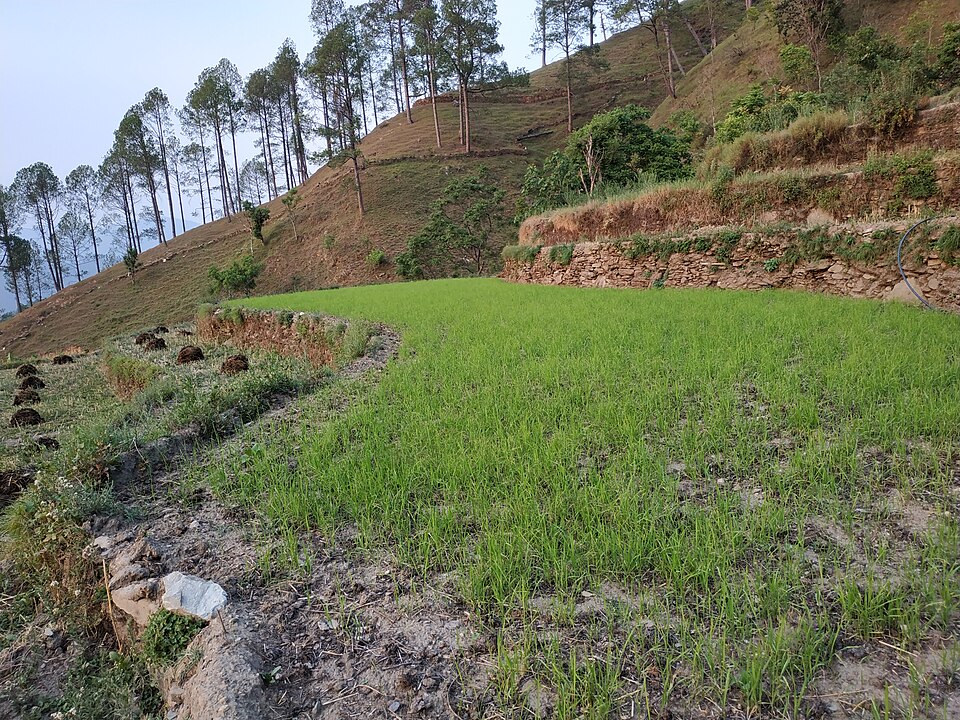
Photo: Nirajan pant, CC BY-SA 4.0 (Wikimedia Commons)
Rice feeds more people than any other single food. For billions of people it is most of what they eat every day. Most of the world's rice is grown by small farmers on small pieces of land, by hand.
Growing Rice, Stage by Stage
- 1. Get the land ready — Make the ground flat, soft and wet, so water sits evenly on it.
- 2. Choose and get your seed — Use full, heavy, clean seed. Poor seed is the cheapest way to lose a whole harvest.
- 3. Wake up the seed — Soak the seed so it starts to sprout before it goes in the ground.
- 4. Grow small plants in a nursery bed — Grow the babies close together in a small bed. Then move them to the big field.
- 5. Move the small plants into the field — Lift the babies gently and push them into the mud, in straight lines, not too deep.
- 6. Water — Keep shallow water on the field most of the time. Never let it go dry when the grain is forming.
- 7. Weeds and feeding — The first month decides everything. Pull weeds early, feed the crop if you can.
- 8. Know when to harvest — Cut when most of the grain is hard and golden, not before, not long after.
- 9. Dry it and store it so you do not lose it — Wet grain rots and grows poison. Dry grain keeps you alive until the next harvest.
Common Problems & Troubleshooting
If you see: The oldest, lowest leaves turn yellow first, starting at the tip, while the young top leaves stay green. The whole plant looks pale and short.
It likely means: The plant is hungry. It is short of nitrogen, the main food that makes leaves green.
Do this: Spread well rotted manure or compost between the rows now.
If you see: Spots on the leaves shaped like a small eye or a boat, grey or white in the middle with a brown edge. Later the neck just below the seed head turns black and the head breaks and hangs.
It likely means: A fungus disease of rice, usually worse in cool damp weather, on plants that got too much nitrogen fertiliser.
Do this: Do not add more nitrogen fertiliser now. Extra nitrogen makes this disease much worse.
If you see: Pale grey or green patches shaped like a water stain or a cloud on the leaf sheath, near the water line, spreading upward. The edges look darker than the middle.
It likely means: A fungus that lives in the soil and water and climbs the plant. It is worse when plants are packed too close together and heavily fertilised.
Do this: Next season leave a bit more space between hills so air moves through the crop.
If you see: The middle young leaf of a stem turns brown and dries out, and pulls out easily when you tug it, while the outer leaves are still green. Later, whole seed heads come out white and empty.
It likely means: A caterpillar has bored into the inside of the stem and eaten the growing point. It is called a stem borer.
Do this: Walk the field and pull out those dead centre stems by hand. Crush them. The caterpillar is inside.
If you see: Grain missing from the heads. Heads bent, cut or lying on the ground. Small droppings or tracks in the mud. Damage worst at the field edge.
It likely means: Birds are taking grain from the top. Rats are cutting whole stems near the ground.
Do this: Guard the field in the early morning and late afternoon. That is when birds feed most.
If you see: Grassy plants that look almost the same as rice, growing between your hills, but taller, or paler, or with a different leaf join.
It likely means: Weeds, and the worst ones look like rice on purpose. If the field went dry early, weeds got their chance.
Do this: Pull them now, before they make seed. One weed left to seed gives you thousands next year.
If you see: The seed heads stand up straight instead of bending over. The husks are there but they are flat and light, with nothing inside.
It likely means: The grain never filled. Usually because the field went dry, or was too hot or too cold, exactly at flowering time.
Do this: You cannot fix this crop now. Learn from it for next time.
If you see: Small beetles or moths in the store. Grain with tiny round holes. Fine powder like flour at the bottom of the sack. Webbing on the surface.
It likely means: Storage insects are eating your grain. They usually came in with the grain from the field, or were left in the store from last year.
Do this: Take the grain out and dry it hard in the sun again. Heat and dryness kill many of them.
Yield & Market Value
Growing the crop is only part of the job. The last part is knowing what a normal harvest looks like, and knowing what your grain is worth before you agree a price with anybody.
Remember It This Way
If you forget every other page of this guide, keep these lines. They are the whole crop, in order, short enough to carry in your head.
- Flat mud, walled all round. That is your field.
- Fat seed sinks, empty seed floats. Keep only what sinks.
- Small plants in a small bed first, then into the mud.
- Shallow, never deep. Two fingers of water, one finger of planting.
- Weeds in the first month, or hunger in the last.
- When the flowers come, the water stays.
- Gold on the head and hard between the teeth. Now cut.
- Dry it till it cracks, tie the air out, and it feeds you till next harvest.
Test Yourself: Identification
This leaf is of which plant?
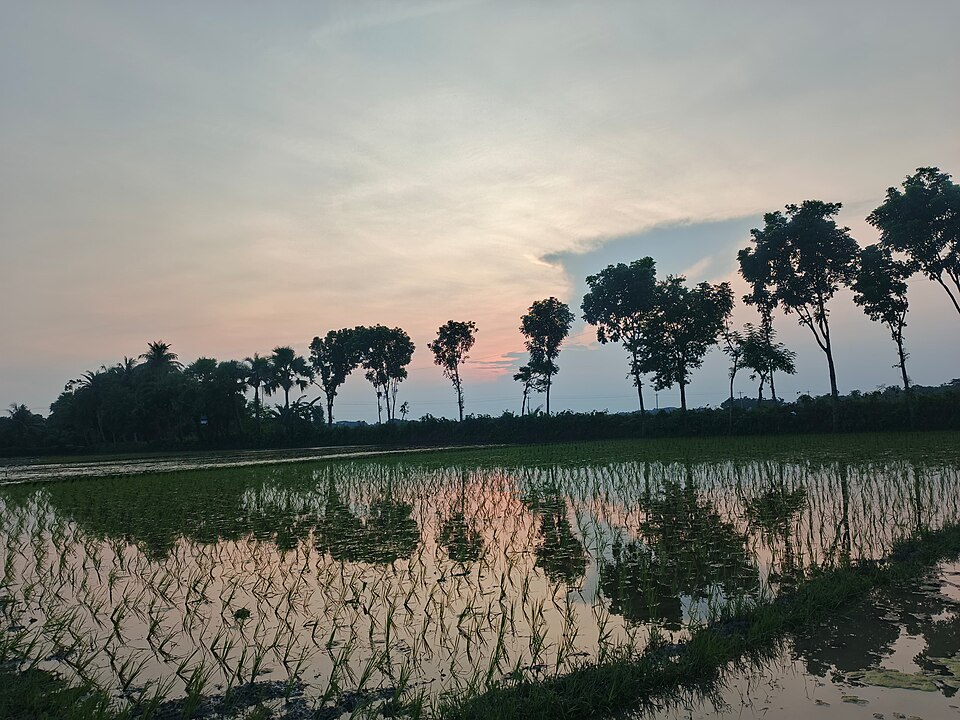
Which food crop is this, standing in shallow water?
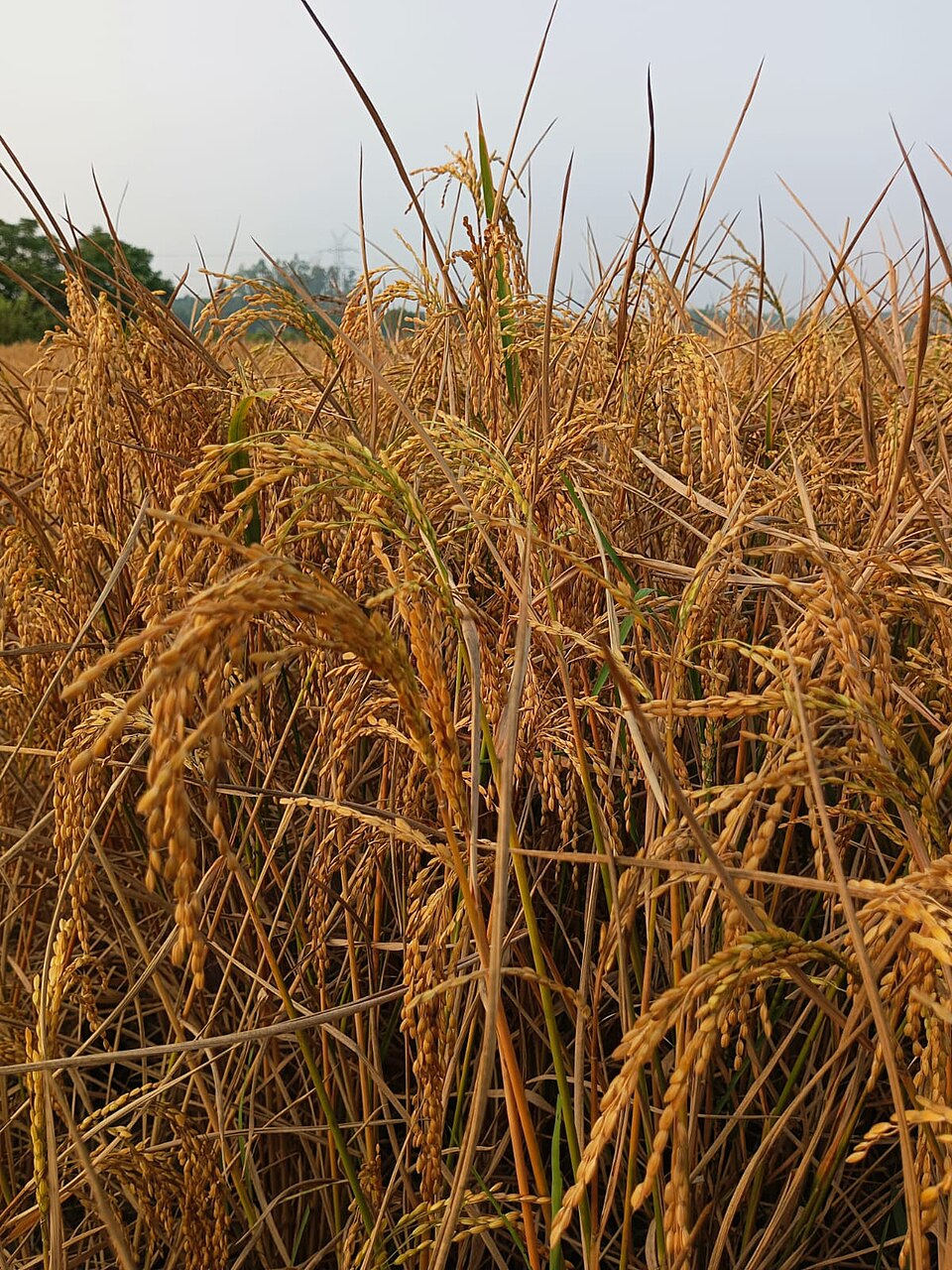
Which crop's seed head is this?
Honest Limits of This Guide
- The right month to plant is different in every country and even in every valley. This guide gives you the rule instead: plant so the crop grows through your wet season and ripens as it dries.
- How much water your field needs cannot be given as one number. Use the pipe test in Stage 6 to read your own field.
- Variety names are local. Ask your neighbours and your local agricultural officer which variety does well on land like yours.
- This guide does not name any pesticide, weedkiller or fungicide product. If you decide to use one, buy only from a licensed dealer, and follow the label.
Related Laisha Tools
- Global Market Price Outlook — Check today's price and trend
- Crop Calendar — Build a season-long sowing plan
- Pest & Disease Intelligence — Risk reasoning and a global pest & disease library
- Crop Health — Photo-based first read on a field problem
- Post-Harvest Loss Prevention — Real storage science by crop
- Irrigation Scheduler — A weather-based watering plan
Open the free Applied Agriculture Library in the Laisha app →
Sources
- Manual transplanting (fact sheet) — IRRI Rice Knowledge Bank, International Rice Research Institute (source)
- Modified mat nursery (fact sheet) — IRRI Rice Knowledge Bank, International Rice Research Institute (source)
- Saving Water with Alternate Wetting and Drying (AWD) (fact sheet) — IRRI Rice Knowledge Bank, International Rice Research Institute (source)
- Storage (postharvest management fact sheets) — IRRI Rice Knowledge Bank, International Rice Research Institute (source)
- Towards integrated commodity and pest management in grain storage — FAO in collaboration with NAPHIRE, Rome (source)
- Purdue Improved Crop Storage (PICS) hermetic bags — Purdue University PICS network (source)
- Integrated management of the Fall Armyworm on maize: A guide for Farmer Field Schools in Africa — Food and Agriculture Organization of the United Nations, Rome (source)
- GBIF Backbone Taxonomy record for Oryza sativa L. — Global Biodiversity Information Facility (GBIF), Copenhagen (source)
- World Checklist of Vascular Plants (WCVP), the checklist behind Plants of the World Online — Royal Botanic Gardens, Kew (source)
- Flora of China, Volume 22 (Poaceae): Oryza sativa treatment, pages 182-184 — Science Press, Beijing, and Missouri Botanical Garden Press, St. Louis, published online at eFloras.org by the Missouri Botanical Garden and the Harvard University Herbaria (source)
- Flora of China, Volume 22 (Poaceae): Echinochloa (barnyard grass) genus treatment, pages 500 and 515 — Science Press, Beijing, and Missouri Botanical Garden Press, St. Louis, published online at eFloras.org (source)
- Rice yields (dataset), built on FAOSTAT: Production, Crops and livestock products — Food and Agriculture Organization of the United Nations, with major processing by Our World in Data (source)