 Laisha
AI Operating System for Agriculture
Ask Laisha
Laisha
AI Operating System for Agriculture
Ask Laisha
Fusarium oxysporum f. sp. lycopersici (Sacc.) W.C. Snyder & H.N. Hansen, 1940
Fusarium wilt is a soil-borne disease that blocks the water-conducting tissue of tomato. Lower leaves yellow, often on one side of the plant or one side of a leaf, plants wilt in the heat of the day and eventually die, and a brown streak runs inside the stem. The fungus survives in soil for many years, so resistant varieties - matched to the races present - and grafting are the main controls.
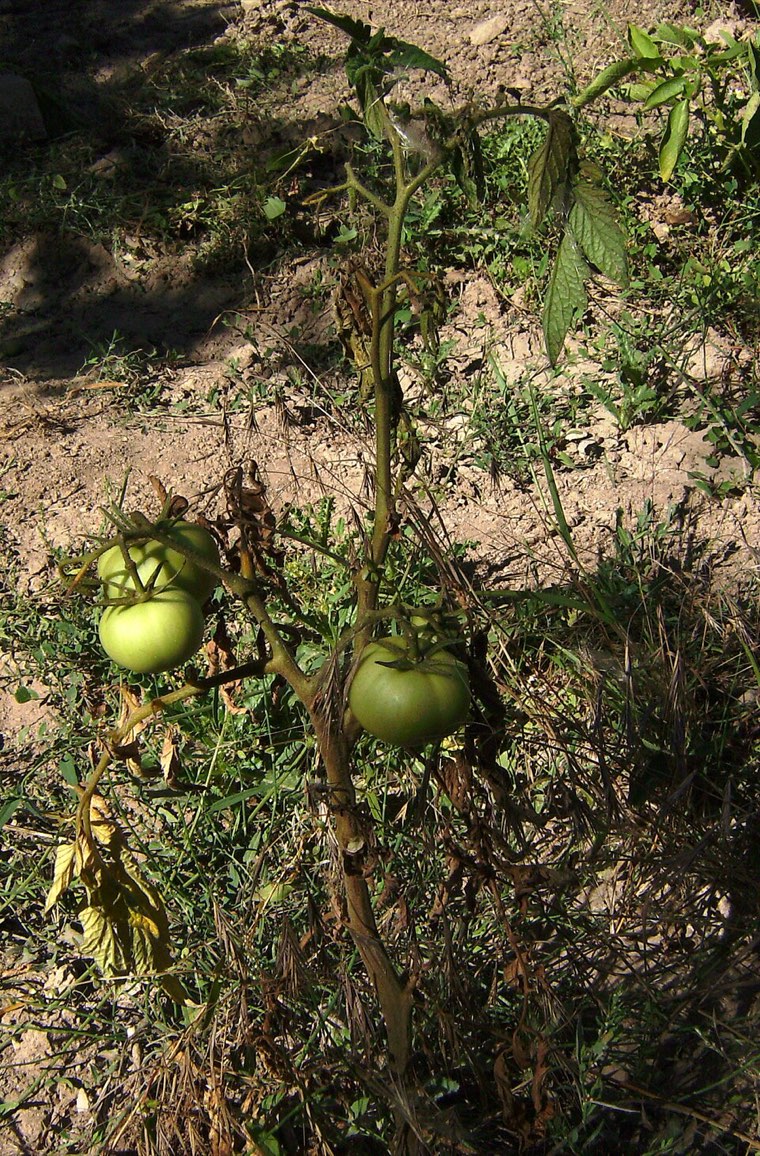
Fusarium wilt of tomato is caused by Fusarium oxysporum f. sp. lycopersici (Sacc.) W.C. Snyder & H.N. Hansen, 1940, a fungus (soil-borne ascomycete causing vascular wilt) (order Hypocreales, family Nectriaceae).
Present in nearly every tomato-growing region, especially warm climates and light, acid soils, in the field and in soil-grown greenhouse crops. Three races are recognised; race 3, first reported in Australia in 1978, has spread to many regions.
| Region | Status |
|---|---|
| Americas | Widespread; races 1, 2 and 3 |
| Europe and the Mediterranean | Widespread |
| Asia | Widespread |
| Africa and the Middle East | Widespread |
| Oceania | Widespread; race 3 first described in Australia |
The fungus produces microconidia, sickle-shaped macroconidia and thick-walled chlamydospores, which survive in soil for many years. In the plant it grows in the xylem. Races are distinguished in the laboratory by tests on differential tomato lines or by molecular markers.
| Crop stage | What you see |
|---|---|
| Seedling | Yellowing and wilting of seedlings in infested soil; stunting. |
| Vegetative to flowering | Lower leaves yellow, often on one side of the plant or of a single leaf; leaves droop and wilt during the day and recover at night at first. |
| Fruiting | Wilting becomes permanent and plants die; cutting the lower stem shows dark brown streaks in the water-conducting tissue extending well up the stem; fruit is small and few. |
Chlamydospores in soil germinate when tomato roots grow near them, and the fungus enters roots through root tips and wounds. It spreads upward in the xylem, blocking water flow. When the plant dies, the fungus forms new spores in the dead tissue that return to the soil. It also spreads on infected transplants, seed, soil on tools and machinery, and in water.
| Stage | Duration | Notes |
|---|---|---|
| Chlamydospores in soil | Survive many years without tomato | Main inoculum. |
| Root infection | Days after contact | Root-knot nematodes increase infection. |
| Vascular colonisation | 1-3 weeks to first symptoms | Fastest in warm soil. |
| New spores in dead tissue | After plant death | Return to soil. |
Disease is most severe at soil and air temperatures around 27-28 °C; it is much less severe below about 20 °C or above about 33 °C.
One disease cycle per crop; inoculum builds up with each susceptible crop.
Warm soils, light sandy and acid soils, ammonium nitrogen, low calcium, root-knot nematodes, continuous tomato cropping and susceptible varieties.
There is no numeric economic threshold; infected plants cannot be cured and the fungus persists in soil. Management decisions are made before planting, based on field history and the races present.
Losses range from a few plants to 30-80% of a crop in heavily infested fields planted with susceptible varieties, and fields can become unsuitable for susceptible tomatoes for years.
Control works best as a sequence: prevent, monitor, then act only when a threshold or a risk forecast says so, using the least disruptive option that works.
No fungicide cures infected plants or gives reliable field control; soil fumigation is heavily restricted and seldom justified. What is registered differs by country and changes over time; follow the label and your local plant-protection authority.
Tomato is the only important host of this form (forma specialis); other formae speciales of Fusarium oxysporum attack banana, chickpea, cotton, watermelon, cabbage and many other crops but not tomato.
How to grow the crop well is the first line of defence. Laisha's free grow guides cover each crop from sowing to harvest:
Written by Laisha from the sources above, in its own words. This page is general reference, not a prescription: confirm identification locally and follow the label and your plant-protection authority.