 Laisha
AI Operating System for Agriculture
Ask Laisha
Laisha
AI Operating System for Agriculture
Ask Laisha
Ralstonia solanacearum species complex (Smith, 1896) Yabuuchi et al., 1996 (complex now split into R. solanacearum, R. pseudosolanacearum and R. syzygii) · formerly or also: Pseudomonas solanacearum, Burkholderia solanacearum
A soil- and water-borne bacterium that blocks the water-conducting tissue of tomato, potato, eggplant, pepper, groundnut, ginger, banana and hundreds of other plants, so they wilt suddenly while still green. It is one of the most destructive plant bacteria in the world. Infected plants cannot be cured, the bacterium survives for years in soil and water, and one cool-climate strain is a strictly regulated quarantine pest of potato.
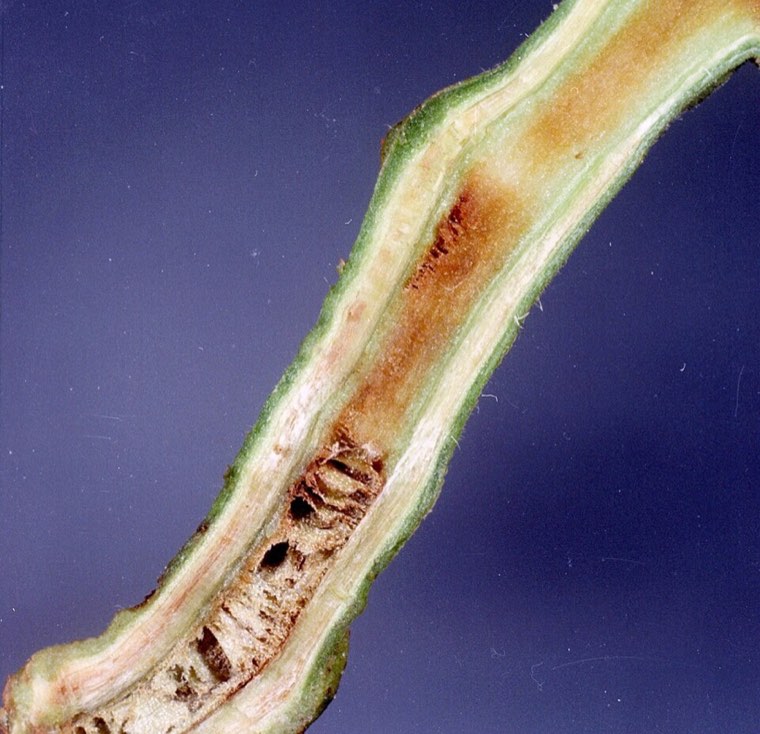
Bacterial wilt is caused by Ralstonia solanacearum species complex (Smith, 1896) Yabuuchi et al., 1996 (complex now split into R. solanacearum, R. pseudosolanacearum and R. syzygii), a bacterium (Gram-negative, soil- and water-borne) (order Burkholderiales, family Burkholderiaceae).
Older or alternative scientific names: Pseudomonas solanacearum, Burkholderia solanacearum.
Widespread in the humid tropics and subtropics on every continent, and in warm temperate regions. The cool-adapted potato strain (historically 'race 3 biovar 2') occurs in tropical highlands and some temperate regions and is a quarantine pest in Europe and North America, where outbreaks are linked to contaminated surface water.
| Region | Status |
|---|---|
| South and Southeast Asia | Widespread; major in tomato, eggplant, potato, ginger and groundnut |
| Sub-Saharan Africa | Widespread; major potato and tomato constraint in highlands |
| Latin America | Widespread; Moko disease of banana |
| East Asia and Oceania | Widespread in warm areas |
| Europe and North America | Potato strain regulated; sporadic outbreaks eradicated |
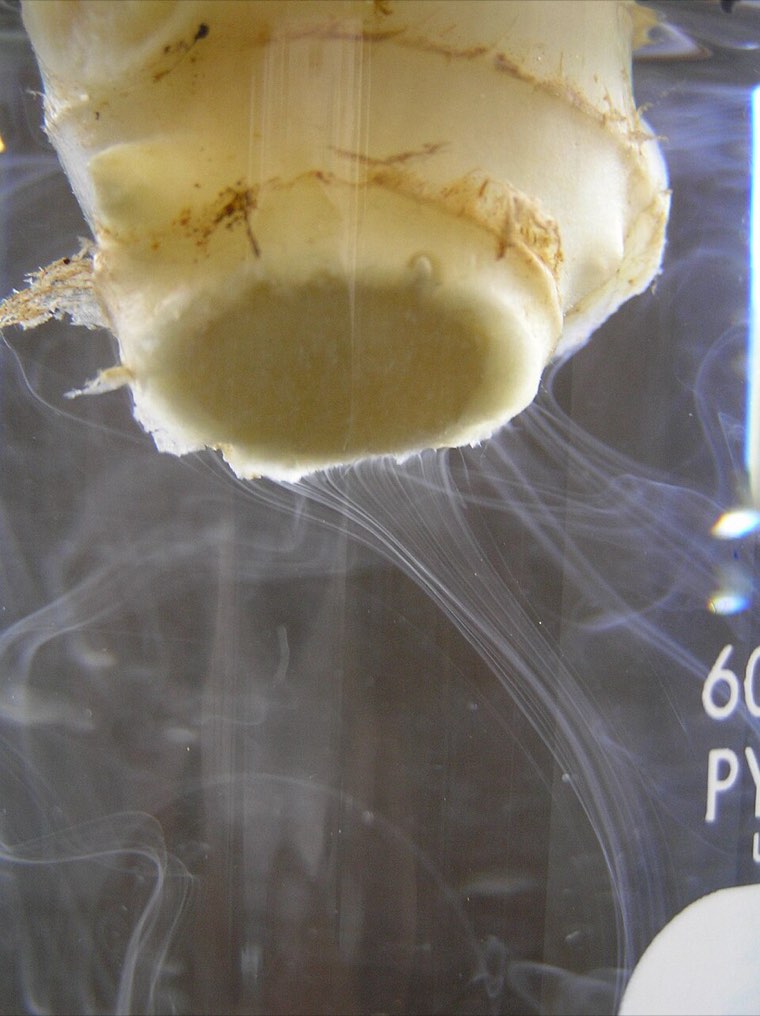
A rod-shaped bacterium. A simple field test: cut a piece of the lower stem of a freshly wilted plant, suspend it in a clear glass of water, and within minutes milky white threads of bacterial ooze stream from the cut end. Laboratory tests are needed to confirm and to identify the strain.
| Crop stage | What you see |
|---|---|
| Young plants | Wilting of the youngest leaves during the heat of the day with recovery at night at first; then permanent wilting while leaves stay green. |
| Established plants | Sudden wilting of whole plants or one side; brown discoloration of the water-conducting tissue when the lower stem is cut; adventitious roots on tomato stems. |
| Potato tubers | Brown ring in the vascular tissue when the tuber is cut, with greyish-white bacterial ooze; ooze and soil sticking to tuber eyes ('brown rot'). |
The bacterium survives in soil, plant debris, the roots of weeds, infected tubers and rhizomes, and surface and irrigation water. It enters roots through wounds, including those caused by nematodes and cultivation, multiplies in the xylem and blocks water flow. Bacteria are released back into soil and water from roots and dying plants.
| Stage | Duration | Notes |
|---|---|---|
| Survival in soil, water and weeds | Months to years | Longest in moist soils and weed roots. |
| Root infection | Through wounds and natural openings | Favoured by nematodes and root damage. |
| Xylem colonisation and wilting | Days to weeks | Faster in heat. |
| Release and spread | Continuous | In water, soil, tools, seed tubers and planting material. |
Most strains are most aggressive at about 25-35 °C; the cool-adapted potato strain causes disease at lower temperatures, down to about 15-20 °C, which allows it in highlands and temperate regions.
Disease develops within each crop; inoculum builds up with continuous host cropping.
Warm, wet soils; poorly drained fields; irrigation with contaminated surface water; continuous cropping of solanaceous crops; latent infection in seed tubers, ginger rhizomes and banana suckers; and root-knot nematodes.
There is no economic threshold: infected plants cannot be cured and every infected plant adds bacteria to the soil. In quarantine regions, any detection triggers official measures; elsewhere, management is preventive and based on field history.
Losses of 30-90% have been reported in tomato, potato, eggplant and ginger in the tropics; fields with a history of the disease can become unsuitable for susceptible crops for years. Seed potato systems in highlands lose certification and markets.
Control works best as a sequence: prevent, monitor, then act only when a threshold or a risk forecast says so, using the least disruptive option that works.
No chemical cures bacterial wilt or reliably clears the soil; disinfectants are used only for tools, footwear and equipment. What is registered differs by country and changes over time; follow the label and your local plant-protection authority.
More than 250 plant species in over 50 families: tomato, potato, eggplant, pepper, tobacco, groundnut, banana and plantain (Moko and related diseases), ginger, ornamentals such as geranium, and many weeds that carry the bacterium without symptoms.
How to grow the crop well is the first line of defence. Laisha's free grow guides cover each crop from sowing to harvest:
Written by Laisha from the sources above, in its own words. This page is general reference, not a prescription: confirm identification locally and follow the label and your plant-protection authority.