 Laisha
AI Operating System for Agriculture
Ask Laisha
Laisha
AI Operating System for Agriculture
Ask Laisha
Meloidogyne incognita (Kofoid & White, 1919) Chitwood, 1949 (with M. javanica, M. arenaria, M. hapla, M. enterolobii and others) · formerly or also: Heterodera marioni (old name for root-knot nematodes)
Root-knot nematodes are microscopic worms that enter roots and turn them into swollen, knotted galls, so plants are stunted, wilt in the heat and yield poorly. They attack almost every vegetable and many field and fruit crops, and Meloidogyne incognita is considered the most damaging plant-parasitic nematode in the world. They cannot be eradicated from a field; management combines rotation, resistant varieties and soil health.
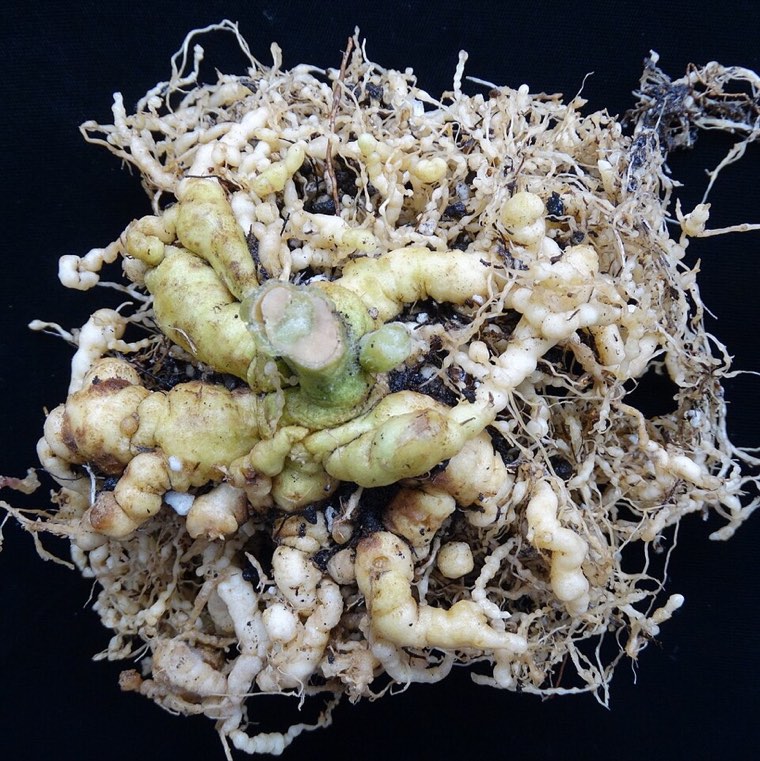
The scientific name of root-knot nematodes is Meloidogyne incognita (Kofoid & White, 1919) Chitwood, 1949 (with M. javanica, M. arenaria, M. hapla, M. enterolobii and others), in the order Rhabditida (Tylenchina; formerly Tylenchida), family Meloidogynidae.
Older or alternative scientific names: Heterodera marioni (old name for root-knot nematodes).
Found worldwide. M. incognita, M. javanica and M. arenaria dominate in tropical, subtropical and warm temperate soils and in greenhouses everywhere; M. hapla is common in cooler regions. The aggressive M. enterolobii, which overcomes many resistance genes, has spread in Africa, the Americas and Asia.
| Region | Status |
|---|---|
| Tropics and subtropics (all continents) | Widespread; major vegetable constraint |
| Mediterranean and warm temperate regions | Widespread in field and protected crops |
| Cool temperate regions | Mainly M. hapla outdoors; tropical species in greenhouses |
| Global (M. enterolobii) | Spreading; regulated in some regions |
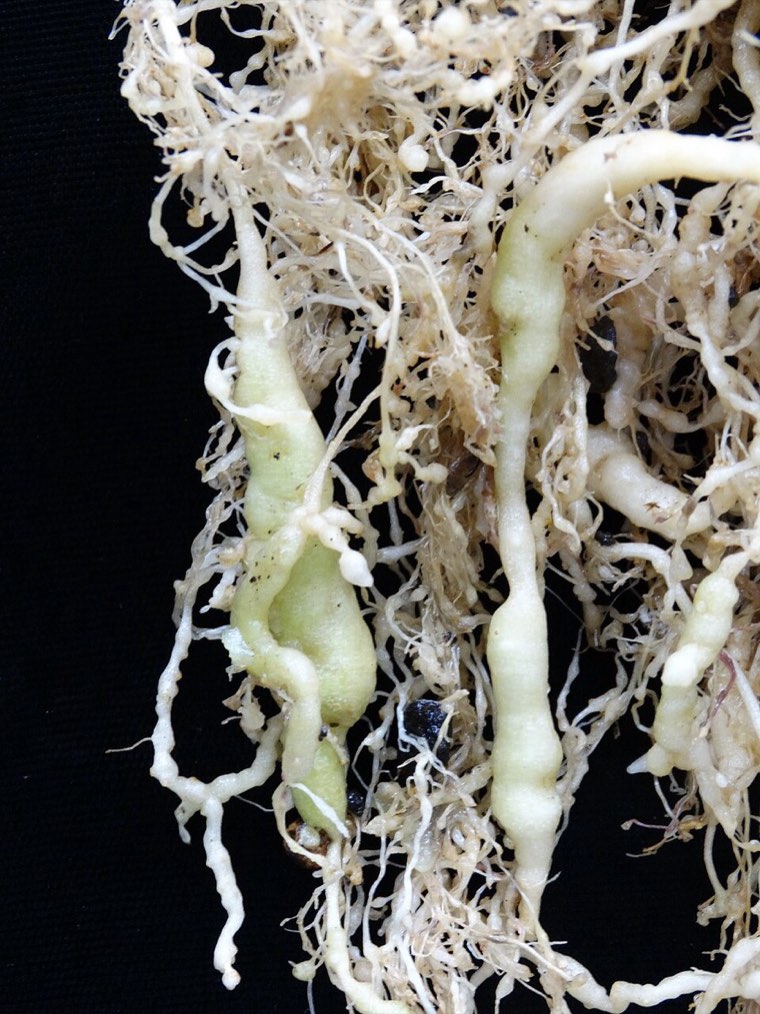
Second-stage juveniles (J2), about 0.4 mm long and invisible to the naked eye, move through soil and enter root tips. Inside, females become pear-shaped, white and swollen (about 0.5-1 mm) and lay several hundred eggs into a gelatinous egg mass on the root surface. Species are identified in a laboratory by female perineal patterns, enzymes or DNA.
| Crop stage | What you see |
|---|---|
| Seedling | Stunted seedlings with small galls on roots; poor stand. |
| Vegetative growth | Patches of yellow, stunted plants that wilt in the heat of the day and recover at night; roots with bead-like or massive, fused galls (galls cannot be rubbed off, unlike legume nodules). |
| Flowering to harvest | Reduced fruit set and yield; forked, galled carrots and cracked root crops; heavier damage when other root diseases (Fusarium wilt, bacterial wilt) join in. |
Eggs hatch in the soil or the egg mass, and J2 juveniles find and enter young roots. They settle near the vascular tissue and induce giant feeding cells, around which the root swells into a gall. After three more moults inside the root, females mature and lay eggs. Most species reproduce without males. Eggs in egg masses and soil survive between crops.
| Stage | Duration | Notes |
|---|---|---|
| Egg (in gelatinous egg mass) | About 1-2 weeks to hatch at 25-30 °C | Several hundred to over 1,000 eggs per female. |
| Second-stage juvenile (J2) in soil | Days to weeks searching for roots | The infective stage. |
| Juveniles inside the root (J3, J4) | About 1-2 weeks | Induce giant cells and galls. |
| Adult female | Lays eggs for several weeks | Pear-shaped and sedentary; males are worm-like and often absent. |
A generation takes about 3-4 weeks at 25-30 °C and much longer below about 18 °C; activity stops below about 10-12 °C. Warm, sandy soils favour high populations.
Several generations per crop in warm conditions (often 3-8 or more a year in the tropics and greenhouses).
Light, sandy, warm soils; continuous cropping of susceptible vegetables, especially in greenhouses; infested transplants; irrigation water and soil movement on machinery; and weed hosts.
There is no single numeric threshold that applies everywhere: damage thresholds (nematodes per unit of soil before planting) depend on species, crop, soil type and temperature, and published values differ by more than tenfold. Extension laboratories in some regions provide crop-specific pre-plant action levels from soil samples; use the local figure.
Thresholds are local. They depend on crop price, control cost, variety and natural-enemy activity, so use the figure your local extension service publishes where one exists.
Yield losses in susceptible vegetables commonly reach 20-50% and can be total in heavily infested soils, especially in tropical and greenhouse production. Galling also lowers root-crop quality and increases wilt diseases. Global losses from plant-parasitic nematodes are estimated in the tens of billions of US dollars a year, with root-knot nematodes the largest share.
Control works best as a sequence: prevent, monitor, then act only when a threshold or a risk forecast says so, using the least disruptive option that works.
Nematicides are classified by IRAC's nematicide mode-of-action scheme. Many older products have been withdrawn because of toxicity, and soil fumigation is restricted and must be done only by trained, licensed operators. What is registered differs by country and changes over time; follow the label and your local plant-protection authority.
| Scheme | Group | Mode of action | Notes |
|---|---|---|---|
| IRAC | N-1 | Acetylcholinesterase inhibitors (nematicide group) | Older group; many members withdrawn. |
| IRAC | N-2 | Glutamate-gated chloride channel allosteric modulators (nematicide group) | Seed treatment or soil uses. |
| IRAC | N-3 | Mitochondrial complex II electron transport inhibitors (nematicide group) | Newer non-fumigant group. |
| IRAC | N-UN | Compounds of unknown or uncertain mode of action (nematicides) | Includes several newer non-fumigants. |
| IRAC | N-UNX | Presumed multi-site inhibitors (fumigants) | Licensed operators only; heavily restricted. |
Thousands of plant species. Tomato, eggplant, pepper, okra, cucurbits, carrot, lettuce, beans, potato, sweet potato, banana, cotton, soybean, tobacco, grapes, coffee and many ornamentals and weeds are hosts. Species and races differ in host range: for example M. hapla attacks many temperate crops but not grasses.
How to grow the crop well is the first line of defence. Laisha's free grow guides cover each crop from sowing to harvest:
Written by Laisha from the sources above, in its own words. This page is general reference, not a prescription: confirm identification locally and follow the label and your plant-protection authority.