 Laisha
AI Operating System for Agriculture
Ask Laisha
Laisha
AI Operating System for Agriculture
Ask Laisha
Physiological calcium disorder (no pathogen)
Blossom-end rot is a dark, sunken, leathery patch at the flower end of tomato, pepper, watermelon, squash and eggplant fruit. It is not a disease and cannot spread from plant to plant: it happens when the growing tip of the fruit does not receive enough calcium, almost always because water supply to the plant is uneven. Steady watering and balanced feeding usually prevent it.
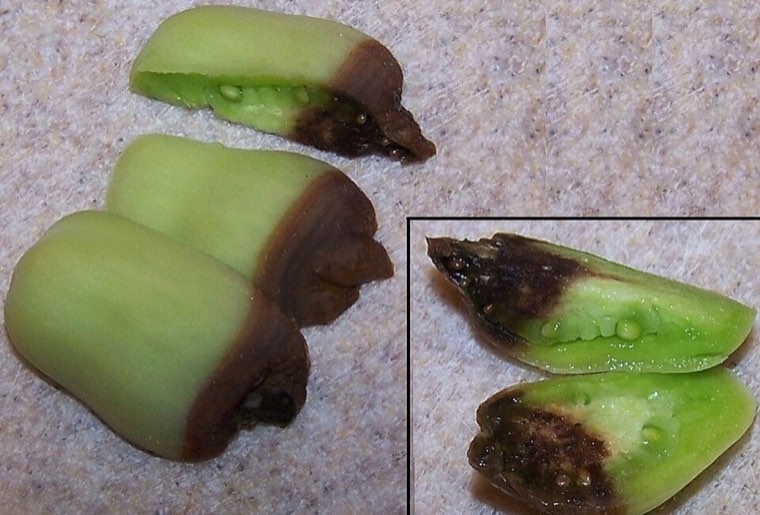
Blossom-end rot is caused by a local shortage of calcium in the fast-growing end of the fruit, usually because of an irregular water supply, salinity or excess nitrogen - not normally a lack of calcium in the soil; it is a disorder, not an infection.
Occurs wherever these crops are grown, in fields, greenhouses and gardens, and is especially common in hot, dry spells, in salty soils or water, and in soilless and container growing with irregular irrigation.
| Region | Status |
|---|---|
| Global, field production | Common in hot, dry periods and on sandy or saline soils |
| Global, protected and container production | Common where irrigation is irregular or salinity is high |
| Home gardens worldwide | Very common |
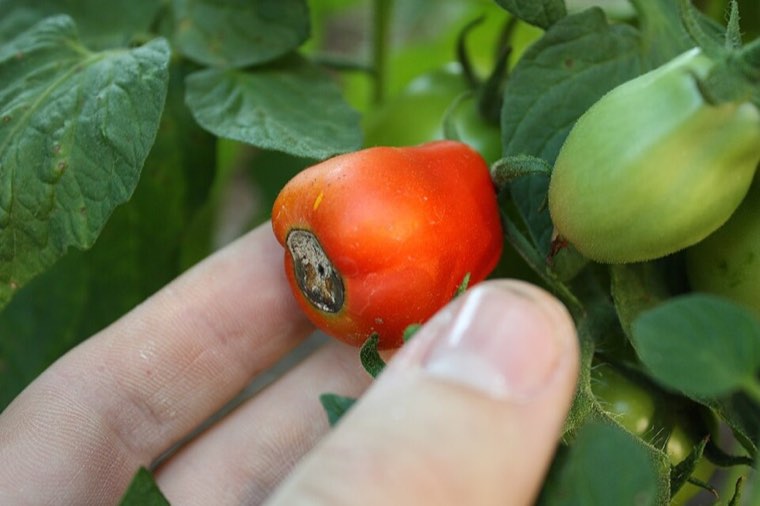
There is no organism. Calcium moves to the fruit in the water stream; because fruits lose little water, they receive little calcium, and the fast-growing tissue at the blossom end is the first to run short. When cells there collapse, a dry, sunken lesion forms; mould that appears later is secondary.
| Crop stage | What you see |
|---|---|
| Young fruit (about one-third grown) | A small, water-soaked, light brown spot at the blossom end (opposite the stem), usually on the first fruits of a truss. |
| Developing fruit | The spot enlarges into a dark brown to black, flat or sunken, leathery patch that may cover a third or more of the fruit; in pepper, often pale, papery patches on the side near the tip. |
| Mature fruit | Affected fruit ripens early; the patch may be colonised by moulds; internal blackening without external symptoms in some pepper and tomato varieties. |
Blossom-end rot has no life cycle; it develops during a sensitive window of about two weeks after fruit set, when fruit cells divide and expand fastest. Stress in that window - a dry spell, then heavy watering, very hot or windy days, salty water, or damaged roots - produces affected fruit a week or two later. Later fruits on the same plant are often normal once growing conditions even out.
| Stage | Duration | Notes |
|---|---|---|
| Fruit set and rapid expansion | About the first 2-3 weeks after flowering | The sensitive window. |
| Calcium shortage at the blossom end | Days of water stress or high transpiration | Leaves outcompete fruit for calcium. |
| Visible symptoms | About 1-2 weeks later | First water-soaked, then dark and sunken. |
Hot, dry, windy weather increases water loss from leaves and draws calcium away from fruit, raising the risk; very rapid growth in warm conditions after a cool period does the same.
Not applicable; occurs in episodes during each crop.
Fluctuating soil moisture (drought then heavy watering), high salinity of soil or water, excessive nitrogen (especially ammonium) or potassium and magnesium that compete with calcium, root damage from cultivation, very acid soils low in calcium, fast-growing large-fruited or elongated varieties, and heat waves.
There is no threshold; as a non-infectious disorder it is prevented by managing water, salinity and nutrition. Affected fruit cannot be repaired and should be removed.
Affected fruits are unmarketable. Losses are usually a few per cent of fruit but can exceed 50% of early fruit in hot, dry spells or salty conditions, especially in elongated tomato and pepper varieties.
Control works best as a sequence: prevent, monitor, then act only when a threshold or a risk forecast says so, using the least disruptive option that works.
No pesticide is relevant, because this is not an infection. Foliar calcium sprays have only limited effect, because calcium sprayed on leaves moves little to the fruit; correcting watering and soil calcium matters far more. Fertiliser products and their registration differ by country; follow the label and local agronomic advice.
Most common in tomato and sweet pepper; also watermelon, squash and zucchini, eggplant and melon. Similar calcium disorders cause bitter pit of apple, tipburn of lettuce and cabbage, and blackheart of celery.
How to grow the crop well is the first line of defence. Laisha's free grow guides cover each crop from sowing to harvest:
Written by Laisha from the sources above, in its own words. This page is general reference, not a prescription: confirm identification locally and follow the label and your plant-protection authority.