 Laisha
AI Operating System for Agriculture
Ask Laisha
Laisha
AI Operating System for Agriculture
Ask Laisha
Cylas formicarius (Fabricius, 1798) (with Cylas puncticollis and C. brunneus in Africa) · formerly or also: Cylas formicarius elegantulus
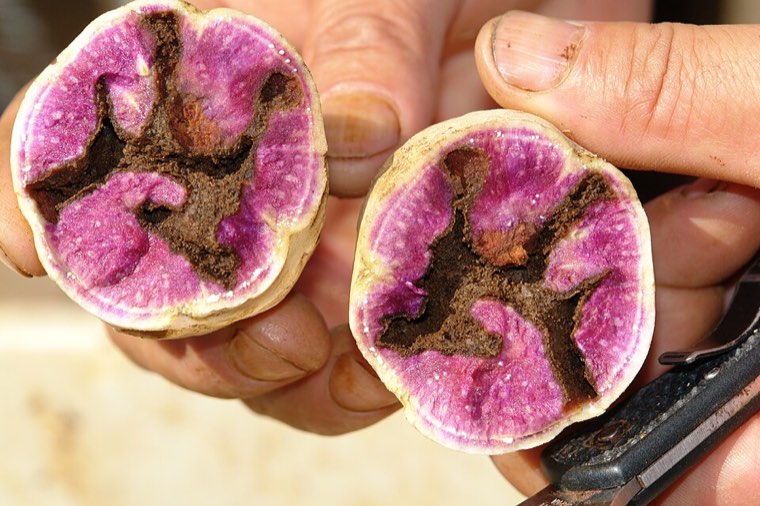
Sweet potato weevils are the most damaging insect pests of sweet potato worldwide. Their grubs tunnel through the vine base and the storage roots, and even light damage makes the plant produce bitter, foul-smelling compounds that ruin the whole root for eating or feeding to animals. The weevils reach the roots mainly through cracks in dry soil, so hilling, irrigation and clean planting material are central to control.
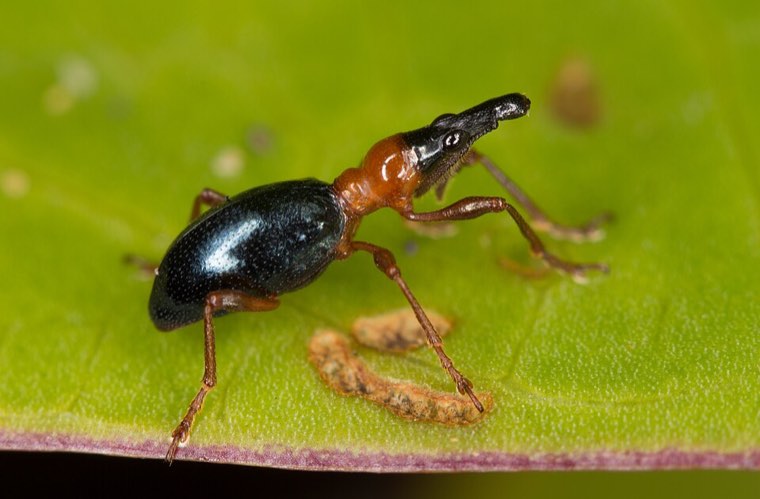
The scientific name of sweet potato weevil is Cylas formicarius (Fabricius, 1798) (with Cylas puncticollis and C. brunneus in Africa), in the order Coleoptera, family Brentidae.
Older or alternative scientific names: Cylas formicarius elegantulus.
Cylas formicarius occurs throughout the tropics and subtropics of Asia, the Pacific, the Americas and parts of Africa; C. puncticollis and C. brunneus are the main species in sub-Saharan Africa.
| Region | Status |
|---|---|
| Asia and the Pacific | Widespread; C. formicarius |
| Americas and the Caribbean | Widespread; C. formicarius |
| Sub-Saharan Africa | Widespread; C. puncticollis and C. brunneus, with C. formicarius in some areas |
| Oceania | Present |
Cylas formicarius adults are slender, ant-like weevils about 5-8 mm long, with a metallic blue-black head and wing covers, a reddish-orange thorax and legs, and a long snout; African species are uniformly dark. Larvae are white, legless, curved grubs inside stems and roots.
| Crop stage | What you see |
|---|---|
| Vine growth | Swollen, cracked vine bases with tunnels and frass; wilting or yellowing of vines in severe cases. |
| Storage root formation | Small holes and dark tunnels in roots, often starting near the stem end; frass-filled galleries. |
| Harvest and storage | Tunnelled roots with a bitter taste and unpleasant smell, even if damage looks slight; infestation continues in store. |
Females chew small cavities in vines or exposed roots and lay single eggs, sealing them with a plug. Larvae tunnel and feed for two to three weeks, pupate in the tunnel, and adults emerge to repeat the cycle. Adults are active mostly at night and walk more than they fly; they reach roots through soil cracks.
| Stage | Duration | Notes |
|---|---|---|
| Egg | About 5-7 days | In cavities in vines or roots. |
| Larva (3 instars) | About 2-3 weeks | Tunnels in roots and stems. |
| Pupa | About 7-10 days | Inside the tunnel. |
| Adult | Several months | Nocturnal; females attracted by host odours. |
A generation takes about one month in warm weather (around 27 °C); dry, hot seasons favour the weevil because soils crack.
Several overlapping generations a year in the tropics.
Dry seasons with cracking soils, shallowly set storage roots, delayed harvest, infested planting material, and volunteer sweet potato or wild Ipomoea near fields.
There is no economic threshold in general use: even slight damage makes roots inedible, so management is preventive throughout the crop.
Thresholds are local. They depend on crop price, control cost, variety and natural-enemy activity, so use the figure your local extension service publishes where one exists.
Root losses of 20-100% are reported, highest in dry seasons and where harvest is delayed; terpenoid compounds produced in response to feeding make roots unfit for food and feed. Infested roots also lose value in storage, where adults and larvae continue to develop.
Control works best as a sequence: prevent, monitor, then act only when a threshold or a risk forecast says so, using the least disruptive option that works.
Dipping planting material and soil applications are used where registered; sprays have limited effect on larvae inside roots. What is registered differs by country and changes over time; follow the label and your local plant-protection authority.
| Scheme | Group | Mode of action | Notes |
|---|---|---|---|
| IRAC | 3A | Sodium channel modulators (pyrethroids) | Used as cutting dips or sprays against adults where registered. |
| IRAC | UNF | Fungal agents (for example Beauveria-based products) | Biological; where registered. |
Sweet potato and wild Ipomoea species (morning glories) are the hosts; Cylas species do not breed on other crops.
How to grow the crop well is the first line of defence. Laisha's free grow guides cover each crop from sowing to harvest:
Written by Laisha from the sources above, in its own words. This page is general reference, not a prescription: confirm identification locally and follow the label and your plant-protection authority.