 Laisha
AI Operating System for Agriculture
Ask Laisha
Laisha
AI Operating System for Agriculture
Ask Laisha
Holotrichia consanguinea Blanchard, 1851 (with H. serrata and other Holotrichia species in Asia, Phyllophaga in the Americas and Melolontha in Europe) · formerly or also: Lachnosterna consanguinea
White grubs are the fat, C-shaped, cream-coloured larvae of chafer beetles that live in the soil and eat roots. Plants wilt and die in patches although the soil is moist, and in groundnut, sugarcane, potato and rainfed cereals whole fields can be lost. Each region has its own species - Holotrichia in South Asia, Phyllophaga ('May beetles') in the Americas, the cockchafer Melolontha in Europe - but their biology and management follow the same pattern: the beetles fly at dusk after the first rains, and control works best if it targets those adults and the young grubs.
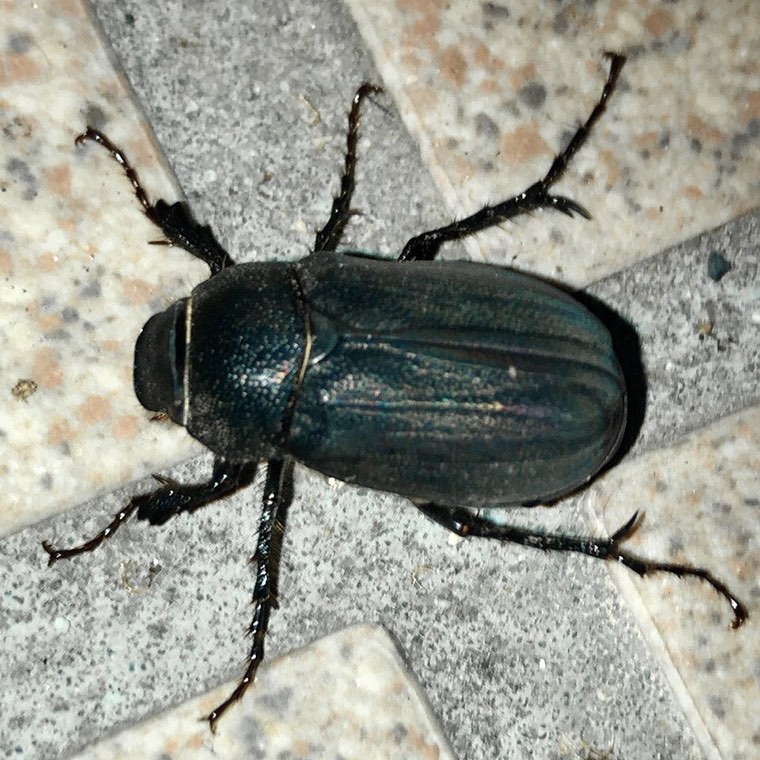
The scientific name of white grubs is Holotrichia consanguinea Blanchard, 1851 (with H. serrata and other Holotrichia species in Asia, Phyllophaga in the Americas and Melolontha in Europe), in the order Coleoptera, family Scarabaeidae (Melolonthinae).
Older or alternative scientific names: Lachnosterna consanguinea.
White grubs occur on every continent. Holotrichia consanguinea and H. serrata are the key species in the rainfed drylands of South Asia; Phyllophaga species are the main 'gallina ciega' of maize and vegetables from Mexico to South America; Melolontha melolontha and other chafers attack pasture, forest nurseries and crops in Europe; other genera are important in Africa, East Asia and Oceania.
| Region | Status |
|---|---|
| South Asia | Holotrichia species; major pests of groundnut, sugarcane and rainfed crops |
| Americas | Phyllophaga and related genera; major in maize, potato and vegetables |
| Europe | Melolontha and other chafers; pasture, vineyards, forest nurseries |
| Africa, East Asia and Oceania | Several genera; important in sugarcane, pasture and cereals |
Larvae are white to cream, with a brown head and three pairs of legs, lying curled in a C shape; mature grubs of Holotrichia reach about 3-4 cm. The end of the abdomen looks grey-blue from soil in the gut, and the pattern of spines on its underside (the raster) is used to identify species. Adults of H. consanguinea are chestnut-brown chafers about 2 cm long that emerge at dusk.
| Crop stage | What you see |
|---|---|
| Seedling to early vegetative | Seedlings wilt, yellow and die in patches in moist soil; they pull out easily because roots are eaten. |
| Vegetative to flowering | Patches of stunted, wilting plants that spread; in sugarcane, yellowing and drying of clumps that topple. |
| Pod and tuber formation | Groundnut pods and pegs eaten; potato tubers with large, shallow holes; grubs found curled in the soil at 5-20 cm depth. |
For Holotrichia consanguinea, beetles emerge from the soil within a few days of the first heavy monsoon rains, fly at dusk to host trees to feed and mate, and return to fields to lay eggs in moist soil. Grubs feed for about two months, mostly on roots, pupate deep in the soil and become adults that stay in the soil, inactive, until the next rainy season - so there is one generation a year. Some species, such as the European cockchafer, take three to four years to complete one generation.
| Stage | Duration | Notes |
|---|---|---|
| Egg (in soil) | About 8-10 days (H. consanguinea) | Laid singly in moist soil near roots. |
| Grub (3 instars) | About 8-10 weeks (H. consanguinea); 1-3 years in some species | Third instar does most damage. |
| Pupa (earthen cell) | About 12-16 days | Deep in the soil. |
| Adult beetle | Months in the soil before emergence; active for a few weeks after the first rains | Feeds at night on tree foliage; attracted to light. |
Adult emergence is triggered by soaking pre-monsoon or monsoon rains (often about 20 mm or more) on warm soil; grubs move deeper in the soil when it dries or cools.
One generation a year for Holotrichia consanguinea; one every 2-4 years for some Phyllophaga and Melolontha species.
Light, sandy and well-drained soils; rainfed crops sown just after the first rains; fields next to host trees where beetles feed; continuous cropping of susceptible crops; and planting into old pasture or sod.
There is no single internationally agreed numeric threshold; because grubs are hidden in the soil and damage is irreversible, programmes act preventively in endemic areas. Local action levels based on grubs per square metre found by digging soil pits before sowing, or on beetle counts at light traps, are used in some regions.
Thresholds are local. They depend on crop price, control cost, variety and natural-enemy activity, so use the figure your local extension service publishes where one exists.
In endemic areas of South Asia, losses in groundnut range from 20% to total crop failure; heavy losses also occur in sugarcane, potato, maize and pasture, where grubs can kill large patches of turf or crop.
Control works best as a sequence: prevent, monitor, then act only when a threshold or a risk forecast says so, using the least disruptive option that works.
Soil and seed treatments at sowing, and sprays on beetle host trees at emergence in community programmes, are used where registered; many older soil insecticides have been withdrawn because of toxicity and residues. What is registered differs by country and changes over time; follow the label and your local plant-protection authority.
| Scheme | Group | Mode of action | Notes |
|---|---|---|---|
| IRAC | 4A | Nicotinic acetylcholine receptor competitive modulators (neonicotinoids) | Seed treatment uses in some crops. |
| IRAC | 28 | Ryanodine receptor modulators (diamides) | Soil uses where registered. |
| IRAC | 1B | Acetylcholinesterase inhibitors (organophosphates) | Historically used; many restricted. |
| IRAC | 3A | Sodium channel modulators (pyrethroids) | Sprays on host trees against adults in some programmes. |
Grubs feed on roots and underground parts of almost any crop: groundnut, sugarcane, potato, maize, sorghum, millets, soybean, pulses, vegetables, turf and pasture, and tree nurseries. Adult beetles feed at night on leaves of trees such as neem, Acacia, ber (Ziziphus), drumstick and fruit trees.
How to grow the crop well is the first line of defence. Laisha's free grow guides cover each crop from sowing to harvest:
Written by Laisha from the sources above, in its own words. This page is general reference, not a prescription: confirm identification locally and follow the label and your plant-protection authority.