 Laisha
AI Operating System for Agriculture
Ask Laisha
Laisha
AI Operating System for Agriculture
Ask Laisha
Spodoptera exigua Spodoptera exigua (Hübner, 1808) · formerly or also: Laphygma exigua
The beet armyworm is a moth whose caterpillars feed on more than 90 kinds of plants, including sugar beet, cotton, tomato, pepper, onion, lettuce, cabbage, soybean, groundnut, chickpea and flowers. Young caterpillars feed in groups under webbing and skeletonise leaves, while older ones eat holes in leaves and bore into fruit and heads. It is found in warm regions on every continent and is known for resisting many insecticides.
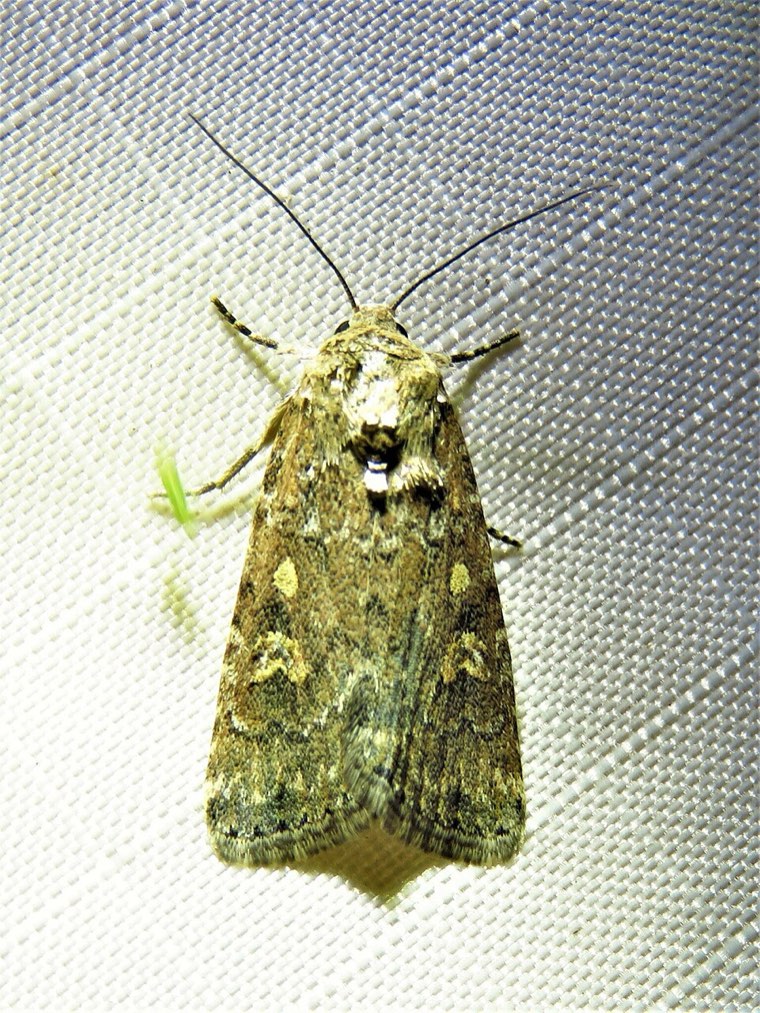
The scientific name of beet armyworm is Spodoptera exigua Spodoptera exigua (Hübner, 1808), in the order Lepidoptera, family Noctuidae.
Older or alternative scientific names: Laphygma exigua.
Probably native to South-East Asia; now found across Asia, Africa, Europe (resident in the south, migrant in the north), the Americas and Australia.
| Region | Status |
|---|---|
| Asia | Widespread; major pest in China and South Asia |
| Africa and the Middle East | Widespread |
| Europe | Southern Europe; migrant northward |
| Americas and Oceania | Widespread in warm regions |
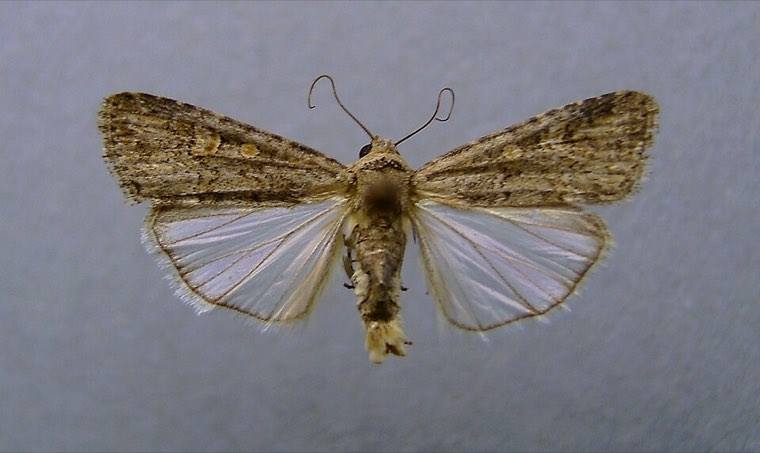
Moths are mottled grey-brown with a wingspan of about 2.5-3 cm, and a pale, often orange-tinged round spot and a kidney-shaped spot on each forewing. Eggs are laid in masses of about 50-150, covered with whitish hair-like scales. Caterpillars grow to about 3 cm and vary from pale green to almost black, with a broad pale stripe along each side and often a small dark spot above the second pair of true legs.
| Crop stage | What you see |
|---|---|
| Young caterpillars | Groups of small caterpillars under fine webbing near the egg mass; leaves skeletonised, leaving a papery window. |
| Older caterpillars | Large irregular holes in leaves; feeding in the growing points of seedlings, inside onion leaves and in lettuce and cabbage heads. |
| Fruiting crops | Holes and scars on tomato and pepper fruit, and damaged cotton bolls and squares. |
Females lay egg masses on leaves, often on weeds or lower leaves. Young caterpillars feed together and then spread out. There are five instars. Mature caterpillars pupate in the soil. Moths are strong fliers and migrate on the wind into cooler regions in summer.
| Stage | Duration | Notes |
|---|---|---|
| Egg (masses covered with scales) | About 2-5 days | 50-150 eggs per mass. |
| Caterpillar (5 instars) | About 10-20 days | Gregarious when young. |
| Pupa (in soil) | About 6-10 days | In an earthen cell near the surface. |
| Adult moth | About 1-2 weeks | Lays several hundred eggs; night-flying. |
Egg to adult takes about three to four weeks in warm weather (around 25-30 °C); it does not survive cold winters outdoors in temperate regions.
Three to five generations in warm temperate regions and continuous breeding in the tropics.
Hot, dry weather; weedy fields and field edges; large areas of host crops; and broad-spectrum sprays that eliminate natural enemies and select for resistance.
There is no single international threshold. Extension services set action levels by crop and stage, often based on the number of egg masses or young larval colonies per number of plants; check with your local extension service.
Thresholds are local. They depend on crop price, control cost, variety and natural-enemy activity, so use the figure your local extension service publishes where one exists.
Seedlings can be killed and leafy vegetables made unmarketable; fruit damage in tomato and pepper and defoliation of cotton, soybean and sugar beet cause serious yield losses in outbreak years.
Control works best as a sequence: prevent, monitor, then act only when a threshold or a risk forecast says so, using the least disruptive option that works.
The beet armyworm has developed resistance to many insecticide groups in Asia, the Americas and elsewhere, and older caterpillars are hard to kill. What is registered differs by country and changes over time; follow the label and your local plant-protection authority.
| Scheme | Group | Mode of action | Notes |
|---|---|---|---|
| IRAC | 28 | Ryanodine receptor modulators (diamides) | Resistance reported in parts of Asia. |
| IRAC | 5 | Nicotinic acetylcholine receptor allosteric modulators, site I (spinosyns) | Rotate. |
| IRAC | 6 | Glutamate-gated chloride channel allosteric modulators | Rotate. |
| IRAC | 18 | Ecdysone receptor agonists (diacylhydrazines) | Selective. |
| IRAC | 22A | Voltage-dependent sodium channel blockers (oxadiazines) | Rotate. |
More than 90 genera in about 35 plant families: vegetables, field crops such as sugar beet, cotton, soybean, groundnut, alfalfa and chickpea, flowers, and many weeds such as pigweed and lamb's quarters.
How to grow the crop well is the first line of defence. Laisha's free grow guides cover each crop from sowing to harvest:
Written by Laisha from the sources above, in its own words. This page is general reference, not a prescription: confirm identification locally and follow the label and your plant-protection authority.