 Laisha
AI Operating System for Agriculture
Ask Laisha
Laisha
AI Operating System for Agriculture
Ask Laisha
Ophiomyia phaseoli Ophiomyia phaseoli (Tryon, 1895) · formerly or also: Agromyza phaseoli, Melanagromyza phaseoli
The bean fly is a tiny shiny black fly whose maggots tunnel down from the leaves into the stems of young bean plants. They feed just under the skin at the base of the stem, which swells and cracks, so seedlings yellow, wilt and die. It is one of the most damaging pests of common bean and other legumes on small farms in Africa and Asia, especially when beans are planted into dry or poor soils. In Africa two related species, Ophiomyia spencerella and O. centrosematis, cause the same damage.
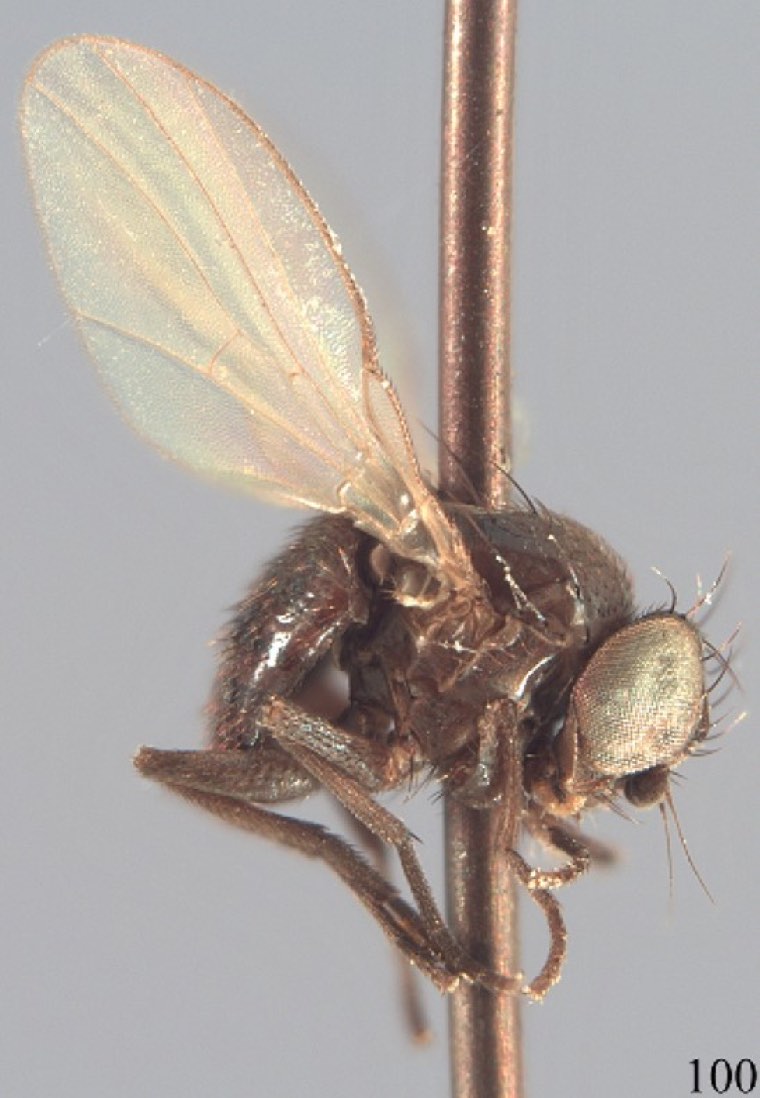
The scientific name of bean fly is Ophiomyia phaseoli Ophiomyia phaseoli (Tryon, 1895), in the order Diptera, family Agromyzidae.
Older or alternative scientific names: Agromyza phaseoli, Melanagromyza phaseoli.
Found across Africa, South and South-East Asia, the Middle East, Australia and Pacific islands; not recorded in the Americas.
| Region | Status |
|---|---|
| Africa | Widespread; major pest of common bean |
| South and South-East Asia | Widespread |
| Oceania | Present in Australia and Pacific islands |
| Americas | Not recorded |
Adults are about 2 mm long, shiny black flies. Females make many tiny feeding and egg-laying punctures in leaves, which appear as pale spots. Maggots are small, pale and legless, and pupae are brown, barrel-shaped and found just under the skin at the base of the stem.
| Crop stage | What you see |
|---|---|
| Leaves of seedlings | Many small pale spots (punctures) on the first leaves; short mines near the leaf stalk. |
| Stem base | Swollen, cracked stem at or just above the soil line; brown pupae visible under the skin when the stem is split. |
| Whole plant | Yellowing, stunting and wilting of young plants, which may die; surviving plants form new roots above the damaged area if soil covers it. |
Females lay eggs inside the leaf tissue of seedlings. Each maggot mines into a leaf vein, down the leaf stalk and into the stem, where it feeds in the outer tissue at the base of the stem and then pupates under the skin. Adults emerge through a small window in the stem.
| Stage | Duration | Notes |
|---|---|---|
| Egg (inside leaf) | About 2-4 days | Laid in young leaves. |
| Maggot (3 instars) | About 7-10 days | Mines down to the stem base. |
| Pupa (under stem skin) | About 7-10 days | Brown, barrel-shaped. |
| Adult fly | About 1-3 weeks | Active in the morning. |
One generation takes about three weeks in warm weather; populations build up when beans are planted continuously or in sequence.
Many generations per year where legumes are grown through the year.
Late planting into high fly populations, poor soil fertility and dry soils that slow seedling growth, continuous or staggered bean planting, volunteer legumes and weeds, and lack of soil cover around the stem base.
There is no single international threshold; because damage happens in the first weeks and is hidden inside the stem, management is mostly preventive in areas with a history of bean fly.
Thresholds are local. They depend on crop price, control cost, variety and natural-enemy activity, so use the figure your local extension service publishes where one exists.
Seedling deaths and stunting can reduce yields heavily on smallholder farms in Africa and Asia; losses are often reported between a third and all of the crop in bad years, especially in late or dry-season plantings.
Control works best as a sequence: prevent, monitor, then act only when a threshold or a risk forecast says so, using the least disruptive option that works.
Seed treatments protect seedlings during the first weeks and are the main chemical method on small farms. What is registered differs by country and changes over time; follow the label and your local plant-protection authority.
| Scheme | Group | Mode of action | Notes |
|---|---|---|---|
| IRAC | 4A | Nicotinic acetylcholine receptor competitive modulators (neonicotinoids), seed treatment | Toxic to pollinators and other non-targets. |
| IRAC | 28 | Ryanodine receptor modulators (diamides), seed treatment | Where registered. |
Common bean, runner and lima beans, cowpea, mung bean, black gram, soybean, pigeon pea and other cultivated and wild legumes.
How to grow the crop well is the first line of defence. Laisha's free grow guides cover each crop from sowing to harvest:
Written by Laisha from the sources above, in its own words. This page is general reference, not a prescription: confirm identification locally and follow the label and your plant-protection authority.