How to Grow Wheat
Triticum aestivum · Also called: bread wheat, gehun, gandum, trigo, blé, ngano, buğday, qamh
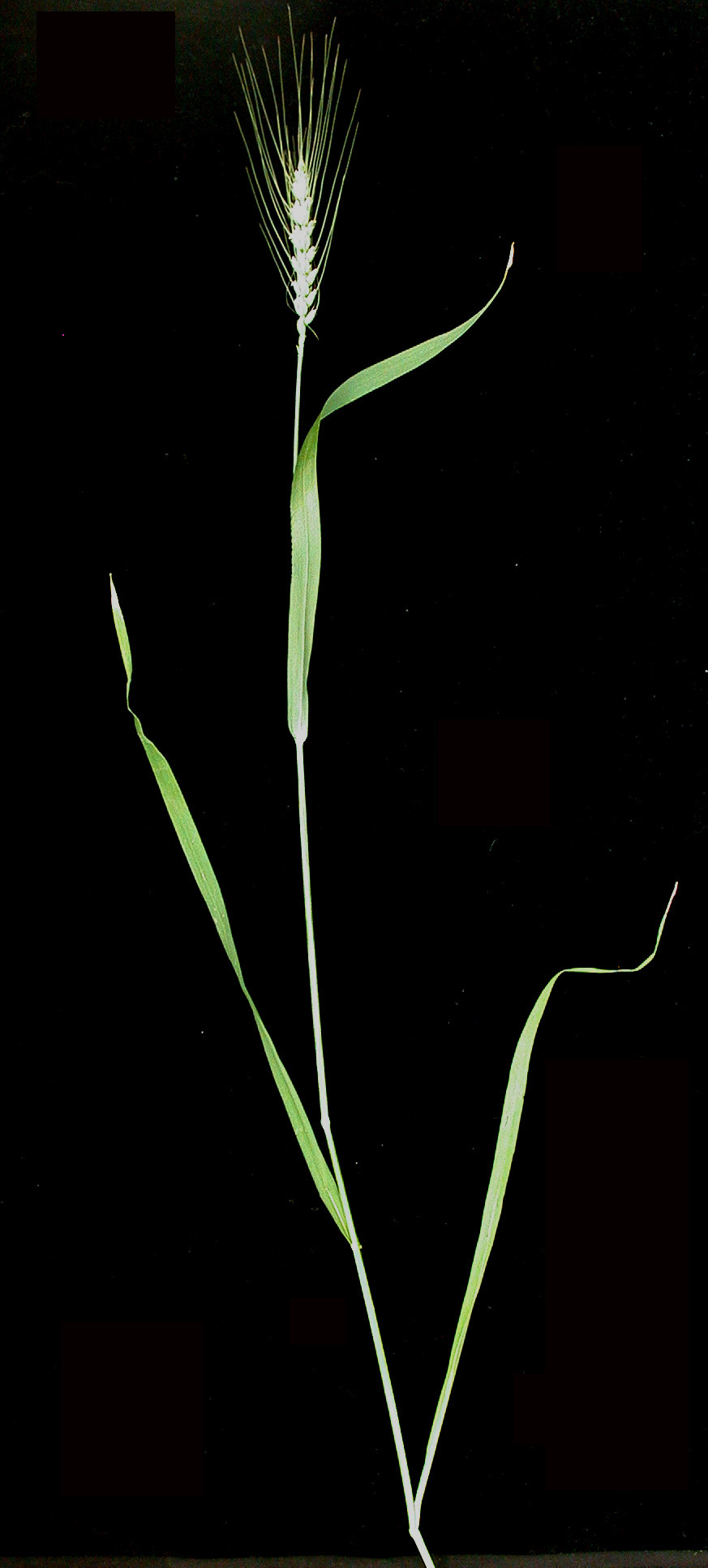
Photo: Ayotte, Gilles, 1948- (Bibliothèque de l'Université Laval), CC BY-SA 4.0 (Wikimedia Commons)
Wheat is one of the three grains that feed the world. It stores well. It travels well. It makes bread, flatbread, porridge and noodles. It is a cool weather crop, so in many hot countries it is the crop that fills the cool months when nothing else will grow.
Growing Wheat, Stage by Stage
- 1. Get the land ready — Make a fine, firm, level seedbed. Wheat seed is small and needs good contact with soil.
- 2. Choose and get your seed — Wheat is a crop where saving your own seed genuinely works. Use big, plump, clean grain.
- 3. Sow the seed — Sow on time, shallow, in rows. On time matters more than anything else here.
- 4. Water — Wheat needs the least water of the big grain crops. But there are three moments it must not be dry.
- 5. Weeds and feeding — Weed early. A thick, even, well fed crop does most of the weeding for you.
- 6. Watch for rust — Walk the field once a week from stem growth onward and look at the leaves.
- 7. Know when to harvest — Cut when the whole plant has gone golden and the grain is hard, not soft.
- 8. Dry it and store it so you do not lose it — Wheat stores better than almost any food if it is dry and sealed. If it is damp, it rots.
Common Problems & Troubleshooting
If you see: Small yellow or orange powdery spots on the leaves, often lined up in neat stripes running along the leaf. Yellow powder rubs off on your finger. Later the leaves dry up from the tip.
It likely means: Yellow rust, also called stripe rust. A fungus that arrives on the wind and spreads fast in cool damp weather.
Do this: Tell your local agricultural officer at once. Rust moves across whole regions on the wind and your report helps everyone.
If you see: Heads that come out black and powdery instead of green, with the grain replaced by black dust that blows away and leaves a bare stalk. Or grains that look normal but are full of a stinking black powder when crushed.
It likely means: A smut or bunt disease. It travels inside or on the seed, from one season to the next.
Do this: Never save seed from a field that showed this. That is how it comes back next year.
If you see: Patches of the crop lying flat on the ground after wind or rain, usually the tallest, greenest, thickest patches.
It likely means: Lodging. The stems could not hold the weight. Usually too much nitrogen, or a tall variety, or a very thick crop, or heavy watering late in the season.
Do this: You cannot stand it back up. Harvest that patch as soon as the grain is ready, before it rots on the ground.
If you see: Big bare gaps in the field. A thin crop with a lot of visible soil between plants, and weeds filling those gaps.
It likely means: The seed did not come up. Usually sown too deep, or into a dry or lumpy seedbed, or the seed was old and weak, or birds and ants took it.
Do this: Weed those gaps now. Bare soil that grows weeds is worse than bare soil alone.
If you see: The oldest, lowest leaves yellowing from the tip while the newest top leaves stay green. The crop pale and short overall.
It likely means: The crop is short of nitrogen. Very common in soil that has grown cereals year after year.
Do this: Put on nitrogen fertiliser, manure or compost now if you can, and water it in.
If you see: The heads are there but the grain inside is small, thin, wrinkled and light. The crop turned gold suddenly, all at once, earlier than expected.
It likely means: The crop ran out of water or was hit by heat while the grain was filling, and it ripened early to save itself. Sometimes rust or a root disease does the same.
Do this: You cannot fix this crop now.
If you see: Ripe grain with small white roots and shoots coming out of it, while still in the head, after rain fell on the ripe crop.
It likely means: Rain came at harvest and the grain started to grow while still on the plant. The flour from it will be poor and it will not store.
Do this: Harvest and dry it as fast as you possibly can.
If you see: Small beetles or moths in the store. Neat round holes in the grain. Fine powder like flour at the bottom of the sack. Webbing on the surface of the grain.
It likely means: Storage insects. Almost always they came in with the grain or were left in a dirty store from last season.
Do this: Dry the grain hard in the sun again.
Yield & Market Value
Growing the crop is only part of the job. The last part is knowing what a normal harvest looks like, and knowing what your grain is worth before you agree a price with anybody.
Remember It This Way
If you forget every other page of this guide, keep these lines. They are the whole crop, in order, short enough to carry in your head.
- Cool season, sown early. Late wheat is small wheat.
- Fine, firm and level. Wheat hates lumps and hollows.
- Shallow seed, thick stand. Many thin stems beat a few fat ones.
- Three waterings matter most: at rooting, at jointing, and while the grain is milky.
- Weeds in the first month. Rust after damp weather.
- Yellow or brown dust on your hands off the leaves means rust. Look every week.
- Straw gold, grain hard, head snaps in the hand. Cut it.
- Dry it hard, clean the store, shut the air out. Wheat will wait for a better price.
Test Yourself: Identification
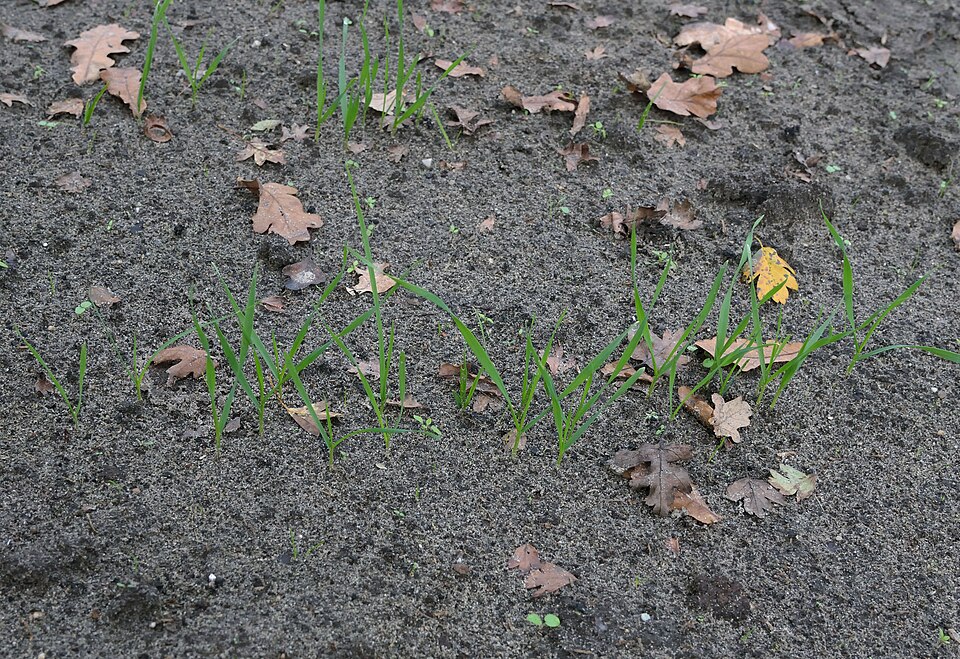
This leaf is of which plant?
Which crop's seed head is this?
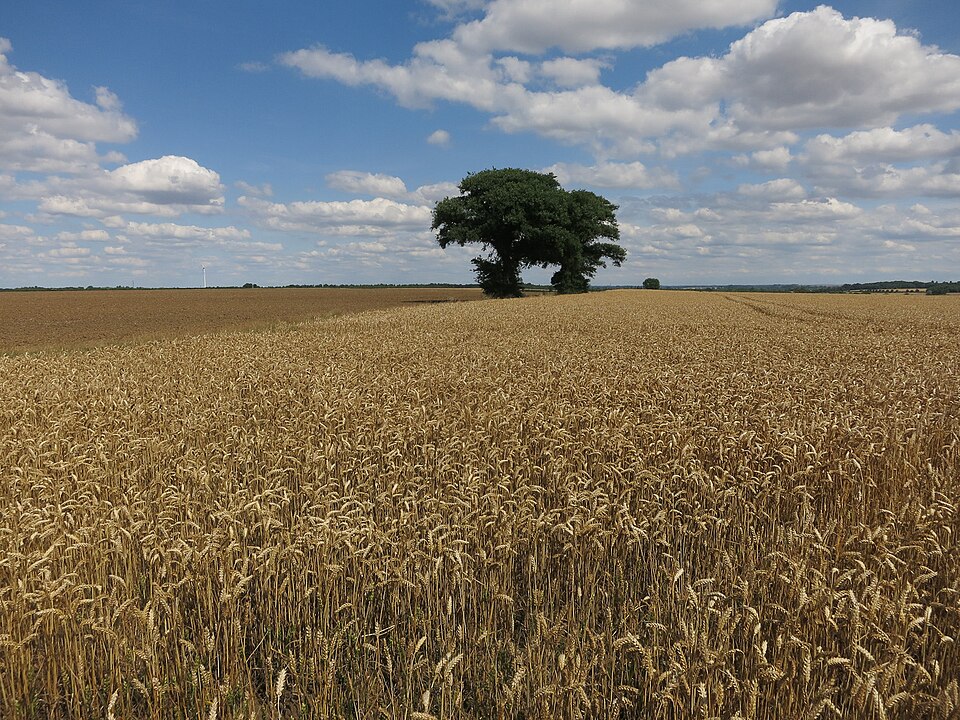
This whole field is which crop, and is it ready?
Honest Limits of This Guide
- The right sowing month is completely different in different countries and even at different altitudes in the same country. This guide gives you the rule instead: sow at the start of your cool season, and do not sow late.
- Wheat varieties are very local, and rust diseases keep changing, so the best variety in your area this year may not be the best in five years. Ask your local agricultural officer, not a book.
- How much water and fertiliser to use cannot be given as one number for the whole world. The three critical watering moments in Stage 4 are the part that travels.
- This guide does not name any pesticide, weedkiller or fungicide product. If you decide to use one, buy only from a licensed dealer and follow the label.
Related Laisha Tools
- Global Market Price Outlook — Check today's price and trend
- Crop Calendar — Build a season-long sowing plan
- Pest & Disease Intelligence — Risk reasoning and a global pest & disease library
- Crop Health — Photo-based first read on a field problem
- Post-Harvest Loss Prevention — Real storage science by crop
- Irrigation Scheduler — A weather-based watering plan
Open the free Applied Agriculture Library in the Laisha app →
Sources
- Bread Wheat: Improvement and Production - Management of dryland wheat (W.K. Anderson, A. Impiglia) — FAO Plant Production and Protection Series No. 30, Food and Agriculture Organization of the United Nations, Rome (source)
- Bread Wheat: Improvement and Production - Management of irrigated wheat (K.D. Sayre) — FAO Plant Production and Protection Series No. 30, Food and Agriculture Organization of the United Nations, Rome (source)
- Bread Wheat: Improvement and Production - Smut diseases (G. Fuentes-Dávila et al.) — FAO Plant Production and Protection Series No. 30, Food and Agriculture Organization of the United Nations, Rome (source)
- Towards integrated commodity and pest management in grain storage — FAO in collaboration with NAPHIRE, Rome (source)
- Purdue Improved Crop Storage (PICS) hermetic bags — Purdue University PICS network (source)
- GBIF Backbone Taxonomy record for Triticum aestivum L. — Global Biodiversity Information Facility (GBIF), Copenhagen (source)
- World Checklist of Vascular Plants (WCVP), the checklist behind Plants of the World Online — Royal Botanic Gardens, Kew (source)
- Flora of China, Volume 22 (Poaceae): Triticum aestivum treatment, pages 442-443 — Science Press, Beijing, and Missouri Botanical Garden Press, St. Louis, published online at eFloras.org by the Missouri Botanical Garden and the Harvard University Herbaria (source)
- Wheat yields (dataset), built on FAOSTAT: Production, Crops and livestock products — Food and Agriculture Organization of the United Nations, with major processing by Our World in Data (source)