 Laisha
AI Operating System for Agriculture
Ask Laisha
Laisha
AI Operating System for Agriculture
Ask Laisha
Dysdercus koenigii, Dysdercus cingulatus and other Dysdercus species Dysdercus koenigii (Fabricius, 1775); Dysdercus cingulatus (Fabricius, 1775)
Cotton stainers are red-and-black bugs that suck the seeds inside developing and open cotton bolls. Their feeding carries fungi into the boll that rot the seed and stain the lint yellow or brown, and their droppings stain it further, so the cotton loses grade. Seeds lose weight, oil and the ability to germinate. Different Dysdercus species cause the same damage in Asia, Africa and the Americas.
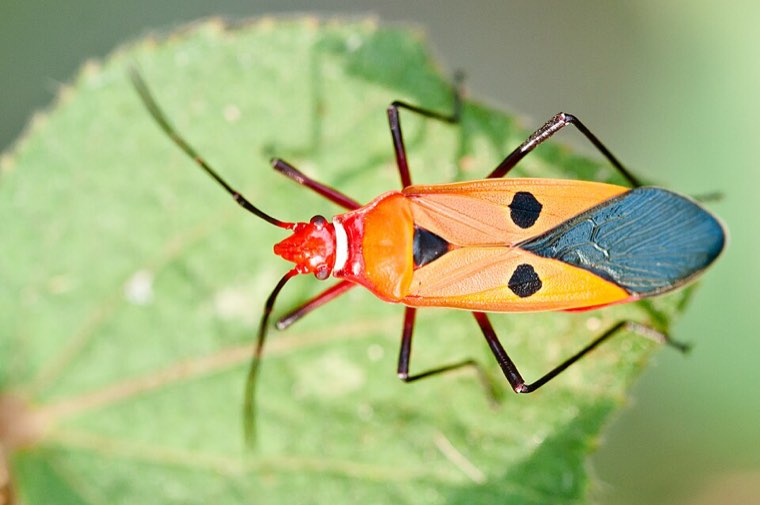
The scientific name of red cotton stainer bugs is Dysdercus koenigii, Dysdercus cingulatus and other Dysdercus species Dysdercus koenigii (Fabricius, 1775); Dysdercus cingulatus (Fabricius, 1775), in the order Hemiptera, family Pyrrhocoridae.
Dysdercus species occur throughout the tropics and subtropics: D. koenigii in South Asia, D. cingulatus from South to South-East Asia and northern Australia, and other species in Africa (for example D. fasciatus and D. superstitiosus) and the Americas (for example D. peruvianus and D. suturellus).
| Region | Status |
|---|---|
| South Asia | D. koenigii and D. cingulatus widespread |
| South-East Asia and Oceania | D. cingulatus |
| Africa | Several species widespread |
| Americas | Several species widespread |
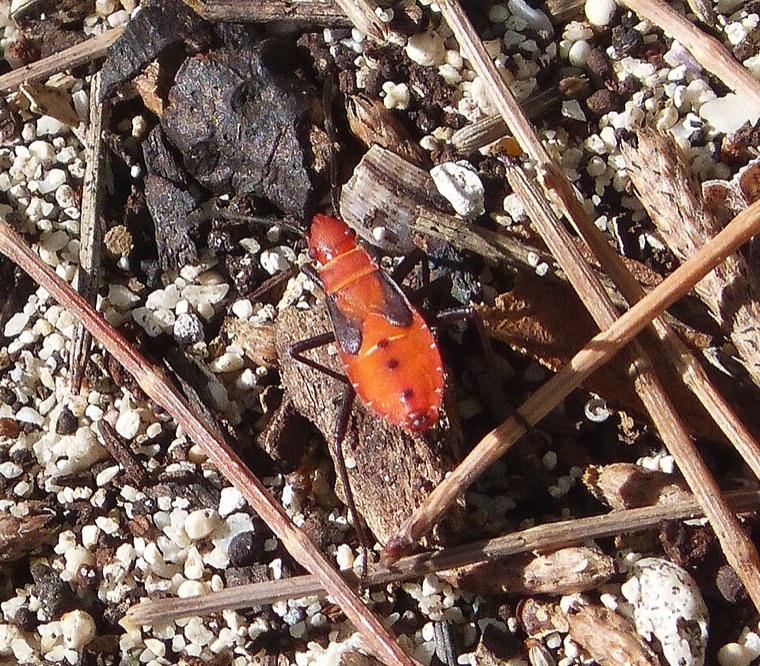
Adults are about 12-18 mm long, slender, bright red to orange with black markings on the wings and white or cream bands across the underside of the abdomen. Nymphs are red and wingless and gather in groups. Eggs are pale yellow and laid in clusters in moist soil or in cracks. The bugs often gather in large numbers on the ground under plants, on fallen seed and on open bolls, and fly up when disturbed.
| Crop stage | What you see |
|---|---|
| Green bolls | Small feeding punctures on bolls; internal boll rot with yellow or brown stained lint and shrivelled seed. |
| Open bolls | Groups of red bugs and nymphs on open cotton; lint stained by droppings and fungi. |
| Seed | Light, shrivelled seeds with low oil content and poor germination. |
Females lay clusters of about 100 eggs in moist soil, under debris or in cracks near host plants. Nymphs pass through five instars, feeding in groups on seeds and fallen bolls. Adults live for several weeks. Populations build up on cotton as bolls open and move to alternate hosts such as kapok trees between seasons. Adults can survive dry periods without breeding when no seeds are available, and then build up quickly when bolls open.
| Stage | Duration | Notes |
|---|---|---|
| Egg (in soil) | About 5-8 days | Clusters of about 100. |
| Nymph (5 instars) | About 3-5 weeks | Gregarious. |
| Adult | Several weeks | Strong fliers; move between hosts. |
Development is fastest in warm, humid weather; egg to adult takes about one to two months.
Several generations per year in the tropics.
Open bolls left long in the field, staggered picking, alternate hosts such as kapok, silk-cotton trees and okra near cotton, and warm, humid weather.
There is no single international threshold. Programmes use counts of bugs per plant or per number of open bolls, which differ between countries; check with your local extension service.
Thresholds are local. They depend on crop price, control cost, variety and natural-enemy activity, so use the figure your local extension service publishes where one exists.
Lint staining lowers cotton grade and price, internal boll rot reduces yield, and damaged seed has lower oil content and germination. Losses are greatest in late-picked crops.
Control works best as a sequence: prevent, monitor, then act only when a threshold or a risk forecast says so, using the least disruptive option that works.
Sprays are directed at nymphs and adults on bolls and the soil surface when counts are high. What is registered differs by country and changes over time; follow the label and your local plant-protection authority.
| Scheme | Group | Mode of action | Notes |
|---|---|---|---|
| IRAC | 3A | Sodium channel modulators (pyrethroids) | Harmful to natural enemies. |
| IRAC | 4A | Nicotinic acetylcholine receptor competitive modulators (neonicotinoids) | Toxic to pollinators. |
Cotton, okra, hibiscus and other mallow-family plants, and seeds of related trees such as kapok and silk-cotton trees (Bombax and Ceiba), which are important breeding hosts between cotton seasons.
How to grow the crop well is the first line of defence. Laisha's free grow guides cover each crop from sowing to harvest:
Written by Laisha from the sources above, in its own words. This page is general reference, not a prescription: confirm identification locally and follow the label and your plant-protection authority.