 Laisha
AI Operating System for Agriculture
Ask Laisha
Laisha
AI Operating System for Agriculture
Ask Laisha
Spodoptera littoralis Spodoptera littoralis (Boisduval, 1833) · formerly or also: Prodenia littoralis
The Egyptian cotton leafworm is a moth whose caterpillars eat the leaves, buds and fruit of cotton, Egyptian clover, maize, tomato, pepper, potato, vegetables and greenhouse flowers across Africa, the Mediterranean and the Middle East. Females lay large egg masses covered with hairs, and the caterpillars can strip fields in outbreak years. It has a long history of insecticide resistance in Egyptian cotton and is a regulated pest for several importing regions.
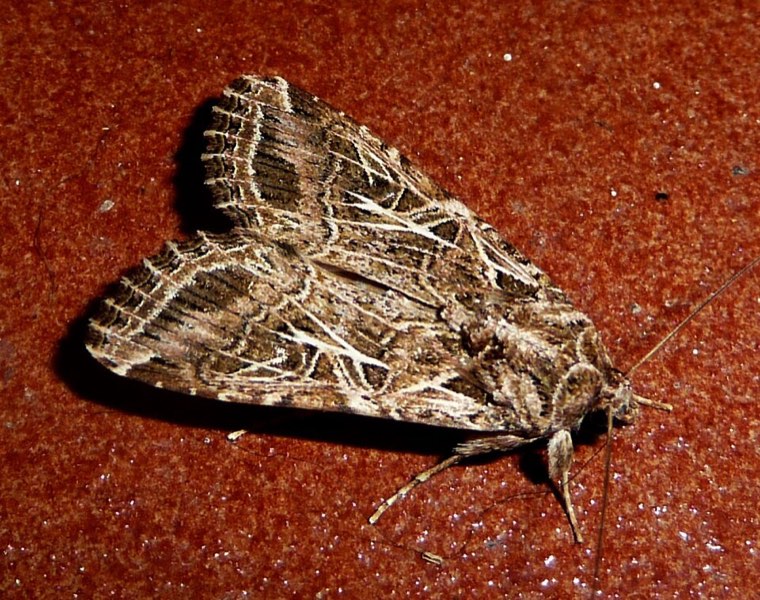
The scientific name of egyptian cotton leafworm is Spodoptera littoralis Spodoptera littoralis (Boisduval, 1833), in the order Lepidoptera, family Noctuidae.
Older or alternative scientific names: Prodenia littoralis.
Found throughout Africa, in southern Europe and Mediterranean islands, and in the Middle East from Türkiye to Iran. East of this range it is replaced by the closely related Spodoptera litura. It is regulated as a quarantine pest in some regions and intercepted on imported plants and produce.
| Region | Status |
|---|---|
| Africa | Widespread; major pest in Egypt and North Africa |
| Southern Europe | Present outdoors in Mediterranean areas and in greenhouses |
| Middle East | Widespread |
| Elsewhere | Regulated; intercepted on trade |
Moths have a wingspan of about 3-4 cm, with brown forewings patterned with pale stripes and a bluish sheen near the base, and whitish hindwings. Eggs are laid in masses of 100-300 or more, covered with brown hair-like scales from the female. Caterpillars grow to about 4-5 cm, vary from grey-green to dark brown, and have a row of paired dark triangular marks along the back and yellowish lines along the sides.
| Crop stage | What you see |
|---|---|
| Young caterpillars | Groups of caterpillars near the egg mass skeletonise leaves, leaving papery windows. |
| Older caterpillars | Large holes in leaves, often eaten down to the veins; feeding at night, hiding in soil or under leaves by day; cutting of seedlings. |
| Fruiting crops | Damage to cotton squares and bolls, tomato and pepper fruit, and flowers of ornamental crops. |
Females lay 1,000-2,000 or more eggs in several masses on leaf undersides. Young caterpillars feed in groups and then disperse; there are six instars. Mature caterpillars pupate in the soil. Development continues through the year in warm regions, with populations moving between Egyptian clover, cotton, maize and vegetables.
| Stage | Duration | Notes |
|---|---|---|
| Egg (masses covered with scales) | About 2-5 days | Hand-collection target. |
| Caterpillar (6 instars) | About 2-4 weeks | Feeds mainly at night when older. |
| Pupa (in soil) | About 1-2 weeks | In an earthen cell. |
| Adult moth | About 1-2 weeks | Night-flying. |
Egg to adult takes about four to five weeks at 25 °C; development slows in cold weather and stops near 13 °C.
Up to seven or more generations per year in Egypt and other warm regions.
Warm temperatures, continuous host crops such as Egyptian clover before cotton, irrigation, and heavy insecticide use that removes natural enemies and selects resistance.
There is no single international threshold. National programmes, especially in Egypt, base action on egg-mass or larval counts per number of plants; values differ by country and crop.
Thresholds are local. They depend on crop price, control cost, variety and natural-enemy activity, so use the figure your local extension service publishes where one exists.
Outbreaks defoliate cotton and other crops and damage fruiting parts, causing heavy yield losses; in greenhouses it damages vegetables and flowers, and interceptions can disrupt trade.
Control works best as a sequence: prevent, monitor, then act only when a threshold or a risk forecast says so, using the least disruptive option that works.
Resistance to organophosphates, pyrethroids and other groups is long established in Egypt and elsewhere; target young larvae and rotate groups. What is registered differs by country and changes over time; follow the label and your local plant-protection authority.
| Scheme | Group | Mode of action | Notes |
|---|---|---|---|
| IRAC | 28 | Ryanodine receptor modulators (diamides) | Rotate. |
| IRAC | 5 | Nicotinic acetylcholine receptor allosteric modulators, site I (spinosyns) | Rotate. |
| IRAC | 15 | Inhibitors of chitin biosynthesis affecting CHS1 (benzoylureas) | Acts on young larvae. |
| IRAC | 22A | Voltage-dependent sodium channel blockers (oxadiazines) | Rotate. |
Very wide: more than 80 plant species of economic importance in about 40 families, including cotton, Egyptian clover (berseem) and alfalfa, maize, rice, soybean, groundnut, tomato, pepper, potato, cabbage, lettuce and ornamentals such as roses, carnations and chrysanthemums.
How to grow the crop well is the first line of defence. Laisha's free grow guides cover each crop from sowing to harvest:
Written by Laisha from the sources above, in its own words. This page is general reference, not a prescription: confirm identification locally and follow the label and your plant-protection authority.