 Laisha
AI Operating System for Agriculture
Ask Laisha
Laisha
AI Operating System for Agriculture
Ask Laisha
Earias vittella and Earias insulana Earias vittella (Fabricius, 1794); Earias insulana (Boisduval, 1833) · formerly or also: Earias fabia (E. vittella)
Spiny and spotted bollworms are small green moths whose spiny caterpillars bore into the growing tips of young cotton and okra, killing the shoots, and later into flower buds, flowers, bolls and okra pods. Damaged buds and young bolls drop, and bored bolls rot or open badly. Earias vittella is the main species in South and South-East Asia, and Earias insulana across Africa, the Mediterranean and the Middle East; both occur in South Asia.
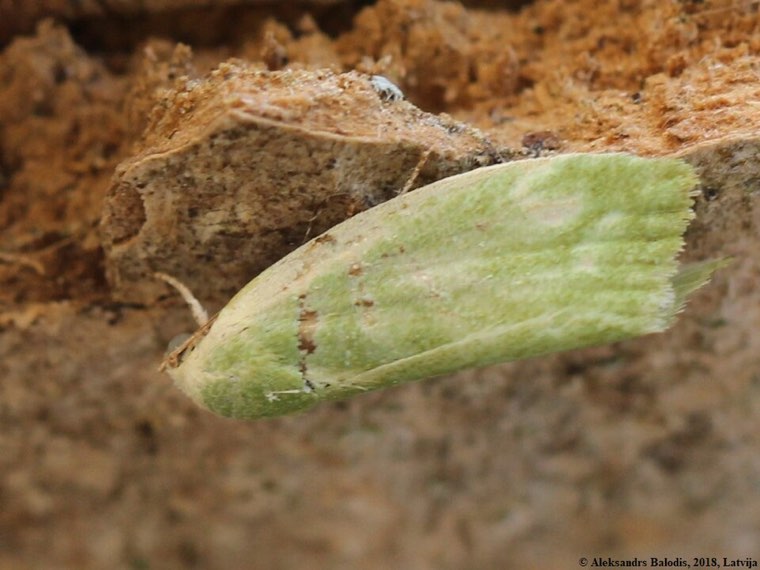
The scientific name of spiny and spotted bollworms is Earias vittella and Earias insulana Earias vittella (Fabricius, 1794); Earias insulana (Boisduval, 1833), in the order Lepidoptera, family Nolidae.
Older or alternative scientific names: Earias fabia (E. vittella).
E. vittella: South and South-East Asia to northern Australia. E. insulana: Africa, southern Europe, the Middle East and South Asia.
| Region | Status |
|---|---|
| South Asia | Both species widespread |
| South-East Asia and Oceania | E. vittella |
| Africa and the Middle East | E. insulana widespread |
| Southern Europe | E. insulana present |
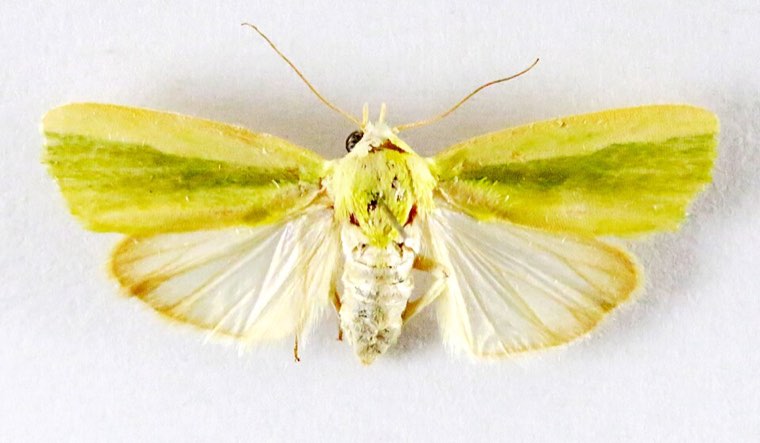
Moths are small, with a wingspan of about 2-2.5 cm. E. vittella has green forewings with a broad white or cream stripe along the front edge; E. insulana has plain green forewings. Caterpillars grow to about 1.5-2 cm, are spindle-shaped and brownish with orange, cream and dark markings and rows of fleshy, finger-like spines. Eggs are tiny, blue-green and crown-shaped, laid singly on buds and leaves.
| Crop stage | What you see |
|---|---|
| Vegetative stage | Shoot tips bored and drooping, then dying ('dead tops'); side shoots grow out and plants become bushy. |
| Squares and flowers | Flower buds and flowers bored with a round hole and droppings; bracts flare and buds drop. |
| Bolls and okra pods | Bolls bored and filled with droppings, rotting or opening early with stained lint; okra pods bored and deformed, unfit for sale. |
Females lay eggs singly on shoot tips, buds, flowers and young bolls. Caterpillars bore in soon after hatching and move from one fruiting part to another. Mature caterpillars spin a boat-shaped, brownish silk cocoon on the plant or on fallen buds and bolls, and pupate inside.
| Stage | Duration | Notes |
|---|---|---|
| Egg | About 3-4 days | Single, on young growth. |
| Caterpillar (5 instars) | About 10-16 days | Bores into shoots, buds and bolls. |
| Pupa (in boat-shaped cocoon) | About 7-10 days | On plants or fallen parts. |
| Adult moth | About 1-2 weeks | Lays 200-400 eggs. |
Egg to adult takes about three to four weeks in warm weather; populations rise during warm, humid periods.
Many overlapping generations; continuous where okra and other hosts are available year-round.
Warm, humid weather; okra and other mallow hosts grown near or before cotton; ratoon cotton and weeds; and loss of natural enemies after broad-spectrum sprays.
There is no single international threshold. South Asian programmes use action levels based on the percentage of damaged shoots, buds or bolls, or caterpillars per plant, which differ between states and countries; check with your local extension service.
Thresholds are local. They depend on crop price, control cost, variety and natural-enemy activity, so use the figure your local extension service publishes where one exists.
Shoot damage delays young crops; loss of buds and bolls reduces cotton yield, and bored bolls give stained, low-grade lint. In okra, bored pods are unmarketable, and losses can exceed half of the crop where unmanaged.
Control works best as a sequence: prevent, monitor, then act only when a threshold or a risk forecast says so, using the least disruptive option that works.
Sprays target eggs and young caterpillars before they bore in. What is registered differs by country and changes over time; follow the label and your local plant-protection authority.
| Scheme | Group | Mode of action | Notes |
|---|---|---|---|
| IRAC | 28 | Ryanodine receptor modulators (diamides) | Rotate. |
| IRAC | 5 | Nicotinic acetylcholine receptor allosteric modulators, site I (spinosyns) | Selective. |
| IRAC | 6 | Glutamate-gated chloride channel allosteric modulators | Rotate. |
| IRAC | 22A | Voltage-dependent sodium channel blockers (oxadiazines) | Rotate. |
Cotton and okra are the main hosts; also hibiscus, roselle and other mallow-family plants and weeds such as Abutilon and Sida species.
How to grow the crop well is the first line of defence. Laisha's free grow guides cover each crop from sowing to harvest:
Written by Laisha from the sources above, in its own words. This page is general reference, not a prescription: confirm identification locally and follow the label and your plant-protection authority.