 Laisha
AI Operating System for Agriculture
Ask Laisha
Laisha
AI Operating System for Agriculture
Ask Laisha
Melanaphis sacchari (Zehntner, 1897) · formerly or also: Aphis sacchari
A small pale yellow to grey aphid that forms dense colonies on the undersides of sorghum and sugarcane leaves. It sucks sap and produces so much honeydew that leaves become shiny and sticky, then covered in black sooty mould; heavy infestations kill leaves, stop grain filling and clog harvesters. Long a pest in Africa and Asia, it exploded on grain sorghum in the Americas from 2013.
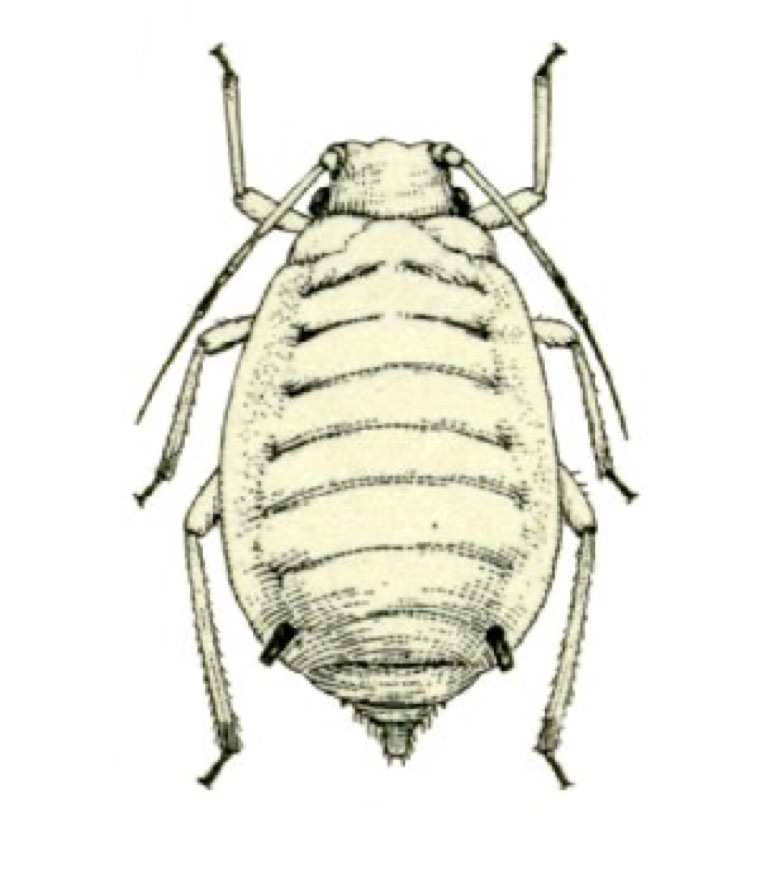
The scientific name of sugarcane aphid is Melanaphis sacchari (Zehntner, 1897), in the order Hemiptera, family Aphididae.
Older or alternative scientific names: Aphis sacchari.
Tropical and subtropical regions worldwide: Africa, South, Southeast and East Asia, Oceania and the Americas. A sorghum-adapted lineage spread rapidly through the sorghum-growing areas of North America and Mexico after 2013.
| Region | Status |
|---|---|
| Africa | Widespread on sorghum and sugarcane |
| Asia | Widespread |
| Americas | Major sorghum pest since 2013 in the US and Mexico; present in South America |
| Oceania | Present |
Wingless adults are about 1.5-2 mm long, pale yellow, tan or grey, with dark cornicles (tail pipes), dark tips to the antennae and dark feet - the dark cornicles help separate them from the yellow sugarcane aphid (Sipha flava). Winged forms have a darker body. Colonies are dense on leaf undersides.
| Crop stage | What you see |
|---|---|
| Seedling and vegetative | Colonies on the undersides of lower leaves; purple-red discoloration in some hybrids; shiny honeydew on the leaves below. |
| Boot to flowering | Colonies spread up the plant and into the panicle; leaves turn yellow, red or brown and die; sooty mould covers leaves. |
| Grain fill to harvest | Poor grain fill and lower yield; sticky honeydew clogs combine harvesters; in sugarcane, honeydew and transmission of sugarcane yellow leaf virus. |
In most regions all individuals are females that reproduce without mating, giving birth to live young, so populations can double in a few days in warm weather. Winged adults appear when colonies are crowded and spread on the wind to new fields, often over long distances. In regions with mild winters, the aphid survives on Johnson grass and sugarcane and moves into sorghum each spring.
| Stage | Duration | Notes |
|---|---|---|
| Nymph (4 instars) | About 4-7 days in warm weather | Born live. |
| Wingless adult | About 2-4 weeks | Produces several nymphs a day. |
| Winged adult | About 2-4 weeks | Disperses to new fields. |
Populations grow fastest at warm temperatures (about 20-30 °C) and decline in very hot, dry weather or heavy rain.
Many overlapping generations wherever host plants are available year-round, including Johnson grass and sugarcane.
Warm weather, overwintering on Johnson grass, sugarcane or ratooned sorghum, late planting, drought-stressed crops, and broad-spectrum sprays that remove natural enemies.
There is no single internationally agreed numeric threshold. Regional extension services publish action levels based on the percentage of plants infested with aphid colonies or on aphids per leaf, varying by crop stage; these were still being refined in the Americas after 2013, so use the local figure.
Thresholds are local. They depend on crop price, control cost, variety and natural-enemy activity, so use the figure your local extension service publishes where one exists.
Yield losses of 30-50% or more have been reported in susceptible sorghum hybrids under heavy infestation, plus harvest problems from sticky honeydew; in sugarcane, losses arise from leaf damage and virus transmission. Seedlings attacked early can be killed outright, and forage sorghum loses quality as well as yield.
Control works best as a sequence: prevent, monitor, then act only when a threshold or a risk forecast says so, using the least disruptive option that works.
Selective insecticides with good coverage of leaf undersides are used when local thresholds are exceeded; some broad-spectrum products flare populations by killing natural enemies. What is registered differs by country and changes over time; follow the label and your local plant-protection authority.
| Scheme | Group | Mode of action | Notes |
|---|---|---|---|
| IRAC | 4C | Nicotinic acetylcholine receptor competitive modulators (sulfoximines) | Selective; widely used in sorghum where registered. |
| IRAC | 4D | Nicotinic acetylcholine receptor competitive modulators (butenolides) | Selective option where registered. |
| IRAC | 9D | Chordotonal organ TRPV channel modulators (pyropenes) | Selective option where registered. |
Sorghum (grain, forage and sweet), sugarcane, Johnson grass and other grasses; occasionally millets and rice.
How to grow the crop well is the first line of defence. Laisha's free grow guides cover each crop from sowing to harvest:
Written by Laisha from the sources above, in its own words. This page is general reference, not a prescription: confirm identification locally and follow the label and your plant-protection authority.