 Laisha
AI Operating System for Agriculture
Ask Laisha
Laisha
AI Operating System for Agriculture
Ask Laisha
Peronosclerospora sorghi (W. Weston & Uppal) C.G. Shaw, 1978 (with P. philippinensis, P. maydis, P. sacchari and related species) · formerly or also: Sclerospora sorghi
Downy mildews are among the most destructive diseases of maize in tropical Asia and parts of Africa and the Americas. Infected seedlings turn pale and striped, a white down grows on the leaves in the early morning, and plants are stunted with malformed tassels and few or no ears. Several Peronosclerospora species are involved, and the disease is managed with resistant hybrids, seed treatment, a maize-free period and removal of infected plants.
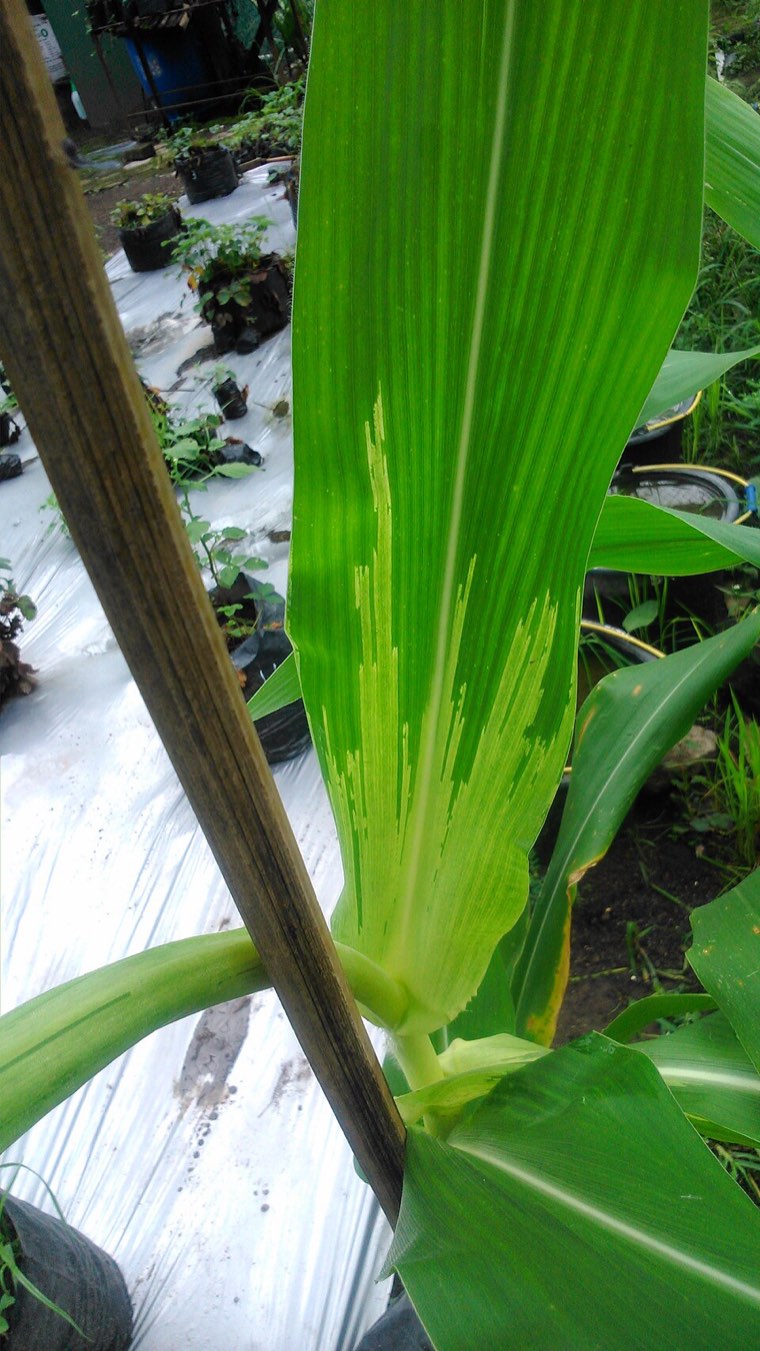
Downy mildews of maize and sorghum is caused by Peronosclerospora sorghi (W. Weston & Uppal) C.G. Shaw, 1978 (with P. philippinensis, P. maydis, P. sacchari and related species), an oomycete (downy mildew), not a true fungus (order Peronosporales (Sclerosporales), family Sclerosporaceae).
Older or alternative scientific names: Sclerospora sorghi.
Most severe in South and Southeast Asia (P. philippinensis in the Philippines and Indonesia, P. maydis in Java, P. sorghi widely), and present in Africa, the Americas and Australia (P. sorghi). Several species are regulated quarantine pests in regions where they are absent.
| Region | Status |
|---|---|
| Southeast Asia | Widespread; the main maize disease in some countries |
| South Asia | P. sorghi and other downy mildews present |
| Africa | P. sorghi widespread on sorghum and maize |
| Americas and Oceania | P. sorghi present; other species regulated |
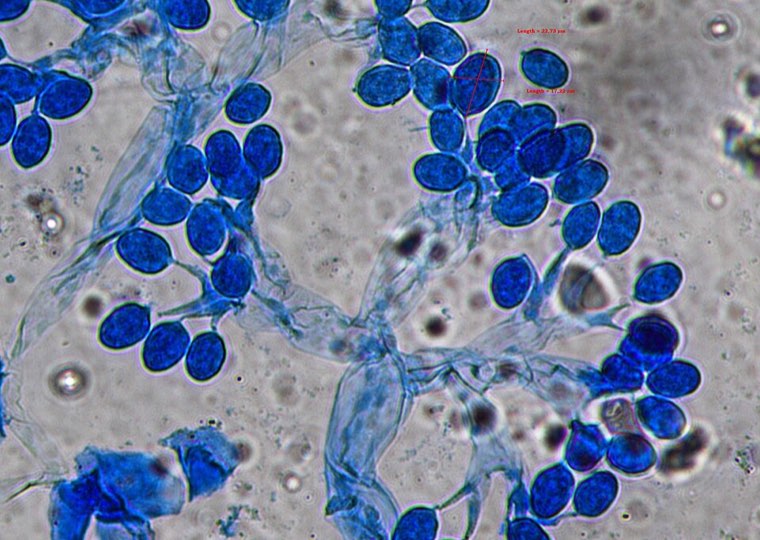
The pathogens grow systemically inside the plant and, on humid nights, produce white downy conidiophores bearing conidia on both leaf surfaces; conidia are wind-dispersed and short-lived. P. sorghi also forms oospores in leaf tissue that survive in soil; Asian species mainly survive on living hosts.
| Crop stage | What you see |
|---|---|
| Seedling (systemic infection) | Pale green to yellow stripes or chlorosis spreading from the base of leaves; white down on leaves early in the morning; stunted, narrow, upright leaves. |
| Vegetative growth | Pale or striped leaves; in sorghum, leaves shred along the stripes as oospores form; local lesions on older leaves from secondary infections. |
| Tasselling and ear formation | Malformed or leafy tassels, small or no ears, barren plants; early death of heavily infected plants. |
Infection starts from oospores in soil (P. sorghi) or from conidia blown from infected maize, sorghum and grasses. Seedlings infected in the first weeks become systemically diseased and produce conidia every humid night, spreading the disease through overlapping plantings. Continuous maize cropping keeps the Asian species alive year-round.
| Stage | Duration | Notes |
|---|---|---|
| Survival | Oospores for years (P. sorghi); living hosts for other species | Including wild grasses. |
| Conidia production | Overnight at high humidity, about 20-25 °C | Wind-dispersed; short-lived. |
| Infection of young plants | Hours of leaf wetness | Seedlings in the first 2-3 weeks most susceptible. |
| Systemic colonisation | Through the season | Plants rarely recover. |
Conidia form and infect on humid nights with dew and temperatures of about 20-25 °C; hot, dry weather limits spread.
Continuous cycles where maize is planted repeatedly through the year.
Overlapping or year-round maize planting, nearby infected maize, sorghum or sugarcane, humid nights with dew, susceptible hybrids and untreated seed.
There is no numeric economic threshold; systemically infected plants do not recover. Management relies on preventive measures before and at sowing, plus removal of infected seedlings.
Thresholds are local. They depend on crop price, control cost, variety and natural-enemy activity, so use the figure your local extension service publishes where one exists.
Yield losses of 40-100% have been reported in susceptible maize in Southeast Asia in epidemic seasons; sorghum downy mildew causes heavy losses in Africa and South Asia where susceptible varieties are grown.
Control works best as a sequence: prevent, monitor, then act only when a threshold or a risk forecast says so, using the least disruptive option that works.
Systemic seed treatments protect seedlings in high-risk areas where registered; populations resistant to the long-used phenylamide treatment are widespread in parts of Southeast Asia. What is registered differs by country and changes over time; follow the label and your local plant-protection authority.
| Scheme | Group | Mode of action | Notes |
|---|---|---|---|
| FRAC | 4 | Phenylamides (seed treatment) | Resistance documented in Southeast Asia. |
| FRAC | 49 | Oxysterol binding protein inhibitors (seed treatment) | Newer option where registered. |
| FRAC | 40 | Carboxylic acid amides | Used where registered. |
Maize, sorghum, sugarcane and wild grasses. P. sorghi attacks maize and sorghum; P. philippinensis maize, sorghum and sugarcane; P. maydis and P. sacchari mainly maize and sugarcane; wild sorghums and grasses carry the pathogens between crops.
How to grow the crop well is the first line of defence. Laisha's free grow guides cover each crop from sowing to harvest:
Written by Laisha from the sources above, in its own words. This page is general reference, not a prescription: confirm identification locally and follow the label and your plant-protection authority.