How to Grow Sugarcane
Saccharum officinarum · Also called: sugar cane, sugarcanes, cane, canes, ganna, ganderi, ganderi cane, ikshu
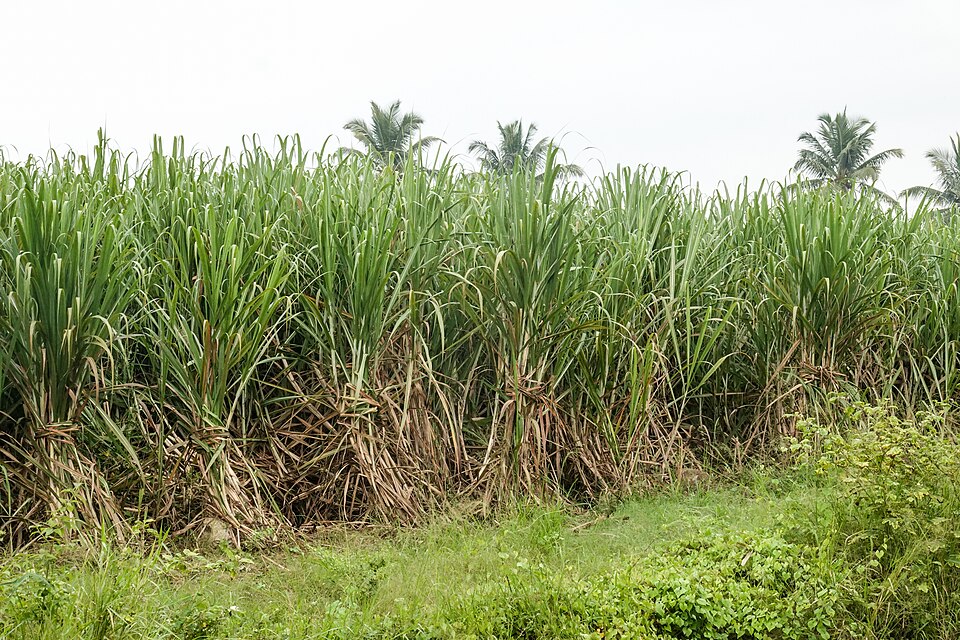
Photo: Timothy A. Gonsalves, CC BY-SA 4.0 (Wikimedia Commons)
By sheer weight of harvest, sugarcane is the single biggest crop grown on Earth, ahead of maize, wheat and rice in tonnes produced every year, even though it covers far less land than any of them because its yield per hectare is so much higher. It is a top-ten crop in 46 of the world's 195 countries, and the single biggest crop of all in six of them: the Bahamas, Barbados, Belize, Cuba, Fiji and Mauritius. It provides roughly four-fifths of the world's sugar supply, the rest coming from temperate sugar beet, and it does three genuinely different jobs at once: it is the raw material for the sugar in almost everything sweet a person eats or drinks; it is, in Brazil above all, a genuine liquid-fuel crop, fermented into ethanol that runs a meaningful share of that country's cars; and, milled the old way into jaggery, gur or panela rather than crystallised sugar, it is a real, unrefined staple sweetener and household income source for tens of millions of smallholder families across South Asia and Latin America who will never sell a single stalk to an industrial sugar mill.
Global Importance
Sugarcane is grown on a real, if smaller-than-you'd-expect, area of the world's cropland — about 26 million hectares, a fraction of wheat's or maize's footprint — precisely because its yield per hectare is so enormous compared with an annual grain crop. Two countries, Brazil and India, between them grow more than three-fifths of the entire world's cane, and its true value is spread across three very different demands: industrial sugar milling, biofuel and jaggery/gur/panela production.
Market Segments
Sugarcane is not one product any more than barley is in this library. Almost the entire plant's value sits inside its stalk as stored sucrose, but what happens to that sucrose after harvest genuinely diverges into different value chains, and — as with barley's malting-versus-feed decision — knowing which one you are growing for shapes real choices you make long before harvest.
Growth Habit
Sugarcane breaks almost every habit rule the rest of this library's grain and legume crops follow, and three real facts about its habit shape this entire guide: it is a perennial grown from a cutting, not an annual grown from true seed; it is genuinely one of the most water- and nutrient-hungry crops in this library, in exchange for genuinely enormous yield; and after the first harvest, the same plant very often regrows and is harvested again as a ratoon crop, sometimes for years.
Growing Sugarcane, Stage by Stage
- 1. Choose and prepare the land — Pick deep, well-drained land with real water access, and prepare a deep, open seedbed — sugarcane's root system and multi-year lifespan both reward thorough land preparation done once, properly, before planting.
- 2. Select and treat healthy seed cane (setts) — Buy or select seed cane from a known, healthy, disease-free source, cut it into two-to-three-budded setts, and treat the cut cane with hot water or another real local method before planting — because sugarcane's worst diseases travel forward almost entirely inside the cutting itself.
- 3. Plant the setts — Lay setts end to end along the furrow with buds facing sideways, cover them at the right depth, and plant in your own real local window rather than by a fixed calendar date.
- 4. Germination and tillering — building the stool — Watch for sprouting in the first month, then let the plant build a clump of multiple stalks from each original sett through tillering — this early stage decides how many millable stalks the field will carry all season.
- 5. Feed the crop — nitrogen, and the potassium this crop is genuinely hungry for — Sugarcane needs a real, substantial nitrogen programme like any grass, but it is unusually demanding of potassium specifically, needed most heavily in the months just before harvest — and a ratoon crop genuinely needs more fertiliser than the plant crop that came before it, not less.
- 6. Water — this crop's real thirst, and its two critical windows — Sugarcane needs more water across a season than almost any other crop in this library, most critically during tillering and grand growth — and a deliberate, managed dry-down in the final weeks before harvest genuinely helps, rather than harms, sucrose accumulation.
- 7. Weeds — Weeds cost this crop the most in its first three to four months, before the canopy closes — after that, a well-grown cane crop shades out most competition on its own.
- 8. Insect pests, stage by stage — Stalk borers are the single most damaging insect group in sugarcane worldwide, tunnelling into the stem itself and causing a dead heart in young cane or hollowed, weakened stalks in older cane — and, as with every crop in this library, natural enemies and timely planting matter more than routine spraying.
- 9. Diseases, stage by stage — Sugarcane's worst diseases travel forward mainly in the seed cane itself, and one of them, ratoon stunting disease, produces no visible symptoms at all — which is exactly why Stage 2's healthy-seed-cane discipline matters as much as anything a spray can do later.
- 10. Ripening — bringing the crop to peak sucrose, and knowing when to harvest — Ripening is a real, distinct final phase in which the plant shifts from building new growth to storing sucrose in the stalk — helped along by a managed dry spell — and harvest timing is a genuine trade-off between waiting for peak sweetness and losing the crop to flowering, lodging or a shrinking crushing window.
- 11. Harvest, and why cane is never stored: burning, cutting and the race against time — However it is cut, sugarcane has to reach the mill and be crushed within hours, not days, because sucrose in a cut stalk begins converting to less valuable sugars from the moment of cutting — and the choice between burning and green harvesting carries a real, disclosed environmental and health cost on one side of the balance.
- 12. Ratoon management — the crop's second, third and later lives — After the first harvest, the same root system very often resprouts from the cut stubble into a fresh crop called a ratoon, with genuinely lower establishment cost than replanting but genuinely higher nutrient needs and, usually, a real yield decline that eventually makes replanting the better choice.
- 13. Grade it and sell it well — Know roughly what your own cane's real sucrose content is likely to be before you deliver it, understand how your own market actually prices cane — by weight alone, or by a real recovery or CCS formula — and remember that this guide never prints a price, because any price it printed would be wrong within weeks.
Fertiliser Programme
Sugarcane is fed differently from every other crop in this library in one specific, important way: it is genuinely more potassium-hungry than nitrogen-hungry relative to most cereals, and a ratoon crop on the same land needs MORE fertiliser than the plant crop that came before it, not less — the opposite of what land preparation and seed cost alone would suggest.
Common Problems & Troubleshooting
If you see: A stalk split lengthwise shows reddened internal tissue, often interrupted by characteristic white cross-bands, with a sour, fermented smell; externally the same stalk may show drooping or drying upper leaves and sound hollow when tapped.
It likely means: Red rot, caused by the fungus Colletotrichum falcatum — one of the most economically damaging cane diseases in Asia specifically, and a disease with a real history of destroying whole popular varieties once a new, more virulent strain of the fungus emerges.
Do this: Nothing will cure an already-infected stalk this cycle. Remove and destroy visibly affected stalks and stubble rather than leaving them in the field or ratooning that stool forward.
If you see: A long, thin, black or dark grey whip-like structure emerging from the growing point at the top of a stalk, covered in a fine black powder, often alongside thinner stalks and excessive tillering on the same stool.
It likely means: Sugarcane smut, caused by the fungus Sporisorium scitamineum.
Do this: Rogue out and destroy affected whips as soon as they are seen, cutting and removing them carefully before the black spore mass ruptures and spreads spores to neighbouring healthy stools or onto cutting tools and equipment.
If you see: A fine, irregular mottling of light and dark green patches on young, actively growing leaves, most visible before the stalk is fully developed.
It likely means: Mosaic, caused by Sugarcane mosaic virus or a related virus, spread mainly through infected seed cane and by aphids moving between plants.
Do this: Nothing will cure an already-infected plant. Remove badly affected plants from a seed-cane nursery specifically, since nursery cane carries the problem forward into a whole future crop.
If you see: A general, otherwise unexplained decline in vigour and yield across successive ratoon cycles on the same stubble, with no clear disease, pest or nutrient symptom visible to the eye — sometimes a faint reddish tinge visible only in the vascular tissue right at the cut base of a stalk under close inspection.
It likely means: Possibly ratoon stunting disease (RSD), caused by the bacterium Leifsonia xyli subsp. xyli — a real, economically significant disease that produces no reliable visible symptom in the growing plant, and can only be confirmed by laboratory testing.
Do this: Do not assume this is simply 'normal ratoon decline' or a nutrient problem without checking further, since RSD's whole danger is that it looks like nothing in particular.
If you see: The central, youngest leaves of a young shoot wilt, turn brown and can be pulled out easily by hand, while the outer leaves of the same shoot remain green.
It likely means: A 'dead heart', caused by a stalk-borer larva (Chilo, Diatraea, Eldana or a related species depending on your region) tunnelling into and killing the shoot's growing point.
Do this: Remove and destroy affected shoots where practical, since the growing point is already dead and cannot recover, and doing so removes the larva along with it before it can move to a neighbouring shoot.
If you see: Older leaves showing yellowing and a scorched, dying appearance starting at the tip and margins and working inward, while younger leaves still look comparatively healthy.
It likely means: Potassium deficiency — a real, specific and, in this crop, genuinely common nutrient disorder, given how potassium-hungry sugarcane is relative to most crops in this library.
Do this: Review your own fertiliser programme honestly against Stage 5 and fertiliserProgramme above before assuming this is disease or drought: has potassium genuinely been applied at a real local rate, and was it timed with the crop's peak demand window roughly four to two-and-a-half months before harvest in mind?
If you see: A feathery, plume-like flower head (an 'arrow' or tassel) emerging from the top of mature stalks, generally as days shorten toward the end of the growing season.
It likely means: Flowering (arrowing) — a normal, real reproductive event in this crop, but one that is generally unwelcome in a sugar-focused planting because it is associated with reduced sucrose accumulation in the stalk below the flower head.
Do this: Where a significant share of the field has begun arrowing, do not delay harvest much further on that field chasing additional ripening, since sucrose accumulation below the flower head is already being compromised.
If you see: Areas of tall, heavy cane leaning or lying flat on the ground before harvest, often after strong wind or heavy rain, or where nitrogen was applied heavily and late.
It likely means: Lodging, generally driven by a combination of excess or late nitrogen, tall variety habit, and weather, worsened by any potassium shortage that has already weakened stalk strength.
Do this: Nothing will stand a lodged cane crop back up. Prioritise harvesting lodged sections promptly, since lodged, ground-contact stalks are at real elevated risk of rot and of the crushing-urgency problem described in Stage 11 getting worse as the crop becomes harder to cut cleanly.
Real Farm Economics
Sugarcane's real economics are shaped by its multi-year ratoon structure in a way no single-season crop in this library shares: a plant crop carries a genuinely higher establishment cost, spread and partly recovered across the several ratoon harvests that typically follow it on the same land, before replanting resets the cycle.
Yield & Market Value
Growing the crop is only part of the job. The last part is knowing what a normal harvest looks like, and knowing what your cane is actually worth before you agree a price with anybody — and for this specific crop, that second part carries a real, honest complication worth stating plainly.
Remember It This Way
If you forget every other page of this guide, keep these lines. They are the whole crop, in order, short enough to carry in your head.
- You are not planting a seed. You are planting a cutting of the plant itself.
- A sick parent plant makes a sick field, so start with healthy seed cane.
- This crop drinks harder than almost anything else you grow — protect water at tillering and grand growth.
- Ease off water on purpose before harvest. A drier finish makes a sweeter stalk.
- Feed it potassium like you mean it, not as an afterthought behind nitrogen.
- Feed the ratoon more than the plant crop before it, never less.
- The clock starts the moment it is cut — crush it in hours, not days.
- A whip, a mottled leaf, or a quietly fading stool: each one is a real disease.
- Burning eases cutting but dirties the air. Know that trade-off honestly.
- The world sugar price on your phone is not your mill's real cane price.
Test Yourself: Identification
You are shown a tall, dense stand of thick, jointed grass stalks over two metres high, growing in a clump, with long, strap-like leaves arching from each stalk. Is this sugarcane, maize, sorghum or bamboo?
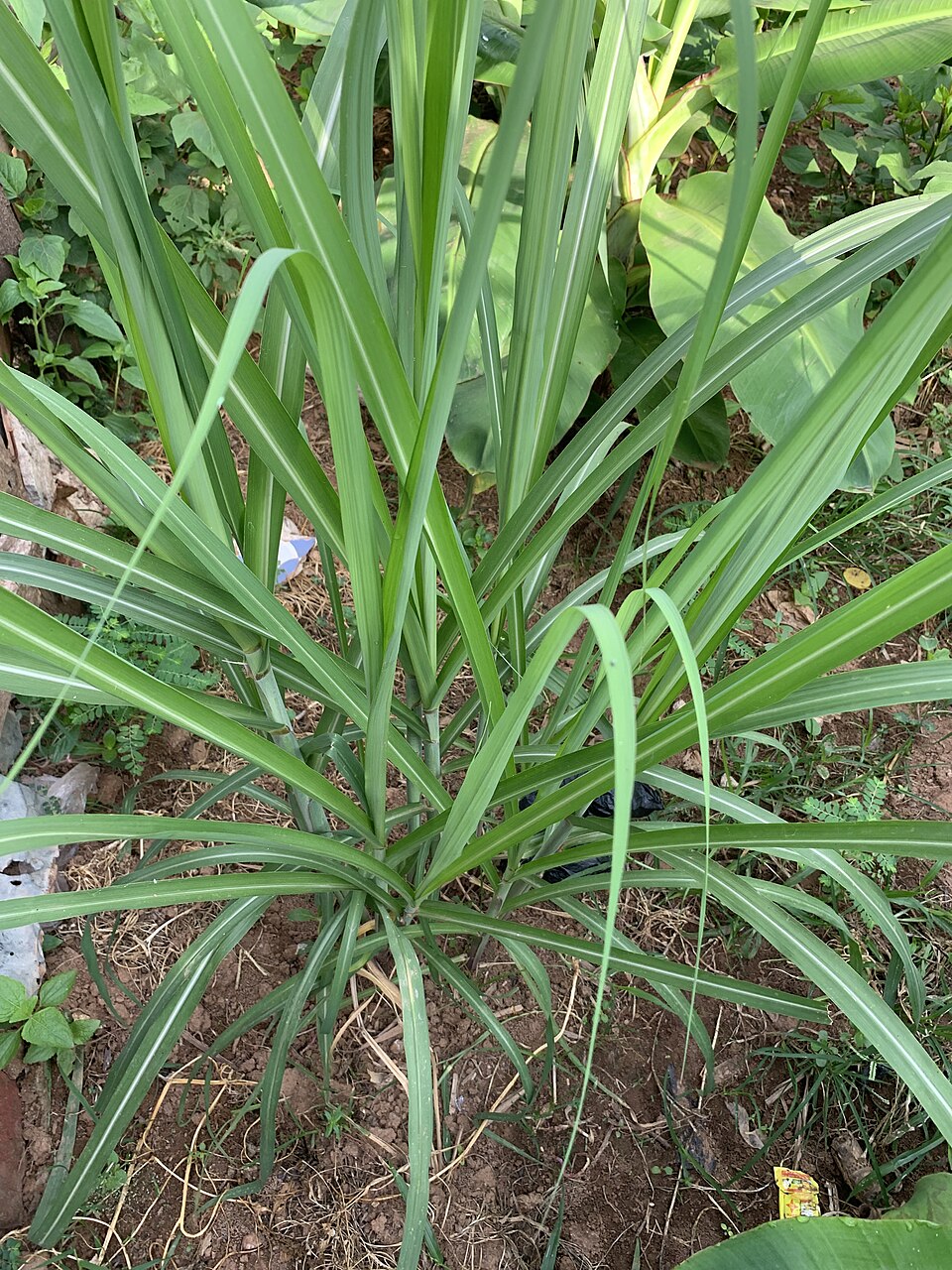
This young planting shows several short, grassy shoots emerging close together from what was clearly one original planted stalk cutting, with no thick cane stem visible yet. What growth stage is this, and why does it matter?
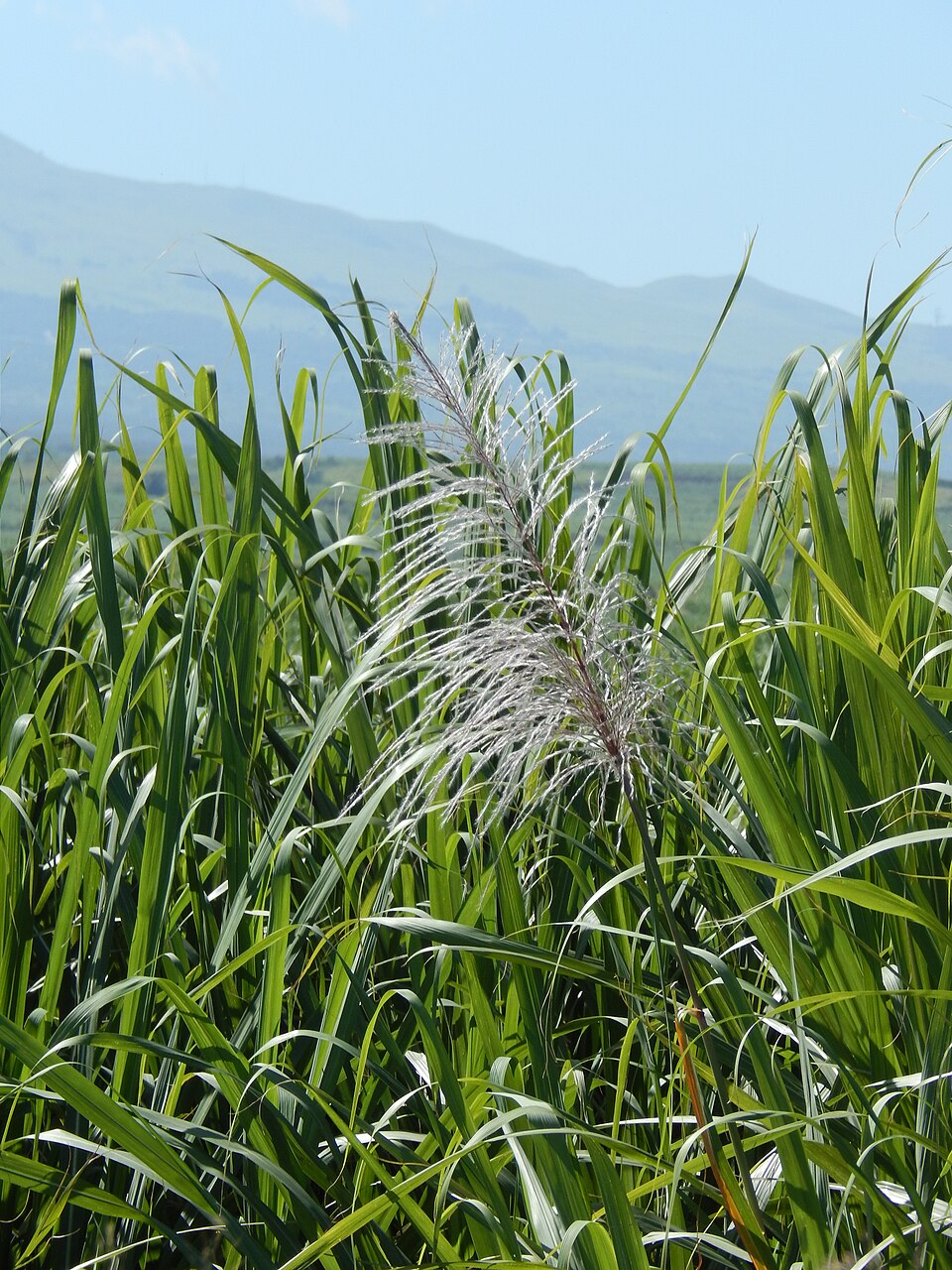
A feathery, plume-like flower head is emerging from the top of several mature cane stalks. What is this, and what does it signal to a grower?
Honest Limits of This Guide
- This session's live connection to FAOSTAT's own public query API returned an HTTP 521 'unknown status' error when this guide was written, verified directly this session — the identical failure this library's barley guide encountered independently. The world and country production figures in this guide are therefore drawn from a secondary compilation cross-checked across independent sources that each cite FAOSTAT by name, rather than read directly from FAOSTAT's own published file the way this library's groundnut and potato guides were able to. Country tonnages, especially India's, are given as rounded ranges rather than one precise figure, because different recent-season compilations genuinely disagree with each other by tens of millions of tonnes for the same country.
- This guide's biggestProducers list is honestly shorter than this library's barley or groundnut guides' own country lists, because this session could only find and cross-check solid, reasonably consistent figures for around eleven countries rather than twenty. That is a real gap in what this session could verify, not a claim that only eleven countries grow meaningful sugarcane.
- Laisha's own curated leaf-and-plant visual diagnostic reference does not yet contain sugarcane-specific entries at the time this guide was written. The disease and pest descriptions in this guide are grounded in the published plant pathology and entomology literature named in its sources, not in that internal reference file.
- This guide could not find an adequately licensed, freely reusable Wikimedia Commons photograph specifically showing red rot's internal stalk symptoms, sugarcane mosaic virus's leaf mottling, a borer's dead-heart symptom, or ratoon stunting disease (which in any case produces no reliable visible symptom to photograph at all). Rather than illustrate these with a stand-in image of a different problem, this guide describes them in words and names the real pathogen or pest for each, exactly as this library's other guides do when a genuinely matching photograph cannot be verified. The dead-heart identification question instead uses a genuine young-cane photograph for comparison, saying so plainly rather than implying it shows the symptom itself.
- The farm economics figures in this guide come from two real, published Indian cost-of-cultivation studies from two specific districts and seasons, given honestly as a real illustration of plant-versus-ratoon economics rather than a global forecast. Brazil's, Australia's and other major mechanised cane economies' own real cost structures would look genuinely different, even where the underlying agronomic lesson (ratooning is structurally cheaper than replanting) still holds.
- The fertiliser figures in this guide are drawn from South Africa's own published fertiliser recommendations for sugar cane, a real, specific national reference, not a universal target. Take your own actual fertiliser programme, especially your potassium rate, from your own local extension service or cane research institute, which will differ with your soil, variety and climate.
- This guide does not name any pesticide, fungicide or herbicide product or compound. It names mode-of-action groups and the toxicity colour-band principle only. If you decide to use a product, buy only from a licensed dealer and follow the label on the actual package.
- The toxicity colour band is a principle, not a fixed chemical-to-colour list. The same active substance can sit in a different band in a different formulation or country, and registrations change. Read the real triangle on the real package.
- This guide's yieldAndMarketValue section states plainly that Laisha's live global commodity price for 'sugar' is a world refined/raw sugar market reference, not the price a mill actually pays a farmer for raw cane, which in several major producing countries is set by a separate, real, government-linked or quality-linked formula (such as India's FRP or Australia's CCS system) rather than tracking the world sugar price directly. A farmer who relies on the world sugar price alone as 'the' cane price will be misled by exactly the gap this guide is trying to disclose rather than hide.
- Seed-cane quality control in this crop leans on disease-freedom far more than on a single published germination-percentage standard, unlike barley, groundnut, common bean or potato seed in this same library. This is stated as a genuine structural difference in seedGradingAndCertification above, not glossed over as if sugarcane had the same kind of certified-seed system those other crops do.
Related Laisha Tools
- Global Market Price Outlook — Check today's price and trend
- Crop Calendar — Build a season-long sowing plan
- Pest & Disease Intelligence — Risk reasoning and a global pest & disease library
- Crop Health — Photo-based first read on a field problem
- Soil Health — Track soil test results across seasons
- Irrigation Scheduler — A weather-based watering plan
Open the free Applied Agriculture Library in the Laisha app →
Sources
- GBIF Backbone Taxonomy species-match record for Saccharum officinarum L. (usage key 2703912) — Global Biodiversity Information Facility (GBIF), Copenhagen (source)
- EPPO Global Database entry for Saccharum officinarum (EPPO code SACOF) — European and Mediterranean Plant Protection Organization (EPPO), Paris (source)
- Global Crop Priority Research (globalCropPriorityResearch.json), Sugarcane entry — Laisha internal reference data set, built on FAOSTAT (source)
- FAOSTAT public query API (FENIX services), live query attempted for sugar cane world production — Food and Agriculture Organization of the United Nations (FAOSTAT) (source)
- Sugarcane — production figures, botanical description, ratoon cropping, pre-harvest burning and processing sections, as compiled from FAOSTAT-derived and other cited secondary sources — Underlying production data: Food and Agriculture Organization of the United Nations (FAOSTAT), compiled via Wikipedia's sugarcane article after this session's own live connection to FAOSTAT's API failed (source)
- Sugar and sugarcane production by country, 2023 figures, as compiled from FAOSTAT by World Population Review — Underlying data: Food and Agriculture Organization of the United Nations (FAOSTAT), compiled by World Population Review (source)
- Brazil Agricultural Production: Average Yield: Sugarcane — CEIC Data, compiled from Brazilian national agricultural statistics (source)
- Commercial Cane Sugar (CCS) and cane payment system documentation — Sugar Research Australia (SRA) and the Australian sugar industry's published cane pricing guides (source)
- Fair and Remunerative Price (FRP) for Sugarcane, and State Advised Price (SAP) mechanism — Cabinet Committee on Economic Affairs (CCEA), Government of India, on the recommendation of the Commission for Agricultural Costs and Prices (CACP) (source)
- Sugarcane seed production, seed standard and seed certification, and related published research on tiered seed-cane nursery systems — Published agronomic research on sugarcane seed-cane production and certification systems (source)
- Hot-water treatment of seed cane, and meristem-tip tissue culture for disease-free sugarcane planting material — Published agronomic and plant pathology research on sugarcane clean-seed production methods (source)
- Annex 1 — Fertilizer recommendations for sugar cane — Food and Agriculture Organization of the United Nations (FAO), reproducing South Africa's own published sugar cane fertiliser recommendations (source)
- Published agronomic research on sugarcane potassium uptake timing and nitrogen-potassium interaction — Peer-reviewed agronomic research on sugarcane nutrient uptake dynamics (source)
- Sugarcane growth stages: sprouting, tillering, grand growth and maturation, and real planting-material specifications (seed rate, sett bud number, planting depth) — Compiled agronomic reference material on sugarcane growth staging and planting-material specification (source)
- Published research and technical guidance on sugarcane water requirement, crop coefficients and critical irrigation timing — Compiled agronomic and irrigation-engineering reference material, including ASCE's published civil-engineering guidance on sugarcane water demand (source)
- Red rot of sugarcane (Colletotrichum falcatum Went): epidemics, pathogen variation, host resistance and management, and the real 1932-1942 Indian variety-breakdown history — Compiled plant pathology research, including CABI Reviews and Indian Phytopathology's published historical and epidemiological accounts (source)
- Sugarcane Smut, Caused by Sporisorium scitamineum, a Major Disease of Sugarcane: A Contemporary Review — Phytopathology (American Phytopathological Society journal) (source)
- Sugarcane Mosaic Virus, symptoms and yield impact — Compiled plant virology reference material, including ScienceDirect Topics' overview of Sugarcane mosaic virus (source)
- Ratoon Stunting Disease of Sugarcane: A Review Emphasizing Detection Strategies and Challenges — Phytopathology (American Phytopathological Society journal) (source)
- Sugarcane borers: species, distribution, damage and management options — Journal of Pest Science (source)
- Pre-harvest sugarcane burning: air-quality and public-health impacts, and Brazil's Green Protocol phase-out — Compiled from peer-reviewed environmental-health research (including published studies on Brazilian and Indian cane-burning air quality) and public-interest reporting (Earthjustice, ProPublica, Sierra Club) on Florida's Everglades Agricultural Area burning controversy (source)
- Quality Indexes and Performance in Mechanized Harvesting of Sugarcane at a Burnt Cane and Green Cane — Sugar Tech (Springer Nature journal) (source)
- Non-centrifugal cane sugar (NCS): process technology, global production scale and regional names (jaggery, gur, panela, rapadura, piloncillo, chancaca, kokuto) — Compiled from published NCS process-technology research and regional non-centrifugal-sugar industry reference material (source)
- Comparative Profitability of Plant and Ratoon Methods of Sugarcane Cultivation in Kamareddy District of Telangana, India — Archives of Current Research International (source)
- Cost and returns of sugarcane production at different size groups of farms in district Meerut (U.P.), India — Published agricultural economics research on sugarcane cost of cultivation in Meerut district, Uttar Pradesh (source)
- Agrochemical Reference (agrochemicalReference.json) — IRAC, FRAC and HRAC mode-of-action classifications, and the India Insecticides Act 1968 / Insecticide Rules 1971 colour-coded hazard triangle — Laisha internal reference data set, built on IRAC, FRAC, HRAC and the Central Insecticides Board & Registration Committee (CIBRC), Government of India (source)