Tomato brown rugose fruit virus ICTV species: Tobamovirus fructirugosum · formerly or also: ToBRFV
virus del fruto rugoso marrón del tomate · Spanish, Spain and Latin America
virus du fruit rugueux brun de la tomate · French, France
番茄褐色皱果病毒 (fānqié hèsè zhòu guǒ bìngdú) · Chinese, East Asia
virus del frutto rugoso bruno del pomodoro · Italian, Italy
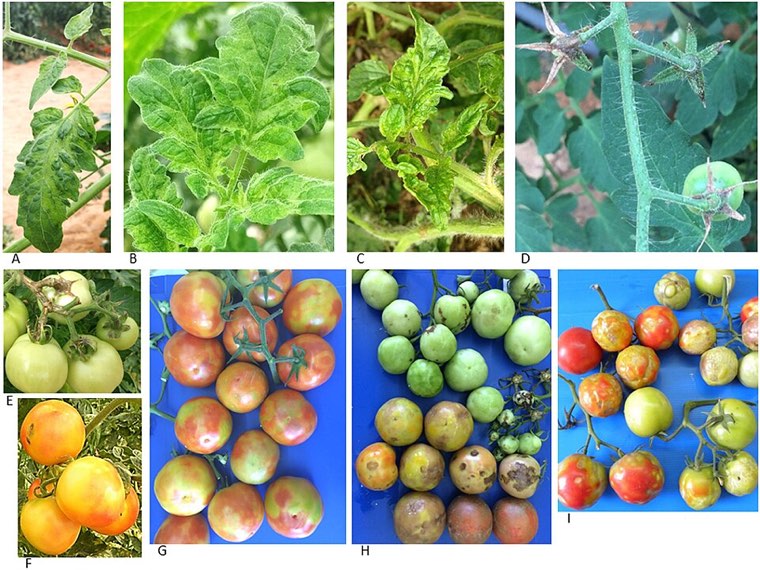
Tomato brown rugose fruit virus is a very stable virus that overcame the resistance genes protecting tomatoes against related tobamoviruses for decades. It spreads on hands, tools, clothing, trays and greenhouse surfaces, and through seed, and causes mottled, wrinkled leaves and fruit with brown, rough patches and yellow blotches that cannot be sold. Since it was found in Israel and Jordan in 2014-2015 it has appeared in greenhouse tomato and pepper production worldwide.
Middle East and North Africa, Europe, Americas, Asia
Last reviewed
2026-10-20
What causes tomato brown rugose fruit virus?
Tomato brown rugose fruit virus is caused by Tomato brown rugose fruit virus, a virus (tobamovirus with an RNA genome), spread by contact and seed (order Martellivirales, family Virgaviridae).
Older or alternative scientific names: ToBRFV.
Where it occurs
First reported in Israel (2014) and Jordan (2015), it has since been recorded in Europe, North and Central America, the Middle East, North Africa and Asia, mostly in greenhouse crops. It is a regulated quarantine pest in many countries, including on tomato and pepper seed.
Region
Status
Middle East and North Africa
Present since 2014-2015
Europe
Outbreaks in several countries; regulated
Americas
Outbreaks in Mexico, the US and elsewhere; regulated
Asia
Recorded in several countries
Symptoms and identification of tomato brown rugose fruit virus
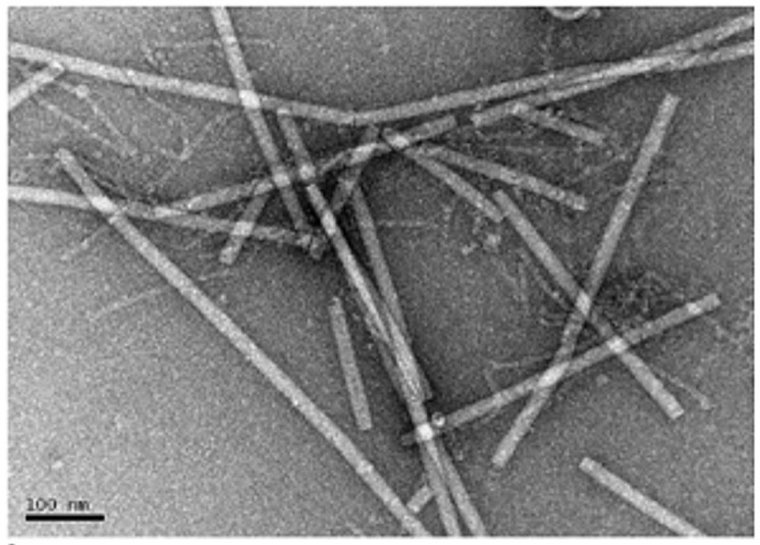
A rod-shaped RNA virus that remains infectious for months on surfaces, in soil and plant debris, and on seed coats. Detected by ELISA and RT-PCR. Bumblebees used for pollination can also move it between plants.
Signs in the crop, stage by stage
Crop stage
What you see
Young plants
Mosaic, mottling and narrowing of young leaves, sometimes with blistering.
Established plants
Leaf mottle, mosaic and wrinkling; occasional necrotic spots on stems, calyx and flower stalks.
Fruit
Yellow or brown blotches, rough wrinkled ('rugose') brown patches, uneven ripening and deformed fruit.
Disease cycle of tomato brown rugose fruit virus
Life cycle of Tomato brown rugose fruit virus (ToBRFV) — diagram drawn by Laisha from the stages below. Durations depend on temperature.
The virus enters a greenhouse on infected seed or plants, or on contaminated people, tools and materials. During crop work it spreads mechanically from plant to plant along rows. It survives in plant residues, soil and on structures for long periods, so it can carry over to the next crop if hygiene fails.
Stage
Duration
Notes
Introduction
At planting or by contact
Seed, plants, people, tools.
Mechanical spread
Days to weeks
Along rows during pruning and harvesting.
Symptom development
About 1-3 weeks
Leaves then fruit.
Persistence
Months on surfaces and debris
Carry-over risk.
Temperature
Spread depends on handling rather than weather; symptom expression varies with temperature and variety.
Generations
Continuous in greenhouse production.
Conditions that favour it
Frequent handling of plants, shared tools and workers between greenhouses, infected seed or transplants, inadequate disinfection between crops, and susceptible varieties.
Economic threshold level (ETL)
There is no economic threshold: in regulated areas any detection triggers official measures, and in production any infection is treated as an outbreak because spread is rapid.
Damage and yield loss from tomato brown rugose fruit virus
Large parts of greenhouse crops can be infected, with marketable fruit losses commonly reported at 15-55% and higher; trade restrictions and destruction of infected crops add costs.
Monitoring
Inspect plants and fruit regularly and test suspect plants; test seed lots as required by regulations.
Use surface and water testing in greenhouses where outbreaks have occurred.
Keep a record of plants removed and their positions; new infections along the same rows point to spread by workers or tools rather than by new introductions.
After an outbreak, test surfaces, drippers, tools and water before replanting to check that disinfection worked.
How to control tomato brown rugose fruit virus (integrated management)
Control works best as a sequence: prevent, monitor, then act only when a threshold or a risk forecast says so, using the least disruptive option that works.
Cultural control
Use tested seed and certified transplants; use resistant or tolerant varieties now available from breeders.
Strict hygiene: dedicated clothing, hand washing, glove changes, footbaths and tool disinfection between rows and houses; restrict visitors.
Remove infected plants and neighbouring plants carefully; at the end of a crop remove all residues and disinfect structures, trays and irrigation systems.
Plan work so that crews move from younger, healthy houses to older or suspect ones, never the reverse, and keep separate tools and trolleys for each house.
Where bumblebees are used for pollination, move hives only with the crop they belong to.
Mechanical and physical control
Disinfect tools and surfaces with products validated against tobamoviruses; steam or heat-treat substrates where possible.
Biological control
No biological control is available.
Host resistance
The virus overcomes the Tm-1, Tm-2 and Tm-2² genes; new tomato varieties with resistance or tolerance from other sources have been released since about 2020.
Chemical control of tomato brown rugose fruit virus — by mode-of-action group only
Laisha names chemical options only by their resistance-committee mode-of-action group (IRAC for insects, mites and nematodes, FRAC for fungi, oomycetes and bacteria, HRAC for weeds), never by active ingredient or product. What is registered differs by country and changes over time; the label and your local plant-protection authority decide what may be used, on which crop, at what rate and with what pre-harvest interval.
No chemical cures infected plants; disinfectants are used for hygiene on tools, footwear and surfaces only. What is registered differs by country and changes over time; follow the label and your local plant-protection authority.
Resistance management
Not applicable to chemicals; combine resistant varieties with hygiene.
Look-alikes and how to tell them apart
Tomato mosaic virus and other tobamoviruses — Similar mosaic; separated by laboratory tests; plants with Tm-2² resistance are not infected by tomato mosaic virus.
Tomato spotted wilt virus (TSWV)Tomato spotted wilt virusVirus disease · Tomato spotted wilt virus has one of the widest host ranges of any plant virus - more than 1,000 plant…
Tomato yellow leaf curl disease (TYLCV)Tomato yellow leaf curl virusVirus disease · Tomato yellow leaf curl is caused by a virus spread by the whitefly Bemisia tabaci. Infected tomato plants…
Bacterial spot of tomato and pepperXanthomonas euvesicatoria and related Xanthomonas speciesBacterial disease · Bacterial spot covers tomato and pepper leaves with small, dark, greasy spots and the fruit with raised,…
Bacterial wilt (Ralstonia wilt, brown rot of potato)Ralstonia solanacearum species complexBacterial disease · A soil- and water-borne bacterium that blocks the water-conducting tissue of tomato, potato, eggplant,…
Blossom-end rotPhysiological calcium disorder (no pathogen)Physiological disorder · Blossom-end rot is a dark, sunken, leathery patch at the flower end of tomato, pepper, watermelon, squash and…
Damping-off of seedlingsPythium aphanidermatum and other soil-borne pathogensOomycete disease · Damping-off is the death of seeds and young seedlings caused by soil-borne water moulds and fungi, above all…
Greenhouse whiteflyTrialeurodes vaporariorumInsect · The greenhouse whitefly is a tiny white sap-sucking insect found on the undersides of leaves of tomato,…
Root-knot nematodesMeloidogyne incognitaNematode · Root-knot nematodes are microscopic worms that enter roots and turn them into swollen, knotted galls, so…
Not sure this is what you are seeing?Ask Laisha: describe the symptoms or send a photo, and get a reasoned first read with what to check next — for your crop, your stage and your region.Ask Laisha
Written by Laisha from the sources above, in its own words. This page is general reference, not a prescription: confirm identification locally and follow the label and your plant-protection authority.
 Laisha
AI Operating System for Agriculture
Ask Laisha