 Laisha
AI Operating System for Agriculture
Ask Laisha
Laisha
AI Operating System for Agriculture
Ask Laisha
Tomato spotted wilt virus ICTV species: Orthotospovirus tomatomaculae · formerly or also: TSWV
Tomato spotted wilt virus has one of the widest host ranges of any plant virus - more than 1,000 plant species - and causes serious losses in tomato, pepper, lettuce, groundnut, tobacco and ornamentals. Thrips spread it: young thrips larvae pick it up and the adults carry it for life. Infected tomato plants develop bronzed leaves with dark spots, stop growing, and produce fruit with yellow and red rings.
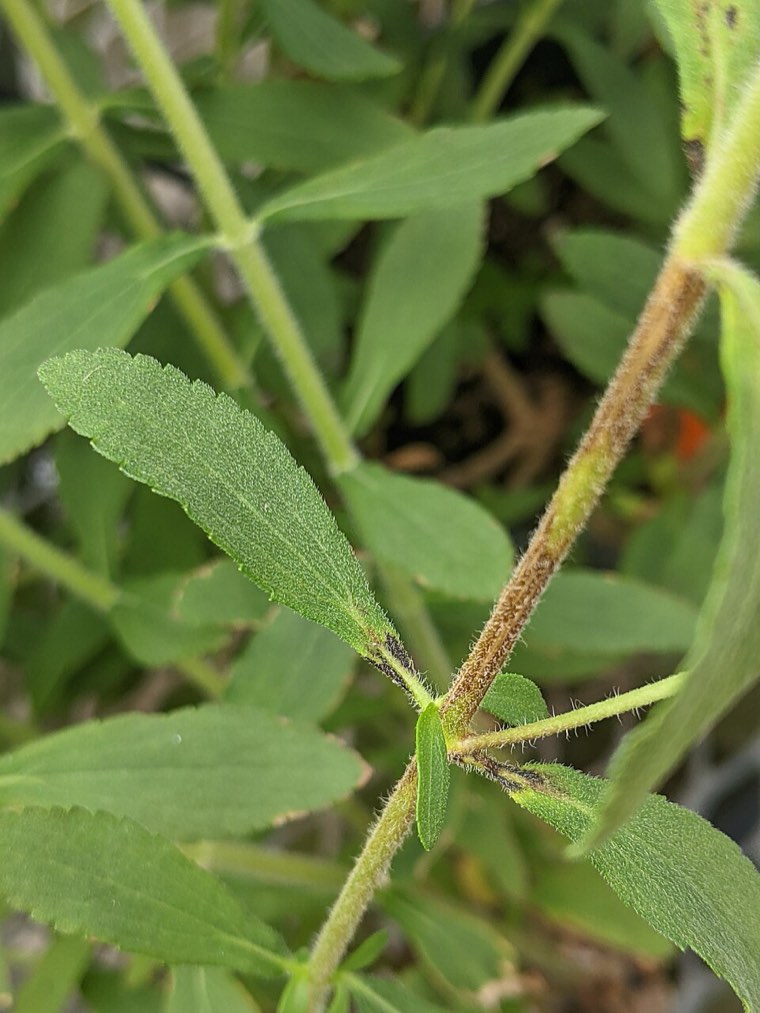
Tomato spotted wilt virus is caused by Tomato spotted wilt virus, a virus (orthotospovirus with an RNA genome), spread by thrips (order Bunyavirales (Elliovirales), family Tospoviridae).
Older or alternative scientific names: TSWV.
Found worldwide in temperate, subtropical and tropical regions, outdoors and in greenhouses; its spread since the 1980s followed the global spread of the western flower thrips.
| Region | Status |
|---|---|
| Americas | Widespread; major in groundnut, tomato and tobacco |
| Europe and the Mediterranean | Widespread in vegetables and ornamentals |
| Asia | Widespread; related tospoviruses also common |
| Africa and Oceania | Present |
An enveloped RNA virus detected by ELISA, lateral-flow strips or RT-PCR. Transmitted by thrips - mainly Frankliniella occidentalis, F. fusca and Thrips tabaci - in a persistent, propagative way: larvae acquire the virus, which multiplies in them, and adults transmit it for life. Not seed-transmitted in tomato. Adult thrips that feed on an infected plant without having acquired the virus as larvae do not become infective, which is why virus-free transplants and early control of breeding thrips matter so much.
| Crop stage | What you see |
|---|---|
| Young plants | Bronzing and small dark brown spots on young leaves; leaves curl downward; plants stop growing and may die. |
| Established plants | Necrotic streaks on stems and leaf stalks; one-sided wilting and dieback of tips. |
| Fruit | Tomato fruit with concentric yellow, red and brown rings or blotches, uneven ripening; pepper fruit with rings and necrotic spots. |
Larvae of thrips feeding on infected plants acquire the virus, which multiplies in the insect; when they become adults they fly to new plants and transmit it while feeding. The virus survives between crops in weeds, ornamentals and greenhouse crops.
| Stage | Duration | Notes |
|---|---|---|
| Acquisition by thrips larvae | Minutes of feeding | Only larvae acquire. |
| Multiplication in the thrips | Days | Persistent, propagative. |
| Transmission by adults | For life | Adults disperse widely. |
| Symptom development | About 1-3 weeks | Young plants suffer most. |
Epidemics follow thrips populations, which build up in warm, dry weather and in greenhouses.
Continuous where thrips and hosts are present.
High thrips populations, infected weeds and ornamentals near crops, transplants raised alongside ornamentals, and susceptible varieties.
There is no economic threshold for thrips when TSWV is present, because a few infective adults can cause heavy losses; management is preventive.
Thresholds are local. They depend on crop price, control cost, variety and natural-enemy activity, so use the figure your local extension service publishes where one exists.
Yield losses of 50-90% occur in tomato, pepper, lettuce and groundnut in epidemic seasons; ornamental crops lose their market value.
Control works best as a sequence: prevent, monitor, then act only when a threshold or a risk forecast says so, using the least disruptive option that works.
No chemical controls the virus; insecticides against thrips reduce spread only partly and thrips resist many groups. What is registered differs by country and changes over time; follow the label and your local plant-protection authority.
| Scheme | Group | Mode of action | Notes |
|---|---|---|---|
| IRAC | 5 | Nicotinic acetylcholine receptor allosteric modulators, site I (spinosyns), against thrips | Resistance documented in thrips. |
| IRAC | 28 | Ryanodine receptor modulators (diamides), against thrips | Systemic uses. |
More than 1,000 species in over 80 families, including tomato, pepper, lettuce, groundnut, tobacco, potato, beans, cucurbits, many ornamentals (chrysanthemum, dahlia, impatiens) and numerous weeds.
How to grow the crop well is the first line of defence. Laisha's free grow guides cover each crop from sowing to harvest:
Written by Laisha from the sources above, in its own words. This page is general reference, not a prescription: confirm identification locally and follow the label and your plant-protection authority.