 Laisha
AI Operating System for Agriculture
Ask Laisha
Laisha
AI Operating System for Agriculture
Ask Laisha
Tilletia indica Mitra, 1931 · formerly or also: Neovossia indica
Karnal bunt replaces part of some wheat grains with black, fishy-smelling spores. Yield loss is usually small, but the disease matters enormously in trade: many countries treat it as a quarantine pest and refuse wheat from areas where it occurs, so a few infected grains can block exports. It was first described near Karnal in northern India in 1931. Because the spores can survive in soil for years and travel with seed, grain, straw and machinery, regulators in importing countries require testing and certification of wheat from affected areas.
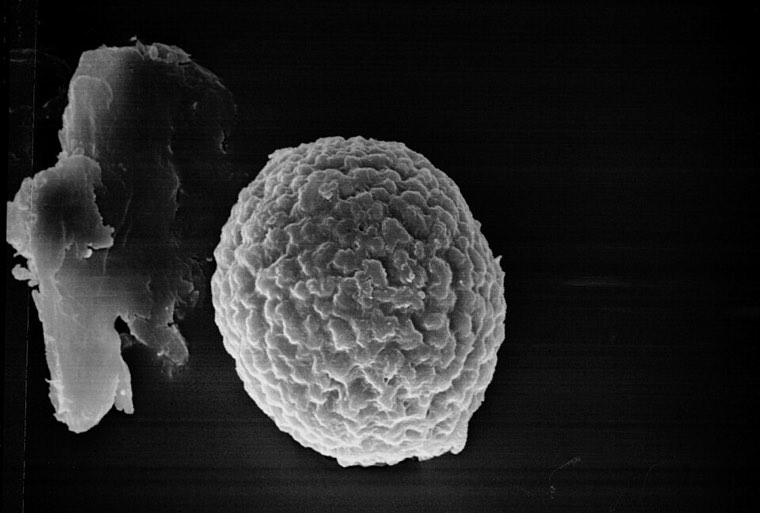
Karnal bunt of wheat is caused by Tilletia indica Mitra, 1931, a fungus (smut fungus, a basidiomycete) (order Tilletiales, family Tilletiaceae).
Older or alternative scientific names: Neovossia indica.
Present in South Asia (India, Pakistan, Nepal), Afghanistan, Iran, Iraq, Mexico, parts of the south-western United States and South Africa. It is a quarantine pest for many importing countries.
| Region | Status |
|---|---|
| South Asia | Present; first described in 1931 |
| West and Central Asia | Present in some countries |
| North America | Present in north-western Mexico and limited areas of the south-western US under regulation |
| Africa | Present in South Africa |
| Other regions | Absent; quarantine pest |
Teliospores are large, dark brown and spiny, formed inside infected grains. Laboratory confirmation (spore morphology and PCR) is required, because the spores resemble those of the ryegrass bunt Tilletia walkeri. Teliospores are about 25-40 micrometres across, larger than those of common bunt, with a thick, spiny wall.
| Crop stage | What you see |
|---|---|
| Heading to grain fill | No obvious symptoms on plants. |
| Maturity and harvest | Some grains partly replaced by black spore masses, usually starting at the embryo end along the crease; infected grains smell of rotten fish (trimethylamine). |
| Stored grain | Partly bunted grains in samples; flour with a dark colour and fishy smell when infection is high. |
Teliospores survive in soil for several years and on seed. In moist soil around heading they germinate and produce airborne secondary spores that reach the ears and infect individual florets at flowering. Only some grains in an ear are infected. Because only florets open to infection at the right moment are affected, incidence varies greatly between seasons and fields, and most infected ears carry only a few bunted grains.
| Stage | Duration | Notes |
|---|---|---|
| Teliospores in soil and on seed | Survive several years | Primary inoculum. |
| Germination | Around heading, in moist soil | Produces airborne spores. |
| Floral infection | Flowering, in cool wet weather | Individual florets. |
| Bunted grains | Grain fill to maturity | Spores return to soil and seed. |
Infection is favoured by cool (about 15-22 °C), cloudy, humid or rainy weather at heading and flowering.
One infection cycle per crop.
Rain and high humidity during heading, susceptible varieties, heavy nitrogen and irrigation around heading, and infested seed and soil. Late-sown or late-maturing crops whose heading coincides with cool, rainy spells are most affected, and the disease is much more common in some years than others.
There is no yield-based threshold; the relevant thresholds are trade and seed-certification tolerances for bunted grains, which are set by national regulations and import requirements and are often zero.
Thresholds are local. They depend on crop price, control cost, variety and natural-enemy activity, so use the figure your local extension service publishes where one exists.
Direct yield losses are usually below 1%, but quality loss and, above all, trade restrictions cause large economic losses in affected regions. Flour milled from grain with more than a few per cent bunted kernels has an unpleasant smell and colour, and such grain is downgraded or diverted to feed.
Control works best as a sequence: prevent, monitor, then act only when a threshold or a risk forecast says so, using the least disruptive option that works.
Seed treatment reduces seed-borne inoculum, and fungicide sprays at heading reduce infection where registered. What is registered differs by country and changes over time; follow the label and your local plant-protection authority.
| Scheme | Group | Mode of action | Notes |
|---|---|---|---|
| FRAC | 3 | Demethylation inhibitors (DMI) | Seed treatment and sprays at heading. |
Bread wheat, durum wheat and triticale; some wild grasses have been infected experimentally.
How to grow the crop well is the first line of defence. Laisha's free grow guides cover each crop from sowing to harvest:
Written by Laisha from the sources above, in its own words. This page is general reference, not a prescription: confirm identification locally and follow the label and your plant-protection authority.