 Laisha
AI Operating System for Agriculture
Ask Laisha
Laisha
AI Operating System for Agriculture
Ask Laisha
Fusarium graminearum Schwabe, 1839 (sexual stage Gibberella zeae (Schwein.) Petch) · formerly or also: Gibberella zeae
Fusarium head blight, or scab, bleaches the ears of wheat and barley when warm, wet weather coincides with flowering. Besides cutting yield, the fungus contaminates grain with mycotoxins, especially deoxynivalenol (DON, 'vomitoxin'), which can make grain unsafe for food and feed and unsaleable. Maize residues left on the surface are a major source of the disease.
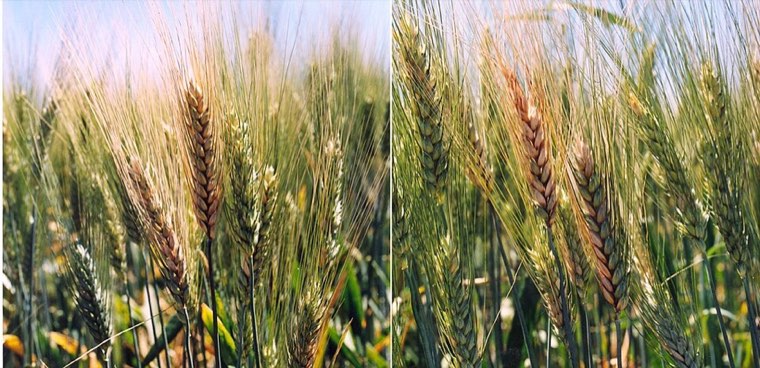
Fusarium head blight (head scab) of wheat and barley is caused by Fusarium graminearum Schwabe, 1839 (sexual stage Gibberella zeae (Schwein.) Petch), a fungus (ascomycete) (order Hypocreales, family Nectriaceae).
Older or alternative scientific names: Gibberella zeae.
Found in wheat and barley regions worldwide where rain or high humidity occurs at flowering: North and South America, Europe, East Asia (especially the Yangtze region of China), and parts of Africa, South Asia and Oceania. Epidemics have become more frequent with more maize in rotations and minimum tillage.
| Region | Status |
|---|---|
| North America | Widespread; major epidemics since the 1990s |
| South America | Widespread in southern Brazil, Argentina and Uruguay |
| Europe | Widespread; several Fusarium species involved |
| East Asia | Major disease of wheat in central and eastern China |
| Other regions | Present in humid wheat areas of Africa, South Asia and Oceania |
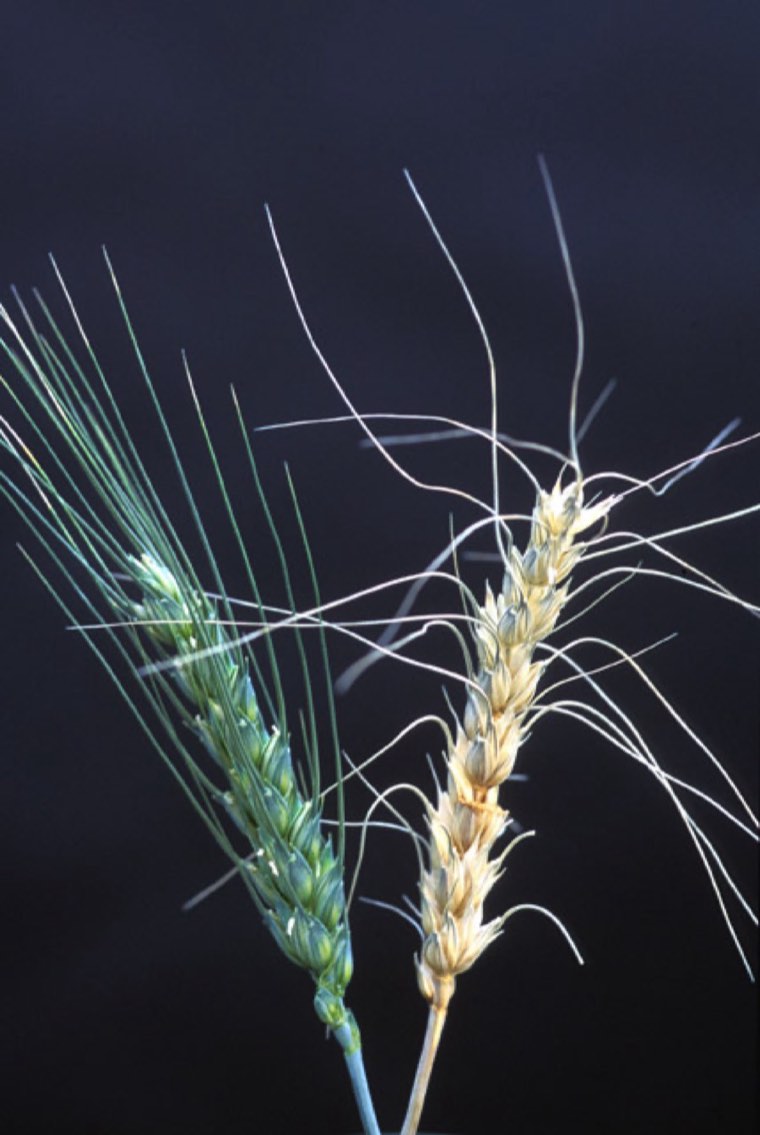
In humid weather, salmon-pink to orange spore masses (sporodochia) form at the base of infected spikelets and on the glumes; later, small bluish-black flask-shaped perithecia may appear. On crop residues, perithecia release ascospores into the air. The fungus produces the mycotoxins deoxynivalenol and zearalenone.
| Crop stage | What you see |
|---|---|
| Flowering to early grain fill | One or more spikelets turn pale or bleached while the rest of the ear stays green; water-soaked brown areas on glumes; the bleaching may spread through the ear. |
| Grain filling | Pink-orange spore masses at spikelet bases in humid weather; brown discoloration of the stem just below the ear, which can kill the ear above it. |
| Harvest | Shrivelled, chalky white or pink 'tombstone' kernels; low test weight; high mycotoxin levels in grain. |
The fungus survives on crop residues, especially maize stalks and cereal straw left on the soil surface. In spring and summer, perithecia on residues release ascospores, and asexual spores splash from residues; both reach wheat and barley ears. Infection happens mainly through the flowers at and shortly after flowering, when anthers are exposed. Infected ears produce spores but secondary spread within a season is limited.
| Stage | Duration | Notes |
|---|---|---|
| Survival on residues | One to several years | Maize residues are the richest source. |
| Spore release (ascospores and macroconidia) | During wet, warm periods | Ascospores airborne; conidia rain-splashed. |
| Infection at flowering | Needs about 48-72 hours of high humidity at 25-30 °C | Flowers and anthers are the main entry point. |
| Colonisation and toxin production | Through grain filling | Symptoms appear about 1-2 weeks after infection. |
Infection is favoured by warm (about 20-30 °C), wet or very humid weather lasting two days or more around flowering; mycotoxin accumulation continues if wet weather persists to harvest.
Essentially one main infection window per crop (flowering); spore release continues through the season.
Rain or prolonged humidity at flowering, wheat or barley following maize or another cereal, residues left on the surface (minimum tillage), susceptible varieties and delayed harvest in wet weather.
There is no numeric economic threshold based on disease counts, because infection happens within a few days at flowering and mycotoxin limits are set by food and feed regulations. Decisions are based on weather forecasts and risk models (for example the US Fusarium Head Blight Prediction Center and similar tools in Europe and South America) that combine weather around flowering, residue and variety resistance.
Thresholds are local. They depend on crop price, control cost, variety and natural-enemy activity, so use the figure your local extension service publishes where one exists.
Yield losses range from small to over 50% in severe epidemics, with additional loss of value because of mycotoxins. Many regions set maximum limits for deoxynivalenol in cereals for food and feed (the Codex Alimentarius has standards for raw cereal grains), and grain above them is discounted or rejected. Epidemics in North America in the 1990s caused losses estimated at several billion US dollars.
Control works best as a sequence: prevent, monitor, then act only when a threshold or a risk forecast says so, using the least disruptive option that works.
Fungicides give partial control (often around 50% reduction in disease and toxin) only when applied at early flowering; timing is more important than the product. Some groups applied after heading can increase toxin levels. What is registered differs by country and changes over time; follow the label and your local plant-protection authority.
| Scheme | Group | Mode of action | Notes |
|---|---|---|---|
| FRAC | 3 | Demethylation inhibitors (DMI) | The main group for head blight, applied at early flowering. |
| FRAC | 7 | Succinate dehydrogenase inhibitors (SDHI) | Some members are active against Fusarium. |
| FRAC | 1 | Methyl benzimidazole carbamates (MBC) | Used in East Asia; resistance widespread. |
Wheat, barley, oats, triticale, rye and many grasses. On maize the same fungus causes Gibberella ear rot and stalk rot, and maize residues produce large numbers of spores. Several other Fusarium species (for example F. culmorum, F. avenaceum, F. poae) also cause head blight, especially in cooler regions.
How to grow the crop well is the first line of defence. Laisha's free grow guides cover each crop from sowing to harvest:
Written by Laisha from the sources above, in its own words. This page is general reference, not a prescription: confirm identification locally and follow the label and your plant-protection authority.