 Laisha
AI Operating System for Agriculture
Ask Laisha
Laisha
AI Operating System for Agriculture
Ask Laisha
Papaya ringspot virus ICTV species: Potyvirus papayanuli · formerly or also: PRSV-P (papaya strain), PRSV-W (watermelon strain, formerly watermelon mosaic virus 1)
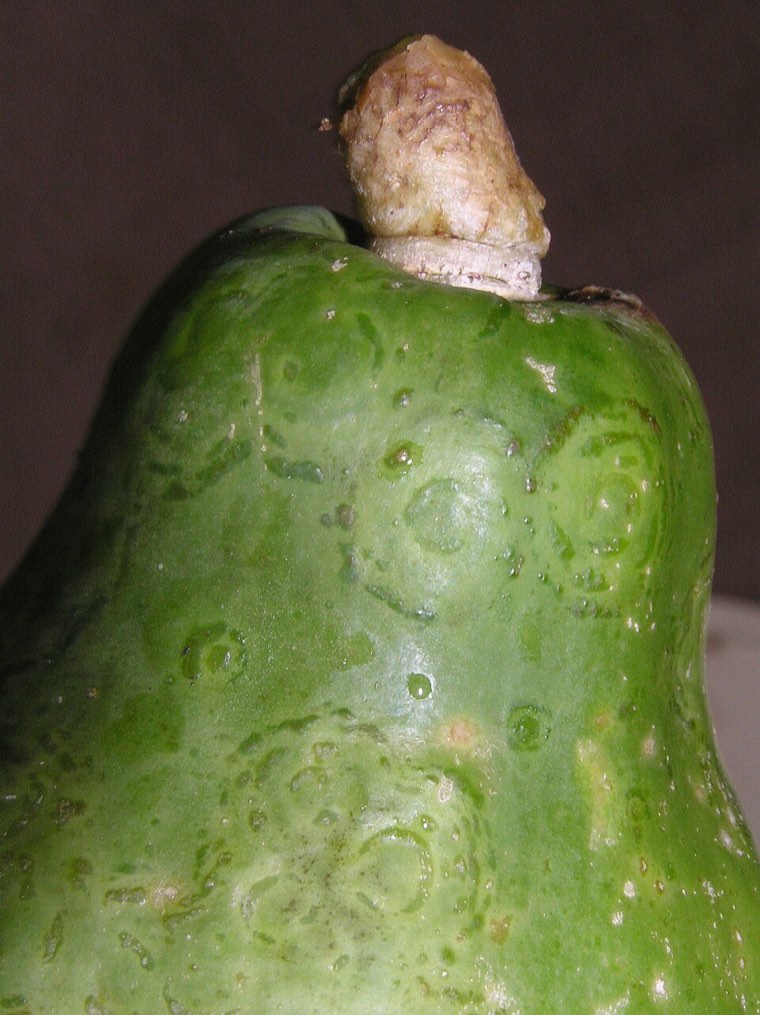
Papaya ringspot is the most destructive disease of papaya worldwide. Aphids spread the virus in seconds as they probe leaves, and infected trees develop mottled, narrowed leaves, oily streaks on stems and leaf stalks, and fruit marked with rings - then produce little, poor-quality fruit and decline. It wiped out papaya production in several regions before transgenic, cross-protected and tolerant varieties and strict roguing were developed. A related strain attacks cucurbits.
Papaya ringspot disease is caused by Papaya ringspot virus, a virus (potyvirus with an RNA genome), spread by aphids (order Patatavirales, family Potyviridae).
Older or alternative scientific names: PRSV-P (papaya strain), PRSV-W (watermelon strain, formerly watermelon mosaic virus 1).
Found in almost every papaya-growing region of the tropics and subtropics: Asia, the Americas and Caribbean, Africa, Oceania (including Hawaii since 1945) and the Middle East.
| Region | Status |
|---|---|
| South and Southeast Asia | Widespread; major constraint on papaya |
| East Asia | Widespread; cross-protection and transgenic varieties developed |
| Americas and the Caribbean | Widespread; Hawaii's industry rescued by transgenic varieties in 1998 |
| Africa and the Middle East | Present in many countries |
| Oceania | Present in Hawaii and parts of Australia and the Pacific |
A flexuous, rod-shaped RNA virus detected by serological (ELISA) or molecular tests. It is transmitted by more than 20 aphid species, including the cotton aphid and green peach aphid, in a non-persistent way: aphids pick it up and pass it on within seconds to minutes of probing, without needing to colonise papaya. It is also spread mechanically but not through papaya seed.
| Crop stage | What you see |
|---|---|
| Young plants | Yellowing and vein clearing of young leaves, followed by mosaic and distortion; seedlings infected early are stunted and never fruit well. |
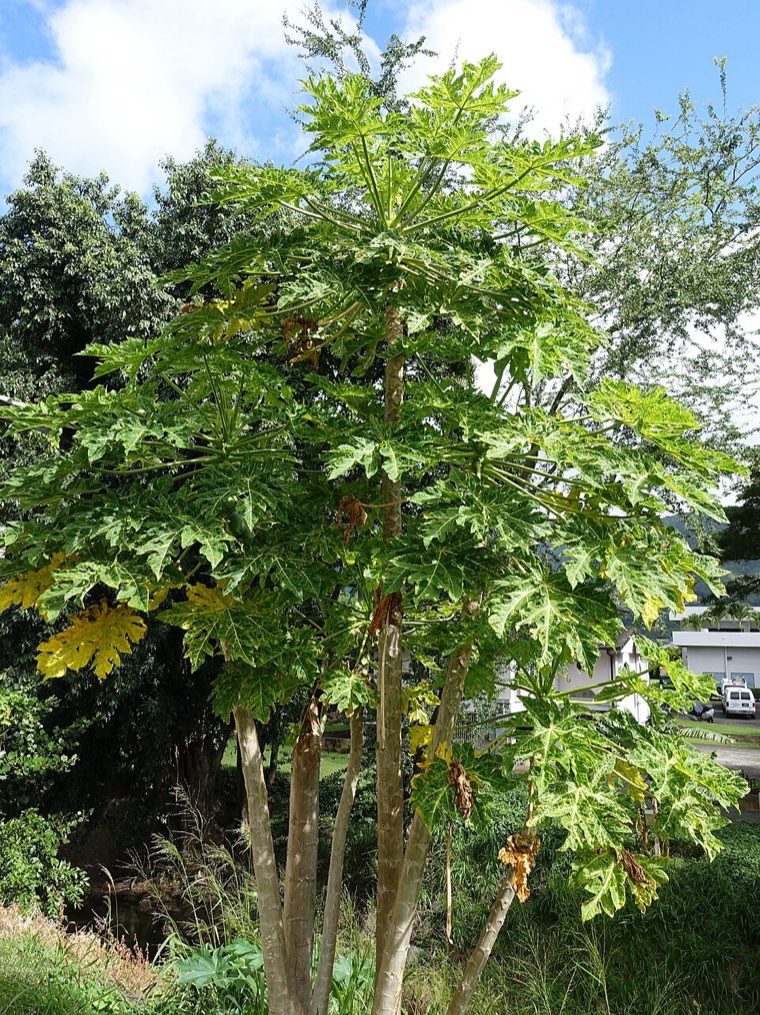
| Established trees | Mottled leaves with dark green blisters; young leaves narrowed to 'shoestrings'; dark green, oily, water-soaked streaks on leaf stalks and the upper trunk; thinning crown. |
| Fruit | Concentric rings and C-shaped spots on the fruit skin; smaller, misshapen fruit with lower sugar content and poor flavour. |
Winged aphids moving through a plantation probe papaya leaves while searching for their own hosts and spread the virus from infected to healthy trees in seconds. Symptoms appear within about two to four weeks. The virus survives in infected papaya and cucurbits, including abandoned trees and wild cucurbits.
| Stage | Duration | Notes |
|---|---|---|
| Acquisition by an aphid | Seconds to minutes of probing | Non-persistent. |
| Transmission | Within minutes; aphids lose the virus within about an hour | Insecticides act too slowly to stop it. |
| Symptom development | About 2-4 weeks | Shown first on young leaves. |
| Survival | Continuous | Infected papaya and cucurbits. |
Spread follows winged aphid flights, often greatest in cooler, drier periods when aphid populations on nearby crops build up and disperse.
Continuous spread where papaya and cucurbits are grown year-round.
Infected trees left standing in or near plantations, cucurbit crops and wild cucurbits nearby, large aphid flights, and planting new orchards next to old infected ones.
There is no economic threshold: every infected tree is a source of further spread. In areas where the disease is new or rare, any symptomatic tree is removed at once; elsewhere, management relies on tolerant or resistant varieties and isolation.
Infected papaya trees lose most of their yield and fruit quality; orchards can become uneconomic within one to two years. In the 1990s the disease devastated papaya production on Hawaii's main growing area until transgenic resistant varieties were released in 1998.
Control works best as a sequence: prevent, monitor, then act only when a threshold or a risk forecast says so, using the least disruptive option that works.
No chemical controls the virus, and insecticides cannot stop non-persistent aphid transmission because aphids pass the virus on within seconds. What is registered differs by country and changes over time; follow the label and your local plant-protection authority.
The papaya strain (PRSV-P) infects papaya and cucurbits; the watermelon strain (PRSV-W) infects cucurbits only. No other crop families are naturally infected.
How to grow the crop well is the first line of defence. Laisha's free grow guides cover each crop from sowing to harvest:
Written by Laisha from the sources above, in its own words. This page is general reference, not a prescription: confirm identification locally and follow the label and your plant-protection authority.