 Laisha
AI Operating System for Agriculture
Ask Laisha
Laisha
AI Operating System for Agriculture
Ask Laisha
Leptocorisa oratorius and Leptocorisa acuta Leptocorisa oratorius (Fabricius, 1794); Leptocorisa acuta (Thunberg, 1783) · formerly or also: Leptocorisa varicornis (misidentification of L. oratorius in older literature)
Rice bugs are slender, long-legged, green-to-brown bugs that suck the contents of developing rice grains. Grains attacked at the milk stage stay empty or only partly filled, and later feeding leaves discoloured, spotted, broken grains. Both adults and nymphs feed, and the bugs give off a strong, unpleasant smell when disturbed. They are among the most common pests of rice at flowering and grain filling in South and South-East Asia and the Pacific.
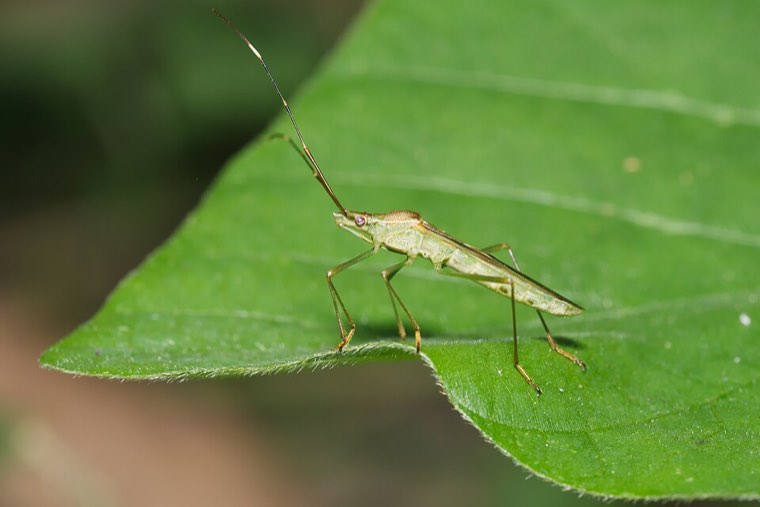
The scientific name of rice bug is Leptocorisa oratorius and Leptocorisa acuta Leptocorisa oratorius (Fabricius, 1794); Leptocorisa acuta (Thunberg, 1783), in the order Hemiptera, family Alydidae.
Older or alternative scientific names: Leptocorisa varicornis (misidentification of L. oratorius in older literature).
Leptocorisa species occur across tropical and subtropical Asia and the Pacific, from South Asia to northern Australia; L. acuta is the main species in South Asia and L. oratorius in South-East Asia.
| Region | Status |
|---|---|
| South Asia | Widespread; mainly L. acuta |
| South-East and East Asia | Widespread; mainly L. oratorius |
| Oceania | Present in Pacific islands and northern Australia |
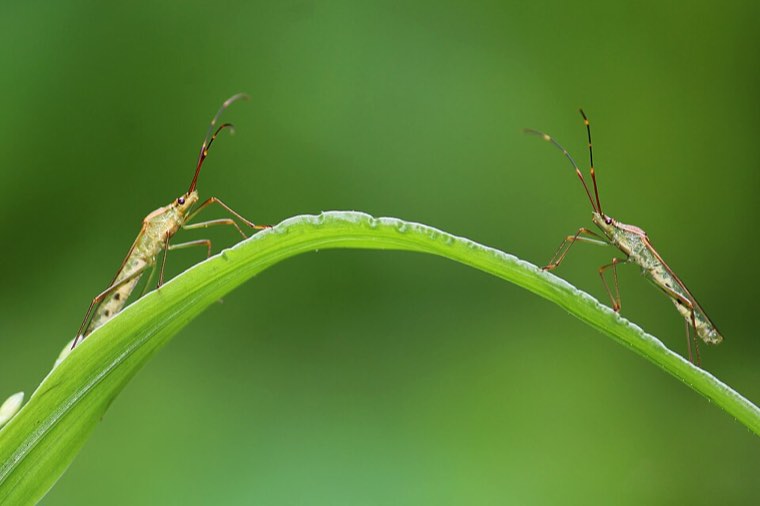
Adults are 14-17 mm long, slender, green below and brown above, with very long legs and antennae. Nymphs are green, slender and blend in with the leaves. Eggs are oval, reddish-brown and laid in rows on the upper side of leaves.
| Crop stage | What you see |
|---|---|
| Milk stage grains | Empty or partly filled grains; panicles stay upright because grains are light. |
| Dough stage grains | Small brown spots at feeding sites; discoloured, chalky or 'pecky' grains that break in milling. |
| Field | Bugs on panicles in the early morning and late afternoon; strong smell when walking through the crop. |
Adults move from grasses and woodland into rice as it flowers. Females lay eggs in rows on leaves. Nymphs pass through five instars, feeding on grains at the milk stage. Adults live for several weeks to a few months and survive between rice crops on grasses; in cooler areas they shelter in grasses for long periods.
| Stage | Duration | Notes |
|---|---|---|
| Egg | About 5-8 days | Rows of 10-20 on leaves. |
| Nymph (5 instars) | About 2-4 weeks | Feeds on milky grains. |
| Adult | Several weeks to a few months | Active in early morning and late afternoon. |
| Between crops | Fallow period | On grasses near fields. |
Most active in warm, humid weather; populations build up over successive plantings.
Several generations per year in the tropics, linked to rice and grass flowering.
Staggered planting that provides flowering rice over a long period, nearby woodland and weedy grassland, grassy canal banks and bunds, and rainy-season crops.
There is no single international threshold. Regional thresholds exist, usually expressed as bugs per hill or per sweep at the milk stage, but values differ between countries; counts may underestimate adults, which fly away when disturbed. Check with your local extension service.
Thresholds are local. They depend on crop price, control cost, variety and natural-enemy activity, so use the figure your local extension service publishes where one exists.
Losses of 10-30% are common in heavily infested fields and can be higher in late-planted crops; damaged grain lowers milling yield and market grade.
Control works best as a sequence: prevent, monitor, then act only when a threshold or a risk forecast says so, using the least disruptive option that works.
Sprays are applied only when counts exceed local thresholds at the milk stage, and preferably in the late afternoon when bugs are active. What is registered differs by country and changes over time; follow the label and your local plant-protection authority.
| Scheme | Group | Mode of action | Notes |
|---|---|---|---|
| IRAC | 3A | Sodium channel modulators (pyrethroids) | Harmful to natural enemies. |
| IRAC | 4A | Nicotinic acetylcholine receptor competitive modulators (neonicotinoids) | Toxic to pollinators and aquatic life. |
| IRAC | 1B | Acetylcholinesterase inhibitors (organophosphates) | Highly toxic; use only where advised. |
Rice is the main host; the bugs also feed and breed on wild and weedy grasses (such as Echinochloa and Panicum species) and on millets and sorghum.
How to grow the crop well is the first line of defence. Laisha's free grow guides cover each crop from sowing to harvest:
Written by Laisha from the sources above, in its own words. This page is general reference, not a prescription: confirm identification locally and follow the label and your plant-protection authority.