 Laisha
AI Operating System for Agriculture
Ask Laisha
Laisha
AI Operating System for Agriculture
Ask Laisha
Aphis glycines Aphis glycines Matsumura, 1917
The soybean aphid is a small yellow aphid from East Asia that colonises the undersides of soybean leaves and stems. Large colonies reduce pod numbers and seed size and cover plants with honeydew and sooty mould. After it was found in North America in 2000, it spread across the Midwest within a few years and became the main insect pest of soybean there, leading to one of the best-studied economic thresholds of any field-crop pest.
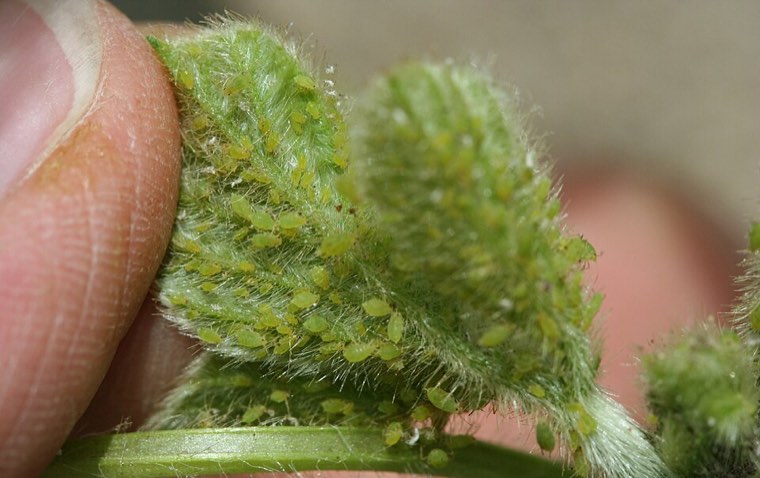
The scientific name of soybean aphid is Aphis glycines Aphis glycines Matsumura, 1917, in the order Hemiptera, family Aphididae.
Native to China, Japan, Korea and other parts of East and South-East Asia; found in North America since 2000 (first in Wisconsin) and now across the soybean-growing areas of the United States and Canada.
| Region | Status |
|---|---|
| East Asia | Native; widespread |
| South-East Asia | Present |
| North America | Widespread since 2000 |
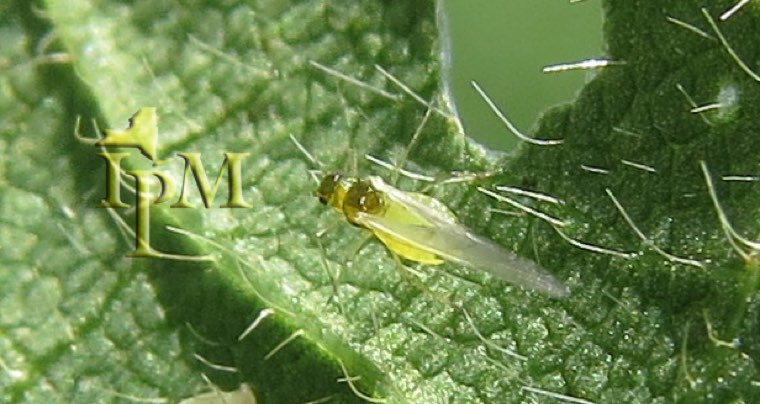
Wingless adults are small (about 1.5 mm), pale yellow to lime-green, with black tips on the cornicles and a pale tail. Winged adults have a dark head and thorax. Colonies are found on the undersides of upper leaves and on stems and pods.
| Crop stage | What you see |
|---|---|
| Early colonisation | Small colonies on new leaves at the top of the plant, often tended by ants. |
| Heavy infestation | Dense colonies on leaves, stems and pods; sticky honeydew and black sooty mould; leaves puckered or yellowing. |
| Yield effects | Stunted plants, fewer pods and smaller seeds, especially when large populations occur during flowering and early pod set. |
In North America, eggs on buckthorn hatch in spring; after two or three generations, winged aphids fly to soybean. On soybean, females give birth to live young without mating, and colonies can double in a few days in mild weather. Winged forms spread between fields during summer. In autumn, sexual forms return to buckthorn and lay overwintering eggs.
| Stage | Duration | Notes |
|---|---|---|
| Egg on buckthorn | Winter | Overwintering stage. |
| Spring generations on buckthorn | Spring | Produce winged migrants. |
| Summer generations on soybean | About 1 week each | Rapid population growth. |
| Autumn return to buckthorn | Autumn | Mating and egg laying. |
Populations grow fastest at about 22-25 °C and slow above about 30 °C.
About 15 or more generations per year, most of them on soybean.
Mild summer temperatures, buckthorn near soybean fields, few natural enemies early in the season, and potassium-deficient soybean.
Multi-state research in the north-central United States calculated an average economic threshold of about 273 aphids per plant (range 111-567), giving about seven days of lead time before the economic injury level of about 674 aphids per plant; extension services round this to 250 aphids per plant with populations increasing, through growth stage R5. Values for other regions may differ.
| Crop | Threshold | Unit | Crop stage | Region | Source |
|---|---|---|---|---|---|
| Soybean | About 250 aphids per plant on average (calculated mean 273), with populations increasing | aphids per plant | Flowering to beginning seed (through R5) | North-central United States | Ragsdale et al. 2007, Economic threshold for soybean aphid, Journal of Economic Entomology |
Thresholds are local. They depend on crop price, control cost, variety and natural-enemy activity, so use the figure your local extension service publishes where one exists.
Uncontrolled outbreaks have reduced yields by up to about 40% in North America; the aphid also transmits viruses such as soybean mosaic virus and alfalfa mosaic virus.
Control works best as a sequence: prevent, monitor, then act only when a threshold or a risk forecast says so, using the least disruptive option that works.
Spray only when the threshold is reached. Resistance to pyrethroids has been documented in parts of the north-central United States. What is registered differs by country and changes over time; follow the label and your local plant-protection authority.
| Scheme | Group | Mode of action | Notes |
|---|---|---|---|
| IRAC | 4C | Nicotinic acetylcholine receptor competitive modulators (sulfoximines) | Rotate. |
| IRAC | 4D | Nicotinic acetylcholine receptor competitive modulators (butenolides) | Rotate. |
| IRAC | 3A | Sodium channel modulators (pyrethroids) | Resistance reported; harmful to natural enemies. |
Soybean is the summer host. In North America the aphid spends the winter as eggs on buckthorn (Rhamnus species); in Asia buckthorn species also serve as winter hosts.
How to grow the crop well is the first line of defence. Laisha's free grow guides cover each crop from sowing to harvest:
Written by Laisha from the sources above, in its own words. This page is general reference, not a prescription: confirm identification locally and follow the label and your plant-protection authority.