 Laisha
AI Operating System for Agriculture
Ask Laisha
Laisha
AI Operating System for Agriculture
Ask Laisha
Macrophomina phaseolina Macrophomina phaseolina (Tassi) Goid., 1947 · formerly or also: Rhizoctonia bataticola (sclerotial stage)
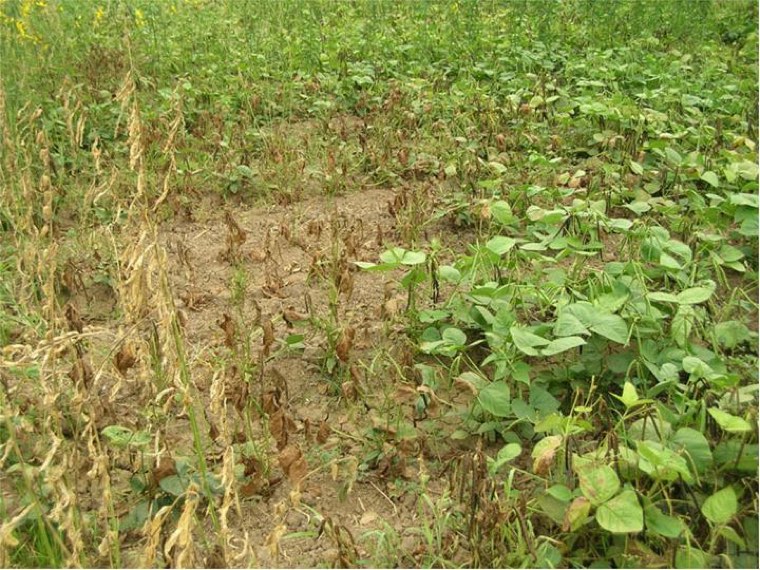
Charcoal rot is a soil-borne fungal disease that kills plants stressed by heat and drought. The fungus infects roots early and stays hidden until the crop is under stress, usually during flowering and grain or pod filling; then plants wilt and die early, and the lower stem and roots turn grey with tiny black specks, as if dusted with charcoal. It attacks more than 500 plants, including soybean, sorghum, maize, sesame, sunflower, groundnut, cotton, beans and chickpea.
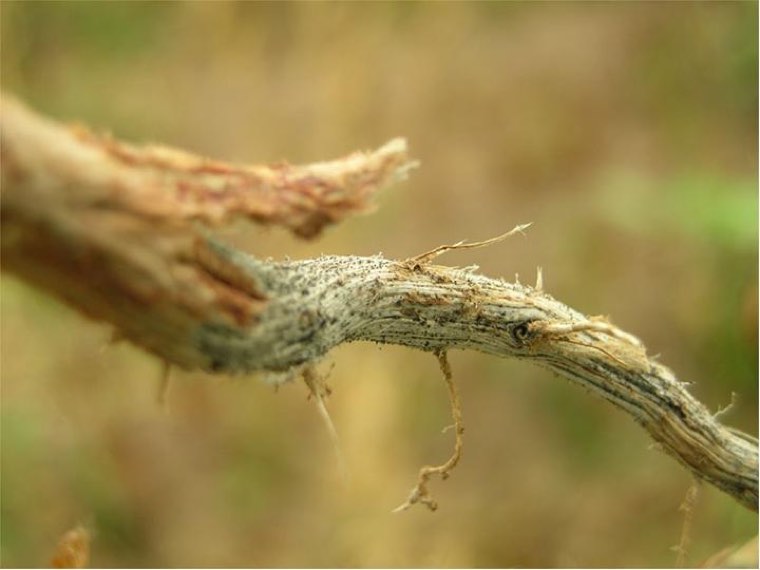
Charcoal rot is caused by Macrophomina phaseolina Macrophomina phaseolina (Tassi) Goid., 1947, a fungus (ascomycete, soil-borne) (order Botryosphaeriales, family Botryosphaeriaceae).
Older or alternative scientific names: Rhizoctonia bataticola (sclerotial stage).
Found worldwide, most damaging in hot, dry tropical and subtropical regions and in drought years in temperate regions.
| Region | Status |
|---|---|
| Asia | Widespread; dry root rot of chickpea in South Asia |
| Africa | Widespread |
| Americas | Widespread; important in soybean and sorghum |
| Europe and Oceania | Present in warm areas |
The fungus forms tiny black resting bodies (microsclerotia), 0.1-1 mm across, in roots and stems, which give the charcoal-like appearance. They return to the soil with crop residue and survive for several years. Some isolates also form pycnidia on stems and leaves. In chickpea the disease is usually called dry root rot: roots become dry, brittle and dark, and break easily when the plant is pulled.
| Crop stage | What you see |
|---|---|
| Seedlings | Reddish-brown lesions at the stem base and seedling death in hot soils. |
| Reproductive stage | Plants wilt and die early in patches during hot, dry weather; leaves yellow and stay attached. |
| Roots and lower stem | Grey to silver discoloration of the outer root and lower stem; when split, many tiny black microsclerotia in the tissue; in sorghum and maize, shredded pith and lodging. |
Microsclerotia in soil germinate near roots and infect them, often early in the season, without obvious symptoms. When plants come under heat and water stress during flowering and grain or pod filling, the fungus spreads through the roots and lower stem, blocking water movement. New microsclerotia form in dying tissue and return to the soil.
| Stage | Duration | Notes |
|---|---|---|
| Microsclerotia in soil | Survive several years | Main source. |
| Root infection | From seedling stage | Often symptomless at first. |
| Disease development | During heat and drought stress | Reproductive stages. |
| New microsclerotia | In dying tissue | Build up soil inoculum. |
Favoured by hot soils (about 28-35 °C) and low soil moisture.
One main cycle per crop.
Hot, dry weather and drought stress during flowering and grain or pod filling, sandy soils with low water-holding capacity, high plant densities, and continuous cropping of susceptible hosts.
There is no economic threshold; management is preventive, mainly by reducing water stress and choosing tolerant varieties.
Thresholds are local. They depend on crop price, control cost, variety and natural-enemy activity, so use the figure your local extension service publishes where one exists.
Yield losses range from small to severe in drought years, through early plant death, lighter seeds and lodging of sorghum and maize. Because the fungus also attacks many rotation crops, losses can build up over years in hot, dry farming systems.
Control works best as a sequence: prevent, monitor, then act only when a threshold or a risk forecast says so, using the least disruptive option that works.
Fungicide seed treatments give limited early protection and no fungicide reliably controls charcoal rot in the field. What is registered differs by country and changes over time; follow the label and your local plant-protection authority.
More than 500 plant species, including soybean, sorghum, maize, sesame, sunflower, groundnut, cotton, beans, cowpea, chickpea, jute, potato and strawberry.
How to grow the crop well is the first line of defence. Laisha's free grow guides cover each crop from sowing to harvest:
Written by Laisha from the sources above, in its own words. This page is general reference, not a prescription: confirm identification locally and follow the label and your plant-protection authority.