 Laisha
AI Operating System for Agriculture
Ask Laisha
Laisha
AI Operating System for Agriculture
Ask Laisha
Pseudocercospora griseola Pseudocercospora griseola (Sacc.) Crous & U. Braun, 2006 · formerly or also: Phaeoisariopsis griseola, Isariopsis griseola
Angular leaf spot covers bean leaves with grey to brown spots that are angular because they are bounded by the small veins. Underneath the spots, the fungus forms tiny dark tufts of spores. Leaves yellow and drop early, and pods develop reddish-brown spots. It is one of the most damaging bean diseases in the tropics and subtropics, especially in Africa and Latin America, where losses can reach half of the crop or more.
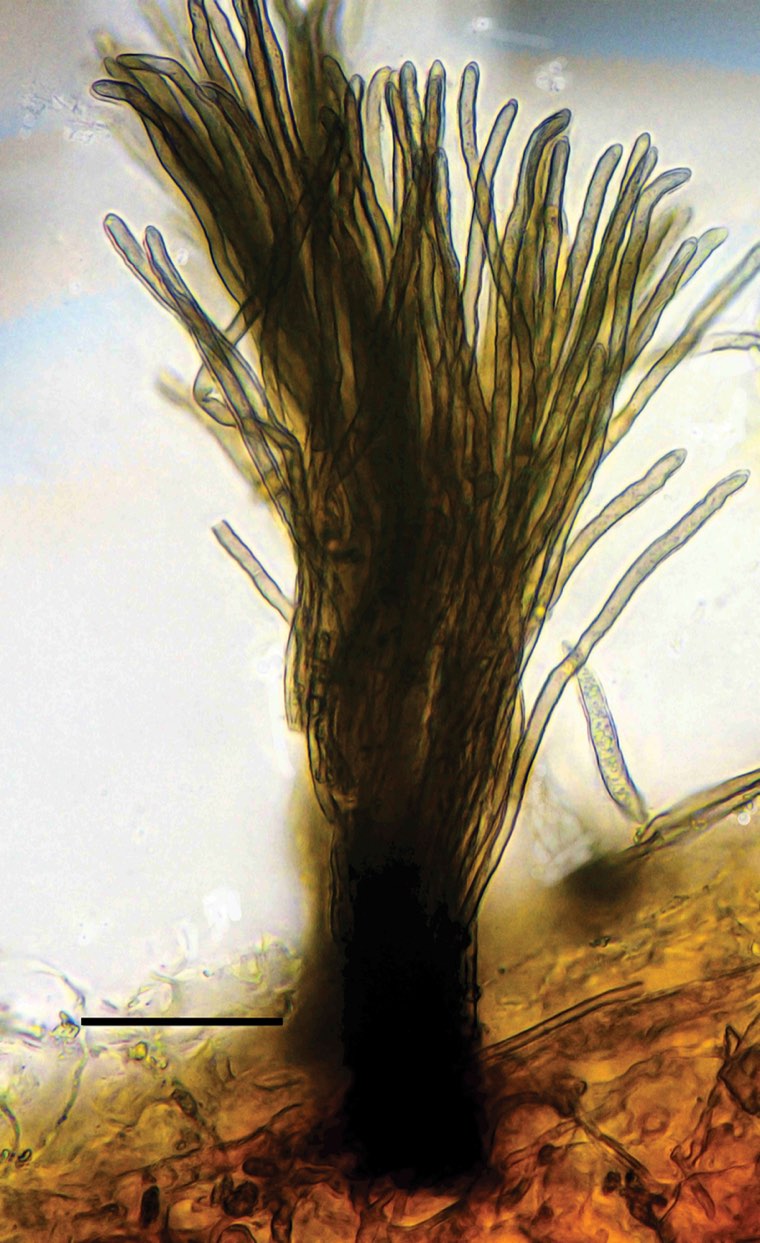
Angular leaf spot of bean is caused by Pseudocercospora griseola Pseudocercospora griseola (Sacc.) Crous & U. Braun, 2006, a fungus (ascomycete) (order Mycosphaerellales, family Mycosphaerellaceae).
Older or alternative scientific names: Phaeoisariopsis griseola, Isariopsis griseola.
Found in bean-growing areas worldwide, most damaging in warm, humid tropical and subtropical regions of Africa and Latin America, and also in Asia, Europe and North America.
| Region | Status |
|---|---|
| Africa | Widespread; major in East and southern Africa |
| Latin America | Widespread |
| Asia | Present |
| Europe and North America | Present; usually less severe |
A fungus that produces dark, bristle-like bundles of spore-bearing threads (synnemata) on the undersides of leaf spots and on pods. Pathogen populations are divided into Andean and Mesoamerican groups that match the two main gene pools of cultivated beans. Andean-group strains mostly attack large-seeded Andean beans, while Mesoamerican strains attack both groups, which is why varieties from one gene pool can fail when grown in a new area.
| Crop stage | What you see |
|---|---|
| Leaves | Grey to brown angular spots limited by veins, often with a yellow halo; dark grey tufts of spores on the undersides; spots merge and leaves yellow and drop. |
| Pods | Oval to round reddish-brown spots with darker borders; poorly filled pods. |
| Stems and seed | Elongated brown lesions on stems and branches; shrivelled or discoloured seed. |
The fungus survives on infected crop debris and on seed. In humid weather it produces spores that are spread by wind and rain splash to leaves, where they infect through pores. New spots produce spores within about a week or two, so several cycles occur in a season.
| Stage | Duration | Notes |
|---|---|---|
| Survival on debris and seed | Between seasons | Debris can carry it for many months. |
| Infection | During humid periods | Through stomata. |
| Lesion development and sporulation | About 9-12 days | Tufts on leaf undersides. |
| Spread | Repeated cycles | Wind and rain splash. |
Most severe at moderate temperatures of about 16-28 °C with alternating wet and dry periods.
Several cycles per season.
Moderate temperatures with periods of high humidity, infected debris from previous crops, farm-saved infected seed, continuous bean cropping and susceptible varieties.
There is no numeric economic threshold; protection relies on clean seed, rotation and resistant varieties, with fungicides started when the first spots appear in susceptible varieties where this is economic.
Thresholds are local. They depend on crop price, control cost, variety and natural-enemy activity, so use the figure your local extension service publishes where one exists.
Early defoliation and pod infection reduce yield and seed quality; losses of 40-80% have been reported in susceptible varieties in Africa and Latin America.
Control works best as a sequence: prevent, monitor, then act only when a threshold or a risk forecast says so, using the least disruptive option that works.
Foliar fungicides applied at the first symptoms and repeated during humid weather reduce losses in susceptible varieties. What is registered differs by country and changes over time; follow the label and your local plant-protection authority.
| Scheme | Group | Mode of action | Notes |
|---|---|---|---|
| FRAC | 3 | Demethylation inhibitors (DMI) | Medium resistance risk. |
| FRAC | 11 | Quinone outside inhibitors (QoI) | High resistance risk; use in mixtures. |
| FRAC | M05 | Chloronitriles (multi-site) | Protectant. |
Common bean and other Phaseolus species (such as runner bean); occasionally other legumes in tests.
How to grow the crop well is the first line of defence. Laisha's free grow guides cover each crop from sowing to harvest:
Written by Laisha from the sources above, in its own words. This page is general reference, not a prescription: confirm identification locally and follow the label and your plant-protection authority.